Image

Orchestrer les insights d’IA pour les transformer en actions

Inscrivez-vous dès aujourd’hui sur la liste d’attente d’AeroGenie !

Tendances

Categories

Duncan Aviation Tests Gogo 5G on Citation Excel
August 28, 2026By ePlane AI
Duncan Aviation Tests Gogo 5G on Citation Excel
0
0
Duncan Aviation
Gogo 5G
Citation Excel

Duncan Aviation Successfully Tests Gogo 5G Connectivity on Citation Excel

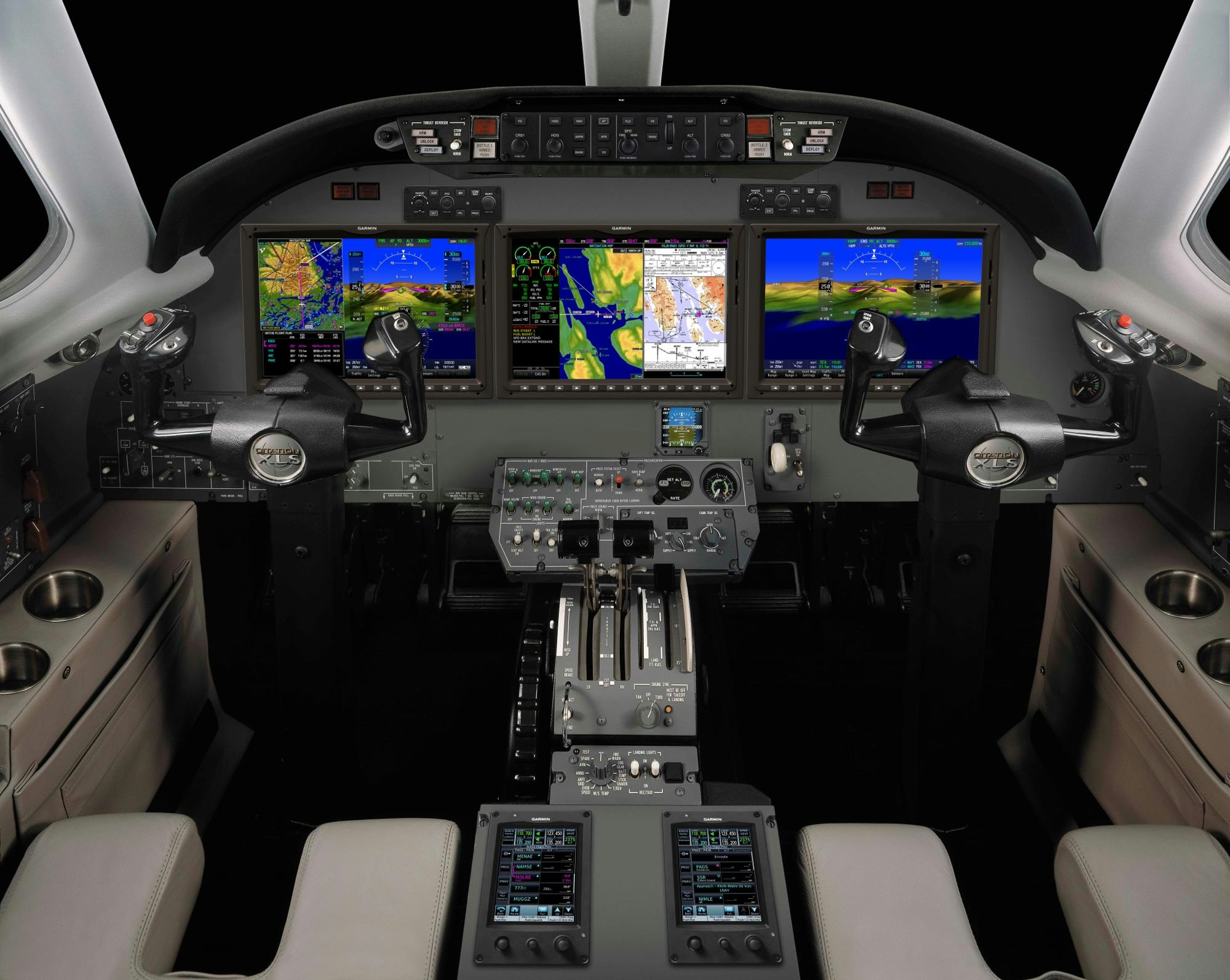
Duncan Aviation has completed the installation and in-flight testing of the Gogo 5G connectivity system aboard its Citation Excel (N1KD), demonstrating strong performance and reliability under real-world conditions. The company conducted a thorough evaluation involving a variety of demanding applications, including video calls, VPN access, large document downloads, and streaming services, while flying across the contiguous United States and parts of Canada.

Rigorous In-Flight Evaluation

The Citation Excel, which Duncan Aviation uses to transport executives and staff between company facilities, served as the platform for testing the new connectivity system. During a recent flight from Lincoln, Nebraska, to Houston, Texas, multiple team members assessed the Gogo 5G system’s capabilities before formulating recommendations for customers.

Kramer Lyons, vice president and general counsel at Duncan Aviation, reported seamless connectivity throughout the journey. He described logging into the company’s Virtual Private Network (VPN), downloading documents, sending and receiving emails, and listening to an audiobook without interruption. Lyons emphasized that the Wi-Fi connection allowed him to remain fully engaged with his team while managing several projects in flight.

Bruno Mazzani, business development manager for Duncan Aviation satellites, tested the system on an Android device. He noted that streaming platforms such as YouTube, Instagram, and Netflix operated smoothly without glitches. Additionally, voice and video calls on WhatsApp were clear, and he was able to share large PDF files via WhatsApp and email without any issues.

To further challenge the system, Nate Klenke, manager of Lincoln completions and modifications service sales, connected 16 devices simultaneously during the flight. Klenke conducted multiple FaceTime calls and reported that both his experience and that of other passengers yielded satisfactory results. He stated that the Gogo 5G connectivity system met and, in many cases, exceeded expectations under heavy usage.

PK Duncan, fleet programme manager, utilized the system during both legs of a two-hour commute. He managed emails, updated schedules, and handled Microsoft To-Do applications through Outlook. Duncan praised the stable speed and connection throughout the flight, noting that the system exceeded his already high expectations. He remarked that the reliable connectivity transformed his travel day into a productive workday rather than a disruption.

Market Impact and Industry Implications

Duncan Aviation’s comprehensive testing addressed potential challenges in ensuring the system’s reliability and performance in operational environments. The positive results have elicited strong market interest, with company leadership expressing high satisfaction. As advanced connectivity becomes increasingly essential in private aviation, competitors are expected to accelerate efforts to integrate similar solutions to maintain competitiveness.

Gogo’s 5G air-to-ground network currently provides coverage across the contiguous United States and parts of Canada, positioning Duncan Aviation at the forefront of in-flight connectivity advancements.

More news
Concorde’s Heir Prepares for First Engine Test

Concorde’s Heir Prepares for First Engine Test

Concorde’s Successor Approaches First Engine Test Amid Industry Hurdles Boom Supersonic, a Colorado-based aerospace firm, is on the verge of testing the first engine for its Overture passenger jet, marking a significant milestone in the revival of commercial supersonic travel. The Overture is designed to connect New York and London in approximately three and a half hours, reminiscent of the iconic Concorde’s speed. Several major airlines, including American Airlines, United Airlines, and Japan Airlines, have already placed orders or options for the aircraft. Ambitious Goals Amid Technical and Industry Challenges Boom Supersonic aims to begin carrying passengers by 2030, but the company faces a complex array of technical, regulatory, and industry-wide obstacles. Developing a new supersonic jet involves overcoming significant engineering challenges, while the broader aviation sector is grappling with production delays, quality control issues, and concerns over the obsolescence of jet engine manufacturing. These difficulties have been highlighted by recent setbacks experienced by the U.S. Air Force with current engine suppliers, as well as cost overruns and delays in projects such as the B-52 bomber upgrade. The Overture’s development is a direct response to the void left by the Concorde, which first flew in 1969 and became a symbol of luxury and speed by connecting London and Paris to New York in record time. The Concorde’s fastest transatlantic crossing was just under three hours, but its era ended following a fatal crash in 2000 and its retirement in 2003. The Overture and the Symphony Engine Boom Supersonic’s CEO, Blake Scholl, recently confirmed that assembly of the first Symphony engine is underway. This medium-bypass turbofan is engineered for sustained supersonic flight without the use of afterburners, a critical innovation for efficiency and environmental considerations. Scholl expressed confidence in overcoming the technical challenges, stating, “We’ll work through the issues, we’ll make it happen.” If development proceeds as planned, the Overture will accommodate 60 to 80 passengers and cruise at Mach 1.7, effectively halving transatlantic travel times. The aircraft is also being designed to minimize the sonic boom, a factor that historically restricted supersonic flights over land. Unlike the Concorde, which primarily served affluent travelers, Boom Supersonic aims to target a broader market. The company envisions ticket prices comparable to current business-class fares, approximately $5,000 one-way between New York and London, significantly lower than the Concorde’s fares, which could reach $20,000 in today’s currency. Industry Outlook and Competitive Landscape The current aviation environment adds further uncertainty to Boom’s ambitious plans. Market observers are closely monitoring the company’s progress, with heightened scrutiny on reliability and delivery timelines. Competition is expected to intensify, particularly in the engine sector, where firms such as IAG Engine Tech are emerging as prominent independent maintenance providers. The forthcoming Symphony engine test represents a pivotal moment for Boom Supersonic. However, the transition from technological promise to a commercially viable supersonic travel option remains a formidable challenge that extends well beyond the initial test flights.
Airbus Shares Navigate Between Labor Strikes and Strong Order Book

Airbus Shares Navigate Between Labor Strikes and Strong Order Book

Airbus Shares Navigate Labor Strikes Amid Robust Order Book Airbus finds itself at a critical juncture as it contends with renewed labor unrest in Spain while managing a record-breaking order backlog. The European aerospace giant, which secured 821 net orders in the first half of 2026—nearly double Boeing’s 408—now faces operational challenges that could undermine its ambitious delivery targets for the year. Labor Unrest in Spain Raises Production Concerns On Tuesday, Spanish trade unions CGT, UGT, and UTIL resumed industrial action at Airbus’s local facilities after rejecting the company’s latest proposals regarding pay and remote work arrangements. This wave of strikes follows a brief pause after management eased its office attendance policies, permitting an average of two days of homeworking per week. Despite these concessions, union representatives remain dissatisfied, and the dispute appears poised to intensify. Research firm AlphaValue has highlighted a “significant execution risk” to Airbus’s annual delivery schedule, cautioning that the unrest could extend to the company’s French plants. The firm maintained its “Reduce” rating and a €215 price target, citing production risks stemming from the strikes. Previous walkouts involved approximately 40% of Airbus’s 14,000 Spanish employees, according to Bloomberg. To date, disruptions have primarily affected administrative and support staff, sparing the assembly lines crucial to meeting delivery commitments. Delivery Targets Under Increasing Pressure Despite leading the market in orders, Airbus faces mounting pressure to translate its strong backlog into actual deliveries. The company aims to deliver 870 aircraft in 2026, necessitating an average monthly delivery rate of 90 planes for the remainder of the year—a substantial increase from recent months. In August, Airbus delivered 47 jets to 31 customers, following 67 aircraft delivered in July. Prolonged labor disruptions could jeopardize this delivery pace, putting the annual target at risk. Divergent Market Sentiment and Competitive Challenges Market analysts remain divided in their outlook for Airbus. On August 14, Morgan Stanley reaffirmed its “Overweight” rating and raised its price target from €227 to €255, citing management’s confidence and consistent operational execution. However, this upgrade preceded the latest escalation of strikes in Spain, underscoring a divergence in analyst perspectives. Beyond labor issues, Airbus faces intensifying competition and network planning challenges. A recent report from Air New Zealand highlights growing competitive pressures within the commercial aviation sector, which could affect Airbus’s market share and profitability. These factors add complexity as the company strives to convert its robust order book into sustained financial performance. Outlook: Navigating Growth Amid Operational Risks In the coming quarters, Airbus’s ability to maintain delivery momentum amid labor unrest and competitive headwinds will be closely watched by investors. While the company’s core business remains intact as long as production lines continue operating and deliveries proceed, the risk of further disruptions—and their potential spread to other markets—places operational resilience at the forefront of sustaining shareholder confidence.
PD-35 Gas Generator Demonstrates Cooler Operation Than GE9X

PD-35 Gas Generator Demonstrates Cooler Operation Than GE9X

PD-35 Gas Generator Demonstrates Cooler Operation Than GE9X The Russian-designed PD-35 engine operates with a gas temperature before the turbine of approximately 2000 K (around 1727 °C), establishing it as a formidable contender in the large turbofan market. In contrast, General Electric’s latest flagship engine, the GE9X—developed for the Boeing 777X—runs at even higher hot section temperatures, though precise figures have not been publicly disclosed. This disparity in operating temperatures reflects not only differing engineering philosophies but also carries broader implications for engine efficiency, durability, and competitive positioning within the aerospace industry. Engineering Choices and Performance Margins The PD-35 is designed to deliver 35,000 kgf of thrust, featuring a 3.1-meter fan diameter, a compression ratio of 53:1, and an 11:1 bypass ratio. United Engine Corporation (ODK) aims for the PD-35 to achieve cruise fuel consumption 10 to 15 percent lower than earlier Russian engines such as the PS-90A, targeting performance on par with Western engines from the 2010s. Typically, attaining higher efficiency necessitates increasing the temperature before the turbine, which in turn imposes greater thermal stress on engine components. Each incremental rise in temperature demands advancements in heat-resistant alloys, protective coatings, and sophisticated cooling systems to maintain reliability. By comparison, the GE9X pushes the boundaries with a thrust rating of 47.6 tons and a larger 3.4-meter fan. Its 11-stage high-pressure compressor achieves a pressure ratio of 27:1, contributing to a total pressure ratio near 60:1. A distinguishing feature of the GE9X is its use of ceramic matrix composites (CMC) in critical areas such as the combustion chamber, casing, and turbine vanes. These materials are approximately three times lighter than traditional metal alloys and can endure higher temperatures with reduced cooling requirements, enabling the GE9X to operate under hotter conditions while maintaining component integrity. Market Implications and Competitive Dynamics The PD-35’s comparatively cooler operation relative to the GE9X could have significant ramifications across the commercial aircraft engine sector. Boeing’s substantial investment in the GE9X for the 777X program means that any demonstration of superior efficiency or reliability by the PD-35 may pose long-term challenges for both Boeing and General Electric. This development could prompt airframe manufacturers to reevaluate their engine partnerships, particularly as airlines and leasing companies increasingly emphasize fuel efficiency and lifecycle costs in their procurement decisions. Furthermore, competitors such as CFM International and Rolls-Royce may find new opportunities to capture market share should the PD-35’s performance shift industry expectations. The aftermarket segment, where engine manufacturers typically secure higher profit margins through parts and maintenance services, could also experience disruption. If the PD-35’s design enables its intellectual property holder to retain a greater share of aftermarket revenues, it may alter the competitive landscape and influence future strategies in engine development and support. A Broader Shift in Engine Technology The contrast between the PD-35 and GE9X underscores a broader trend in gas turbine engine technology: achieving higher turbine inlet temperatures is increasingly reliant on the integration of advanced alloys, coatings, cooling techniques, and aerodynamic refinements rather than a single material breakthrough. As the commercial aircraft engine market continues to demand greater efficiency, the emergence of engines like the PD-35 may accelerate the adoption of innovative technologies and reshape strategic approaches among both engine manufacturers and airframe builders.
ExecuJet Malaysia Completes Falcon 8X C-Check

ExecuJet Malaysia Completes Falcon 8X C-Check

ExecuJet Malaysia Completes Falcon 8X C-Check, Reflecting Rising Regional Demand ExecuJet MRO Services Malaysia, a wholly owned subsidiary of Dassault Aviation, has successfully completed its first C-check on a Falcon 8X aircraft. This milestone represents the facility’s inaugural heavy maintenance inspection for the Falcon 8X model and highlights its expanding technical capabilities at Subang Airport in Kuala Lumpur. Expanding Maintenance Capabilities in Asia-Pacific The C-check, a thorough inspection of an aircraft’s structures and systems typically conducted after eight years of service, was carried out at ExecuJet’s heavy maintenance facility. This site is equipped to support major inspections on all in-production Falcon models. The Falcon 8X serviced is based in Asia, underscoring the region’s growing fleet of Dassault business jets and the increasing need for advanced maintenance, repair, and overhaul (MRO) services. Falcon aircraft currently represent 60 to 65 percent of ExecuJet MRO Services Malaysia’s total maintenance workload. The facility plans to conduct additional Falcon 8X C-checks throughout the year, with aircraft arriving from across Asia. This trend reflects a rising demand for high-quality MRO support within the region. Strategic Positioning and Market Response Ivan Lim, regional vice president for Asia at ExecuJet MRO Services, emphasized the importance of this achievement, stating that completing the first Falcon 8X C-check demonstrates growing confidence among Falcon operators in the facility’s technical expertise. He noted that as the number of Falcon aircraft increases in the Asia-Pacific region, operators are seeking reliable, high-standard maintenance services closer to home. Lim highlighted ExecuJet Malaysia’s strengths, including its experienced workforce, purpose-built infrastructure, and integration with the broader Dassault MRO network. The presence of a Dassault Aviation customer support team on site further enhances the overall customer experience. Market response to ExecuJet’s accomplishment has been positive, with Falcon operators expressing trust in the facility’s technical proficiency and service quality. Nonetheless, the company faces challenges in maintaining rigorous maintenance standards, accommodating future growth in Falcon 8X traffic, and remaining competitive amid other MRO providers in Asia. Industry analysts anticipate that competitors may upgrade their own maintenance capabilities to capture a share of the expanding business jet support market. As the Asia-Pacific business aviation sector continues to grow, ExecuJet Malaysia’s successful completion of the Falcon 8X C-check positions it as a significant player in the region’s evolving MRO landscape.
LATAM Airlines Obtains $505 Million Financing for 2026 Aircraft Deliveries

LATAM Airlines Obtains $505 Million Financing for 2026 Aircraft Deliveries

LATAM Airlines Secures $505 Million Financing for 2026 Fleet Expansion LATAM Airlines Group has obtained approximately $505 million (€433 million) in long-term financing to facilitate the delivery of 11 new-generation aircraft scheduled for the second half of 2026. This financing marks a pivotal advancement in the airline’s ongoing fleet renewal strategy. The package, led by BNP Paribas, encompasses one Airbus A320neo, four Airbus A321neos, and six Embraer E195-E2s. A significant aspect of the agreement is that around $400 million of the financing is structured as sustainability-linked funding. This innovative approach ties LATAM’s borrowing costs to its progress on emissions intensity and other environmental targets. Notably, this is the first instance in which LATAM has employed a sustainability-linked structure to finance Embraer aircraft, thereby expanding its funding options and reinforcing its commitment to environmental performance. Strategic Fleet Renewal and Sustainability Commitments The introduction of these new aircraft is expected to enhance LATAM’s operational efficiency and network flexibility. The Embraer E195-E2s are designed to serve thinner, lower-demand routes, while the Airbus A320neo and A321neo models will cater to higher-capacity markets. Both aircraft families offer substantial fuel-efficiency improvements compared to previous generations, aligning with LATAM’s objective to reduce its carbon footprint. According to Airbus, the A320neo achieves at least a 20% reduction in fuel burn and CO₂ emissions per seat, while the A321neo provides increased capacity and range alongside similar efficiency gains. Operational Challenges and Market Impact The integration of 11 new aircraft by late 2026 presents several operational challenges for LATAM, including ensuring seamless fleet integration, maintaining high utilization rates, and meeting the sustainability targets linked to its financing. Additionally, the airline must navigate market volatility and elevated fuel costs, factors that have influenced its decision to diversify funding sources and invest in more efficient aircraft. This strategic move is anticipated to intensify competition within the South American aviation sector. LATAM’s aggressive fleet renewal may prompt rival carriers to accelerate their own modernization efforts or pursue similar sustainability-linked financing arrangements to remain competitive in terms of capacity and efficiency. Andrés del Valle, LATAM’s Director of Corporate Finance, highlighted that the transaction effectively combines fleet renewal, financing diversification, and sustainability-linked conditions. He stated, “This structure allows us to finance Embraer aircraft through this mechanism for the first time while retaining access to long-term international financing.” The 11-aircraft order reflects LATAM’s commitment to modernizing its fleet, enhancing operational efficiency, and advancing its sustainability agenda amid a rapidly evolving aviation landscape.
IndiGo Ventures Invests in Sarvam to Advance AI in Aviation

IndiGo Ventures Invests in Sarvam to Advance AI in Aviation

IndiGo Ventures Invests in Sarvam to Advance AI in Aviation IndiGo Ventures, the corporate venture capital arm of IndiGo—India’s largest airline and one of the fastest-growing carriers globally—has announced a strategic investment in Sarvam, a prominent Indian full-stack sovereign AI company. This investment is part of Sarvam’s Series B funding round and seeks to combine IndiGo’s extensive aviation expertise and operational scale with Sarvam’s advanced artificial intelligence capabilities. The collaboration aims to accelerate the integration of AI technologies across IndiGo’s operations, enhancing efficiency and innovation within the airline. Strengthening an Existing Partnership This investment builds upon an ongoing partnership between IndiGo and Sarvam, which has already focused on improving customer experience, empowering employees, and streamlining complex operational workflows through AI-driven solutions. By deepening this relationship, IndiGo intends to establish a long-term platform for AI-led innovation and operational excellence within the aviation sector. Neetan Chopra, Chief Digital and Information Officer at IndiGo, emphasized the unique suitability of aviation for enterprise AI, citing the industry’s high volume of customer interactions, time-sensitive operations, and large, distributed workforce. He stated, “Our partnership with Sarvam gives IndiGo access to cutting-edge AI capabilities, built in India and tailored to our market. By combining these technologies with our operational expertise, we can accelerate innovation and maximize value for our customers, employees, and stakeholders.” Sarvam’s AI Expertise and Industry Impact Sarvam’s technology portfolio includes training and inference infrastructure, frontier AI models, and enterprise products spanning text, speech, vision, and document processing. These solutions are designed for secure deployment in complex, high-volume environments such as aviation. Pratyush Kumar, Co-founder of Sarvam, highlighted the complementary nature of the partnership, noting that IndiGo’s domain expertise and scale are critical in identifying where AI can generate tangible value. He added, “Together, we can develop systems that are useful in production and build a stronger template for enterprise AI in India.” The investment arrives amid a broader surge of interest and funding in AI, climate technology, and enterprise sectors, reflecting strong market momentum and investor confidence. The aviation industry’s adoption of advanced AI technologies, however, faces challenges including regulatory compliance, integration complexities, and the need for continuous technological innovation. Industry Implications and Future Prospects IndiGo’s move is expected to prompt competitors within the aviation sector to increase their own investments in AI and forge strategic partnerships to maintain competitiveness. As the industry evolves, IndiGo and Sarvam plan to continue developing and assessing AI applications across customer experience, employee productivity, and operational efficiency. Successful solutions have the potential to be scaled across IndiGo’s extensive network, setting new benchmarks for enterprise AI adoption in Indian aviation. By leveraging Sarvam’s AI expertise alongside IndiGo’s operational scale, the partnership aspires to position both companies at the forefront of technological innovation in the sector, establishing a new standard for AI-driven transformation in aviation.
ADE Revenue Increases 29% Amid Growing MRO Demand

ADE Revenue Increases 29% Amid Growing MRO Demand

ADE Revenue Increases 29% Amid Growing MRO Demand Strong Second-Quarter Performance Driven by Maintenance and Repair Services Asia Digital Engineering (ADE), the maintenance, repair, and overhaul (MRO) subsidiary of Capital A Berhad, reported a robust second-quarter performance for the period ending June 30, 2026. The company’s revenue surged 29% year-on-year to RM284 million (US$70.6 million), propelled by an increase in higher-value base maintenance checks and a rise in workshop orders. This growth reflects heightened demand for component repair and refurbishment as ADE expanded its portfolio of intensive maintenance work. Earnings before interest, taxes, depreciation, and amortization (EBITDA) reached RM69 million, representing a 22% margin, while profit after tax (PAT) stood at a 14% margin. ADE attributed its improved profitability to strategic debt refinancing, which helped mitigate the impact of higher depreciation costs following investments in new tools and equipment. Half-Year Results and Market Position For the first half of 2026, ADE generated revenue exceeding RM500 million, marking a 19% increase compared to the previous year. EBITDA rose 16% to RM112 million, and net operating profit (NOP) increased sharply by 52% to RM62 million. These strong results played a significant role in Capital A’s overall growth, with ADE and its logistics arm Teleport together accounting for more than 70% of the group’s total revenue during the period. This development highlights the growing importance of Capital A’s core businesses following the disposal of its airline operations and its exit from PN17 status. Market Response and Future Challenges Investor response to ADE’s revenue growth has been positive, reflecting confidence in the company’s ability to capitalize on expanding demand within the MRO sector. Nevertheless, ADE faces challenges in sustaining this momentum amid intensifying competition and ongoing supply chain disruptions. The MRO market is experiencing increased activity, with major competitors such as Lufthansa Technik and Grainger also reporting significant revenue growth and likely intensifying efforts to expand their market share. As ADE continues to leverage rising demand for aircraft maintenance and component services, its capacity to navigate competitive pressures and operational challenges will be critical to maintaining its growth trajectory. *(RM1 = US$0.24862 at time of publication)*
Willis Lease to Open Engine Repair Center in Malaysia

Willis Lease to Open Engine Repair Center in Malaysia

Willis Lease to Establish Engine Repair Center in Malaysia Willis Lease Finance Corporation is advancing its global maintenance footprint with plans to develop a new Willis Engine Repair Center® (WERC®) in Johor, Malaysia. This facility will mark the company’s third WERC®, complementing its existing centers in Coconut Creek, Florida, and Bridgend, Wales. Construction is expected to conclude by the first quarter of 2027. Strategic Expansion into Asia-Pacific The forthcoming Malaysian center will offer maintenance, repair, and storage services for both Willis Lease’s owned engine portfolio and third-party assets. This expansion is designed to reinforce the company’s integrated aviation services platform and extend its engine repair capabilities into the Asia-Pacific region. By establishing a presence in Malaysia, Willis Lease aims to enhance its service delivery across a strategically important market. Malaysia’s selection as the site for the new facility reflects its advantageous geographic location, a skilled aerospace workforce, a well-established aviation ecosystem, and strong logistics infrastructure. The company has collaborated with South Alliance Sdn. Bhd. to secure land and oversee the development of WERC® Malaysia. Competitive and Operational Challenges The expansion occurs amid intensifying competition in the region, with major lessors such as HAECO and FTAI also bolstering their engine repair operations across Asia and Africa. This competitive environment may drive firms to adopt aggressive pricing models or introduce enhanced service offerings to secure market share. Industry analysts highlight that the new facility could attract increased regulatory scrutiny, as authorities focus on maintaining rigorous safety and compliance standards. Additionally, ongoing supply chain disruptions—exemplified by shortages of critical aircraft components like windows—pose potential operational challenges as Willis Lease scales up its Malaysian operations. Despite these challenges, Willis Lease’s move into Malaysia signals a strategic commitment to expanding its global service network and addressing the evolving demands of the aviation sector within the Asia-Pacific region.
Matt Silverberg Appointed CEO of B&H Worldwide

Matt Silverberg Appointed CEO of B&H Worldwide

Matt Silverberg Appointed CEO of B&H Worldwide B&H Worldwide, a global leader in aerospace logistics, has announced the appointment of Matt Silverberg as its new Chief Executive Officer, effective immediately. Silverberg succeeds Stuart Allen, who, after 13 years as CEO, will transition to the role of Chairman and Board Advisor. Allen will continue to provide strategic oversight from Singapore, while Silverberg, based in the United States, assumes responsibility for the company’s global operations and strategic growth initiatives. Leadership Transition Amid Industry Growth This leadership change occurs at a critical juncture for B&H Worldwide, as the aerospace sector experiences heightened demand for resilient, responsive, and technology-driven supply chain solutions. The surge is driven by global fleet expansion and increased maintenance activities, creating both opportunities and challenges for logistics providers. Silverberg’s appointment has been positively received within the industry, with experts noting his extensive executive experience in time-sensitive logistics, supply chain management, and professional services. Silverberg brings a strong track record from previous senior roles, including CEO and Chief Commercial Officer positions, where he successfully led high-growth businesses and managed complex global enterprises. His expertise in driving revenue growth through organic expansion and acquisitions, leading business transformation programs, and building high-performing international teams is expected to be pivotal as B&H Worldwide aims to reinforce its position as a trusted logistics partner to airlines, maintenance, repair and overhaul (MRO) providers, original equipment manufacturers (OEMs), and spare parts suppliers worldwide. Strategic Outlook and Industry Positioning While competitor reactions to Silverberg’s appointment have yet to be fully revealed, the aerospace industry’s increasing emphasis on supply chain innovation positions B&H Worldwide to capitalize on emerging trends under his leadership. The company intends to leverage Silverberg’s experience to address the evolving demands of the aerospace sector and to support its ongoing international expansion. Stuart Allen will remain actively engaged in shaping the company’s long-term strategy as Chairman, collaborating closely with Silverberg and the executive team. Together, they will focus on maintaining B&H Worldwide’s leadership in aerospace logistics amid a rapidly evolving industry landscape.
Lufthansa Technik Employs 3D-Printed Titanium Latch in Aircraft Maintenance

Lufthansa Technik Employs 3D-Printed Titanium Latch in Aircraft Maintenance

Lufthansa Technik Advances Aircraft Maintenance with 3D-Printed Titanium Latch Lufthansa Technik, a prominent leader in aircraft maintenance and interiors, has expanded its application of 3D printing technology to improve reliability and operational efficiency for its airline clients. The company’s engineering team recently developed a titanium latch using laser powder bed fusion (LPBF) to replace a polymer component that had been prone to frequent failure. This latch, integral to the roller shutters on Airbus A330, A340, and A380 aircraft, had long been a source of maintenance challenges due to repeated breakages. Addressing Durability Challenges with Advanced Materials Historically, maintenance, repair, and overhaul (MRO) operations have utilized 3D printing primarily to replace heavier metal parts with lighter, cost-effective polymer alternatives. Lufthansa Technik’s decision to reverse this trend by substituting the original polymer latch with a titanium counterpart reflects a strategic response to durability concerns. The polymer component’s repeated failures not only led to costly repairs and potential flight delays but also posed risks to safety and passenger experience. Compounding the issue, the original supplier did not offer the latch as a standalone replacement, compelling operators to replace the entire roller shutter assembly—a process both time-consuming and expensive. By manufacturing the replacement latch from Ti6Al4V titanium alloy through an EN 9100-certified process and under EASA Part 21.G and 21.J certification, Lufthansa Technik has significantly extended the service life of the roller shutter. This innovation allows for rapid replacement of the latch itself if it fails, eliminating the need to procure a full assembly. The result is a marked reduction in aircraft downtime and considerable cost savings over the long term. Implications for the MRO Industry and Future Adoption While the integration of 3D printing for critical components entails substantial initial investment and necessitates comprehensive training for maintenance personnel in new production and quality assurance protocols, the advantages are substantial. Airlines stand to benefit from lower operational costs, reduced lead times for difficult-to-source parts, and enhanced fleet availability. Industry analysts suggest that Lufthansa Technik’s pioneering use of additive manufacturing for such essential parts may encourage competitors to accelerate their own adoption of similar technologies. This shift could herald a broader transformation within the MRO sector toward on-demand production of certified, high-performance components that are otherwise challenging to obtain through conventional supply chains. By leveraging its capacity for self-certification, Lufthansa Technik not only resolves a persistent maintenance issue but also establishes a benchmark for innovation in aircraft support. Project Engineer David Rudolz emphasized that the company’s approach prioritizes safety and customer experience while simultaneously driving operational efficiencies that benefit both airlines and passengers.
line









