Image

Débloquez 3x plus de revenus sur vos opportunités de devis grâce à l’IA !

Rejoignez-nous pour une démonstration en direct de 30 minutes de l’automatisation des devis

Tendances

Categories

Electric air taxis: Paris’ future in the skies and what it means for luxury travel
January 31, 2026By ePlane AI
Electric air taxis: Paris’ future in the skies and what it means for luxury travel
0
0
Electric Air Taxis
Urban Air Mobility
eVTOL Certification

Electric Air Taxis: Paris’ Future in the Skies and What It Means for Luxury Travel

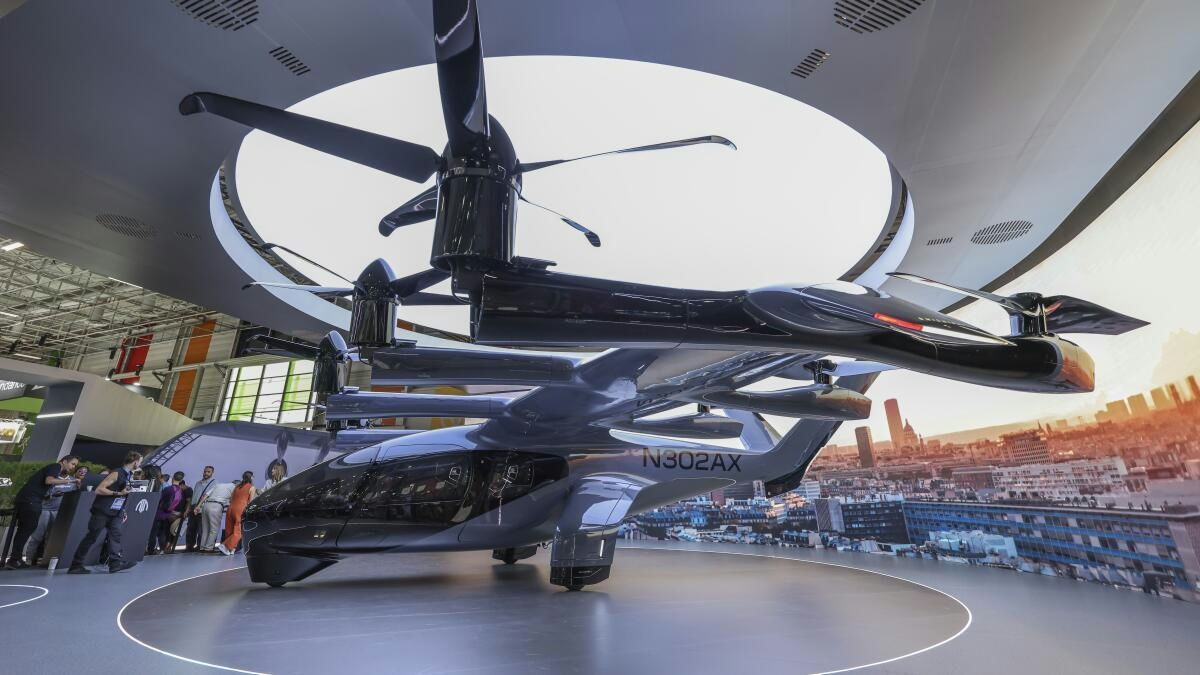
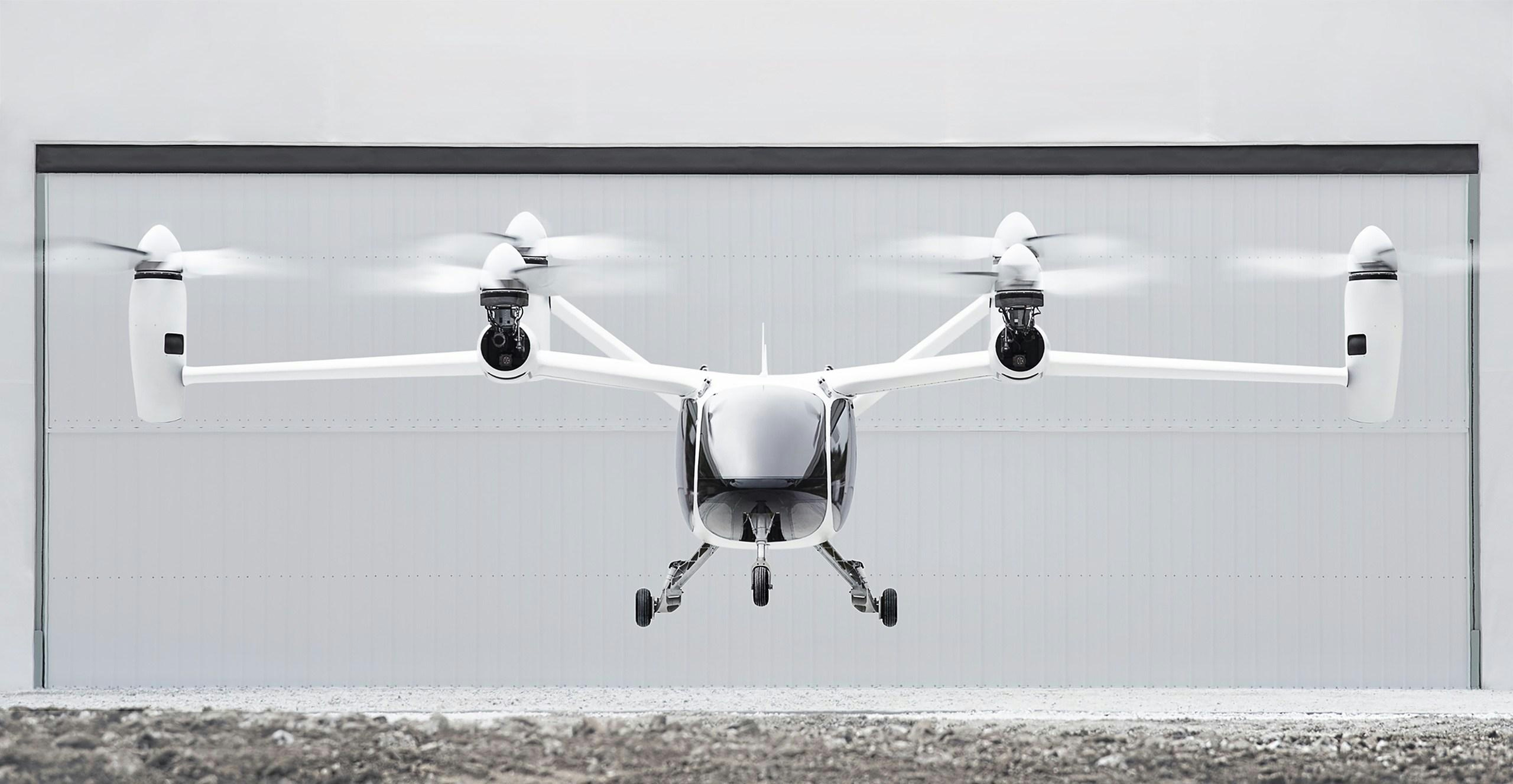
Although electric air taxi services did not make their anticipated debut at the Paris 2024 Olympics, the vision of urban air mobility remains a significant element in shaping the city’s transportation future. Parisian authorities and developers had aimed to showcase electric vertical take-off and landing (eVTOL) aircraft—commonly referred to as “air taxis”—during the Games, offering a glimpse of a cleaner, faster, and more exclusive mode of urban transport. While these plans were postponed, ongoing development efforts indicate that Paris continues to position itself at the forefront of next-generation mobility, with a potential commercial launch now targeted for 2026.

Delays in Olympic Debut: Regulatory and Technical Challenges

The absence of air taxis during the Olympics resulted from a combination of regulatory, technical, and operational challenges. Securing certification from both the European Union Aviation Safety Agency (EASA) and the French Directorate General for Civil Aviation (DGAC) proved more time-consuming than initially expected, delaying the commercial rollout. Developers also encountered unresolved issues related to battery performance, motor reliability, and overall operational safety—critical factors for gaining public trust and regulatory approval.

In addition to these technical hurdles, concerns were raised by local officials and residents regarding environmental impact, noise pollution, and the integration of air taxis into Paris’s dense urban environment. Although vertiport infrastructure, including a floating platform on the Seine, was prepared, the full-scale commercial operation of air taxis could not be safely or reliably launched during the Olympic Games.

The Path Forward: Opportunities Amidst Ongoing Challenges

Despite the missed opportunity to debut at the Olympics, Paris continues to invest heavily in electric air mobility. Vertiports are operational, and test flights are ongoing, positioning the city as a global leader in urban air transport innovation. However, significant challenges remain. Regulatory hurdles must be fully addressed before commercial services can commence, and market skepticism—particularly among luxury travelers, a key target demographic—persists until air taxis demonstrate proven safety, reliability, and seamless integration with existing travel networks.

Furthermore, Paris faces increasing competition as other cities and companies accelerate their own urban air mobility projects. In this rapidly evolving market, exclusivity and innovation will be crucial differentiators for Paris to maintain its competitive edge.

Implications for Luxury Tourism

Electric air taxis hold considerable promise for the luxury travel sector. They offer the potential for faster, quieter transfers, enabling premium guests to enjoy swift, stress-free connections between airports, hotels, and regional destinations while avoiding road congestion. Moreover, these services are likely to appeal to affluent travelers seeking unique and cutting-edge transportation experiences as part of bespoke travel itineraries.

As Paris continues to refine its approach to electric air taxis, the city’s embrace of this technology could redefine luxury mobility. However, the realization of this vision depends on overcoming the regulatory, technical, and market challenges that currently stand in the way. The coming years will be decisive in determining whether the French capital’s skies become a new frontier for high-end travel or remain an aspirational concept.
More news
Cyber Spies Target Russian Aviation Firms for Satellite and GPS Data

Cyber Spies Target Russian Aviation Firms for Satellite and GPS Data

Cyber Spies Target Russian Aviation Firms for Satellite and GPS Data A sophisticated cyber-espionage group known as HeartlessSoul has been actively targeting Russian government agencies and aviation companies to exfiltrate sensitive geospatial and satellite data, according to a recent report by cybersecurity firm Kaspersky. Operating since at least September 2025, the group has concentrated its efforts on organizations and individuals involved in aviation, aiming to obtain geographic information system (GIS) files that contain detailed information about infrastructure, terrain, and potentially strategic facilities. Methods of Infiltration and Malware Distribution Kaspersky’s analysis highlights that GIS data, widely used across engineering, government, and industrial sectors, holds highly detailed mapping information that is of significant interest to attackers. The HeartlessSoul group primarily gains access through phishing emails containing infected archive files. Additionally, the group has orchestrated malicious advertising campaigns that impersonate legitimate aviation software websites, deceiving victims into downloading compromised installers. The attackers have also registered domains mimicking aviation resources to distribute malware disguised as trusted software. Once these files are downloaded, they automatically initiate the infection process. Researchers uncovered that HeartlessSoul exploited the legitimate software hosting platform SourceForge to disseminate malware by uploading a counterfeit version of GearUP, a tool designed to enhance online gaming connections. Users searching for GearUP could inadvertently download spyware capable of capturing screenshots, keystrokes, browser data, and files stored on the infected system. The malware is also capable of extracting Telegram login credentials and determining the device’s physical location. Links to Other Threat Actors and Broader Implications Kaspersky’s investigation revealed connections between HeartlessSoul and another hacking group known as Goffee, previously implicated in stealing sensitive files from flash drives connected to infected Russian computers. This overlap suggests possible coordination or shared tactics between the two groups. The campaign emerges amid escalating challenges for Russian aviation firms, which are increasingly subjected to GPS jamming and spoofing attacks that jeopardize navigation systems and risk operational disruptions. The sector’s heavy reliance on satellite data has raised market concerns, including the potential for increased insurance costs and interruptions to flight operations. In response, some industry players are bolstering cybersecurity defenses and pursuing collaboration with international organizations to counter electronic warfare threats. Reflecting these global concerns, the U.S. Federal Aviation Administration (FAA) recently updated its GPS interference guidelines, emphasizing the need for improved detection and mitigation of such threats. While Kaspersky identified the aviation sector as the primary target, independent Russian cybersecurity analyst Oleg Shakirov noted that the malware was also distributed through files disguised as FPV drone simulators and tools designed to bypass restrictions on the Starlink satellite internet service. If confirmed, this would indicate that HeartlessSoul’s campaign may also be targeting drone operators, communications specialists, and potentially military personnel. The ongoing attacks highlight the increasing risks faced by Russian aviation and related sectors as cyber-espionage groups continue to exploit vulnerabilities in satellite and GPS-dependent systems.
AI Becomes Crucial as Aerospace Systems Exceed Human Oversight

AI Becomes Crucial as Aerospace Systems Exceed Human Oversight

AI Becomes Crucial as Aerospace Systems Exceed Human Oversight The Data Deluge in Aerospace Modern aerospace systems are generating data at volumes that far exceed human capacity for real-time monitoring, prompting a significant shift toward artificial intelligence (AI) that goes well beyond traditional fault detection. Michael Foale, a veteran astronaut with over 370 days in space across six missions—including time aboard the Mir space station and as commander of the International Space Station (ISS)—emphasizes that this transformation is not a distant future scenario but an immediate challenge. Foale highlights the dramatic increase in sensor data, noting that while the space shuttle was equipped with roughly a thousand sensors, the ISS now operates with hundreds of thousands, potentially millions, of measurements simultaneously. “No human can watch them all,” he states, underscoring the impracticality of manual oversight in the face of such complexity. This surge in data is not confined to space exploration. Commercial aviation is experiencing a parallel trend, with aircraft systems and components generating vast streams of operational data. Airlines are under increasing pressure to detect faults earlier, reduce maintenance costs, and minimize service disruptions. For instance, easyJet’s maintenance, repair, and overhaul (MRO) expenditure rose to £451 million in 2025, up from £390 million the previous year. The core challenge has shifted from data collection to effective data interpretation. The Limits of Human Monitoring and the Role of AI Traditionally, engineers have manually reviewed system readings on the ground to identify anomalies. Foale points out that for the past five decades, system monitoring has relied heavily on human analysis. However, the complexity of current aerospace systems has surpassed this model’s feasibility. “Aerospace is crossing a complexity threshold,” he explains. While AI is already in use within the aerospace sector, its application remains largely reactive. Presently, AI systems tend to identify failures only after they occur rather than predicting them in advance. Foale describes these as “stupid systems” that merely spot faults post-failure. Onboard predictive failure analysis is notably absent on the ISS, with most predictive analytics still conducted on the ground using powerful computing resources to process data transmitted from orbit. Nonetheless, advancements are emerging. Airbus, for example, is developing neural network-based systems that analyze extensive spacecraft data sets. These systems employ autoencoder models to learn normal operational patterns across thousands of parameters. When deviations occur, the AI flags potential issues for further investigation by engineers. This approach represents a significant step toward predictive fault analysis, as Foale explains. Challenges and Cultural Shifts in AI Adoption Scaling AI integration in aerospace faces considerable obstacles beyond technical development. Dismantling established processes and cultivating a culture receptive to technological innovation are critical. Jie Zheng of TUI Group emphasizes the importance of organizational openness to change in this context. Market responses to AI adoption remain mixed, with skepticism fueled by concerns over AI’s disruptive potential and its capacity to circumvent cybersecurity measures. Representative Dave Min highlights fears related to shifting risk profiles, ranging from minor chatbot errors to more severe threats such as cyberattacks, economic instability, and the concentration of power in the hands of a few. Industries adjacent to aerospace are exploring strategies to optimize human roles alongside AI, aiming to preserve oversight and accountability. As the aerospace sector advances through this transition, fostering a culture of safe and responsible AI deployment will be essential to leveraging its advantages while managing emerging risks.
Jet Linx seeks to reduce downtime for private jet maintenance

Jet Linx seeks to reduce downtime for private jet maintenance

Jet Linx Partners with Veryon to Reduce Private Jet Maintenance Downtime Jet Linx, ranked among the top ten private jet operators, has announced a strategic partnership with aviation software provider Veryon to minimize maintenance downtime across its fleet. This collaboration aims to modernize Jet Linx’s maintenance and reliability program by integrating Veryon’s advanced tracking and defect analysis technologies, thereby streamlining operations and enhancing aircraft availability. Enhancing Maintenance Efficiency Through Technology Managing a diverse fleet of nearly 100 business jets operating under both Part 91 and Part 135 regulations, Jet Linx serves individual aircraft owners as well as jet card and on-demand charter clients. Operational efficiency and reliability are therefore essential to the company’s business model. The integration of Veryon Tracking and Veryon Defect Analysis offers Jet Linx a centralized platform for comprehensive maintenance management. This system facilitates efficient tracking of airworthiness requirements, reduces administrative workload, and increases visibility into potential maintenance issues. Jason Vanis, Senior Vice President of Operations at Jet Linx, emphasized the company’s rigorous evaluation process, stating that Veryon’s depth of expertise and the sophistication of its Defect Analysis product distinguished it from other platforms. Powered by Veryon’s proprietary AIRE technology, the platform connects the entire maintenance lifecycle, enabling teams to track work orders, access technical documentation, troubleshoot issues more rapidly, and maintain inspection readiness. The system’s use of artificial intelligence and natural language processing allows it to detect recurring defects early, even when logbook entries or ATA codes vary, thereby helping to eliminate repeat problems and standardize repair procedures across technicians. Bethany Little, CEO of Veryon, highlighted Jet Linx’s forward-thinking approach, noting that the platform upgrade will support the company’s operational growth while managing complexity. This initiative comes at a critical time when maintenance downtime poses a significant challenge for private jet owners and operators, directly affecting aircraft availability and reliability. Industry Context and Competitive Dynamics Jet Linx’s efforts to reduce maintenance downtime coincide with broader industry challenges. Recent geopolitical tensions have caused fuel prices to double, exerting additional pressure on airline operations and maintenance demand. These market fluctuations can influence airline capacity and delay the impact on maintenance service requirements. In response, competitors are also pursuing strategic advantages; for instance, American Airlines has recently re-entered the private jet market through a partnership with TLC Jet, targeting high-net-worth individuals and corporate executives. Veryon Defect Analysis, which currently supports over 25% of the global commercial fleet, has expanded its reach into business aviation, now covering more than 300 business jets worldwide. By adopting this technology, Jet Linx anticipates creating a more connected, data-driven maintenance operation that will reduce downtime, improve efficiency, and bolster the company’s growth prospects in an increasingly competitive and evolving market.
VertiPorts and Joby Aviation to Demonstrate Electric Air Taxi at NYC East 34th Street Heliport

VertiPorts and Joby Aviation to Demonstrate Electric Air Taxi at NYC East 34th Street Heliport

VertiPorts and Joby Aviation to Demonstrate Electric Air Taxi at NYC East 34th Street Heliport **New York, May 1, 2026** – VertiPorts by Atlantic is set to host a live demonstration of Joby Aviation’s all-electric vertical takeoff and landing (eVTOL) aircraft at Manhattan’s East 34th Street Heliport. Scheduled for Friday, May 1, from 12:00 p.m. to 1:30 p.m. ET, the event represents a significant advancement in the development of zero-emission urban air mobility. City officials, transportation leaders, and community members will gather to observe the potential future of urban transportation firsthand. Showcasing Next-Generation Urban Air Mobility The demonstration will feature Joby’s eVTOL air taxi arriving and departing from the heliport, showcasing how existing aviation infrastructure can be adapted to accommodate innovative aircraft within dense urban environments. Attendees will have the opportunity to witness live flight operations over Midtown Manhattan and document the aircraft after landing. Key figures participating in the event include Kevin Cox, CEO of VertiPorts by Atlantic; Greg Bowles, Chief Policy Officer of Joby Aviation; and Robert Wiesenthal, CEO of Blade. This event highlights the growing momentum behind advanced air mobility solutions as cities seek to alleviate congestion and reduce commute times. Market responses have been largely positive, with urban centers expressing strong interest in integrating electric air taxis into their transportation ecosystems. Challenges and Industry Context Despite the enthusiasm, the path to commercial deployment remains complex. VertiPorts and Joby Aviation continue to navigate regulatory scrutiny as authorities assess the safety and integration of eVTOL operations within busy urban airspace. Competition in the sector is intensifying, with companies such as Archer Aviation competing for market share and engaging in legal disputes. Notably, the US International Trade Commission has initiated an investigation into Joby Aviation concerning potential import violations, underscoring the competitive pressures in this emerging industry. Public acceptance also remains a critical factor. While electric air taxis promise reduced emissions and faster travel times, communities are weighing these benefits against concerns related to noise pollution, safety, and the management of urban airspace. Nonetheless, the New York City demonstration is widely regarded as a pivotal moment in advancing the adoption of electric air taxis and the development of the necessary supporting infrastructure. About VertiPorts by Atlantic and Atlantic Aviation VertiPorts by Atlantic, a subsidiary of Atlantic Aviation, specializes in developing and operating vertiport infrastructure to support advanced air mobility. Drawing on Atlantic Aviation’s extensive experience across more than 100 locations in North America, VertiPorts aims to integrate eVTOL operations with a strong focus on safety, customer experience, and sustainability. Atlantic Aviation operates over 105 fixed base operations (FBOs) throughout North America, offering comprehensive services for business aviation, including fueling, ground handling, and hangar facilities. The company is recognized for its sustainability initiatives, such as expanding electric ground support equipment and preparing infrastructure to accommodate eVTOL aircraft. For further information, visit VertiPorts by Atlantic and Atlantic Aviation.
NUATE decries surge in wet-leasing, labels it threat to Nigerian jobs

NUATE decries surge in wet-leasing, labels it threat to Nigerian jobs

NUATE Condemns Rising Wet-Leasing Trend as a Threat to Nigerian Employment The National Union of Air Transport Employees (NUATE) has expressed serious concerns over the increasing reliance on wet-leasing arrangements within Nigeria’s aviation sector. Wet-leasing, which involves airlines leasing aircraft complete with foreign crew, maintenance, and insurance (ACMI), is viewed by the union as a significant threat to domestic employment and aviation safety standards. Impact on Nigerian Workforce and Aviation Safety In a statement released on Workers’ Day, NUATE President Ben Nnabue criticized the growing prevalence of wet-leased aircraft operating in Nigerian airspace. He argued that such contracts systematically displace qualified Nigerian pilots, engineers, and cabin crew, effectively bypassing collective labour agreements. Nnabue described the situation as creating a two-tier system where foreign crews operate under foreign regulations, undermining local labour standards. “Wet-leasing is dangerous to Nigerian aviation,” he asserted. “With the calibre of licensed professionals and AOC holders we have, it is indefensible that domestic carriers still wet-lease aircraft under arrangements that violate Nigerian labour standards.” The union further warned that wet-leasing erodes local capacity building and diminishes decades of investment in indigenous expertise. By outsourcing maintenance to foreign teams, Nigerian engineers are deprived of critical hands-on experience with modern aircraft, hindering the development of technical skills within the country. Moreover, many wet-lease contracts involve atypical or self-employment arrangements for crews, resulting in reduced job security and fewer social protections compared to direct employment. Economic Pressures and Industry Response Industry analysts attribute the surge in wet-leasing partly to the financial challenges confronting Nigerian airlines, notably the ongoing jet fuel crisis. While some companies, such as Dangote, have managed to benefit from the situation, many local carriers face soaring operational costs that exacerbate job insecurity. The difficulty in accessing foreign currency for dry leases or outright aircraft purchases has left wet-leasing as the only viable option for numerous operators. By late 2025, over 75% of aircraft operating in Nigeria were reportedly under wet-lease agreements. This growing dominance of foreign wet-lease operators has sparked calls for increased regulatory scrutiny and protective measures. Nigerian airlines and labour groups are advocating for policies that prioritize the employment of local personnel and restrict the use of foreign crews. Market responses may include tighter oversight of foreign carriers and adjustments by international operators to align with evolving local regulations. Government Initiatives and Infrastructure Modernization In response to these challenges, the Federal Executive Council (FEC) approved the establishment of a Nigerian Aircraft Leasing Company in April 2026. This initiative is designed to promote dry leasing, allowing airlines to lease aircraft hulls while employing Nigerian crews and maintenance teams, thereby fostering local job creation and technical development. NUATE also called on the Federal Government to provide a special grant for the overhaul of the Nigerian Airspace Management Agency’s (NAMA) ageing navigational aids and to acquire advanced radar systems from Indra of Spain. President Nnabue emphasized the urgency of modernizing airspace infrastructure, recalling the fire at Murtala Mohammed International Airport that destroyed critical communication systems. He stressed the importance of safeguarding the integrity of Nigeria’s aviation architecture to ensure continued safety and operational efficiency.
TrueNoord Names Arcus as Majority Investor

TrueNoord Names Arcus as Majority Investor

TrueNoord Names Arcus as Majority Investor TrueNoord has announced that Arcus Infrastructure Partners will acquire a majority stake of approximately 74% in the regional aircraft leasing company. Founding investor Freshstream will re-invest to retain the remaining share, marking a significant milestone in TrueNoord’s growth strategy. This transaction is expected to provide the company with stable capital to support future aircraft acquisitions as it continues to expand its global leased fleet, which includes Embraer, ATR, Airbus, and De Havilland Canada jets and turboprops. Strategic Partnership and Growth Prospects Anne-Bart Tieleman, CEO of TrueNoord, welcomed Arcus as a new long-term investor, underscoring the firm’s commitment to supporting the company’s expansion within the 50–150 seat regional aircraft leasing sector. She highlighted that Arcus is investing not only in TrueNoord’s business development expertise and experienced team but also in its dynamic brand. Tieleman also expressed gratitude to Freshstream and previous investors, including BlackRock and Patria, whose foundational support over the past decade has enabled TrueNoord to establish itself as a leading specialist lessor. Michael Allen, Partner and Head of Transport at Arcus, praised TrueNoord’s accomplishments, emphasizing the company’s critical role in providing connectivity across numerous cities and nations worldwide. He noted, “Anne-Bart and team have done a phenomenal job building the TrueNoord platform over almost a decade, and the regional aircraft which they own and lease provide critical connectivity across dozens of cities and nations worldwide, powering economic and social development.” Allen expressed enthusiasm about partnering with TrueNoord for the next phase of its growth. Rayhan Davis, Managing Partner at Freshstream, reflected on TrueNoord’s remarkable growth from a fleet of just three aircraft to one of the largest pure-play regional aircraft lessors globally. He described the company’s trajectory as exceptional and aligned with Freshstream’s strategy of backing entrepreneurial businesses and their management teams. Davis welcomed Arcus’s involvement as a positive step for the company’s continued development. Market Challenges and Industry Implications While the investment signals strong confidence in TrueNoord’s growth potential, the company will continue to face structural challenges within the aviation market. Regions such as Africa present both significant opportunities and obstacles; demand for regional aircraft remains robust, yet access to leasing markets is often constrained. Successfully navigating these complexities will be essential as TrueNoord seeks to leverage its new capital and broaden its global footprint. Market analysts anticipate that Arcus’s majority investment may prompt competitors to reassess their strategies. Some industry players are expected to closely monitor TrueNoord’s expansion and adapt to the evolving dynamics within the regional aircraft leasing sector. This development is likely to reinforce TrueNoord’s market position while potentially catalyzing further shifts across the industry as rivals respond to the company’s enhanced financial backing and growth ambitions.
Lufthansa Marks 100th Anniversary with New Uniforms Designed by BOSS

Lufthansa Marks 100th Anniversary with New Uniforms Designed by BOSS

Lufthansa Celebrates 100 Years with New Uniforms by BOSS Lufthansa is marking its centenary with the introduction of a new uniform collection for its employees, created in partnership with the prestigious fashion house BOSS. Scheduled for rollout in the fourth quarter of 2026, the collection embodies a fusion of tradition, innovation, and sustainability—principles that have defined Lufthansa’s identity throughout its 100-year history. A Modern Take on Tradition and Sustainability The redesigned uniforms retain Lufthansa’s iconic dark blue and yellow color scheme, refreshed through the use of contemporary, eco-friendly materials and adaptable designs. The collection allows employees to mix and match pieces, enhancing comfort and flexibility while promoting resource efficiency. This initiative reflects Lufthansa’s growing commitment to sustainability, a critical focus as the aviation industry faces mounting pressure to mitigate climate change and reduce environmental impact. The development process involved comprehensive consultations with staff from various departments to ensure the uniforms meet practical workplace needs while aligning with the airline’s evolving brand image. Jens Ritter, CEO of Lufthansa Airlines, highlighted the importance of the new attire, stating, “It is our business card and stands for quality, reliability, and the unmistakable style that our passengers experience on every journey with Lufthansa.” Challenges Amidst Celebration The centennial milestone and uniform launch coincide with a turbulent period for Lufthansa. Ongoing labor strikes by pilots and flight attendants have caused significant operational disruptions, including widespread flight cancellations and delays. These challenges have strained relations between management and employees and have affected passenger perceptions. While some customers appreciate the refreshed look and renewed emphasis on employee experience, others remain frustrated by service interruptions. Market responses to the new uniforms have been mixed, mirroring broader uncertainties within the aviation sector. Lufthansa’s recent decision to reduce 20,000 flights and its continued efforts to secure sustainable aviation fuel underscore the operational and environmental pressures confronting the airline. Furthermore, the centenary celebrations have been overshadowed by fuel shortages and increasing legal challenges, casting uncertainty over Lufthansa’s future growth trajectory. Setting New Standards in Aviation Branding Despite these obstacles, the collaboration with BOSS signals Lufthansa’s ambition to redefine standards in aviation fashion and corporate identity. By prioritizing premium design and sustainability, the airline aims to boost employee morale and enhance customer engagement, reinforcing its status as a leading global carrier. As the aviation industry evolves, Lufthansa’s innovative approach to uniform design may serve as a model for how airlines worldwide integrate style, sustainability, and operational resilience into their brand strategies.
HAL Appoints New Leadership to Guide Aviation Strategy

HAL Appoints New Leadership to Guide Aviation Strategy

HAL Appoints New Leadership to Guide Aviation Strategy Hindustan Aeronautics Limited (HAL), India’s premier government-owned aerospace enterprise, has appointed Ravi K as its new Chairman and Managing Director, effective from Friday. He succeeds D K Sunil, who retired on April 30. Ravi brings over three decades of expertise spanning aerospace, manufacturing, and electronics. Prior to this appointment, he served as Director (Operations) at HAL, where he was instrumental in enhancing the company’s operational capabilities. Navigating a Changing Aviation Landscape Ravi’s leadership begins amid a period of significant transformation and intensified competition within the global aviation sector. Airlines and aerospace companies worldwide are contending with rising fuel costs and market uncertainties, challenges underscored recently by leadership shifts at AirAsia X and network expansions by Malaysia Airlines. Industry analysts anticipate that HAL’s strategic decisions will come under increased scrutiny as competitors recalibrate their approaches to safeguard market share in this evolving environment. Vision and Strategic Priorities In outlining his vision for HAL, Ravi emphasized the company’s ambition to emerge as a globally competitive force in aerospace and defense. Central to this vision are innovation, the integration of artificial intelligence, and a commitment to operational excellence. His prior tenure as Executive Director of the LCA Tejas Division saw him play a key role in securing major contracts with the Indian Armed Forces. Under his stewardship, HAL has bolstered indigenous capabilities within the LCA Tejas program and expanded into civil manufacturing alongside maintenance, repair, and overhaul (MRO) services, thereby diversifying its revenue streams. Looking forward, Ravi intends to strengthen HAL’s production capacity and cultivate deeper partnerships with private sector entities to enhance the company’s market presence. These strategic initiatives are considered vital for HAL to remain agile and competitive amid the dynamic conditions characterizing the aviation industry. As HAL embarks on this new chapter under Ravi’s guidance, the company confronts both significant opportunities and challenges in sustaining its competitive advantage and advancing India’s aerospace and defense ambitions.
Airbus Aims to Align Production and Deliveries Ahead of Second Half

Airbus Aims to Align Production and Deliveries Ahead of Second Half

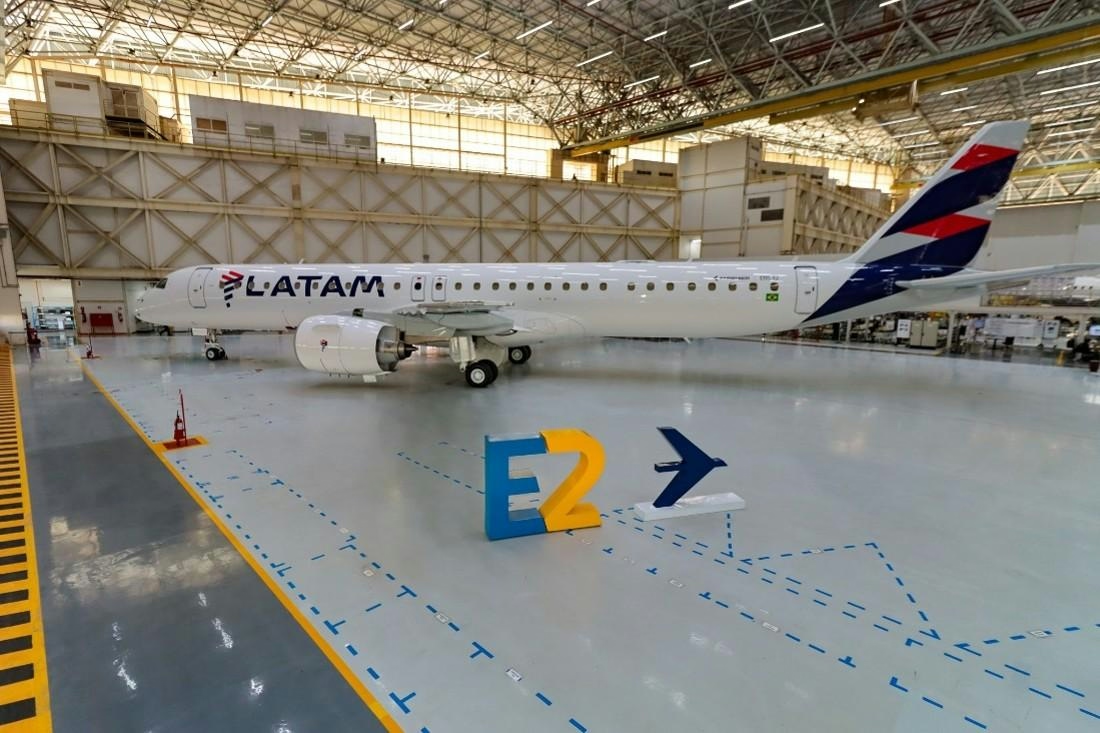
Airbus Aims to Align Production and Deliveries Ahead of Second Half Challenges in Production and Delivery Schedules Airbus is striving to realign its aircraft production and delivery schedules by the end of June, following recent disruptions caused by quality issues and administrative delays. The European aerospace leader has encountered significant obstacles, including an 11% decline in first-quarter commercial aircraft revenues and an 84% drop in adjusted earnings. Despite these setbacks, Airbus remains committed to its full-year target of delivering 870 aircraft. The primary challenge originated late last year when deviations in the thickness of forward fuselage panels were identified on A320neo-family jets, raising concerns about structural integrity. Chief Executive Guillaume Faury described the corrective process—replacing the affected panels—as “quite a bit of work,” but emphasized that progress is steady. He anticipates the issue will be “almost completely behind us” by the end of the first half. Faury explained that the resources required to replace the panels are substantial, necessitating a careful balance between expediting deliveries and managing repair workloads. “We’re trying to find a good balance between delivering to customers as quickly as possible and managing resources so we can repair multiple aircraft simultaneously,” he said. Impact of Administrative Delays and Inventory Build-Up In addition to the panel issue, an administrative delay hindered the transfer of nearly 20 aircraft to China, causing a “desynchronisation” between production and deliveries, according to Faury. He noted that China represents a significant market, and the delay of almost 20 aircraft in a single quarter, particularly the first, had a notable impact. Airbus’s financial disclosures revealed that inventories increased by €5.2 billion in the first quarter, reaching €46.9 billion, largely due to the hold-up in China. Deliveries to the Chinese market have since resumed. Faury highlighted that the inventory build-up reflects ongoing production ramp-up efforts. However, he acknowledged that the delivery schedule remains dependent on engine shipments from Pratt & Whitney. The number of engines Pratt & Whitney is set to deliver this year remains “frozen and stable,” forming the basis for Airbus’s annual delivery target. While disagreements persist between Airbus and Pratt & Whitney in other areas, the engine delivery count for the year is not among them. Outlook for the Coming Months Although Airbus is experiencing another year of backloaded deliveries, Faury expressed confidence that resolving the Chinese administrative issues and advancing panel repairs will help restore balance. “We believe we should be reasonably back to where we should have been by the end of the first half,” he stated. He added that undelivered aircraft from the first quarter will be delivered in the second quarter, in addition to the planned deliveries for that period. Airbus continues to monitor geopolitical developments in the Middle East for any potential operational impacts and remains focused on achieving targeted production rates across its aircraft models. Barring unforeseen disruptions, the company expects to have the “vast majority” of affected aircraft delivered and production and deliveries resynchronized by the end of June.
Safe skies and smart systems: The DIALOG vision for human-AI teaming

Safe skies and smart systems: The DIALOG vision for human-AI teaming

Safe Skies and Smart Systems: The DIALOG Vision for Human-AI Teaming As global air traffic continues to increase and the aviation industry faces growing sustainability challenges, technological innovation has become indispensable. Artificial intelligence (AI) and automation offer the potential to optimize flight routes, reduce fuel consumption, and enhance airspace capacity. However, in the safety-critical domain of Air Traffic Management (ATM), the integration of AI extends beyond technical considerations; it fundamentally involves fostering human trust, ensuring safety, and enabling effective collaboration between humans and machines. The EU-funded DIALOG project addresses these challenges by uniting leading research institutions, academic partners, and Air Navigation Service Providers, including SINTEF, Deep Blue, DSNA, ONERA, Radboud University, and DFS. Together, they are developing the Teamwork Assistant, an AI-driven support system designed to augment rather than replace human air traffic controllers. Human-AI Teaming: A Human-Centered Approach Unlike traditional automation systems that often require humans to conform to inflexible algorithms—potentially diminishing situational awareness and increasing cognitive load—DIALOG adopts a human-centered, operationally grounded methodology. The project aims to tailor AI capabilities to complement human strengths and limitations, thereby preserving the critical decision-making skills of air traffic controllers. Central to this approach are principles of transparency and reliability, ensuring that controllers can comprehend the AI’s actions, reasoning, and objectives. This clarity fosters trust and facilitates efficient teamwork. Human agency and accountability remain paramount; operators retain ultimate control and the ability to override or adjust AI recommendations, maintaining responsibility for final decisions. Furthermore, the AI system is designed to develop shared mental models with controllers, adapting to their understanding of the airspace and providing contextually relevant support rather than imposing machine-centric workflows. Validation and Early Outcomes In March 2026, the DIALOG Teamwork Assistant underwent rigorous validation involving licensed air traffic controllers operating within realistic simulation environments. Led by Deep Blue’s human factors specialists, these trials evaluated the system’s technical performance, its impact on cognitive workload, and collected direct feedback from end-users. Preliminary findings have been encouraging. Controllers reported that the Teamwork Assistant helped sustain their focus, alleviated mental fatigue during repetitive tasks, and enhanced their confidence when managing complex decision-making scenarios. Addressing Broader Challenges in AI Integration Despite these promising developments, the integration of AI into ATM raises broader concerns. Balancing human involvement with increasingly autonomous AI systems presents complex questions regarding accountability and safety. The sector must also confront risks such as cyber threats, economic disruption, and the concentration of power within technological infrastructures. Market dynamics are evolving rapidly in response. Investment in AI-driven aviation technologies is accelerating, prompting the creation of new economic and social frameworks to manage this transition. Concurrently, competitors are advancing smart systems and augmented reality (AR) technologies. Companies such as Apple, Snap, Warby Parker, and Google are pioneering AI-powered smart glasses and AR features, reflecting a wider trend toward intelligent, context-aware support tools across multiple industries. Looking Ahead The DIALOG project embodies a balanced vision for the future of aviation, one that harnesses AI’s transformative potential while maintaining human expertise and oversight at its core. As the aviation sector continues to evolve, ensuring safe, accountable, and collaborative human-AI teaming will be essential—not only for the industry itself but also for the broader adoption of smart systems throughout society.
line