
Orchestrer les insights d’IA pour les transformer en actions

Tendances
Categories
Emirates A380 Makes Emergency Landing at JFK After Engine Shutdown
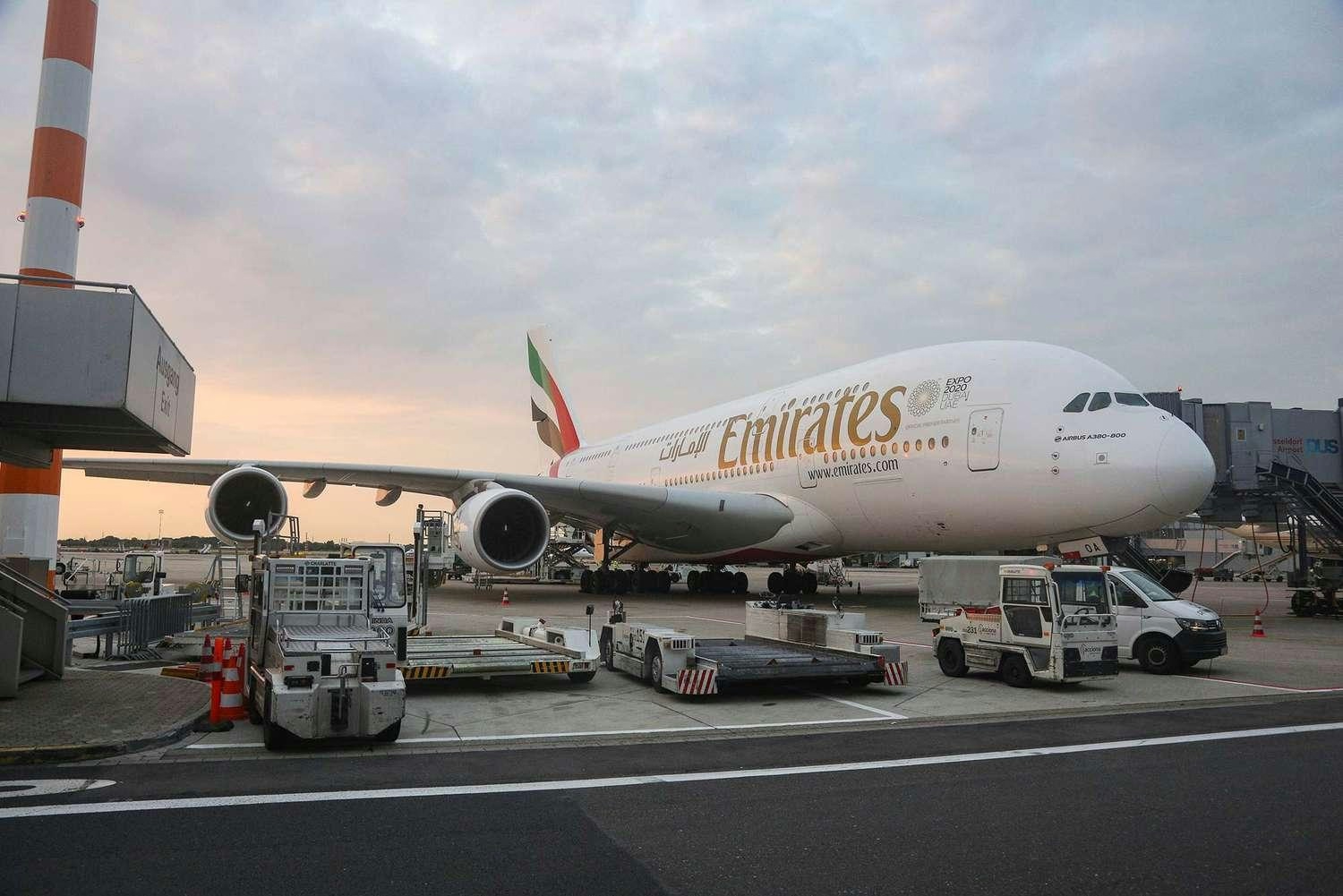
Emirates A380 Executes Emergency Landing at JFK Following Engine Shutdown
On June 28, 2025, Emirates flight EK203, operated by an Airbus A380-800 (registration A6-EUW), conducted a safe emergency landing at New York’s John F. Kennedy International Airport (JFK) after experiencing an in-flight shutdown of its number one engine. The aircraft, en route from Dubai International Airport (DXB) to JFK, encountered the failure of its far-left engine while flying over the northeastern United States.
Incident and Response
Despite the loss of one of its four engines, the flight crew maintained full control of the aircraft, ensuring the safety of all 450 passengers and crew aboard. The pilots promptly declared an emergency with Boston Center, before coordination was transferred to New York Approach. Air traffic controllers guided the aircraft toward JFK, clearing it to land on runway 22L, the airport’s longest runway, as requested by the crew.
At the time of the incident, EK203 was carrying approximately 24.8 tonnes of fuel, sufficient for about one hour of flight time. Throughout the descent and approach, the crew worked closely with air traffic control (ATC), providing critical information including fuel quantities and local pressure settings. While some observers questioned the necessity for pilots to convert units mid-flight, the crew’s swift and precise communication demonstrated their professionalism under pressure.
Operational and Industry Implications
The emergency landing underscored the vital importance of seamless collaboration between flight crews and ATC during in-flight crises. Controllers adhered to established emergency protocols, offering clear navigational guidance and continuous updates, which contributed significantly to the safe touchdown at 8:57 AM local time.
However, the incident also revealed minor communication lapses, notably ATC’s initial uncertainty regarding the exact location of the failed engine. Aviation experts have highlighted the need for enhanced training and improved reference tools for controllers, particularly when managing complex aircraft such as the Airbus A380. Such measures could help prevent similar oversights in future emergencies.
This event occurs amid heightened public scrutiny of airline safety, following recent high-profile engine issues involving other major carriers including American Airlines and Delta. Industry analysts suggest that incidents of this nature may challenge passenger confidence and prompt closer examination of Emirates’ maintenance protocols. The episode could also trigger insurance reviews and claims, while competitors might leverage the situation to emphasize their own safety records and operational reliability in marketing campaigns.
Despite these broader industry ramifications, the professionalism exhibited by both the Emirates flight crew and air traffic controllers ensured a safe outcome for all on board. The incident serves as a reminder of the critical importance of training, communication, and preparedness in maintaining aviation safety.

Etihad Airways Suspends Airbus A380 Flights on Key Route

Aditya Birla Group Seeks Approval for Aircraft Leasing in GIFT City

Qatar Airways Highlights Innovation and Connectivity at Arabian Travel Market 2026

Hong Kong's Five-Year Plan Includes Andrew Fan's Aircraft Parts Processing Hub Proposal

ACIA Aero Leasing Delivers ATR72-600 to Air Nostrum

RTX Appoints Jill Albertelli as Head of Pratt & Whitney

TAT Technologies Joins Beyond Aero Hydrogen Aircraft Program

AURAK Study Highlights Barriers to Air Taxi Adoption in Emerging Economies

Xiamen Air Selects Altitude for 787 Maintenance at Heathrow

Etihad and Swissport Extend Global Partnership
