Image

AeroGenie — Votre copilote intelligent.

Posez n'importe quelle question. Analysez tout. Agissez instantanément.

Tendances

Categories

Emirates’ Oldest A380 Marks 20 Years in Service
April 26, 2026By ePlane AI
Emirates’ Oldest A380 Marks 20 Years in Service
0
0
Emirates
Airbus A380
Aircraft Longevity

Emirates’ Oldest A380 Celebrates 20 Years in Service

DUBAI – Emirates continues to operate the world’s oldest active Airbus A380, registered as A6-EDF, which marked its 20th year in service in February 2026. The superjumbo first took to the skies on February 19, 2006, and now flies alongside more than 100 other A380s from Emirates’ hub at Dubai International Airport (DXB). As the seventh A380 ever built, A6-EDF holds the distinction of being the oldest superjumbo still carrying fare-paying passengers.

Despite its age, the aircraft is not expected to retire until the 2030s. It spent over five years in storage during and after the COVID-19 pandemic, a period that significantly reduced airframe wear compared to other jets of similar vintage. This extended downtime has been a crucial factor in Emirates’ decision to maintain the aircraft in active service, even as the aviation industry undergoes rapid technological advancements and evolving passenger expectations.

A Unique Journey to Emirates

A6-EDF did not join Emirates immediately after its maiden flight. According to Planespotters.net, Airbus delivered the aircraft to Emirates in December 2009, nearly four years after its first flight. Of the first six A380s produced, none remain in active passenger service today. The very first airframe (F-WWOW) serves as an Airbus test aircraft, while the others have been scrapped, stored, or preserved.

Since joining Emirates, A6-EDF has accumulated 45,087 flight hours across 7,407 cycles as of January 31, 2026. These figures are relatively modest for a widebody aircraft of its age, largely due to the prolonged storage period during the pandemic.

Five Years in Storage

The coronavirus pandemic grounded A6-EDF on March 24, 2020, when Emirates relocated it to Dubai World Central Airport (DWC). It remained there until December 2023 before being moved back to DXB, where it stayed until April 2025 prior to returning to active service. This extended period of inactivity has helped preserve the aircraft’s structural integrity, enabling Emirates to extend its operational lifespan.

Current Operations and Routes

As of April 2026, data from Flightradar24 indicates that A6-EDF operates a diverse range of routes from DXB. The aircraft serves short-haul flights to Jeddah, medium-haul sectors to Cairo and Bangkok—with onward service to Hong Kong—and long-haul destinations including Denpasar (Bali), Casablanca, London, and Paris. This operational flexibility highlights the strategic value Emirates derives from its extensive A380 fleet.

Cabin Configuration and Passenger Experience

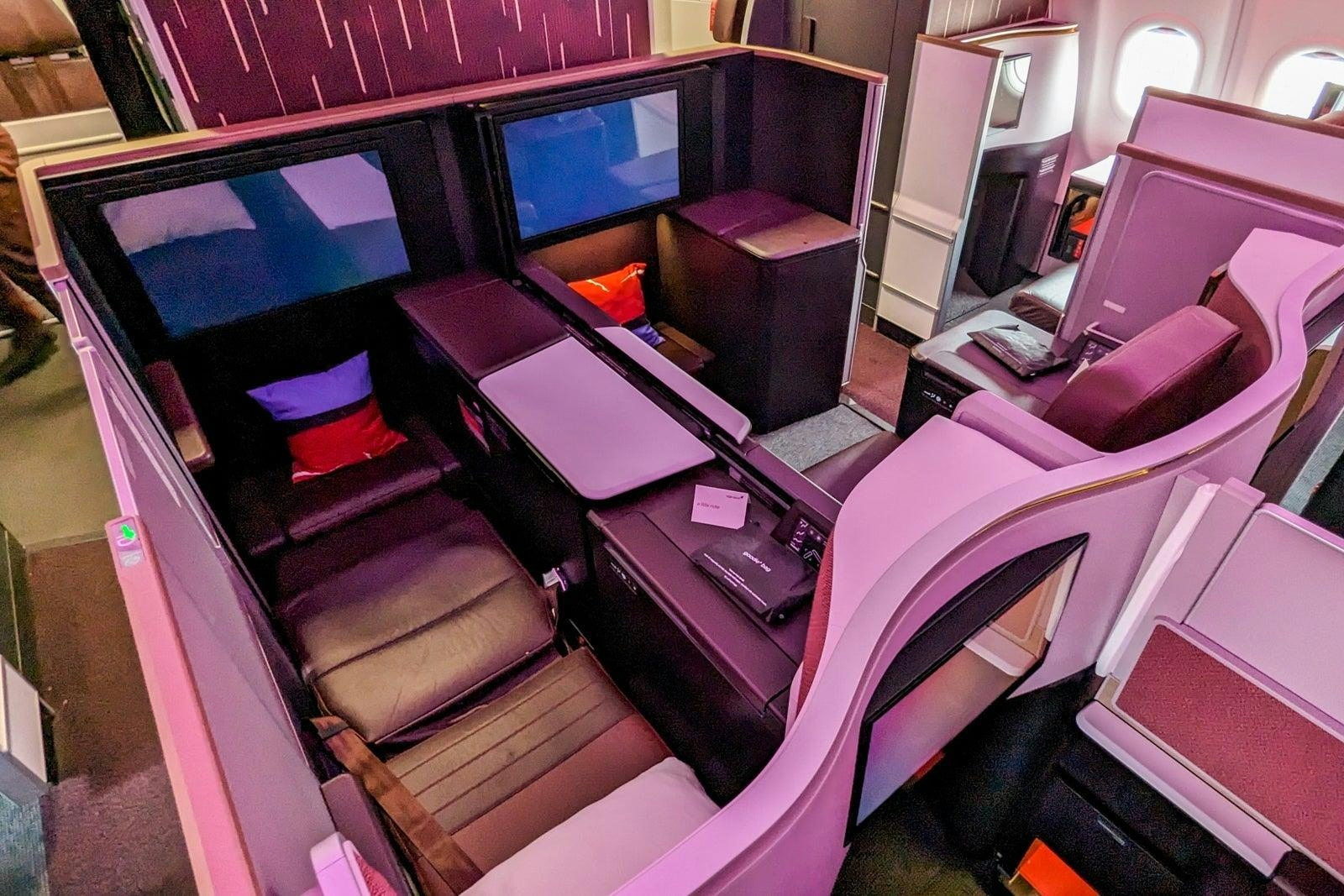
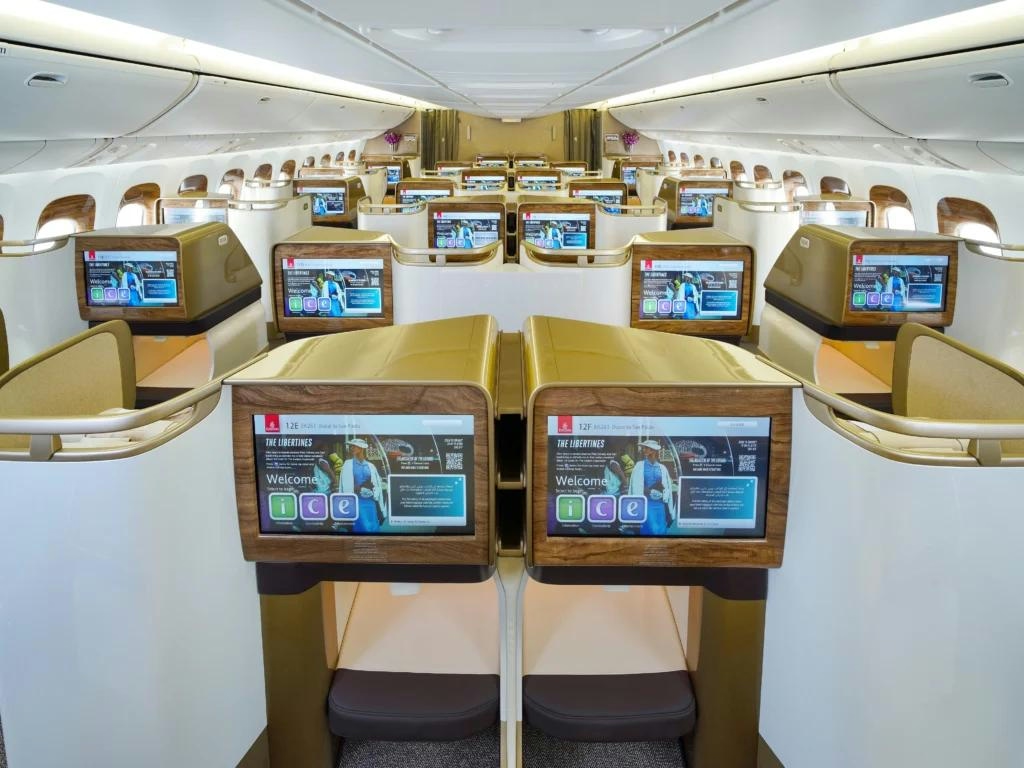
Emirates’ A380s accommodate between 468 and 615 passengers depending on configuration. A6-EDF is configured with 517 seats: 427 in economy class on the lower deck, complemented by 14 first-class suites and 76 business-class seats on the upper deck, offering a premium travel experience.

Looking Ahead: Challenges and Market Dynamics

As A6-EDF reaches two decades in service, Emirates faces emerging challenges related to maintenance costs and increasing regulatory scrutiny associated with aging aircraft. Additionally, competition from airlines operating newer, more fuel-efficient models may influence passenger preferences, potentially shifting demand toward modern cabins and enhanced onboard amenities. These market dynamics could prompt Emirates to accelerate investments in next-generation aircraft to sustain its competitive edge, even as it continues to demonstrate the enduring appeal of the A380.

More news
AIESL Nagpur MRO Facility Seeks EASA Approval for International Expansion

AIESL Nagpur MRO Facility Seeks EASA Approval for International Expansion

AIESL Nagpur MRO Facility Seeks EASA Approval for International Expansion Strategic Pursuit of EASA Certification AI Engineering Services Limited (AIESL), a government-owned Maintenance, Repair, and Overhaul (MRO) provider, is intensifying efforts to establish its Nagpur facility as a leading maintenance hub for international airlines. The company has initiated the process of obtaining European Aviation Safety Agency (EASA) certification for Airbus base maintenance at Nagpur. This certification is expected to significantly broaden AIESL’s access to the global market by enabling the servicing of European-registered Airbus aircraft, thereby extending its client base beyond those governed by India’s Directorate General of Civil Aviation (DGCA). Having transitioned from its former status as part of Air India to an independent government entity, AIESL regards the Nagpur facility as its flagship centre. The leadership’s strategic focus on expanding international business hinges on securing EASA approval, a critical credential in the competitive global MRO landscape. However, achieving this certification entails overcoming rigorous regulatory requirements, adopting advanced technological solutions, and navigating an increasingly competitive market environment. Industry trends highlight the growing importance of technological innovation in MRO operations, exemplified by companies such as Donecle, which has invested €10 million in AI-driven inspection technologies to enhance maintenance precision and efficiency. Established Expertise and Market Position The Nagpur facility boasts a robust operational record, having completed over 240 maintenance checks on wide-body Boeing 777 aircraft, alongside numerous services on Boeing 737 and Airbus A320 family jets. Consistently positive customer feedback has reinforced its reputation as a dependable MRO partner within Asia. This proven track record positions AIESL favorably to secure contracts from international carriers seeking reliable and high-quality maintenance services. Market analysts observe that obtaining advanced certifications like EASA approval could attract heightened investor interest in MRO facilities, as airlines and lessors increasingly prioritize partners with strong regulatory credentials. In response, competitors are likely to accelerate their own expansion initiatives and enhance service offerings to maintain competitiveness in the evolving sector. Expanding Capabilities and Notable Projects In addition to routine maintenance, AIESL is exploring the introduction of passenger-to-freighter (P2F) conversion capabilities for Boeing 777 aircraft at the Nagpur facility. This development aligns with the global surge in e-commerce, which is driving demand for cargo aircraft. The ability to perform complex P2F conversions would position Nagpur among a select group of Indian MRO centres equipped to undertake such advanced structural modifications. A significant recent achievement for the facility was the comprehensive restoration of Air India’s Boeing 777-300ER (VT-ALL), which had been grounded since February 2020. The overhaul, initiated in May 2025, involved the installation of over 3,000 new components and the completion of more than 4,000 maintenance tasks. Conducted under stringent DGCA supervision and with technical support from Boeing, the project underscored the facility’s commitment to rigorous compliance and engineering excellence. An AIESL official noted that the insights gained from the VT-ALL restoration are expected to further enhance maintenance protocols and operational standards at Nagpur. Outlook As AIESL advances its pursuit of EASA certification and invests in cutting-edge MRO capabilities, the Nagpur facility is well-positioned to emerge as a significant player in the international maintenance market. The combination of regulatory ambition, technological integration, and a strong operational record equips AIESL to meet the growing global demand for high-quality MRO services.
Garuda Indonesia Leases Widebody Aircraft for Hajj Operations

Garuda Indonesia Leases Widebody Aircraft for Hajj Operations

Garuda Indonesia Leases Widebody Aircraft for 2026 Hajj Operations Garuda Indonesia has commenced its 2026 Hajj operations by deploying a mixed fleet of owned and leased widebody aircraft to transport over 102,000 Indonesian pilgrims to Saudi Arabia. The national carrier is operating 15 widebody jets in total, comprising eight aircraft from its own fleet and seven leased units, servicing ten embarkation points across Indonesia. Fleet Composition and Leasing Details The leased aircraft include Airbus A330-300s operated by Thai AirAsia X, World2Fly Portugal, and World2Fly Spain, alongside an A330-900neo from Lion Air. According to Garuda’s CEO Glenny Kairupan, the airline’s Hajj fleet consists of six Boeing 777-300ERs, six A330-300s, and three A330-900neos. Flight tracking data from the initial departures confirms the active deployment of four leased aircraft: Thai AirAsia X’s HS-XTI, World2Fly Portugal’s CS-WFP, World2Fly Spain’s EC-KCP, and Lion Air’s PK-LET. Additionally, at least seven in-house aircraft—five Boeing 777-300ERs and two A330-900neos—were operational as of April 24, 2026. Garuda Indonesia, alongside Saudi Arabian Airlines (Saudia), remains one of the two carriers authorized to operate Indonesia’s Hajj flights. Outbound services to Jeddah and Madinah are scheduled from April 22 to May 21, with return flights planned between June 1 and June 30, 2026. While the airline has not disclosed specific terms of its leasing agreements, previous tender documents suggest a preference for damp lease contracts, which typically provide aircraft and crew but exclude full operational support. Market Context and Strategic Implications Garuda’s decision to augment its fleet through leasing reflects broader shifts in the global aviation market. In the United States, for example, American Airlines trails competitors Delta and United in expanding their widebody fleets, with the latter two carriers having over 100 widebody aircraft on order. This trend highlights the increasing strategic importance of widebody capacity in securing profitable long-haul routes, a factor likely influencing Garuda’s fleet planning. Regionally, the shortage of widebody aircraft in markets such as India—underscored by comments from IndiGo’s incoming chief executive—illustrates the challenges airlines face in acquiring suitable aircraft for peak demand periods like the Hajj. Meanwhile, Malaysia Airlines’ parent company has indicated no major changes to its fleet strategy despite ongoing instability in the Middle East, suggesting that Garuda’s leasing approach is primarily driven by operational requirements rather than geopolitical factors. Industry analysts observe that Garuda’s leasing strategy may prompt competitors to reevaluate their own fleet and leasing policies, potentially intensifying competition within the widebody leasing market. As demand for long-haul and charter services continues to grow, airlines in the region are expected to increasingly rely on flexible leasing arrangements to adapt to evolving market conditions and operational demands.
Six Injured as Swiss A330 Aborts Takeoff in Delhi Due to Engine Fire

Six Injured as Swiss A330 Aborts Takeoff in Delhi Due to Engine Fire

Six Injured as Swiss A330 Aborts Takeoff in Delhi Due to Engine Fire Emergency Takeoff Aborted Following Engine Fire In the early hours of April 26, a Swiss International Air Lines Airbus A330-300 operating flight LX147 from New Delhi to Zurich was compelled to abort its takeoff at Indira Gandhi International Airport after a fire erupted in the aircraft’s left engine. The incident occurred shortly after 1:00 a.m. local time on runway 28, prompting an emergency response that resulted in six passengers sustaining injuries during the subsequent evacuation. The aircraft, registered HB-JHK, was accelerating when the flight crew detected an anomaly in the No. 1 engine. Witnesses reported hearing a loud bang followed by visible smoke and flames emanating from the left engine or the adjacent landing gear area. The pilots executed a high-speed rejected takeoff at approximately 104 knots, successfully bringing the aircraft to a controlled halt on the runway. Evacuation and Response Onboard the flight were 228 passengers, including four infants, and 13 crew members. Following the aborted takeoff, the crew promptly assessed the situation and initiated an emergency evacuation using slides as a precautionary measure. Fire and rescue teams responded immediately, and a full airport emergency was declared. All passengers were evacuated safely; however, six individuals sustained injuries, mostly minor. At least two passengers suffered leg fractures and required hospital treatment. The injured were transported to local medical facilities, including Medanta Hospital, with many discharged after treatment. No injuries or fatalities were reported among the crew. Swiss International Air Lines issued an official statement expressing regret over the disruption and confirming the activation of a crisis task force. Technical experts were dispatched to Delhi to inspect the aircraft and collaborate with Indian authorities, including the Directorate General of Civil Aviation (DGCA), as part of an ongoing investigation. Passengers affected by the incident were provided with hotel accommodations and rebooking options for their onward journeys. Operational Impact and Investigation The Airbus A330 remained on runway 28 for post-incident inspection, temporarily closing the runway. Airport operations resumed shortly thereafter without significant long-term disruption. Weather conditions at the time were hazy but with good visibility and are not believed to have contributed to the incident. This event follows a recent similar occurrence involving a Delta Air Lines Airbus A330-300 in Brazil, where a Pratt & Whitney PW4000 engine failure during takeoff prompted investigations by both U.S. and Brazilian authorities. High-speed rejected takeoffs on widebody aircraft are rare but represent a critical component of pilot training. The swift and decisive actions of the LX147 flight crew are credited with averting a potentially more serious outcome. As of April 27, the precise cause of the engine failure remains under investigation by Swiss International Air Lines and the DGCA.
NASA Takes Delivery of Modified Boeing 777 Flying Laboratory Ahead of Schedule

NASA Takes Delivery of Modified Boeing 777 Flying Laboratory Ahead of Schedule

NASA Takes Delivery of Modified Boeing 777 Flying Laboratory Ahead of Schedule Advanced Modifications Enhance Research Capabilities NASA has officially taken delivery of its newly modified Boeing 777-200ER flying laboratory at the Langley Research Center in Hampton, Virginia, marking a significant enhancement to the agency’s airborne research capabilities. The aircraft, previously operated by Japan Airlines as JA704J, arrived ahead of schedule following a successful check flight and a three-hour ferry from Waco, Texas. This widebody jet underwent extensive structural modifications at L3Harris’s Waco facility, in collaboration with Yulista, employing advanced engineering techniques such as 3D scanning and specialized installation tooling to accelerate the conversion process. The modifications involved drilling nearly 35,000 precision holes in the fuselage to accommodate remote-sensing instruments, enlarging cabin windows to fit scientific sensors, and installing new wiring harnesses to connect operator workstations with sophisticated equipment including LIDAR and infrared imaging spectrometers. Additional upgrades encompassed new power, data, and communications systems, alongside dedicated research stations designed to support complex scientific missions. While L3Harris and Yulista focused on the structural transformation, NASA and Huntington Ingalls Industries (HII) are now integrating the research stations and upgrading the cabin wiring. Yulista’s expertise in modernization and mission support was instrumental in ensuring the aircraft meets the rigorous demands of airborne scientific research. A New Era for NASA’s Airborne Science Fleet Registered as N577NA, the 777-200ER replaces NASA’s retired Douglas DC-8 and becomes the largest airborne research platform in the agency’s fleet. This new aircraft represents a substantial leap in capability, accommodating between 50 and 100 onboard operators—more than double the DC-8’s typical complement—and offering a useful payload capacity of 75,000 pounds, compared to the DC-8’s 30,000 pounds. Mission endurance is also significantly enhanced, with the 777 capable of flying up to 18 hours at a maximum altitude of 43,000 feet, enabling longer and more comprehensive data-gathering campaigns. NASA acquired the aircraft in December 2022 for under $30 million after it had been stored in Southern California since 2020. Its inaugural science mission is scheduled for January 2027 as part of the North American Upstream Feature-Resolving and Tropopause Uncertainty Reconnaissance Experiment (NURTURE). This campaign aims to investigate high-impact winter weather events across North America, Europe, Greenland, and the Arctic and North Atlantic Oceans. Implications for Aerospace and Research Communities As NASA prepares the 777 for operational service, the agency faces the challenge of ensuring the aircraft complies with all safety and operational standards required for complex research missions. The delivery has attracted interest from other research institutions considering similar airborne science platforms. Meanwhile, competitors in the aircraft conversion market, such as Mammoth Freighters—which is developing converted 777 freighters—may respond by positioning their own solutions for research and cargo applications. NASA’s initiative is expected to drive further advancements in aviation technology and propulsion, potentially influencing the broader aerospace sector and establishing new benchmarks for airborne research platforms worldwide.
Why the Boeing 737 Lacks Landing Gear Doors

Why the Boeing 737 Lacks Landing Gear Doors

Why the Boeing 737 Lacks Landing Gear Doors The Boeing 737, one of the most recognizable single-aisle aircraft globally, features a conventional landing gear configuration with two wheels on the nose gear and two sets of dual wheels on the main gear. While this arrangement is broadly similar to competitors such as the Airbus A320, a notable distinction lies in the absence of protective landing gear doors covering the main gear wells when retracted. This design choice is unusual in modern commercial aviation, where most airliners—including Boeing’s own 757—employ gear doors to enhance aerodynamic efficiency and shield the landing gear. Design Origins and Operational Considerations The omission of main landing gear doors on the 737 can be traced back to its development in the 1960s. Boeing engineered the aircraft primarily for short-haul routes serving smaller, less developed airports. The emphasis was on creating a robust and easily maintainable aircraft. By eliminating the main gear doors, Boeing reduced the number of moving components susceptible to failure, thereby simplifying maintenance—a critical advantage for operations at remote airfields with limited repair infrastructure. Contrary to common assumptions, the 737’s low ground clearance was not the principal factor behind this design decision. Other low-riding jets of the era, such as the BAC 1-11, incorporated gear doors. Instead, both the aircraft’s low stance and the absence of doors were driven by a strategic focus on operational simplicity and reliability. Aerodynamic Trade-offs and Evolution of the 737 Landing gear doors contribute to aerodynamic refinement by reducing drag and improving fuel efficiency, particularly during cruise. However, they also add weight to the aircraft. For the original 737-100 and 737-200 models, designed for short-haul missions, the marginal fuel savings from improved aerodynamics were outweighed by the additional weight penalty. Consequently, Boeing prioritized weight reduction and mechanical simplicity over incremental efficiency gains. Over nearly six decades, the 737 has transformed from a regional workhorse into a mainline jet capable of carrying up to 200 passengers and operating transatlantic flights. Despite this evolution, the fundamental design—including the exposed main landing gear—has remained largely unchanged. While Airbus introduced gear doors on its clean-sheet A320 to optimize efficiency for longer routes, Boeing has opted to incrementally update the 737 platform rather than undertake a comprehensive redesign, balancing considerations of cost, certification complexity, and market demand. Industry Scrutiny and Market Impact The exposed landing gear design has attracted scrutiny within aviation safety discussions, particularly following incidents such as a tail-strike involving a United Airlines 737-900ER. Investigations attributed the event to pilot error during landing flare rather than the landing gear configuration itself. Nonetheless, the absence of gear doors continues to provoke debate among industry experts. Market responses to the 737’s design have been varied. Some carriers, including Air Algérie, have continued to invest in the latest 737 MAX variants to expand their fleets, even as certification processes for new derivatives remain underway. While competitors have largely refrained from directly addressing this design feature, the lack of landing gear doors remains a distinctive characteristic of the 737 in a highly competitive single-aisle market. The Boeing 737’s lack of landing gear doors thus reflects a legacy design philosophy centered on simplicity, weight savings, and ease of maintenance. Although this choice has come under renewed examination as the aircraft’s operational role has expanded, it endures as a defining element of the world’s best-selling commercial jetliner.
Aircraft Smoke Detection and Fire Suppression Systems Expected to Grow Through 2035 Amid Fleet Modernization and Safety Regulations

Aircraft Smoke Detection and Fire Suppression Systems Expected to Grow Through 2035 Amid Fleet Modernization and Safety Regulations

Aircraft Smoke Detection and Fire Suppression Systems Set for Sustained Growth Through 2035 The global market for aircraft smoke detection and fire extinguishing systems is anticipated to experience steady expansion through 2035, propelled by ongoing fleet modernization, increasingly stringent safety regulations, and the gradual replacement of legacy halon-based extinguishing agents. This outlook is detailed in the latest report from IndexBox, which highlights the critical role these systems play across all aircraft categories, including commercial airliners, military platforms, business jets, helicopters, and unmanned aerial vehicles. These systems encompass a range of components such as smoke and overheat detection sensors, fixed and portable fire suppression units, alarm control panels, and integration hardware. Their deployment is mandatory, reflecting the aviation industry's commitment to safety. The market is characterized by high entry barriers and rigorous certification requirements imposed by regulatory authorities like the Federal Aviation Administration (FAA) and the European Union Aviation Safety Agency (EASA). The competitive landscape is divided between full-system integrators competing for original equipment manufacturer (OEM) contracts and specialized component suppliers focusing on the aftermarket. Market Growth Drivers and Regional Trends Between 2026 and 2035, the aircraft smoke detection and fire suppression systems market is projected to grow at a compound annual growth rate (CAGR) of 4.8%, with the market index increasing from 100 in 2025 to 158 by 2035. This growth is underpinned by several key factors. First, global air passenger traffic is expected to rise by 3.5 to 4.0 percent annually, driving demand for over 40,000 new aircraft deliveries during this period. Each new aircraft requires integrated smoke detection and fire suppression systems, thereby fueling market expansion. Regulatory mandates also play a significant role. Enhanced fire protection requirements for cargo compartments, particularly those introduced by the FAA, alongside the global phase-out of halon 1301 and 1211 under the Montreal Protocol, are stimulating retrofit and maintenance, repair, and overhaul (MRO) activities. Additionally, sustained defense budgets across the United States, Europe, and the Asia-Pacific region are supporting upgrades to fire safety systems in military aircraft, including fighter jets, transport planes, and helicopters. Regionally, the Asia-Pacific market is expected to lead growth, accounting for more than 35 percent of global demand by 2035. This surge is driven by fleet expansions in China, India, and Southeast Asia. North America and Europe remain mature but stable markets, with a focus on replacement and technological upgrades. Notably, Europe’s business aviation fleet is projected to grow at an annual rate of 2.4 percent, reflecting broader market momentum. Latin America and the Middle East & Africa are identified as regions with moderate growth potential. Challenges and Industry Responses Despite the positive outlook, the sector faces several challenges. Manufacturers must continuously adapt to evolving safety standards and certification requirements, which can be complex and resource-intensive. Integrating advanced detection and suppression systems into older aircraft presents technical and financial difficulties. Furthermore, supply chain constraints, particularly for specialty sensors and semiconductor components, coupled with the high costs associated with certifying new technologies, may restrict market growth. In response to these challenges, industry players are increasing investments in safety technologies and pursuing collaborations with technology providers to enhance their product offerings. There is a notable emphasis on developing next-generation clean-agent extinguishing systems that comply with both regulatory and environmental standards, reflecting the sector’s commitment to innovation and sustainability. Outlook The baseline scenario projects steady, compliance-driven growth for the aircraft smoke detection and fire extinguishing systems market through 2035. As airlines, military operators, and business aviation providers continue to modernize their fleets and respond to stricter safety mandates, demand for advanced fire detection and suppression solutions is expected to remain robust. This environment presents significant opportunities for manufacturers, system integrators, and MRO providers worldwide.
US Air Force Uses AI to Reduce Flight Test Planning Time

US Air Force Uses AI to Reduce Flight Test Planning Time

US Air Force Employs AI to Accelerate Flight Test Planning Enhancing Agility in Military Aviation In the evolving landscape of modern air warfare, technological superiority increasingly hinges not only on advanced aircraft but also on the speed at which new systems can be tested, validated, and deployed. Recognizing this imperative, the US Air Force has turned to artificial intelligence to streamline one of the most time-consuming stages in capability development: the extensive documentation required prior to flight testing. At the Air Force Test Center, engineers have introduced the AI Flight Test Assistant (AFTA), a generative AI platform designed to significantly reduce the preparation time for flight tests. Traditionally, the process demands the creation of numerous documents—including test plans, hazard assessments, evaluation frameworks, and technical reports—before any aircraft can take to the skies. While these documents are essential for ensuring safety and data integrity, they have historically slowed the overall testing timeline. Transforming Test Preparation with AI AFTA addresses this bottleneck by producing initial drafts of necessary documents within minutes rather than days, thereby substantially shortening the “time-to-test,” a critical metric in defense planning. Maj. Gen. Scott Cain, commander of the Air Force Test Center, emphasized the importance of speed in maintaining a strategic advantage: “Our ability to test, learn, and adapt faster than potential adversaries allows us to deliver credible capability to the warfighter. Tools that help our engineers move faster while maintaining rigorous testing standards are critical to that effort.” The system’s impact is already tangible. In one case, an operational tester reduced a task that previously required over 20 hours to less than two hours, with minimal initial human input. Another complex cost-estimation workflow was developed in under ten minutes and now generates results in less than a minute. Operating seamlessly in the background, AFTA frees engineers to concentrate on other critical tasks while automating document generation. Jordan Conner, a lead on the program, described AFTA as a cloud-based tool that leverages generative AI to augment labor-intensive test and evaluation processes. Initially conceived as a document generator, the platform has evolved into a versatile, no-code workflow editor. This advancement allows engineers to create customized, automated processes tailored to their organizational needs by uploading reference materials and defining structured workflows—an important development in a domain where consistency and traceability are paramount. Challenges and Broader Implications Despite its promise, the integration of AI into flight test planning presents challenges. The Air Force must navigate the complexities of managing vast data sets, overcoming institutional resistance to change, and ensuring robust cybersecurity measures to safeguard sensitive information. Addressing these issues is essential for fully harnessing the potential of AI-driven solutions. The success of AFTA has attracted attention across the defense sector, likely prompting increased interest from other contractors in AI-powered tools. Concurrently, competitors may accelerate their own AI initiatives to maintain technological parity. Recent advancements, such as Northrop Grumman’s B-21 Raider, highlight the expanding role of AI in enhancing long-range strike capabilities and suggest a future in which artificial intelligence is integral to military aviation. As the US Air Force continues to refine and expand the capabilities of AFTA, this initiative represents a significant stride toward faster, more efficient, and more secure flight test planning, with the potential to reshape the pace of innovation in military aviation.
Air India Adopts AI to Improve Operational Efficiency and Cut Costs

Air India Adopts AI to Improve Operational Efficiency and Cut Costs

Air India Adopts AI to Improve Operational Efficiency and Cut Costs Since its acquisition by the Tata Group in January 2022, Air India has embarked on a comprehensive technological transformation aimed at revitalizing its operations. Central to this strategy is the adoption of artificial intelligence (AI), which the airline views as a critical tool to enhance operational efficiency, elevate customer service, increase revenues, and reduce costs. This shift marks a significant departure from the airline’s previous state, which was characterized by minimal technological infrastructure. Technological Overhaul and AI Integration Satya Ramaswamy, Chief Digital & Technology Officer at Air India, emphasized the rapid pace of the airline’s digital overhaul. At the time of privatization, Air India had “practically nothing” in terms of modern technology, a factor that allowed the company to implement new AI-driven systems without the constraints of legacy platforms. Among the most notable advancements is the deployment of a generative AI-based virtual agent, AI.g, which now manages approximately half of all customer interactions. This innovation has led to significant reductions in contact center expenses. Beyond customer service, AI applications have been extended to employee support, engineering, and operational functions. Ramaswamy noted that the airline collaborated closely with its executive leadership to identify AI initiatives that prioritize cost reduction tailored to the specific needs of each department. Additionally, AI has been instrumental in ensuring regulatory compliance. For instance, when Air India introduced revised Flight Duty Time Limitations (FDTL) for pilots, generative AI was employed to validate the alignment between Directorate General of Civil Aviation (DGCA) regulations, internal policies, and software implementations. This process, previously unattainable, enhanced accuracy and completeness while generating comprehensive test cases to prevent violations. The airline currently utilizes three categories of AI: predictive, generative, and agentic. Ramaswamy, who holds multiple patents, revealed that Air India is exploring agentic coding to accelerate in-house software development, further driving down operational costs. Challenges and Industry Context Despite the promising benefits, Air India’s AI adoption faces several challenges. Integrating new technologies with existing systems, safeguarding data privacy and security, and managing workforce transitions remain significant obstacles. Employee resistance to new workflows is also a concern. Public reception has been mixed, with some passengers expressing skepticism about AI’s expanding role in customer service. Meanwhile, competitors are likely to intensify their own AI initiatives to maintain market competitiveness. The broader industry landscape reflects the complexities of AI integration. For example, Meta’s recent decision to cut 8,000 jobs while investing heavily in AI underscores the delicate balance between cost reduction and technological advancement. In the hospitality sector, Marriott’s approach in India has focused on augmenting staff capabilities through AI rather than replacing personnel, illustrating a cautious and measured adoption of new technologies. As Air India advances its digital transformation, its experience underscores both the potential and the challenges inherent in leveraging AI to enhance efficiency and redefine the future of aviation in India.
Ryanair CEO Warns Wizz Air and airBaltic May Struggle This Winter

Ryanair CEO Warns Wizz Air and airBaltic May Struggle This Winter

Ryanair CEO Issues Warning Over Winter Challenges for Wizz Air and airBaltic Ryanair’s Chief Executive Officer, Michael O’Leary, has issued a stark warning regarding the financial stability of two prominent European carriers, Wizz Air and airBaltic, as they confront escalating jet fuel prices and limited fuel hedging ahead of the winter season. O’Leary emphasized that these factors could severely disrupt their operations and threaten their viability in the coming months. Fuel Crisis and Financial Vulnerability O’Leary, known for his candid assessments, revealed that Ryanair has already incurred an additional $50 million in jet fuel expenses this month alone. He cautioned that the situation could worsen if fuel shortages emerge and oil prices continue to rise, driven by geopolitical tensions in the Middle East and potential disruptions in the Strait of Hormuz. While Ryanair has hedged approximately 80% of its fuel requirements at $67 per barrel through March next year, the remaining 20% is exposed to volatile market prices, which have surged beyond $150 per barrel. This volatility places significant financial strain on airlines, many of which are unable to sustain such elevated costs without passing them on to passengers through higher airfares and fuel surcharges. O’Leary specifically identified Wizz Air, the Hungarian ultra-low-cost carrier, and Latvia’s airBaltic as particularly vulnerable due to their insufficient fuel hedging strategies. He warned that both airlines risk depleting their cash reserves by the end of the fourth quarter if oil prices remain at current levels. “If oil stays at these levels, two or three European airlines in October or November could go bankrupt like Wizz Air, which wants to sue me but won’t have enough time to do so, and airBaltic,” O’Leary stated, implying that a reduction in competition could ultimately benefit Ryanair. Expansion Amid Uncertainty This warning comes as both Wizz Air and airBaltic continue to pursue aggressive expansion plans. Wizz Air recently announced new routes from Maastricht Aachen Airport and Eindhoven Airport, while airBaltic has introduced a new service connecting Groningen Airport Eelde to Tenerife. Despite these growth initiatives, O’Leary’s remarks cast doubt on the sustainability of such expansions given the mounting fuel costs and uncertain liquidity positions. The broader airline industry is already grappling with the repercussions of the Middle East conflict, which has driven operational costs higher and contributed to a decline in airline share prices. Ryanair itself has experienced a drop in its share price from €35 ($37) to €25 ($29) in recent months. O’Leary warned that if fuel supplies tighten further in the coming months, the financial pressure on airlines could intensify, potentially forcing carriers unable to absorb these costs to suspend operations. Industry data highlights the scale of the challenge facing Wizz Air and airBaltic. Wizz Air operates a fleet of 228 aircraft across its subsidiaries, while airBaltic continues to expand its network from its base in Riga. However, without adequate fuel hedging and with cash reserves under strain, both airlines may face a difficult and turbulent winter ahead.
KQ Manager Dismissal Highlights Changes in Engine Maintenance Contracts

KQ Manager Dismissal Highlights Changes in Engine Maintenance Contracts

KQ Manager Dismissal Highlights Shifts in Engine Maintenance Contracts Legal Dispute Reveals Internal Tensions The recent dismissal of David Shellany, a senior manager within Kenya Airways’ (KQ) technical and engineering department, has brought to light significant internal conflicts regarding the procurement of engine maintenance services. Legal proceedings surrounding Shellany’s termination have exposed deeper challenges within the national carrier, particularly concerning the management of high-value maintenance, repair, and overhaul (MRO) contracts—one of the largest operational expenses for any commercial airline. Court documents reveal that Shellany’s dismissal was closely tied to disagreements over the selection process for external service providers responsible for maintaining KQ’s aircraft engines. Shellany contends that his professional recommendations were overlooked during the procurement process, suggesting that the dispute extends beyond personnel issues to fundamental disagreements over the airline’s maintenance strategy. Kenya Airways, however, asserts that the dismissal was conducted in accordance with established disciplinary procedures and was justified based on performance and organizational alignment, rather than the specifics of the maintenance tender. Industry Trends and Operational Challenges This legal conflict emerges amid a global shift in how airlines approach engine maintenance, driven by rising fuel costs and fluctuating demand. Airlines worldwide are increasingly adopting maintenance contracts that provide greater cost predictability and operational flexibility. For instance, South American carriers such as Azul have embraced flight-hour-based maintenance agreements, which link costs directly to aircraft usage. These contracts, often awarded to original equipment manufacturers or specialized engineering firms, aim to reduce fleet downtime and enhance preventive maintenance. Moreover, vertical integration within engine platforms is gaining momentum, enabling airlines to improve coordination, reduce fragmentation, and utilize data analytics for more effective lifecycle management. Despite these advantages, such strategies carry inherent risks, including challenges in contract execution, project design complexities, and vulnerability to shifting market conditions. Kenya Airways has historically faced difficulties balancing operational costs with the imperative to maintain stringent safety and engineering standards. The technical department plays a critical role in ensuring the airworthiness of the fleet through both scheduled and unscheduled maintenance. Disputes over engine maintenance contracts, therefore, have immediate implications for flight schedules and overall reliability. Broader Implications for Kenya Airways The ongoing legal battle coincides with the Kenyan government’s exploration of measures to stabilize the national carrier, including potential partnerships and the privatization of certain business segments. Analysts observe that conflicts such as this underscore the complexities inherent in managing state-linked corporations with substantial procurement budgets. They also highlight the pressing need for transparent and adaptable contract management frameworks. As the court case unfolds, it not only reflects internal governance challenges at Kenya Airways but also illustrates the broader pressures confronting airlines as they adapt to a rapidly evolving maintenance landscape.
line