
Orchestrer les insights d’IA pour les transformer en actions

Tendances
Categories
Engineer Dismissed After Rebooting Singapore Airlines Plane, Causing 17-Minute Delay
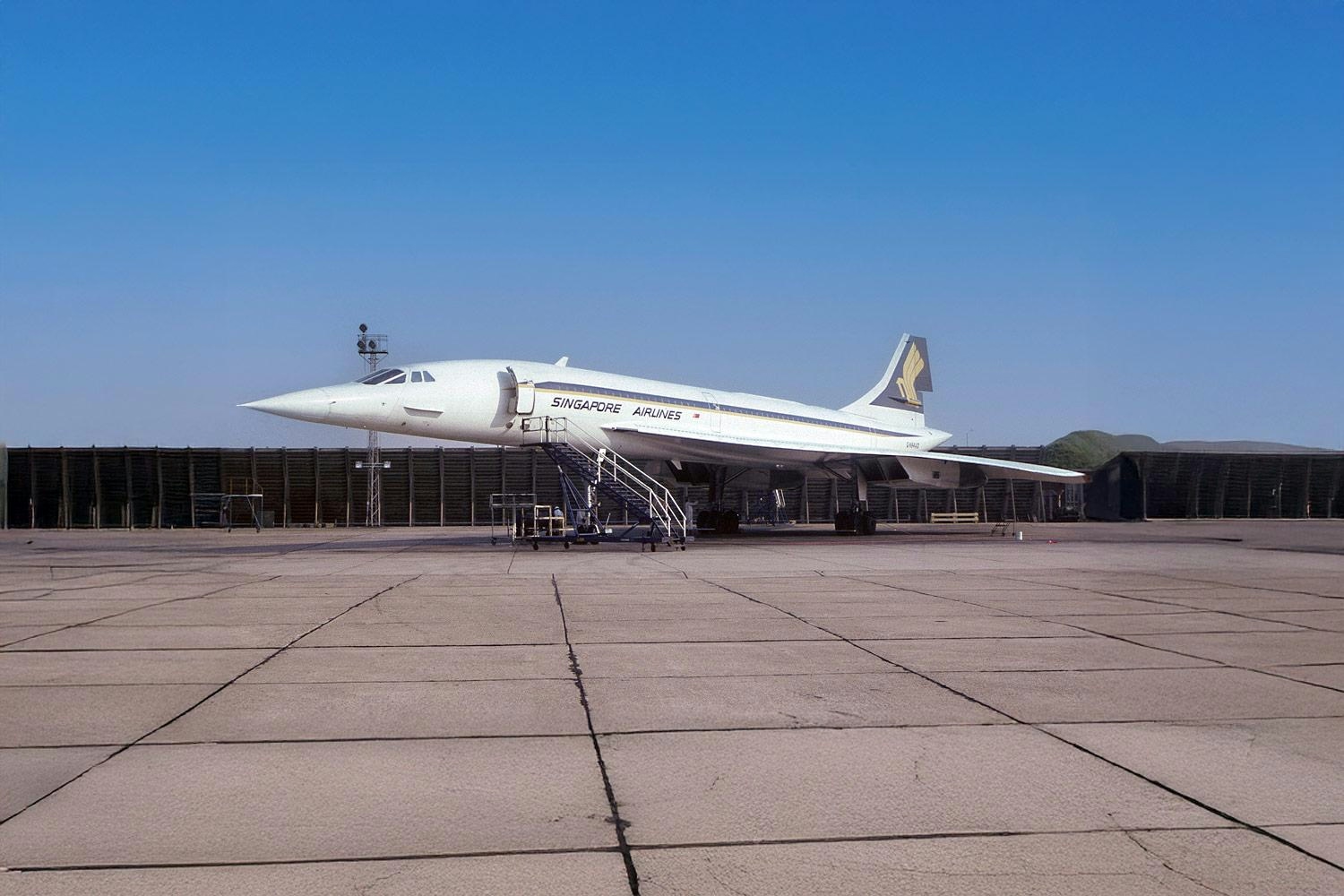
Engineer Dismissed Following Reboot of Singapore Airlines Aircraft, Causing Departure Delay
An aircraft maintenance engineer has lost an unfair dismissal claim after being terminated for rebooting a Singapore Airlines plane prior to take-off, an action that resulted in a 17-minute delay. The case has sparked debate over aviation safety protocols and operational standards, raising concerns about regulatory oversight and company procedures within the industry.
Background and Incident Details
The engineer, based in Brisbane and employed full-time by Heston MRO from May 2023 to December 2025, was responsible for line maintenance on international carriers, including Singapore Airlines. In November of the previous year, multiple fault diagnostic messages appeared before a scheduled flight. After consulting with the pilots, the engineer decided to perform a full power cycle—shutting down and restarting the aircraft’s systems. This reboot cleared the faults but delayed the flight’s departure by 17 minutes.
Singapore Airlines contended that the reboot was unnecessary for the specific fault encountered and argued that the engineer acted based on “experience and instinct” rather than following established protocols. The airline cited customer dissatisfaction and subsequently revoked the engineer’s maintenance authority, attributing the decision to “mishandling incidents.”
Dispute Over Procedures and Investigations
The engineer, who has over 25 years of experience in the aviation industry, defended his decision as a routine procedure, likening the reboot to resetting a phone to clear errors. He maintained that his actions reduced the pilots’ workload, prevented further delays, and contributed to flight safety.
An initial internal investigation conducted by Heston MRO, endorsed by senior leadership including the chief executive, concluded that the engineer’s actions were “standard practice” and aligned with procedural guidelines. However, Singapore Airlines rejected this report, alleging bias. A subsequent review by Heston MRO’s newly appointed head of quality and safety reversed the earlier findings, describing the engineer’s conduct as a “reckless violation.” This revised report was not disclosed to the engineer prior to his dismissal.
During the dismissal hearing, Heston MRO’s chief executive, Asta Zirlyte, expressed concerns about the engineer’s “attitude” and failure to adhere to protocols. Zirlyte acknowledged that her judgment was partly influenced by the engineer’s absence from a meeting during his rostered days off. She also admitted that losing Singapore Airlines as a client would have commercial repercussions for the company but denied that the investigation’s outcome was swayed by the desire to preserve the business relationship.
Fair Work Commission Ruling and Industry Implications
The Fair Work Commission ultimately upheld the dismissal, noting that the engineer had also been undertaking additional shifts with a competitor, which factored into the decision.
This incident has prompted wider scrutiny of safety procedures and training standards within aviation maintenance. Industry experts warn that such cases may attract heightened regulatory attention and potential legal challenges. The negative publicity surrounding the event could affect Singapore Airlines’ market performance, with analysts forecasting a possible short-term decline in its stock price. Competitors may leverage the situation to highlight their own safety records and operational efficiency, underscoring the critical importance of rigorous training and strict adherence to safety protocols across the sector.

Etihad Airways Suspends Airbus A380 Flights on Key Route

Aditya Birla Group Seeks Approval for Aircraft Leasing in GIFT City

Qatar Airways Highlights Innovation and Connectivity at Arabian Travel Market 2026

Hong Kong's Five-Year Plan Includes Andrew Fan's Aircraft Parts Processing Hub Proposal

ACIA Aero Leasing Delivers ATR72-600 to Air Nostrum

RTX Appoints Jill Albertelli as Head of Pratt & Whitney

TAT Technologies Joins Beyond Aero Hydrogen Aircraft Program

AURAK Study Highlights Barriers to Air Taxi Adoption in Emerging Economies

Xiamen Air Selects Altitude for 787 Maintenance at Heathrow

Etihad and Swissport Extend Global Partnership
