Image

AeroGenie — Votre copilote intelligent.

Posez n'importe quelle question. Analysez tout. Agissez instantanément.

Tendances

Categories

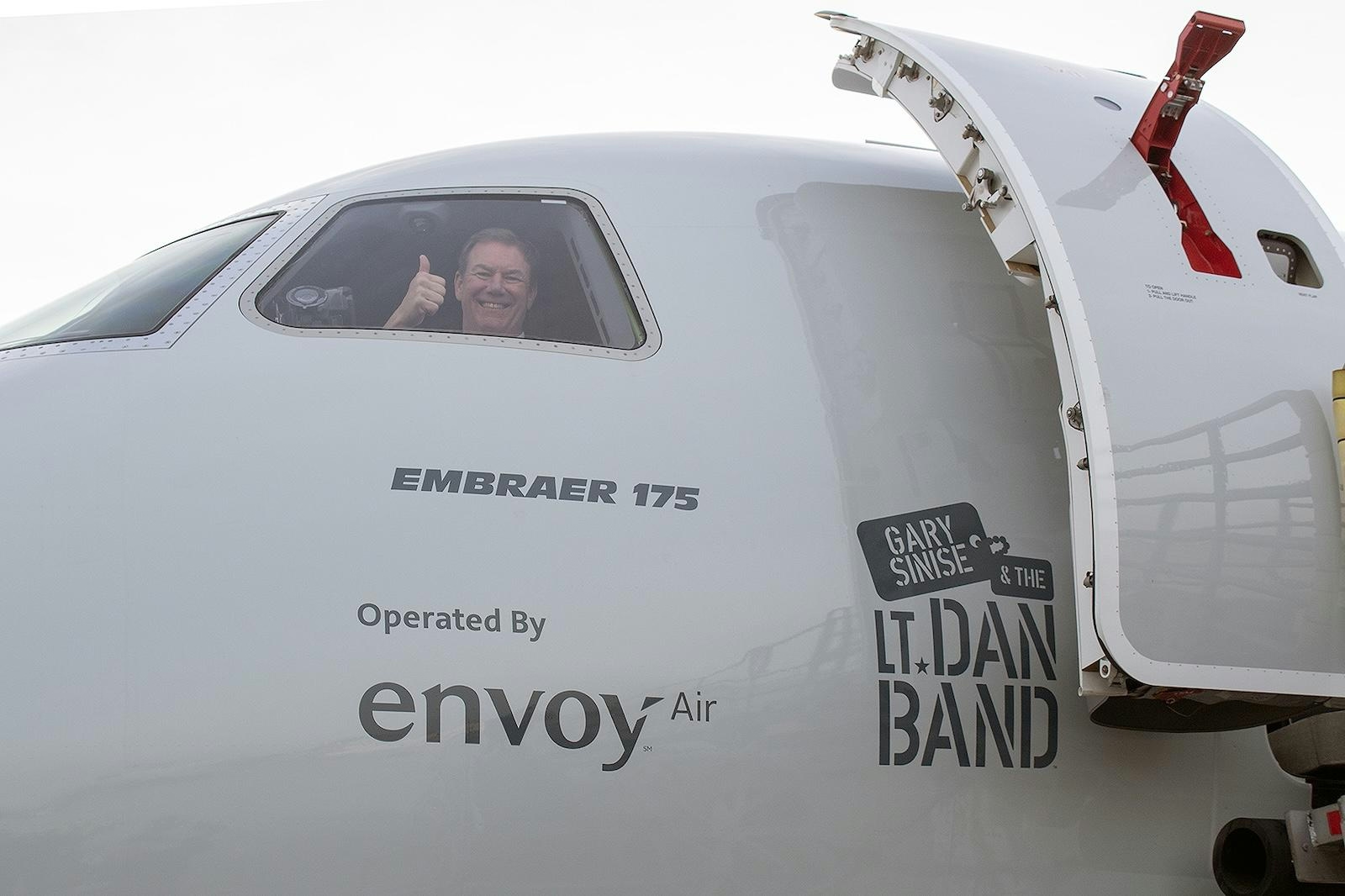
Envoy Air Receives New Embraer Jet
July 9, 2025By ePlane AI
Envoy Air Receives New Embraer Jet
0
0
Envoy Air
Embraer E175
Fleet Expansion

Envoy Air Expands Regional Fleet with New Embraer E175 Jets

Envoy Air has announced the acquisition of 33 new Embraer E175 aircraft, signaling a substantial expansion of its regional fleet. This strategic move arrives amid a period of intensified competition and evolving operational strategies within the airline industry, as carriers strive to adjust to shifting market dynamics and emerging challenges.

Operational Implications and Industry Response

The integration of the Embraer E175s into Envoy Air’s existing operations presents a complex set of opportunities and challenges. The airline must navigate potential issues related to maintenance expenses, regulatory compliance, and the smooth assimilation of the new jets into its current network. These factors are critical, as they may influence operational efficiency and long-term profitability, particularly in an environment where airlines face increasing scrutiny over safety protocols and environmental standards.

The announcement has elicited prompt reactions across the industry. Analysts suggest that Envoy Air’s fleet enhancement could intensify competition among regional carriers, compelling rivals to reconsider their own fleet development plans. For instance, competitors such as All Nippon Airways (ANA) may expedite the introduction of Embraer E190-E2 aircraft to match Envoy’s expanded capacity and service capabilities. This heightened competition is expected to drive strategic adjustments in pricing and route management as airlines seek to protect or expand their market share.

Industry Context and Future Outlook

The broader airline sector is currently contending with economic uncertainties and fluctuating consumer demand, factors that are influencing both immediate and long-term strategic planning. Recent financial reports from major carriers have highlighted margin pressures and downward revisions in forecasts, underscoring the challenges faced by the industry. Experts caution that while the addition of new aircraft like the E175s offers potential benefits, careful management is essential to prevent increased cost burdens or operational disruptions.

Nonetheless, some industry observers maintain a cautiously optimistic view regarding growth prospects. They argue that focused investments in fleet modernization, exemplified by Envoy Air’s recent acquisition, could position airlines to capitalize on anticipated rebounds in demand and shifting passenger preferences. Success, however, will depend on the ability to effectively manage regulatory requirements, control costs, and respond strategically to competitive developments.

As Envoy Air advances with its fleet expansion, both the airline and the wider industry confront a challenging environment. The forthcoming months will be pivotal in testing carriers’ capacity to adapt, innovate, and sustain resilience amid ongoing market fluctuations and competitive pressures.

More news
Turkish Airlines Plans to Launch Leasing Company in Ireland

Turkish Airlines Plans to Launch Leasing Company in Ireland

Turkish Airlines to Launch Aircraft Leasing Company in Ireland Turkish Airlines is embarking on a significant strategic transformation by establishing a dedicated aircraft leasing subsidiary in Ireland. This move marks a shift from its traditional airline operations toward becoming a more diversified aviation group with a pronounced presence in financial services. Instead of selling older aircraft upon retirement, the carrier intends to capitalize on its fleet as financial assets, extending their value through leasing—a sector known for higher profit margins and operational efficiency. Strategic Rationale and Fleet Modernization This initiative aligns with Turkish Airlines’ broader fleet modernization efforts, which focus on replacing aging aircraft with newer, more fuel-efficient models. By situating its leasing subsidiary in Dublin, a global center for aircraft leasing renowned for its favorable tax environment, legal expertise, and concentration of industry leaders, the airline aims to tap into international financial markets and attract a worldwide customer base. Ahmet Bolat, Chairman of the Board, emphasized the economic benefits of the leasing business model, highlighting its potential to generate substantial revenues with a relatively small workforce compared to the labor-intensive nature of passenger operations. Bolat noted that a leasing unit staffed by approximately 100 employees could achieve revenues of $2.2 billion, a level of per capita return that is unattainable in conventional airline activities. Currently, Turkish Airlines operates a fleet of 361 aircraft, which supports not only its mainline services but also its subsidiary Ajet and the joint venture SunExpress with Lufthansa Group. The airline further supplements its operations with 134 dry-leased aircraft and an additional 45 leased for Ajet. This extensive fleet underscores the potential for an internal leasing solution, allowing aircraft retired from primary service to be profitably redeployed rather than sold at residual value. Challenges and Market Implications Despite the promising outlook, Turkish Airlines faces several challenges in executing this strategy. The company must navigate Ireland’s regulatory framework, secure favorable leasing agreements, and manage currency risks inherent in international finance. Additionally, maintaining profitability, network quality, and resilience amid geopolitical tensions and fluctuating fuel prices will be critical factors closely monitored by industry analysts. Market observers are expected to scrutinize how this new leasing venture fits within Turkish Airlines’ disciplined growth strategy and ongoing fleet expansion. The airline’s entry into the aircraft leasing sector may also provoke competitive responses from other major carriers, potentially intensifying competition as airlines reassess their own leasing approaches. By outsourcing aircraft management to a specialized, profit-driven subsidiary, Turkish Airlines aims to optimize its balance sheet and position itself alongside established leasing companies, using its existing fleet as an initial portfolio. As the airline continues to modernize and expand, this strategic pivot could redefine its role in the global aviation industry, blending operational expertise with financial innovation.
Experts Discuss Growing Role of Aviation Finance in Central Asia Amid Geopolitical Changes

Experts Discuss Growing Role of Aviation Finance in Central Asia Amid Geopolitical Changes

Experts Discuss Growing Role of Aviation Finance in Central Asia Amid Geopolitical Changes Expanding Aviation Finance in a Dynamic Region The aviation sector in Central Asia and the Caucasus is experiencing significant growth, driven by increasing demand for air travel and evolving geopolitical dynamics. At a recent roundtable held on March 10 at the Astana International Financial Centre (AIFC), industry experts highlighted the accelerating importance of aviation finance in the region. Projections from the AIFC indicate that the aircraft fleet in Central Asia could double by 2030, reflecting broader global trends. Airbus forecasts a near doubling of the worldwide aircraft fleet from 24,730 in 2024 to approximately 49,210 by 2044. This rapid expansion is intensifying the need for innovative financing mechanisms, particularly aircraft leasing, as airlines seek to modernize and grow their fleets. Leasing as a Dominant Model and Kazakhstan’s Strategic Role Leasing has emerged as the predominant model for fleet management in Central Asia and the Caucasus, with estimates suggesting that between 55% and 80% of commercial aircraft in the region are leased—surpassing the global average of around 60%. Assel Bagissova, Head of the AIFC Aviation Finance Hub, noted that only 45% of the global commercial fleet is owned outright by airlines, underscoring leasing’s appeal due to its favorable risk-return profile. Industry data from 2024 further indicates that leasing companies have outperformed aircraft manufacturers in operational efficiency. Kazakhstan, in particular, is positioned as a regional leader in this expanding market. Peter Foster, CEO of Air Astana, emphasized the country’s strategic geographic location, growing infrastructure, and skilled workforce as key factors underpinning its leadership. He acknowledged the rapid development occurring across the region and stressed the need for a coordinated aviation development strategy to maintain Kazakhstan’s competitive edge. The AIFC is actively promoting Kazakhstan as a hub for aviation finance and leasing, aiming to attract investment, support sustainable growth, and enhance international collaboration. Zhanbolat Kakishev, Chief Product Officer of the AIFC Authority, highlighted the Aviation Finance Hub’s role in facilitating financing and leasing arrangements for both commercial and cargo aircraft. Challenges, Competition, and Regulatory Considerations Despite the promising outlook, the region faces several challenges. Experts pointed to regulatory fragmentation and the necessity for greater financial transparency, especially within private aviation sectors. These issues contribute to increased scrutiny from investors and customers concerning the financial stability of airlines and lessors operating in the region. The competitive landscape is also evolving rapidly. Market participants are pursuing strategic partnerships, such as FlyHouse’s collaboration with Brazilian operators, and embracing technological innovations exemplified by Elevate Jet’s self-service air charter application. Geopolitical shifts are further influencing growth strategies; for instance, Finnair is redirecting its focus toward Europe and Asia in response to pressures on North Atlantic yields. Legal and regulatory frameworks remain critical to the attractiveness of jurisdictions for aviation leasing. Jim Bell, Partner at Watson Farley & Williams, emphasized that a robust legal system, favorable tax policies, and a well-developed aviation services ecosystem are essential. He suggested that the AIFC could complement established global leasing centers if it carefully calibrates its regulatory environment and market positioning. As Central Asia’s aviation sector continues its expansion, the establishment of reliable and secure financing frameworks will be vital to sustaining growth and enhancing the region’s competitiveness on the global stage.
Joby Air Taxi Completes Bay Area Flight Amid FAA Commercial Approval Efforts

Joby Air Taxi Completes Bay Area Flight Amid FAA Commercial Approval Efforts

Joby Air Taxi Completes Bay Area Flight Amid FAA Commercial Approval Efforts Demonstration Flight Marks Significant Progress Joby Aviation advanced its pursuit of commercializing electric air taxis with a demonstration flight over San Francisco on Thursday. The Northern California-based company, headquartered in Marina and with offices in Santa Cruz and San Carlos, showcased its aircraft flying past iconic landmarks such as the Golden Gate Bridge after departing from Oakland. This event represents a critical milestone in Joby’s ongoing efforts to secure Federal Aviation Administration (FAA) approval for commercial operations. JoeBen Bevirt, Joby’s CEO and founder, described the flight as a “landmark achievement” for the company, which employs over 2,500 people, many of whom are based in Northern California. The company is simultaneously ramping up manufacturing capabilities in the region and Ohio. Reflecting on his 16-year journey to bring electric air taxis to fruition, Bevirt emphasized the immediacy and significance of this development, stating, “It’s here, and it’s happening right now. That’s what’s so remarkable and so exciting.” Vision for Urban Air Mobility and FAA Integration The aircraft, designed to carry one pilot and up to four passengers, aims to revolutionize urban transportation by offering quick and quiet flights. Didier Papadopoulos, Joby’s President of Aircraft OEM, highlighted the potential impact on daily commutes, noting that trips currently taking about an hour by car could be reduced to 10 minutes or less by air. He expressed optimism about the near future, suggesting that passengers will soon experience this mode of travel firsthand. Joby’s demonstration flight coincides with its selection by the FAA for the Electric Vertical Takeoff and Landing (eVTOL) Integration Pilot Program. This initiative could enable Joby to commence operations within months across multiple states, including Arizona, Florida, Idaho, New Jersey, New York, North Carolina, Oklahoma, Oregon, Texas, and Utah. Planned activities under the program range from cargo delivery in Florida to medical transport operations in North Carolina. The FAA’s endorsement is widely regarded as a pivotal step toward enabling commercial air taxi services that promise to significantly reduce commute times. Challenges and Competitive Landscape Despite these advances, Joby faces considerable challenges on the path to market entry. Regulatory approval remains a complex hurdle, and the company contends with increasing competition from other eVTOL manufacturers, notably Bay Area rival Archer Aviation. The competitive environment has intensified amid legal and reputational disputes, with Archer accusing Joby of fraud related to alleged ties to China, adding further pressure to the race for FAA certification. Market acceptance will depend heavily on Joby’s ability to demonstrate safety, reliability, and cost-effectiveness at scale. The company aims to price rides comparably to Uber Black, seeking to make the service accessible to a broad commuter base. Additionally, Joby is exploring autonomous flight capabilities that would eliminate the need for an onboard pilot, potentially transforming operational models in the future. While the timeline for regular air taxi service in San Francisco remains uncertain, Thursday’s flight underscores growing momentum within the urban air mobility sector. As Joby and its competitors accelerate testing and regulatory compliance efforts, the Bay Area may soon witness the emergence of a new era in transportation.
Azul’s AI Approach Focuses on Augmentation Over Transformation

Azul’s AI Approach Focuses on Augmentation Over Transformation

Azul’s AI Strategy: Prioritizing Augmentation Over Transformation Artificial intelligence (AI) has swiftly transitioned from a specialized experiment to a strategic imperative within the global airline industry. Carriers are increasingly investing in data science, automation, and machine learning to refine pricing strategies, optimize network operations, and enhance overall resilience. Despite this enthusiasm, many AI initiatives continue to face challenges, often becoming complex technological endeavors that struggle to produce clear commercial benefits. The Challenge of Integration in a Complex Industry The primary obstacle is seldom the technology itself. Airlines operate within deeply integrated ecosystems shaped by decades of legacy systems, stringent regulatory frameworks, and rigorous operational protocols. The prospect of replacing foundational platforms is frequently cost-prohibitive, disruptive, and impractical. Consequently, the industry is shifting its perspective, recognizing that AI’s true value lies not in radical transformation but in practical augmentation—improving the intelligence and efficiency of existing processes rather than attempting wholesale reinvention. This pragmatic approach is increasingly evident across the aviation sector. Airlines are employing machine learning to enhance demand forecasting accuracy, automate operational decision-making, and advance predictive maintenance capabilities. Dynamic pricing models are evolving as carriers strive to respond more agilely to fluctuating demand and competitive market pressures. However, scaling these AI-driven capabilities remains a complex endeavor. Success hinges not only on the sophistication of algorithms but also on organizational alignment, seamless data integration, and cultivating trust in automated systems. Azul’s Pragmatic AI Focus Amid Market Realities For Azul, the emphasis on augmentation over transformation reflects both strategic pragmatism and the realities of the current market environment. The industry is gravitating toward a philosophy that values tangible assets and operational AI—prioritizing projects that yield immediate, measurable returns. This shift presents challenges for AI initiatives lacking clear short-term outcomes, as capital allocation tightens and investor tolerance for speculative AI ventures diminishes. Azul and similar carriers must demonstrate that AI can be reliably embedded within existing infrastructures to drive practical improvements, rather than merely showcasing its transformative potential. Competitors are responding by harnessing expansive data sets for predictive maintenance and integrating these insights with revenue management systems to reduce aircraft downtime and enhance profitability. In this context, the ability to generate operational gains through AI—without destabilizing core systems—has emerged as a critical differentiator. Market sentiment increasingly favors airlines that move beyond experimentation and hype, embedding AI solutions that tangibly improve efficiency and operational resilience. For airline executives, the pivotal question is no longer whether AI will influence future operations, but how it can be effectively deployed to deliver genuine commercial value while maintaining the stability of established systems. As the industry contends with evolving investor expectations and intensifying competitive pressures, the focus remains firmly on augmentation—leveraging AI to make existing processes smarter, faster, and more dependable.
Low-Altitude Economy Requires Institutional Support

Low-Altitude Economy Requires Institutional Support

Low-Altitude Economy Requires Institutional Support China’s forthcoming 15th Five-Year Plan (2026-2030) marks a significant strategic shift by elevating the low-altitude economy to an independent priority alongside other emerging sectors such as new energy, new materials, and aerospace. Previously subsumed under the broader category of strategic emerging industries during the 14th Five-Year Plan (2021-2025), the low-altitude economy is now recognized for its distinct potential and the need for coordinated, large-scale development efforts. Strategic Importance and Technological Foundations The low-altitude economy represents a new frontier of productive forces, integrating cutting-edge technologies from aerospace, smart manufacturing, new energy, and artificial intelligence. Its extensive industrial chains and diverse application scenarios position it to exceed one trillion yuan (approximately $145 billion) in market size within the next five years, fostering regionally diversified economic growth. However, realizing this ambitious target requires systematic planning focused on breakthroughs in core technologies, talent development, and the construction of a robust industrial ecosystem. Indigenous innovation is critical to enhancing resilience amid global uncertainties and to sustaining high-quality growth. The sector’s advancement hinges on rapid technological progress in unmanned aerial vehicles (UAVs) and electric vertical takeoff and landing aircraft (eVTOLs). These technologies depend on continued improvements in flight control systems, high-energy-density batteries, and reliable electric propulsion. Recent advancements in lithium metal batteries, which offer significant gains in energy density and performance, exemplify the technological strides that could reshape the global low-altitude economy. Institutional Challenges and Policy Imperatives Despite promising technological developments, the growth of the low-altitude economy faces structural challenges that require strong institutional support. Experiences from other markets, such as Brazil, where aviation industry leaders have pointed to regulatory and infrastructural barriers, highlight the risks of underdeveloped frameworks impeding sectoral expansion. This underscores the necessity for China to establish robust institutional mechanisms and policy frameworks to unlock the full potential of the low-altitude economy. To maintain global competitiveness, China must increase investment in indigenous research and consolidate resources to build a secure, coordinated innovation system. Addressing critical bottlenecks—such as redundant flight control chips, high-precision LiDAR, and advanced battery materials—is essential. Accelerating the commercialization of technological achievements and enhancing self-reliance across the entire industry chain will be pivotal in this regard. Green Development and Innovation Ecosystem Green development remains a central pillar of China’s strategy, aligned with its dual-carbon goals. The international race to develop green aviation technologies has intensified, with traditional lithium battery systems facing inherent energy density limitations. Consequently, the pursuit of both electrification and hydrogen-based solutions is imperative. Promoting higher-density batteries, advancing airworthiness certification, and commercializing electric aircraft for urban mobility, emergency rescue, and logistics are critical steps forward. Concurrently, intensified research into hydrogen storage, transportation, and utilization is necessary to support sustainable growth. An effective technology transfer mechanism is equally vital. Establishing a demand-driven, full-chain innovation model through testing bases and demonstration zones can facilitate the integration of new technologies into practical applications. Data-driven feedback loops will help shorten commercialization cycles and refine business models. Collaboration between universities and enterprises can tailor research to regional needs, accelerating scalable and sustainable development. Workforce Development and Infrastructure Preparation The sector’s success also depends on cultivating a workforce of composite, innovative, and highly skilled professionals. Addressing talent gaps in aerospace engineering, intelligent control, and airspace management requires closer integration between industry and education, updated curricula, and diversified training mechanisms. Preparing traditional infrastructure, including vertiports and energy supply stations, alongside fostering a coordinated innovation ecosystem, will be essential for the sustainable expansion of China’s low-altitude economy. Market responses to emerging technologies remain cautious, as evidenced by significant outflows from Bitcoin ETFs, reflecting institutional hesitancy toward new markets. This further highlights the critical role of strong institutional support in nurturing confidence and stability within the low-altitude economy.
Aviation Industry Adopts AI and Green Fuels Amid Changing Passenger Habits

Aviation Industry Adopts AI and Green Fuels Amid Changing Passenger Habits

Aviation Industry Adopts AI and Green Fuels Amid Changing Passenger Habits The commercial aviation sector continues to demonstrate remarkable resilience and adaptability despite ongoing economic and geopolitical challenges. Airlines are expanding their networks through new routes and codeshare agreements, while technological innovation and sustainability initiatives are driving growth and transformation across the industry. Digital Transformation and Operational Innovation Artificial intelligence (AI) is rapidly reshaping the aviation landscape by enhancing operational efficiency in areas such as predictive maintenance, route optimization, and personalized passenger services. The adoption of biometric scanning and contactless processing at airports has become increasingly widespread, significantly reducing wait times and improving the overall travel experience. However, as digitalization deepens, the industry is placing greater emphasis on cybersecurity to mitigate the growing risks posed by cybercrime and digital warfare targeting airlines and airport infrastructure. AI’s impact extends beyond operational improvements to the travel planning process itself. Automated booking systems and AI-driven itinerary management are beginning to disrupt traditional intermediaries, including online travel agencies (OTAs) and global distribution systems (GDSs). This technological shift has exerted pressure on these companies’ profit margins and led to workforce reductions, as evidenced by recent layoffs at firms such as Supernal. These developments highlight the sector’s ongoing struggle to adapt swiftly to rapid technological change. Sustainability Efforts and the Challenge of Green Fuels The aviation industry has committed to achieving net-zero carbon emissions by 2050, with a significant focus on transitioning to Sustainable Aviation Fuel (SAF). However, the path to decarbonization remains complex and fraught with challenges. The European Union’s mandate for advanced synthetic green fuels (eSAF) presents considerable obstacles, as commercial-scale production is still limited and the costs of these fuels remain substantially higher than those of conventional jet fuel. This situation complicates airlines’ efforts to comply with regulatory requirements and meet environmental targets. In addition to SAF, aircraft manufacturers are investing in the development of electric and hydrogen-powered planes, aiming to introduce these technologies into commercial service. Engineers are also pursuing aerodynamic enhancements and fuel-efficient design improvements to reduce emissions. Furthermore, the emergence of electric vertical take-off and landing (eVTOL) aircraft promises to revolutionize urban mobility, potentially creating new revenue streams for both aviation companies and city transport providers. Shifting Passenger Preferences and Airline Strategies Evolving travel habits are prompting airlines to reconsider their strategic approaches. The growing trend of “bleisure” travel, which combines business and leisure trips, continues to influence network planning decisions. Rising demand for family and group travel has led carriers to introduce group deals and tailored offers to better serve these segments. Personalization remains a key focus, with airlines encouraging direct bookings by offering customizable packages that allow passengers to select preferred amenities both before and during flights. Airlines are also enhancing their premium offerings to meet changing passenger expectations. For instance, Thai Airways’ introduction of the Business Plus cabin exemplifies the industry’s commitment to delivering a more refined inflight experience that aligns closely with customer preferences. As the aviation sector navigates the complexities of technological disruption, regulatory pressures, and shifting consumer demands, its capacity for innovation and adaptation will be critical in shaping the future of air travel.
Federal Approval Advances New York City Air Taxi Test Program

Federal Approval Advances New York City Air Taxi Test Program

Federal Approval Advances New York City Air Taxi Test Program New York City is poised to alleviate some of its notorious traffic congestion through a pioneering federal initiative that designates the metropolitan area as a test zone for electric air taxis. This program aims to introduce high-speed, electric vertical takeoff and landing (eVTOL) aircraft to shuttle passengers between Manhattan and regional airports, potentially reducing travel times to as little as five to fifteen minutes. The service is expected to be priced comparably to luxury car rides, offering a new alternative for urban commuters and travelers. A Collaborative Effort to Revolutionize Urban Transit The three-year pilot program, announced on Monday, involves a partnership between the Port Authority of New York and New Jersey and several leading aerospace companies, including Archer Aviation, Electra, BETA Technologies, and Joby Aviation. These firms will deploy electric aircraft resembling helicopters, capable of operating from short runways or heliports. The initial network will connect key locations such as JFK, LaGuardia, and Newark airports, with flights potentially commencing as early as this summer. Ticket prices are anticipated to range between $110 and $165. Archer Aviation, headquartered in San Jose, has proposed a network linking skyports in Lower Manhattan and Midtown to major airports, with plans to expand service to Teterboro, Westchester County, and Long Island’s Republic Airport. Electra’s electric planes, notable for requiring as little as 150 feet for takeoff and landing, could operate from unconventional sites such as fields or parking lots, enhancing operational flexibility. Passengers may soon benefit from integrated booking options that combine traditional airline tickets with air taxi segments departing from Manhattan skyports, streamlining the journey from city center to airport. This initiative forms part of the broader federal Electric Vertical Takeoff and Landing (eVTOL) Integration Pilot Program, which includes test sites across Texas, Utah, Pennsylvania, Louisiana, Florida, North Carolina, and New Mexico. Some of these locations will also trial autonomous cargo flights. Market Response and Emerging Challenges The announcement has generated significant enthusiasm within the market, with shares of companies like Joby Aviation and Archer experiencing notable gains. Industry analysts anticipate heightened competition as more firms enter the advanced air mobility sector, potentially accelerating technological innovation and expanding service offerings. Nonetheless, the program faces considerable challenges. Regulatory approval processes, safety concerns, and technological limitations remain critical hurdles for operators and policymakers alike. Community apprehensions regarding noise pollution and safety have already emerged, with Federal Aviation Administration data indicating a 150% increase in noise complaints near existing heliports and proposed vertiport sites. Despite these obstacles, industry leaders express optimism about the program’s potential. Marc Allen, CEO of Electra, described the initiative as “American innovation at its best,” emphasizing the administration’s role in enabling domestic companies to showcase hybrid-electric propulsion technologies that could transform urban transportation. As New York and other participating cities prepare for the introduction of air taxis, the coming years will serve as a crucial period for testing not only the technology itself but also public acceptance and regulatory frameworks necessary to support this new mode of urban mobility.
Cryogenic Hydrogen Fuel System Tested for Aircraft Turbines at -423°F

Cryogenic Hydrogen Fuel System Tested for Aircraft Turbines at -423°F

Cryogenic Hydrogen Fuel System Tested for Aircraft Turbines at -423°F Pioneering Tests at the German Aerospace Center Engineers at the German Aerospace Center (DLR) have successfully completed a series of pioneering cryogenic tests aimed at evaluating the feasibility of liquid hydrogen as a fuel for future aircraft engines. These experiments were conducted at DLR’s newly established Future Propulsion Test Facility in Cologne, which became operational in October 2025. The tests subjected an innovative hydrogen fuel delivery system to extreme temperatures as low as -423°F (-253°C), the critical point at which hydrogen transitions into its liquid state. The primary focus of the trials was to address one of the most technically challenging aspects of hydrogen-powered aviation: the safe and reliable transport of liquid hydrogen from onboard storage tanks to aircraft turbines. Maintaining hydrogen in its liquid form requires sophisticated cryogenic storage and distribution systems capable of preserving stable temperatures throughout the entire fuel pathway. This stability must be ensured despite the wide range of external environmental conditions encountered during flight, which can vary from -22°F (-30°C) at cruising altitude to 104°F (40°C) on the ground. Christian Fleing, the project leader, underscored the importance of these initial tests, describing them as a crucial first step in a long developmental journey. Conducted in February 2026, the experiments achieved Technology Readiness Level 4 (TRL 4), indicating that key components and prototypes were successfully validated within a controlled laboratory environment. Challenges and Industry Collaboration Liquid hydrogen (LH2) is widely regarded as a promising energy carrier for aviation due to its potential to eliminate carbon dioxide (CO2) emissions when combusted. In 2024, DLR demonstrated that aircraft engine combustion chambers could operate safely on 100% gaseous hydrogen. Despite this progress, significant challenges remain in the efficient and safe storage and delivery of hydrogen at cryogenic temperatures. Unlike conventional jet fuel, hydrogen requires considerably more storage volume, operates under high pressure, and demands advanced thermal management systems. Additionally, turbine engines must be modified to burn hydrogen directly, necessitating further innovations in structural materials and heat management technologies. To overcome these obstacles, DLR partnered with Italian original equipment manufacturer Vanzetti, recognized for its expertise in cryogenic pumps within the maritime sector, and the Messer Group, specialists in cryogenic technologies. Fleing noted that while comparable systems did not exist in aviation, the shipping industry provided valuable technological precedents. Implications for the Future of Aviation The successful completion of these tests represents a significant milestone in the pursuit of hydrogen-powered flight, though the path to commercial viability remains complex. Researchers plan to utilize the data gathered to conduct advanced computer simulations and explore adaptations of the system for practical aircraft operations. Florian Herbst, director of the DLR Institute of Propulsion Technology, highlighted the initiative as a rare example of fundamental research in modern aeronautical engineering, focusing on entirely new system architectures rather than incremental improvements. The broader aviation industry is closely monitoring these developments, with expectations of increased investment in sustainable aviation technologies. Market dynamics may prompt competitors to develop similar cryogenic hydrogen systems or to advance hybrid-electric propulsion solutions, particularly for smaller aircraft. Nonetheless, regulatory and logistical challenges—including securing financing and airline purchase agreements—will be critical factors influencing the pace at which hydrogen-powered aviation can be realized.
FAA Selects North Carolina for National Air Taxi Pilot Program

FAA Selects North Carolina for National Air Taxi Pilot Program

FAA Selects North Carolina for National Air Taxi Pilot Program The Federal Aviation Administration (FAA) has designated North Carolina as one of 26 states to participate in its Advanced Air Mobility and Electric Vertical Takeoff and Landing (eVTOL) Integration Pilot Program. This initiative aims to test and integrate emerging electric aircraft technologies into the national airspace, potentially transforming the future of urban transportation with the introduction of air taxis. Advancing Electric Air Mobility eVTOL aircraft are compact vehicles capable of vertical takeoff and landing, combining the operational flexibility of helicopters with the efficiency and design of small airplanes. The FAA’s pilot program, established under a federal directive to explore innovative aviation technologies, seeks to collect data that will inform regulatory frameworks and facilitate the broader adoption of these aircraft across the United States. FAA Deputy Administrator Chris Rocheleau emphasized the transformative potential of these technologies, stating, “These aircraft really will be game-changing. We’re looking to move beyond isolated demonstrations and work with state and local officials to build an ecosystem that supports safe, widespread use of these technologies.” North Carolina’s Role and Collaborative Efforts Within the program, eight projects are underway across the participating states, focusing on applications such as urban air taxi services and cargo logistics. North Carolina’s Department of Transportation will partner with electric aircraft manufacturer BETA and air taxi operator Joby Aviation to conduct tests involving eVTOLs in medical scenarios. These tests will include the transportation of emergency equipment and supplies, leveraging the state’s extensive medical network—a key factor in its selection for the program. Rocheleau noted the state’s prior experience with drone deliveries, which has been transformative, and expressed optimism that advanced air mobility will similarly enhance the movement of passengers and critical medical resources. The program will also explore autonomous flights between North Carolina and Virginia, with testing scheduled to commence this year and continue for at least three years. Further details on North Carolina’s involvement are expected to be released by the Department of Transportation in the near future. Challenges and Market Response Despite the promising outlook, the pilot program faces significant challenges, including regulatory hurdles, safety concerns, and the need for new infrastructure to support these novel aircraft. The FAA and its partners must address these issues to ensure the safe and effective integration of air taxis into the national airspace. Market reactions to the announcement have been positive, with shares of air taxi companies such as Joby Aviation experiencing notable gains. Other competitors, including Archer Aviation and Wisk, are also actively engaged in the pilot program, developing their own air taxi services and contributing to the rapidly evolving electric aviation sector. The FAA views this initiative not only as a test of new technology but also as a critical step toward establishing a national framework for advanced air mobility that balances innovation with safety and regulatory oversight.
Electric air taxis could transform travel in growing cities like Atlanta

Electric air taxis could transform travel in growing cities like Atlanta

Electric Air Taxis Poised to Revolutionize Urban Travel in Cities Like Atlanta The landscape of urban transportation in rapidly growing and congested cities such as Atlanta is on the cusp of a significant transformation. Electric air taxis—vehicles capable of vertical takeoff and landing (eVTOL) and designed to fly like airplanes—are being developed to alleviate ground traffic congestion by offering an aerial alternative for commuters. At VertiCon, an aviation conference held at the Georgia World Congress Center from March 10 to 12, leading companies in the eVTOL sector presented their visions for how this emerging technology could reshape metropolitan travel. Emerging Technologies and Market Timelines Executives from Eve Air Mobility revealed that their eVTOL aircraft could begin operating in U.S. cities as early as late 2027, contingent upon regulatory approval. Megha Bhatia, Chief Commercial Officer at Eve, emphasized that these aircraft are specifically engineered for urban environments, with cities like Atlanta identified as prime candidates due to their chronic congestion challenges. Similarly, Vertical Aerospace anticipates that its VX4 model will first secure certification in Europe, with plans to enter the U.S. market around 2029. Michael Cervenka, Chief Commercial and Strategy Officer at Vertical Aerospace, outlined that both companies envision their aircraft serving a variety of roles, including passenger transport, cargo delivery, and emergency response, typically over short distances ranging from 20 to 60 miles. One of the most compelling use cases is the connection between downtown Atlanta and Hartsfield-Jackson Atlanta International Airport. During peak traffic hours, this journey can exceed an hour by car, but developers suggest that eVTOLs could reduce travel time to between 10 and 20 minutes. The VX4, designed to cruise at approximately 150 miles per hour, exemplifies the potential for rapid transit linking airports with business districts. Cervenka noted, “That airport-to-city connection is really the dominant use case we see around the world.” Regulatory Hurdles and Safety Considerations Despite the promising outlook, the path to widespread adoption of electric air taxis faces significant regulatory and technical challenges. The certification process for eVTOL aircraft is stringent, requiring safety standards on par with those of commercial airliners. Vertical Aerospace plans to conduct extensive flight testing throughout 2027 and 2028 before seeking approval from European authorities and validation from the Federal Aviation Administration (FAA). Both Eve and Vertical Aerospace emphasize the incorporation of multiple redundant safety systems. For instance, the VX4 is equipped with eight propellers powered by multiple motors, eight independent batteries, three flight control computers, and backup structural components. Eve’s aircraft similarly features redundant systems in both rotors and propulsion to ensure passenger safety. Noise pollution is another critical consideration for urban deployment. Developers assert that electric air taxis are substantially quieter than traditional helicopters. Cervenka highlighted that the VX4 produces noise comparable to a loud conversation during takeoff and landing, with noise levels decreasing further during forward flight. Industry Challenges and Market Momentum The industry also contends with complex legal and regulatory challenges. Recent disputes, such as the countersuit between Archer and Joby Aviation over alleged undisclosed Chinese affiliations and government funding, underscore the competitive and intricate nature of the emerging market. Additionally, concerns remain regarding energy efficiency and the integration of eVTOLs into already crowded urban airspace. Nonetheless, momentum is building. The FAA has approved eight pilot programs across 26 states to test electric aircraft, including urban air taxis. Companies such as Archer, Joby, Eve, and Vertical Aerospace are actively competing to lead this nascent market, with the shared goal of making airborne commuting a practical reality for cities like Atlanta in the near future.
line










