
Orchestrer les insights d’IA pour les transformer en actions

Tendances
Categories
European Union Backs Aviation Safety and Innovation Talks in Nepal
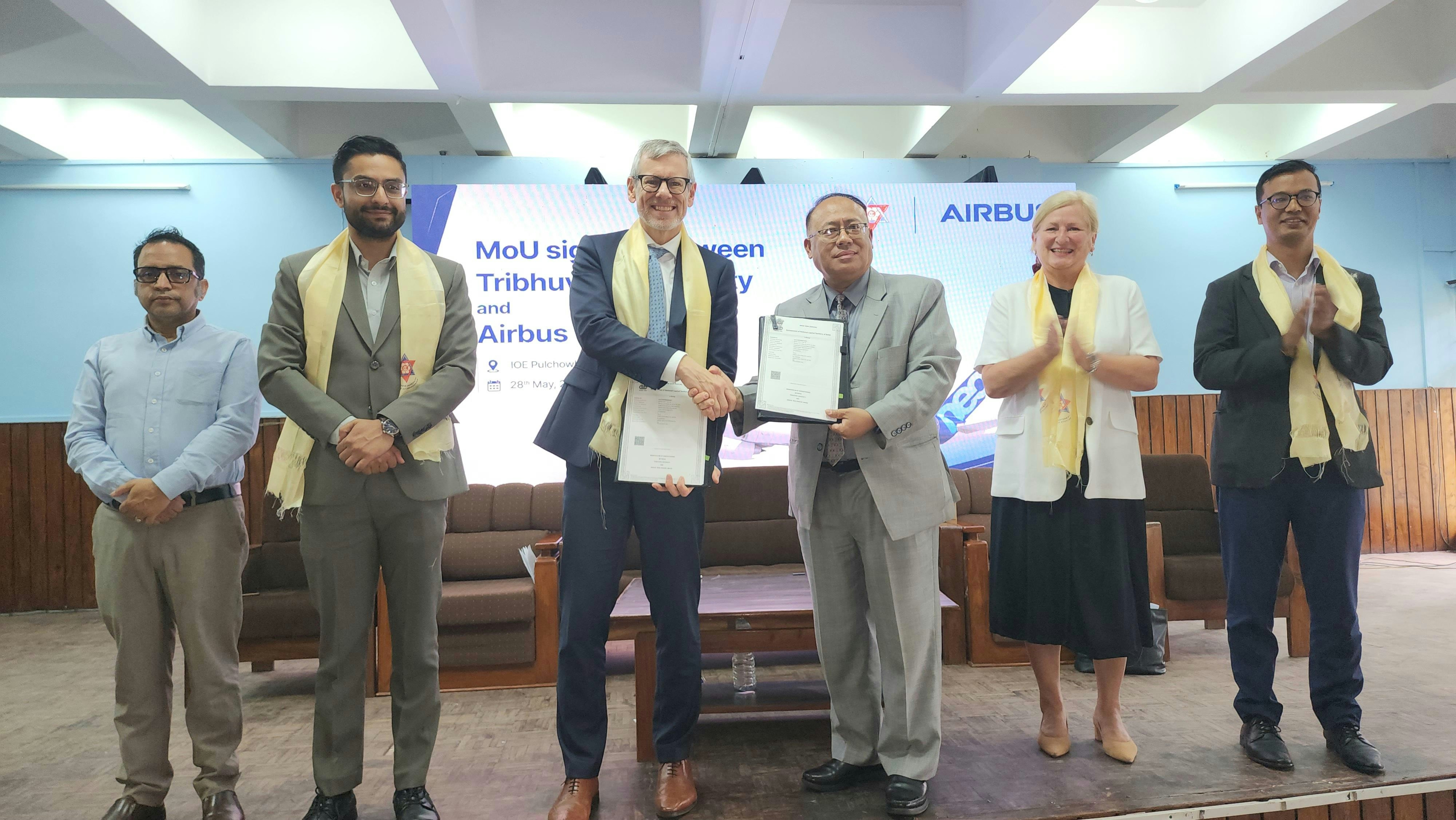
European Union Supports Aviation Safety and Innovation Initiatives in Nepal
A regional workshop on Next-Generation Flight Simulation Training Devices commenced on 24 February in Kathmandu, marking a pivotal moment in the European Union’s continued commitment to advancing aviation safety and innovation in Nepal. The two-day event, organized by the Civil Aviation Authority of Nepal (CAAN) and backed by the EU–South Asia Aviation Partnership Project, convened aviation regulators, technical experts, and industry stakeholders from Nepal and the broader South Asian region.
Advancing Flight Simulation and Regulatory Oversight
Funded by the European Union and executed by the European Union Aviation Safety Agency (EASA), the workshop concentrated on enhancing regulatory oversight and operational deployment of modern Flight Simulation Training Devices (FSTDs), including cutting-edge Extended Reality (XR) technologies. A notable feature of the event was the demonstration of a Virtual Reality-based H125 (AS350) simulator, developed collaboratively by Loft Dynamics and Airbus Helicopters. This simulator provided participants with immersive experiences replicating complex operational scenarios such as mountain flying, a critical consideration given Nepal’s challenging topography.
At the opening ceremony, EU Ambassador to Nepal Véronique Lorenzo underscored the vital role of safe and reliable aviation in supporting Nepal’s connectivity, tourism, and economic development. She affirmed the European Union’s dedication to assisting Nepal in strengthening aviation oversight while fostering technological innovation. Ambassador Lorenzo emphasized that effective cooperation between regulators and industry is essential to ensure that emerging technologies contribute to enhanced safety and operational resilience.
Nepal’s demanding geographical and operational environment necessitates rigorous pilot training and robust regulatory frameworks. Simulation technologies offer a secure and efficient means to improve pilot proficiency, mitigate operational risks, and promote more sustainable aviation practices.
Broader Context and Future Engagements
Despite these advancements, the EU’s approach to aviation safety and environmental regulation faces challenges on the global stage. The European Union’s unilateral expansion of its Emissions Trading System (ETS) for aviation has met with skepticism from other regions, particularly as it diverges from the internationally agreed Carbon Offsetting and Reduction Scheme for International Aviation (CORSIA) under the International Civil Aviation Organization (ICAO). This divergence has raised concerns within the market and highlighted contrasting regulatory philosophies regarding aviation emissions.
Simultaneously, global competitors such as China are striving to establish their aerospace industries—most notably through COMAC—as alternatives to established manufacturers like Boeing and Airbus. However, COMAC remains heavily dependent on foreign components and lacks certification from major U.S. and European regulatory bodies, illustrating the complexities inherent in global aviation standards and market access.
The Kathmandu workshop forms part of a comprehensive EU-supported aviation cooperation programme in Nepal, extending through 2026. Additional technical engagements are planned for June and later in the year, reflecting the EU’s ongoing partnership with Nepal to enhance aviation safety systems and regulatory capacity.
The EU–South Asia Aviation Partnership Project, within the broader EU–Asia Aviation Partnership framework, seeks to promote regulatory convergence, strengthen safety oversight, and facilitate structured technical dialogue between authorities and industry. These initiatives align with the EU’s Global Gateway strategy, which aims to foster safe, sustainable, and resilient connectivity—key drivers of trade, tourism, and economic growth—while ensuring responsible integration of innovation.
The workshop concluded with participants, including EU Ambassador Véronique Lorenzo and Nepal’s Honourable Minister Anil Kumar Sinha, gathering to highlight the collaborative spirit underpinning efforts to advance aviation safety and innovation across the region.

Etihad Airways Suspends Airbus A380 Flights on Key Route

Aditya Birla Group Seeks Approval for Aircraft Leasing in GIFT City

Qatar Airways Highlights Innovation and Connectivity at Arabian Travel Market 2026

Hong Kong's Five-Year Plan Includes Andrew Fan's Aircraft Parts Processing Hub Proposal

ACIA Aero Leasing Delivers ATR72-600 to Air Nostrum

RTX Appoints Jill Albertelli as Head of Pratt & Whitney

TAT Technologies Joins Beyond Aero Hydrogen Aircraft Program

AURAK Study Highlights Barriers to Air Taxi Adoption in Emerging Economies

Xiamen Air Selects Altitude for 787 Maintenance at Heathrow

Etihad and Swissport Extend Global Partnership
