
Orchestrer les insights d’IA pour les transformer en actions

Tendances
Categories
eVTOL Aircraft Expected to Launch in 2026
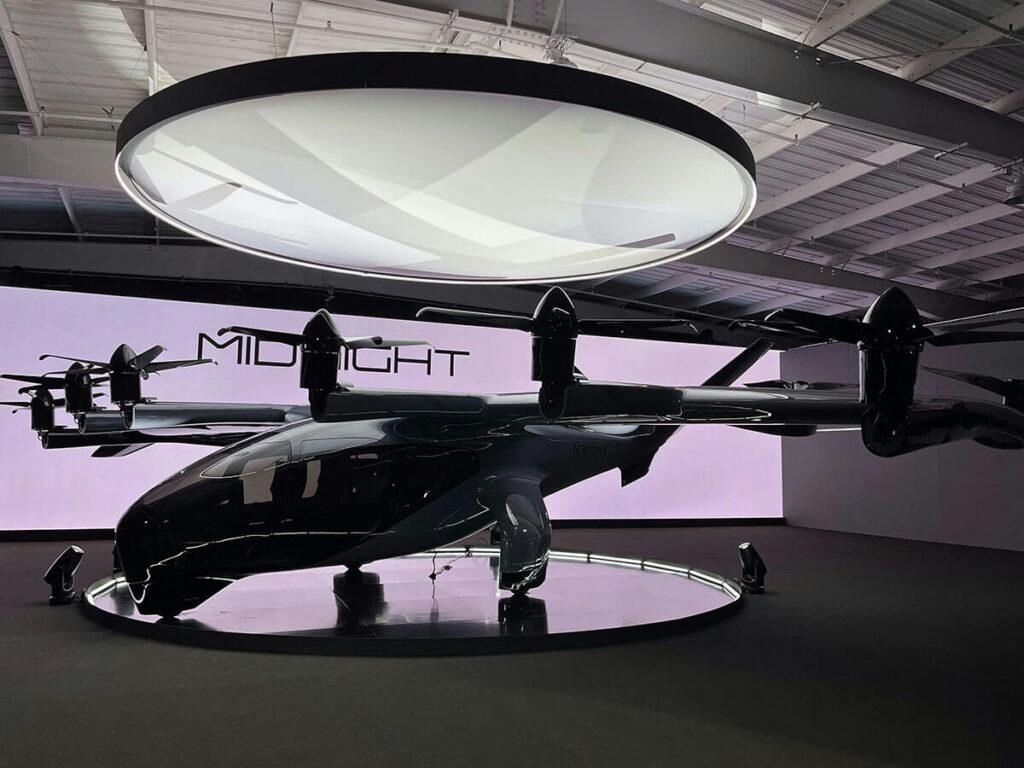
eVTOL Aircraft Set for 2026 Launch Amid Industry Challenges
The long-anticipated arrival of electric vertical takeoff and landing (eVTOL) aircraft is now within reach, with commercial operations expected to commence in urban centers as early as 2026. Following delays caused by the global pandemic, the industry’s focus has shifted from proving technological viability to addressing the complexities of scaling production and integrating these aircraft into existing urban and airspace infrastructures.
Certification Progress and Market Positioning
Several leading manufacturers, including Joby Aviation, Archer Aviation, Beta Technologies, and Eve, are advancing toward critical certification milestones, with regulatory approvals anticipated by late 2026. As these companies approach the conclusion of Federal Aviation Administration (FAA) testing and regulatory scrutiny, strategic considerations regarding market entry and operational frameworks have come to the forefront.
Each firm is pursuing distinct approaches to capture market share. Joby Aviation aims to establish a strong urban presence, leveraging its acquisition of Blade’s passenger services to operate in major cities such as New York. Archer Aviation is concentrating on securing defense contracts and forming strategic partnerships to generate early revenue streams while preparing for broader commercial deployment. Meanwhile, Beta Technologies and Eve are targeting a diverse clientele, including both commercial and corporate sectors, with plans for multi-market launches upon certification.
In response to evolving market dynamics, other players are recalibrating their strategies. Embraer has shifted its focus toward eVTOL development, deprioritizing new airliner projects. Elektra is expanding its footprint through the creation of new subsidiaries, and Vertical Aerospace anticipates robust demand in the Asia-Pacific region, where investor enthusiasm and customer interest are notably strong.
Regulatory, Operational, and Infrastructure Challenges
Despite significant technological advancements, the eVTOL industry continues to confront substantial regulatory and safety challenges. Integrating these aircraft into existing airspace systems and urban environments will require meticulous coordination with aviation authorities and the implementation of rigorous safety protocols. Ensuring seamless technological integration with current aviation operations remains a critical hurdle.
Operational scaling presents further difficulties. Production targets aim for 500 to 700 aircraft by the end of 2027, but achieving this will necessitate a considerable expansion of the pilot workforce. Training programs for eVTOL pilots range from three to fifteen months and can cost between $30,000 and $100,000, depending on the pilot’s experience and the aircraft type. The limited pool of qualified powered-lift pilots, often drawn from military backgrounds, may constrain fleet deployment. Additionally, pilot retention poses an ongoing challenge amid broader shortages in the commercial aviation sector.
Infrastructure limitations also pose significant obstacles. Reliable eVTOL operations depend on the availability of batteries, charging stations, and maintenance facilities. Although battery technology is improving at an approximate rate of six percent annually, urban space for vertiports remains scarce. Constraints related to aircraft size and weight further restrict range and passenger capacity, necessitating careful planning of routes and schedules.
Early revenue generation will be critical for operators, as most are not expected to achieve significant financial returns before 2027 or 2028. Developing viable income strategies during this initial phase will be essential for the sustainability of eVTOL ventures.
Outlook
As the projected 2026 launch date approaches, the eVTOL sector faces a multifaceted array of regulatory, operational, and market challenges. Nonetheless, increasing investor confidence and growing customer interest—particularly in the Asia-Pacific region—underscore the sector’s strong momentum. The coming years will be decisive in determining which companies and strategies will successfully transform the vision of urban air mobility into a practical reality.

Etihad Airways Suspends Airbus A380 Flights on Key Route

Aditya Birla Group Seeks Approval for Aircraft Leasing in GIFT City

Qatar Airways Highlights Innovation and Connectivity at Arabian Travel Market 2026

Hong Kong's Five-Year Plan Includes Andrew Fan's Aircraft Parts Processing Hub Proposal

ACIA Aero Leasing Delivers ATR72-600 to Air Nostrum

RTX Appoints Jill Albertelli as Head of Pratt & Whitney

TAT Technologies Joins Beyond Aero Hydrogen Aircraft Program

AURAK Study Highlights Barriers to Air Taxi Adoption in Emerging Economies

Xiamen Air Selects Altitude for 787 Maintenance at Heathrow

Etihad and Swissport Extend Global Partnership
