
Orchestrer les insights d’IA pour les transformer en actions

Tendances
Categories
FAA Advances Integration of Manned and Unmanned Aircraft
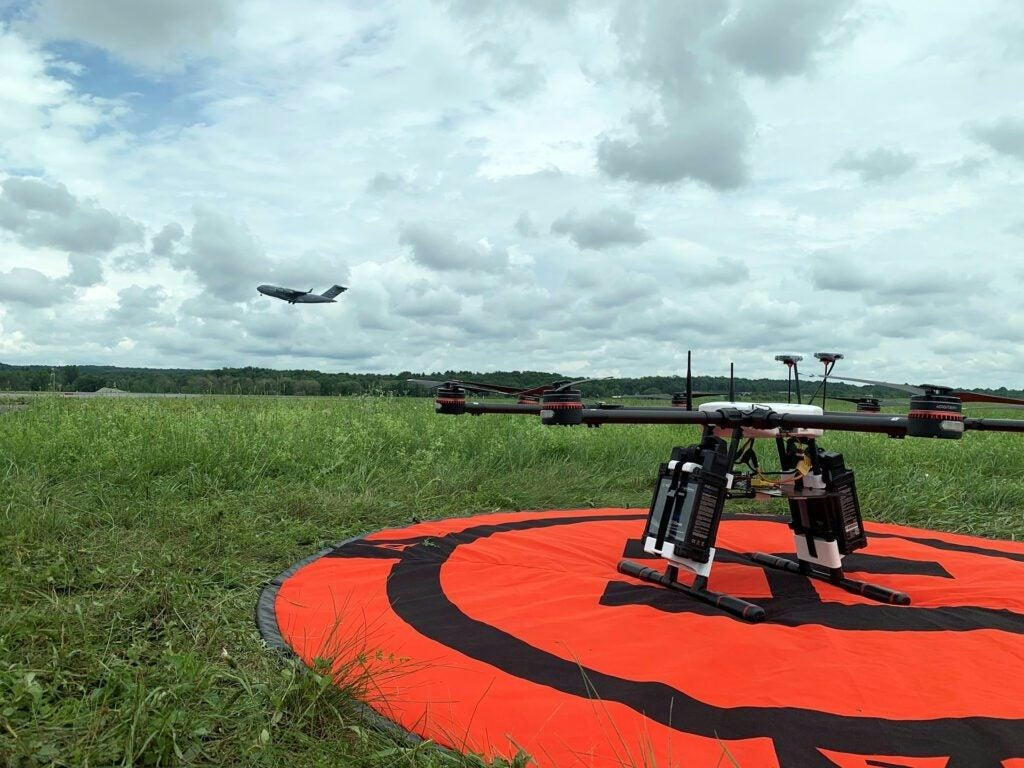
FAA Advances Integration of Manned and Unmanned Aircraft
The Federal Aviation Administration (FAA) is making significant strides toward the integration of crewed and uncrewed aircraft within the National Airspace System (NAS), signaling a transformative phase in the evolution of aviation. In a recent development, uAvionix announced the addition of 55 new airports to the FAA’s airport safety programs by incorporating its Flightline technology into the agency’s Surface Awareness Initiative (SAI). This expansion enhances the FAA’s surveillance infrastructure, improving situational awareness and safety across airports nationwide.
Expanding Airport Safety Programs and Surveillance
The FAA currently manages three principal airport safety programs: Approach Runway Verification (ARV), Surface Awareness Initiative (SAI), and Runway Incursion Device (RID). These programs focus on enhancing safety during the critical phases of flight—takeoff and landing. The integration of uAvionix’s Flightline technology into the SAI program represents a vital element of the FAA’s broader strategy, which combines technological innovation, industry collaboration, and forward-looking planning for advanced air mobility.
The SAI program is designed to increase visibility and situational awareness for unmanned aerial vehicles (UAVs) by incorporating surveillance data into the broader air traffic management system. By extending this system to dozens of additional control towers, the FAA is expanding its capacity to monitor low-altitude drone operations more effectively. This development is particularly important as drone usage grows rapidly across commercial sectors such as package delivery, infrastructure inspection, emergency response, and recreational activities.
Addressing Technological and Regulatory Challenges
While expanding surveillance capabilities is a critical step, the FAA acknowledges that the safe integration of uncrewed aircraft requires a comprehensive approach involving advanced enabling technologies and updated regulatory frameworks. Through its Broad Agency Announcement (BAA) for UAV integration technologies, the FAA is actively soliciting proposals from industry stakeholders to address key challenges. These include the development of Uncrewed Traffic Management (UTM) systems tailored to drone operations, Detect-and-Avoid (DAA) technologies to prevent collisions between manned and unmanned aircraft, and reliable Command and Control (C2) communication links to ensure secure UAV operation.
Additionally, the FAA is focusing on electronic conspicuity solutions to improve the visibility of low-flying aircraft that lack Automatic Dependent Surveillance-Broadcast (ADS-B) capabilities, as well as research into noise and environmental impacts to support community acceptance and sustainability. By fostering collaboration with the private sector, the FAA aims to accelerate technological advancements, particularly in anticipation of the forthcoming implementation of Part 108 regulations, which will authorize Beyond Visual Line of Sight (BVLOS) drone operations.
Ongoing Initiatives and Industry Response
Despite these advancements, the integration of manned and unmanned aircraft continues to face significant challenges, including regulatory complexities, airspace management issues, and cybersecurity risks. The dynamic environment is driving increased investment in drone technologies and infrastructure, with industry players responding through accelerated innovation and strategic partnerships to enhance UAV capabilities and expand their market presence.
A notable example of the FAA’s commitment to this integration is its contract with AURA Network Systems, announced earlier this year. This initiative focuses on demonstrating low-latency voice and data communications for UAVs, underscoring the agency’s dedication to ensuring that manned and unmanned aircraft can coexist safely and efficiently in shared airspace.
As these efforts progress, the FAA’s multifaceted strategy is laying the groundwork for a future in which drones, air taxis, and traditional aircraft operate seamlessly together, fundamentally reshaping the landscape of American aviation.

Etihad Airways Suspends Airbus A380 Flights on Key Route

Aditya Birla Group Seeks Approval for Aircraft Leasing in GIFT City

Qatar Airways Highlights Innovation and Connectivity at Arabian Travel Market 2026

Hong Kong's Five-Year Plan Includes Andrew Fan's Aircraft Parts Processing Hub Proposal

ACIA Aero Leasing Delivers ATR72-600 to Air Nostrum

RTX Appoints Jill Albertelli as Head of Pratt & Whitney

TAT Technologies Joins Beyond Aero Hydrogen Aircraft Program

AURAK Study Highlights Barriers to Air Taxi Adoption in Emerging Economies

Xiamen Air Selects Altitude for 787 Maintenance at Heathrow

Etihad and Swissport Extend Global Partnership
