
Orchestrer les insights d’IA pour les transformer en actions

Tendances
Categories
First Responder Reflects on AI 171 Crash: 'Wish We Could Save More Lives'
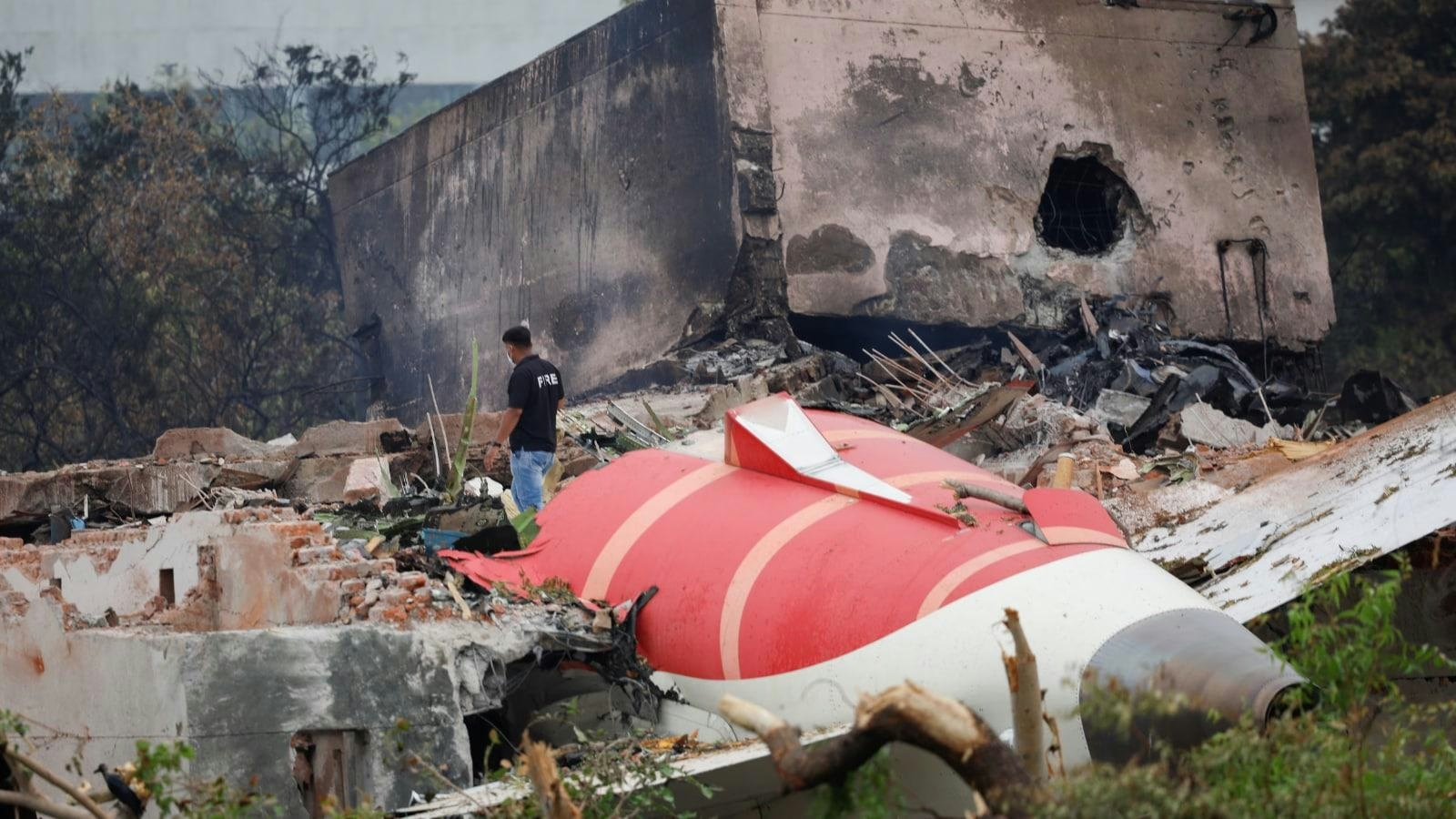
First Responder Reflects on AI 171 Crash: ‘Wish We Could Save More Lives’
A Tragedy That Haunts Ahmedabad
Ahmedabad continues to grapple with the aftermath of one of the deadliest aviation disasters in recent history. On June 12, 2025, Air India flight AI-171 crashed moments after takeoff from Sardar Vallabhbhai Patel International Airport, claiming 260 lives. Satinder Singh Sandhu, a supervisor with 108 Emergency Services, remains deeply affected by the tragedy. Stationed just 200 metres from the crash site at Ahmedabad Civil Hospital’s Gate No. 8, Sandhu vividly recalls the harrowing moments when the routine afternoon was shattered by a deafening explosion.
“I saw a thick cloud of smoke rising from the hostel complex. At first, I thought it was a bomb blast,” Sandhu recounts. Upon learning that an aircraft had collided with the BJ Medical College hostel building, he immediately dispatched ambulances and rushed to the scene. The scale of devastation was overwhelming—bodies and injured individuals were scattered both inside the complex and on the surrounding roads. Within minutes, Sandhu and his team arrived with four ambulances, soon joined by the airport fire brigade, all focused on the urgent task of saving lives.
The Rescue Effort and Its Lingering Impact
Sandhu supervised the deployment of 35 ambulances throughout the night, coordinating the transport of the injured and deceased to nearby hospitals. Among the survivors was Vishwas Kumar Ramesh, the sole individual to survive the crash. The grim recovery operation extended over a week, as rescuers painstakingly retrieved charred victims and body parts from the wreckage. For Sandhu and his colleagues, the experience left an indelible mark. “Whenever I pass through the area, the memories return—the smell of burnt flesh and aviation fuel,” he reflects. “Our biggest regret is that we couldn’t save more lives.”
Broader Implications: AI, Ethics, and Market Reactions
The AI-171 disaster also intensified ongoing debates about the role of artificial intelligence in aviation safety. The crash occurred during a period of heightened scrutiny over AI technologies, coinciding with the introduction of Anthropic’s Mythos model and the emergence of what has been termed the “restricted-AI era.” Ethical concerns regarding AI’s reliability and decision-making capabilities in critical systems have grown, prompting calls from regulators and industry leaders for stricter oversight.
The repercussions extended beyond the tragedy itself, affecting financial markets and corporate strategies. Technology stocks experienced volatility as investors reassessed the costs and regulatory risks associated with advanced AI systems. Analysts observed a strategic pivot among major tech firms, with some shifting focus from consumer-facing AI products to enterprise solutions, a trend highlighted in Elliott’s analysis of OpenAI’s IPO filing. The Nasdaq index reflected this uncertainty, declining amid concerns over interest rate hikes and escalating expenses related to AI development.
As Ahmedabad marks the anniversary of the AI-171 crash, the event remains a poignant reminder of the complex interplay between technological advancement, ethical responsibility, and human resilience.

Etihad Airways Suspends Airbus A380 Flights on Key Route

Aditya Birla Group Seeks Approval for Aircraft Leasing in GIFT City

Qatar Airways Highlights Innovation and Connectivity at Arabian Travel Market 2026

Hong Kong's Five-Year Plan Includes Andrew Fan's Aircraft Parts Processing Hub Proposal

ACIA Aero Leasing Delivers ATR72-600 to Air Nostrum

RTX Appoints Jill Albertelli as Head of Pratt & Whitney

TAT Technologies Joins Beyond Aero Hydrogen Aircraft Program

AURAK Study Highlights Barriers to Air Taxi Adoption in Emerging Economies

Xiamen Air Selects Altitude for 787 Maintenance at Heathrow

Etihad and Swissport Extend Global Partnership
