
Orchestrer les insights d’IA pour les transformer en actions

Tendances
Categories
Flight Data Monitoring Systems Market Poised for Robust Growth Amid Rising Focus on Aviation Safety and Digital Transformation
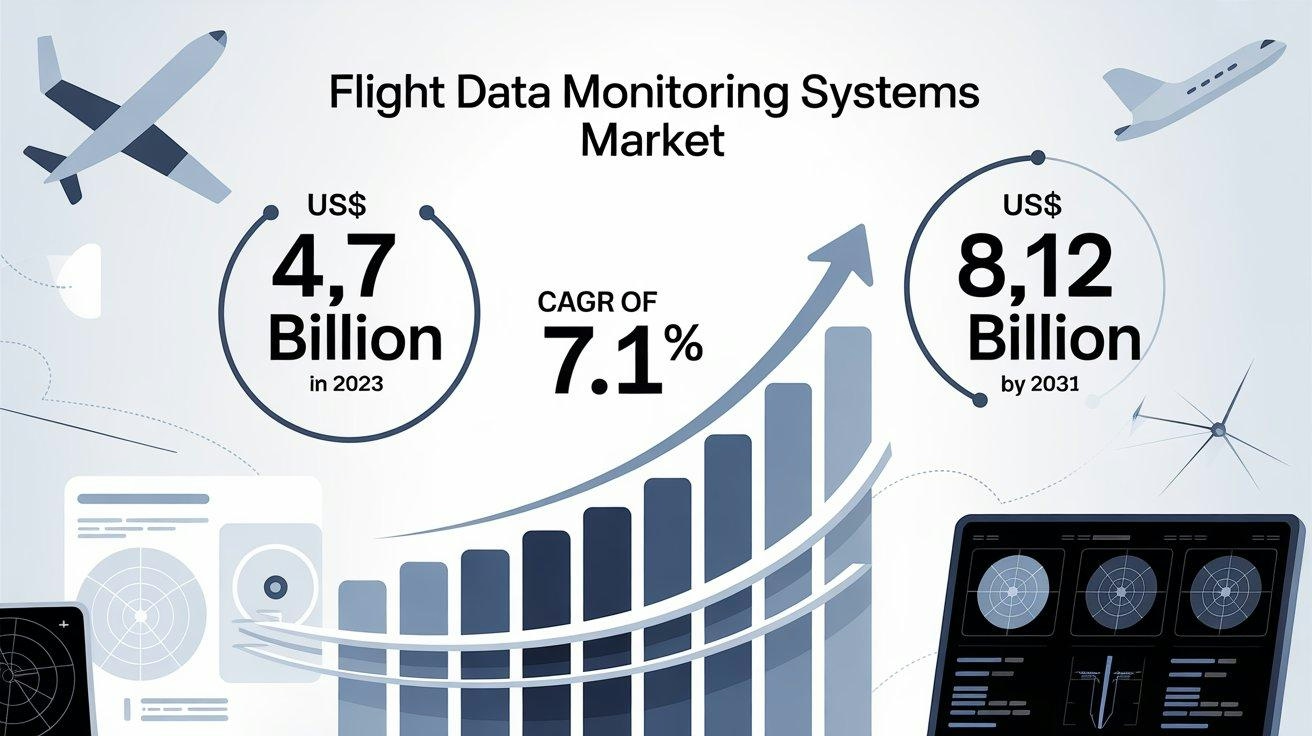
Flight Data Monitoring Systems Market Poised for Robust Growth Amid Rising Focus on Aviation Safety and Digital Transformation
The global aviation sector is experiencing significant expansion, driven by a surge in both international and domestic air travel. This growth has intensified demand for Flight Data Monitoring (FDM) systems, as airlines and operators place greater emphasis on safety, regulatory adherence, and operational efficiency. FDM systems, which systematically collect and analyze aircraft flight data, have become essential components of contemporary aviation safety management across commercial airlines, business aviation, and military fleets. The ongoing digital transformation within the industry, characterized by a shift toward data-driven decision-making, has further elevated the importance of these systems. By enabling proactive identification of safety risks, monitoring pilot performance, optimizing fuel consumption, and enhancing fleet efficiency, FDM systems are reshaping operational standards.
Regulatory Mandates and Technological Innovation Driving Market Expansion
A principal factor propelling the FDM systems market is the tightening of regulatory frameworks by global aviation authorities. Institutions such as the International Civil Aviation Organization (ICAO), the Federal Aviation Administration (FAA), and the European Union Aviation Safety Agency (EASA) now require the implementation of FDM programs as integral elements of comprehensive Safety Management Systems (SMS). These mandates compel airlines and operators to invest in advanced FDM software and analytics platforms to ensure compliance and mitigate operational risks. The compulsory adoption of FDM, particularly among commercial airlines and large fleet operators, has accelerated market penetration across both developed and emerging economies. Furthermore, evolving safety regulations are encouraging smaller operators and charter service providers to incorporate FDM solutions into their operations.
Technological advancements are simultaneously transforming the FDM landscape. Modern systems increasingly utilize cloud computing, artificial intelligence (AI), and sophisticated analytics to provide real-time insights and predictive risk assessments. AI-driven algorithms can process extensive flight data to detect anomalies, forecast maintenance requirements, and identify unsafe operational behaviors. Cloud-based FDM platforms are gaining prominence due to their scalability, cost-effectiveness, and seamless integration with existing aviation IT infrastructures. These platforms facilitate centralized data management across diverse fleets and geographic locations, enabling faster and more informed decision-making. The integration of FDM with aircraft health monitoring and maintenance systems further amplifies operational benefits. Notably, the incorporation of AI-enabled capabilities within avionics-grade computing systems is anticipated to significantly influence market dynamics as industry players enhance their offerings to meet evolving safety and regulatory demands.
Emphasis on Cost Efficiency and Sustainability Amid Market Challenges
Beyond safety considerations, airlines are increasingly adopting FDM systems to address cost pressures and sustainability objectives. Fuel expenses constitute one of the largest operational costs, and FDM provides actionable insights to improve fuel efficiency through optimized flight profiles and minimized deviations. By identifying inefficient practices, airlines can reduce fuel consumption and carbon emissions, aligning with the growing strategic emphasis on environmental sustainability within the aviation industry.
Despite promising growth prospects, the FDM systems market faces several challenges. The high costs associated with retrofitting existing aircraft, maintaining ongoing regulatory compliance, and implementing continuous technological upgrades present significant barriers to widespread adoption. Nevertheless, these challenges are driving increased investment in safety-critical systems and fostering innovation across the sector. As digital transformation accelerates and safety standards continue to rise, the Flight Data Monitoring Systems Market is positioned for sustained expansion, with technological advancement and regulatory compliance remaining central to its evolution.

Etihad Airways Suspends Airbus A380 Flights on Key Route

Aditya Birla Group Seeks Approval for Aircraft Leasing in GIFT City

Qatar Airways Highlights Innovation and Connectivity at Arabian Travel Market 2026

Hong Kong's Five-Year Plan Includes Andrew Fan's Aircraft Parts Processing Hub Proposal

ACIA Aero Leasing Delivers ATR72-600 to Air Nostrum

RTX Appoints Jill Albertelli as Head of Pratt & Whitney

TAT Technologies Joins Beyond Aero Hydrogen Aircraft Program

AURAK Study Highlights Barriers to Air Taxi Adoption in Emerging Economies

Xiamen Air Selects Altitude for 787 Maintenance at Heathrow

Etihad and Swissport Extend Global Partnership
