
Orchestrer les insights d’IA pour les transformer en actions

Tendances
Categories
Flying Taxis Begin to Take Flight, Fulfilling Science Fiction Predictions
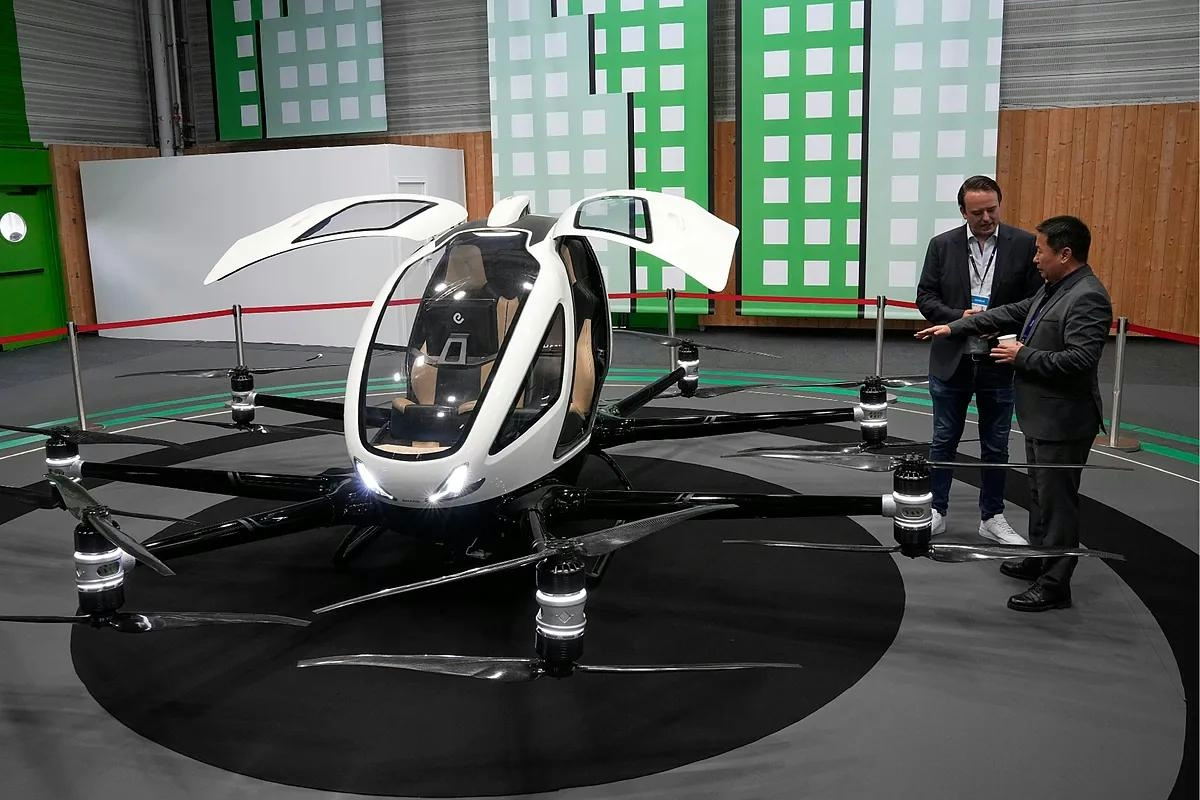
Flying Taxis Take Flight in China, Realizing Long-Standing Science Fiction Visions
For decades, cinematic portrayals in films such as The Fifth Element, Blade Runner, and Back to the Future have captivated audiences with futuristic images of flying cars navigating urban skylines. This once speculative vision is now approaching reality as China initiates its first autonomous flying taxi test flights, marking a pivotal advancement in the field of urban air mobility.
Breakthrough in Urban Air Mobility
This milestone has been achieved through a collaboration between the Chinese government and technology firm EHang, which recently showcased successful public demonstrations of its EH216 electric vertical takeoff and landing (eVTOL) vehicles. These drone-like taxis are designed to carry a single passenger along with a suitcase, reaching speeds of up to 81 miles per hour and covering distances of approximately 35 kilometers, equating to around 21 minutes of flight time. The fully electric vehicles recharge within two hours and employ 16 propellers to ensure stability and safety during operation.
Video footage of the test flights rapidly circulated on social media platforms, providing viewers with a firsthand look at the smooth takeoffs and landings, as well as sweeping aerial views of the cityscape. Although these vehicles differ from traditional automobiles, their resemblance to large drones highlights the significant technological progress being made.
On April 6, EHang announced that it had secured official certification for the EH216 model from the Civil Aviation Administration of China, a critical regulatory approval that paves the way for commercial deployment. However, the company has yet to disclose a definitive timeline for full-scale service or identify the initial cities slated for rollout.
Challenges and Market Outlook
Despite the enthusiasm surrounding this development, several challenges remain before flying taxis can become a widespread mode of transportation. Regulatory frameworks governing urban air mobility are still in the process of formation, and safety concerns continue to be paramount for both regulators and the public. Additionally, technological hurdles such as battery endurance and the management of increasingly complex air traffic must be overcome to ensure the viability of these services.
Market responses have been measured but optimistic. Investors recognize the substantial growth potential in this sector, with forecasts suggesting that the global flying taxi market could reach a valuation of $14.5 billion by 2034. In response, competitors are intensifying their research and development efforts or seeking strategic partnerships to remain competitive amid rapid industry advancements.
As China asserts itself as a leader in this nascent industry, the advent of flying taxis moves beyond the realm of science fiction. While obstacles persist, the successful test flights herald a transformative era in urban transportation, one that may fundamentally alter how people navigate cities and reshape urban skylines for future generations.

Etihad Airways Suspends Airbus A380 Flights on Key Route

Aditya Birla Group Seeks Approval for Aircraft Leasing in GIFT City

Qatar Airways Highlights Innovation and Connectivity at Arabian Travel Market 2026

Hong Kong's Five-Year Plan Includes Andrew Fan's Aircraft Parts Processing Hub Proposal

ACIA Aero Leasing Delivers ATR72-600 to Air Nostrum

RTX Appoints Jill Albertelli as Head of Pratt & Whitney

TAT Technologies Joins Beyond Aero Hydrogen Aircraft Program

AURAK Study Highlights Barriers to Air Taxi Adoption in Emerging Economies

Xiamen Air Selects Altitude for 787 Maintenance at Heathrow

Etihad and Swissport Extend Global Partnership
