Image

Orchestrer les insights d’IA pour les transformer en actions

Inscrivez-vous dès aujourd’hui sur la liste d’attente d’AeroGenie !

Tendances

Categories

Fort Worth Leases Space at Alliance Airport for Air Taxi Manufacturing and Testing
August 11, 2026By ePlane AI
Fort Worth Leases Space at Alliance Airport for Air Taxi Manufacturing and Testing
0
0
Joby Aviation
eVTOL Aircraft
Alliance Airport

Fort Worth Secures Lease for Air Taxi Manufacturing and Testing at Alliance Airport

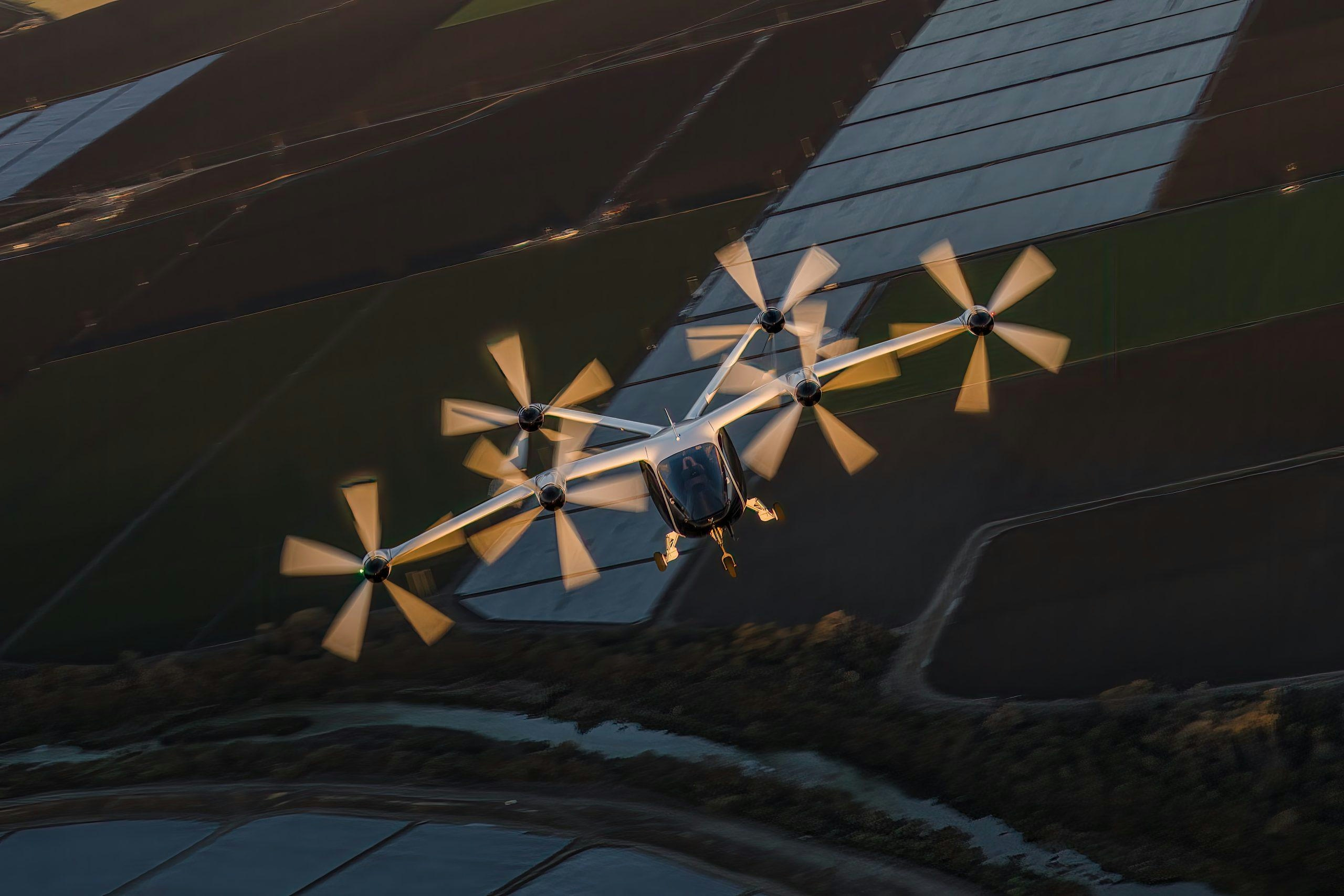
Joby Aviation has taken a significant step toward introducing air taxis to Fort Worth by leasing a 45,000-square-foot facility at Alliance Airport. This space will be dedicated to the manufacturing and testing of electric vertical takeoff and landing (eVTOL) aircraft, marking the first such lease by an eVTOL manufacturer in North Texas. The move underscores the region’s growing prominence in the advanced air mobility sector.

Strategic Importance of Joby’s Arrival

Christopher Ash, president of Alliance Aviation Companies, emphasized the importance of Joby’s establishment at Perot Field, calling it a “significant milestone for the airport and for North Texas aviation.” He highlighted that Joby’s location within the AllianceTexas Mobility Innovation Zone not only validates ongoing collaborative efforts but also advances the integration of eVTOL technology into the broader regional transportation network.

Challenges and Competitive Landscape

Despite the enthusiasm surrounding Joby’s expansion, the introduction of air taxi services in the Dallas-Fort Worth metroplex faces considerable challenges. Regulatory approval remains a critical hurdle, as federal and local authorities continue to develop safety and operational standards for this emerging mode of transport. Joby also confronts stiff competition from other air taxi companies, such as Archer Aviation, which are actively pursuing their own development and testing programs. The sector has seen legal disputes over trade secrets, reflecting the high stakes involved in capturing market share within urban air mobility.

Market Response and Future Prospects

Investor sentiment toward Joby Aviation’s plans has been largely positive, particularly as the company aims to launch its electric air taxi service in the region by September 2026. Realizing this vision will require substantial investment in infrastructure and technology to ensure the seamless integration of eVTOL aircraft into existing transportation systems. Joby’s presence at Alliance Airport is poised to enhance North Texas’s reputation as a center for transportation innovation, showcasing the collaborative efforts driving next-generation mobility solutions. As the industry continues to navigate regulatory, competitive, and technological challenges, the region’s influence in shaping the future of urban air travel is set to expand.

More news
Airbus Tests Uncased Engine Fan on A380, Raising Noise and Safety Concerns

Airbus Tests Uncased Engine Fan on A380, Raising Noise and Safety Concerns

Airbus Tests Uncased Engine Fan on A380, Raising Noise and Safety Concerns Airbus is repurposing the first A380 ever built into a flying laboratory to test CFM International’s innovative exposed-blade Open Fan engine, marking a pivotal advancement in next-generation aircraft propulsion. The double-deck superjumbo, designated MSN001, will support a comprehensive flight test campaign based in Toulouse, scheduled to commence before the end of the decade. This initiative aims to validate the Open Fan’s potential to reduce fuel consumption and carbon dioxide emissions by more than 20% compared to the most efficient engines currently in service. At the Farnborough International Airshow on July 21, 2026, Airbus and CFM revealed the A380 Flight Lab’s new livery and announced the completion of the initial conceptual flight-test design review. While the project’s ambitious efficiency goals are promising, the Open Fan must overcome significant technical challenges, including meeting rigorous standards for safety, noise, durability, and integration before it can be considered viable for commercial deployment. The A380 as an Optimal Test Platform The selection of the A380 as the testbed for this technology is a strategic decision. Its expansive cabin offers ample space to accommodate engineers, workstations, and a wide array of test equipment. Moreover, the aircraft’s four-engine configuration provides a robust and adaptable platform for evaluating unconventional propulsion systems. The A380 will be equipped with hundreds of sensors—ranging from microphones and cameras to accelerometers and pressure instruments—to continuously monitor thrust, drag, vibration, structural loads, and cabin noise throughout various phases of flight. In this capacity, the aircraft will effectively serve as a large-scale airborne data center. Technical Innovation Behind the Open Fan The Open Fan engine diverges from traditional turbofan designs by eliminating the conventional nacelle that encases the front fan. This uncased architecture enables a larger rotor to move greater volumes of air at lower speeds, thereby enhancing efficiency through reduced fuel burn. Unlike the noisy open-rotor concepts of the 1980s, the Open Fan features a single rotating front fan followed by stationary variable-pitch blades that shape the airflow. This configuration is intended to reduce both weight and noise while maintaining cruise speeds comparable to current jet engines. The Open Fan is a key component of CFM’s broader RISE program, which also explores compact engine cores, advanced materials, and hybrid-electric propulsion systems. Safety and Noise Challenges Despite its promising efficiency gains, the Open Fan faces considerable scrutiny regarding safety and noise. The uncased design introduces novel risks that must be rigorously assessed during flight testing. Noise pollution remains a critical concern, with industry stakeholders expressing doubts about the engine’s ability to comply with stringent airport and community noise regulations. Airbus and CFM are under significant pressure to demonstrate that the Open Fan can achieve its fuel efficiency targets without compromising safety or exceeding acceptable noise thresholds. Industry and Market Implications The aviation industry is closely monitoring the development of the Open Fan. The prospect of substantial fuel savings and reduced emissions is particularly appealing for future single-aisle aircraft operating on high-frequency routes. However, airlines and regulatory bodies will require unequivocal evidence of the engine’s safety and noise compliance before adoption. Meanwhile, competitors may leverage these concerns to promote alternative engine technologies that claim superior safety or quieter operation, intensifying competition in the race for sustainable aviation propulsion. As flight tests approach, the A380 Flight Lab will be instrumental in determining whether the Open Fan is ready for commercial application. The results of this program could significantly influence the future trajectory of aircraft engine design, contingent upon Airbus and CFM’s ability to address the critical challenges of safety, noise, and system integration.
Shortest and Longest Flights of the Airbus A350

Shortest and Longest Flights of the Airbus A350

Shortest and Longest Flights of the Airbus A350 The Airbus A350 has emerged as one of the most adaptable widebody aircraft in commercial aviation, capable of serving an extensive range of routes from brief hops lasting under an hour to ultra-long-haul flights approaching a full day in duration. This versatility is exemplified by recent developments at both ends of its operational spectrum. Ultra-Short A350 Flights Qatar Airways recently introduced the Airbus A350-900 on its Doha–Bahrain route, covering a mere 90 miles (80 nautical miles or 150 kilometers). This deployment ranks among the shortest commercial flights operated by a widebody aircraft, reminiscent of Emirates’ use of the A380 on brief Gulf routes. Prior to this, Qatar Airways utilized the similarly sized Boeing 787 for the same sector. The record for the shortest scheduled A350 service, however, is held by Ethiopian Airlines, which operates a 60-mile (approximately 100 kilometers) segment between Geneva and Lyon. This leg, part of a longer Addis Ababa–Geneva flight, lasts just 45 minutes and is flown three times weekly. Short-haul A350 operations extend beyond the Middle East and Europe. In Asia, Singapore Airlines and Ethiopian Airlines both operate the A350-900 between Singapore and Kuala Lumpur, a journey of only 180 miles (295 kilometers). Air India employed its first A350-900 on domestic routes such as Bengaluru–Mumbai, approximately 500 miles, primarily for crew training and regulatory compliance before commencing long-haul services. In Japan, Japan Airlines (JAL) regularly deploys A350-900s on domestic routes, including the 300-mile (520 kilometers) Tokyo Haneda–Osaka sector. These short-haul uses reflect the high passenger volumes and dense urban networks in these regions, where widebody aircraft remain viable even on flights lasting just over an hour. Pushing the Limits: The Longest A350 Flights While the A350’s efficiency on short routes is notable, its principal strength lies in long-haul operations. The aircraft has been central to groundbreaking ultra-long-range flight tests, most prominently a 24-hour nonstop flight from Melbourne to Toulouse. Conducted as part of Qantas’ Project Sunrise initiative, this test set a record for the world’s longest commercial route and showcased the A350’s capability for nonstop flights nearing a full day in duration. The A350-1000ULR (Ultra Long Range) variant has further demonstrated its endurance with a 19-hour nonstop flight from Toulouse to Melbourne. These milestones have sparked considerable market interest, with airlines eager to exploit the A350’s extended range to inaugurate new direct intercontinental routes. Airbus is reportedly considering increasing production to satisfy this demand, while competitors are anticipated to respond with their own ultra-long-range aircraft designs. A Versatile Workhorse Spanning flights as brief as 45 minutes to journeys approaching 24 hours, the Airbus A350’s operational flexibility is unparalleled among contemporary widebody aircraft. Its adaptability enables airlines to deploy it effectively on both dense short-haul routes and pioneering ultra-long-haul services, solidifying its position as a cornerstone of global aviation.
FAA Projects 24,600 Advanced Air Mobility Flights in First Year

FAA Projects 24,600 Advanced Air Mobility Flights in First Year

FAA Projects 24,600 Advanced Air Mobility Flights in First Year The Federal Aviation Administration (FAA) forecasts that advanced air mobility (AAM) operations in the United States could generate approximately 24,600 departures during their first full year of service, according to the agency’s latest Aerospace Forecast. This projection includes a range of services such as airport shuttles, commuter air taxis, cargo feeder routes, and medical transport flights. Anticipated Growth Trajectory The FAA anticipates that the initial AAM fleet will consist of seven aircraft operating across two markets. By the third year, this fleet is expected to expand significantly to 80 aircraft serving 15 markets, resulting in an estimated 334,800 annual departures. Projections for the sixth year indicate further growth to 367 aircraft operating in 32 markets, supporting roughly 1.6 million annual departures—equivalent to about 4,400 flights per day. While the forecast does not specify an exact calendar year for the commencement of commercial AAM services, the FAA acknowledges that the timeline remains uncertain and will depend on factors beyond the scope of its demand study. Industry players such as Joby Aviation, Archer Aviation, and Beta Technologies are among those targeting operations within the 2026-2027 timeframe. Several companies have already initiated limited operations this year under the Department of Transportation’s Electric Vertical Takeoff and Landing and Advanced Air Mobility Integration Pilot Program (eIPP). FAA Deputy Administrator Chris Rocheleau emphasized the importance of these partnerships, stating in March, “These partnerships will help us better understand how to safely and efficiently integrate these aircraft into the National Airspace System. The program will provide valuable operational experience that will inform the standards needed to enable safe Advanced Air Mobility operations.” Early Market Focus and Operational Assumptions Airport shuttle services are projected to constitute the largest segment of initial AAM operations. Other early applications include cargo feeder services targeting sparsely populated western regions and island communities, alongside commuter air taxi and medical transport flights. To meet anticipated demand, the FAA assumes that aircraft engaged in airport shuttle, cargo, and commuter air taxi services will average 28 trips per day, based on two trips per hour during a 14-hour operating window. Medical transport aircraft are expected to average 2.5 trips daily. The agency also notes that current production capacities announced by manufacturers suggest that aircraft availability should not limit fleet expansion. Challenges and Industry Response Despite the optimistic outlook, the FAA recognizes several challenges that must be addressed as AAM operations scale. Regulatory compliance, infrastructure development, and technological integration remain critical hurdles. Safely incorporating these new aircraft into the existing National Airspace System will require close collaboration between industry stakeholders and regulatory authorities. The market is already responding to the FAA’s projections with increased investment in AAM startups and the formation of new partnerships. Competitors are accelerating the development of advanced air vehicle technologies and refining regulatory strategies to secure early market advantages. As the sector evolves, both industry and regulators will need to confront operational, safety, and infrastructure challenges to unlock the full potential of advanced air mobility in the coming years.
American Airlines Flight Returns to Myrtle Beach After Engine Fire Caused by Bird Strike

American Airlines Flight Returns to Myrtle Beach After Engine Fire Caused by Bird Strike

American Airlines Flight Returns to Myrtle Beach Following Engine Fire Caused by Bird Strike Incident Overview Bird strikes remain a persistent hazard in aviation, with the United States reporting up to 60 such incidents daily. While most result in minimal disruption, a recent flight operated by American Airlines experienced a more severe consequence when a bird strike ignited visible flames in one of its engines, necessitating an emergency return to the departure airport. Flight 1760 departed Myrtle Beach at 8 a.m., bound for Charlotte Douglas International Airport. Shortly after takeoff, as the aircraft ascended over open water, passengers and air traffic controllers observed flames and sparks emanating from the left engine. One passenger recounted the experience, describing a loud bang followed by significant rumbling that prompted her to ask her husband to cover their daughter’s ears. Video footage captured from inside the cabin showed flames shooting from the engine against the backdrop of the Atlantic Ocean. Air traffic control personnel also witnessed birds striking the engine, leading the pilot to issue a “Mayday” distress call. The aircraft, a Boeing 787-8 Dreamliner, remained airborne for only 36 minutes before safely returning to Myrtle Beach. Thanks to the prompt and coordinated response of the flight crew and air traffic controllers, all passengers disembarked without injury. Investigation and Aftermath Following the emergency landing, American Airlines immediately removed the aircraft from service for a comprehensive inspection. Maintenance teams discovered significant bird remains and feathers within the affected engine. Although ground-based video footage showed intermittent flames and sparks, airline officials emphasized that there was no indication of a sustained engine fire. The incident has prompted heightened scrutiny of American Airlines’ safety protocols and emergency response measures. Regulatory authorities are expected to investigate the airline’s handling of the event, which may lead to operational disruptions as the damaged aircraft undergoes repairs. Passengers impacted by the emergency landing were rebooked on alternate flights, though some chose to make different travel arrangements. Broader Implications for the Aviation Industry This event raises broader concerns within the airline industry regarding the risks posed by bird strikes. American Airlines may face reputational challenges as public confidence in flight safety is tested. Competitors might leverage the situation to underscore their own safety records in an effort to reassure travelers. Financial repercussions are also possible, including compensation claims from affected passengers and costs related to emergency response and aircraft maintenance. Historically, bird strikes have posed serious risks to aviation safety. The deadliest U.S. incident occurred in 1960 when Eastern Air Lines Flight 375 crashed after colliding with a flock of starlings, resulting in 62 fatalities. Although such tragedies are rare, the recent American Airlines incident highlights the ongoing challenges airlines face in mitigating unpredictable hazards to ensure passenger safety. American Airlines has reaffirmed its commitment to safety and is cooperating fully with authorities as investigations continue, aiming to prevent similar incidents in the future.
Joby Secures $500 Million Defense Contract

Joby Secures $500 Million Defense Contract

Joby Secures $500 Million Defense Contract Joby Aviation has announced a landmark $500 million agreement to acquire Resonant Sciences, a defense firm based in Dayton, Ohio. This acquisition marks a significant expansion of Joby’s footprint in the military sector and is expected to close in early 2027. The deal will be financed through $450 million in cash and $50 million in equity. Following the acquisition, Resonant Sciences will operate as Joby’s dedicated defense division, while the company’s commercial operations remain focused on launching its first air taxis later this year. Strategic Expansion into Defense This move reflects a broader shift within the electric aviation industry, as companies seek alternative revenue streams beyond urban air taxi services amid rising costs and prolonged regulatory challenges. With commercial air taxi operations still awaiting government approvals in most markets, military contracts have become an increasingly vital source of funding. Joby, like many of its competitors, continues to report significant financial losses, posting a net loss of $245.4 million in the second quarter of 2026 on revenues of $38.6 million. Founded in 2015, Resonant Sciences employs approximately 250 people and specializes in advanced systems that enable aircraft to operate effectively in complex environments, including warzones. Its portfolio includes sensors, antennas, and signal-processing systems designed for secure communications and intelligence gathering, alongside expertise in low-observability technologies that reduce aircraft detectability. Resonant’s products are already qualified on more than 20 commercial and defense airframes, and many of its employees hold military clearances due to the classified nature of their work. Joby intends to leverage this acquisition to integrate its propulsion and autonomy technologies with Resonant’s radio frequency, sensing, and mission systems, with ambitions to design and build stealth aircraft. The company’s engagement with the military dates back to 2016, when it joined the Department of Defense’s Defense Innovation Unit project. In 2020, Joby became the first electric vertical takeoff and landing (eVTOL) developer to secure airworthiness approval and flight clearance from the U.S. Air Force. In 2023, it delivered its first aircraft to Edwards Air Force Base for testing. Challenges and Competitive Landscape Despite the promising prospects, Joby’s expansion into defense faces several challenges. The company must navigate complex certification processes for autonomous flight systems, potential operational disruptions, and uncertainties regarding the long-term sustainability of its defense partnerships. Meanwhile, competition in the sector is intensifying. Archer Aviation, a key rival, recently unveiled a new aircraft co-developed with defense technology firm Anduril and is actively expanding into defense, drones, and autonomy. This competitive environment is driving both consolidation and innovation across the industry. Market reactions to Joby’s announcement have been mixed. While investors express optimism about the potential of new defense partnerships, concerns persist regarding the company’s profitability and its ability to execute on ambitious plans. As the electric aviation industry continues to evolve, securing military contracts is emerging as a critical complement to the pursuit of commercial air taxi services.
Southwest Adds Two CEOs to Board of Directors

Southwest Adds Two CEOs to Board of Directors

Southwest Airlines Expands Board with Two New CEOs Southwest Airlines has announced the immediate appointment of Jason Liberty, Chairman and Chief Executive Officer of Royal Caribbean Group, and Varun Krishna, Chief Executive Officer of Rocket Companies, to its Board of Directors. The airline stated that the inclusion of Liberty and Krishna is intended to enhance the board’s expertise in technology, digital innovation, commercial strategy, and financial leadership, aligning with Southwest’s ongoing strategic priorities. Profiles of the New Appointees Jason Liberty has served as Chief Executive of Royal Caribbean Group since 2022 and assumed the role of Chairman in 2025. His tenure at Royal Caribbean spans over two decades, during which he has held senior positions across finance, strategy, technology, and operations, including nine years as Chief Financial Officer. Varun Krishna leads Rocket Companies, a financial technology conglomerate with holdings such as Rocket Mortgage and Redfin. Before joining Rocket, Krishna held senior roles at prominent technology firms including Intuit, PayPal, Groupon, and Microsoft. Southwest highlighted that both executives bring extensive experience in steering large, customer-centric organizations through phases of growth and transformation. Their leadership backgrounds are expected to support Southwest’s efforts to strengthen its competitive position, particularly within the corporate travel sector. Challenges and Market Response The appointments come at a time when Southwest faces the challenge of integrating two active CEOs into its board structure. The airline’s culture, known for its emphasis on "low ego" and servant leadership, will require careful alignment with the new leadership dynamic. Maintaining board cohesion and preserving the company’s distinctive culture will be critical as these changes take effect. Market reactions have been varied. Some investors regard the move as a strategic step to bolster Southwest’s capabilities and respond to shifting industry demands. Conversely, others have expressed caution regarding the potential implications of leadership changes. Competitors are anticipated to closely observe Southwest’s strategic developments and may adjust their corporate travel offerings accordingly. Southwest’s decision to expand its board underscores the airline’s commitment to innovation and adaptability amid a rapidly evolving travel industry.
AerFin and Lufthansa Technik Reach Component Supply Agreement

AerFin and Lufthansa Technik Reach Component Supply Agreement

AerFin and Lufthansa Technik Reach Component Supply Agreement Strengthening Supply Chain Resilience Amid Market Challenges AerFin and Lufthansa Technik have formalized a multi-platform component supply agreement aimed at enhancing material availability and operational flexibility within the aviation aftermarket. Under this partnership, AerFin will provide Lufthansa Technik with access to serviceable components for a wide range of Airbus and Boeing aircraft models, including the A320ceo, A320neo, A330 families, as well as the Boeing 737NG, 737 MAX, and 777 series. This collaboration emerges against a backdrop of persistent supply chain constraints, market volatility, and escalating material costs that continue to challenge the aviation industry. By expanding Lufthansa Technik’s component support network, the agreement seeks to mitigate these pressures and secure more dependable access to critical aircraft parts, thereby supporting uninterrupted flight operations. Industry Implications and Strategic Outlook Berit Plewinsky, Vice President of Aircraft Component Services at Lufthansa Technik, highlighted the significance of reliable partnerships in enhancing component availability. She stated, “We are committed to working with reliable partners like AerFin to ensure our customers benefit from enhanced material access and operational continuity.” The agreement is poised to attract scrutiny from competitors and customers alike, with industry analysts anticipating that rival firms may respond by broadening their aftermarket services or pursuing alternative supply arrangements to safeguard their market positions. Despite the competitive landscape, Lufthansa Technik’s continued investments and strategic partnerships underscore its resilience amid ongoing market challenges. The company’s emphasis on collaboration reflects a wider industry trend, as airlines and service providers increasingly seek cooperative solutions to navigate supply disruptions and cost pressures. By leveraging AerFin’s extensive inventory and expertise, Lufthansa Technik aims to strengthen its component support capabilities, delivering enhanced value to airline customers and reinforcing its standing in the global aviation aftermarket.
Safety Travels Uses AI Assistant to Streamline Flight Booking and Combat Online Fraud

Safety Travels Uses AI Assistant to Streamline Flight Booking and Combat Online Fraud

Safety Travels Introduces AI Assistant to Enhance Flight Booking and Combat Online Fraud Safety Travels Limited has launched an artificial intelligence (AI) assistant designed to simplify the flight booking process, provide real-time fare options, and strengthen defences against online travel fraud. Unveiled on Monday in Abuja, the AI-powered platform aims to improve transparency and convenience for travellers while granting them greater control over their bookings. Innovative Features and Accessibility Joseph Agofure, Managing Director of Safety Travels Limited, emphasized that the company is the first travel agency in Nigeria to integrate an AI assistant directly into its website. This assistant enables users to search for flights and generate itineraries through voice or text commands. Accessible from any internet-enabled device, the AI has been trained to comprehend multiple languages, including Nigerian dialects and broken English. Agofure explained, “Travellers can simply speak or type their destination, departure point, and preferred travel date. The AI then generates available flight options and fares, allowing customers to compare departure times, prices, baggage allowances, and other conditions before booking.” The platform also provides detailed fare conditions, such as refund policies and flight durations, ensuring customers have comprehensive information prior to confirming their reservations. To enhance user experience, the system allows customers to place bookings on hold for a limited time to complete payment, after which electronic tickets are issued. The platform supports various payment methods and is compatible with smartphones, laptops, and other internet-enabled devices. Addressing Online Fraud and Data Security The launch of this AI assistant comes amid growing concerns over fraudulent websites and impersonators targeting unsuspecting travellers. Chidi Nwogu, Chairman of Safety Travels Limited, recounted instances where customers lost substantial amounts—citing a case where a traveller lost £1,000—after making payments through counterfeit websites mimicking the company’s official platform. He urged customers to verify agency identities and transact exclusively through authorised channels, underscoring that Safety Travels’ official website is safetytravels.org. Nwogu further highlighted that the company has processed over 5,000 client passports, making the protection of customer identity and financial information a paramount priority. To this end, Safety Travels has adopted Stripe for secure identity verification and payment processing, with customer data safeguarded by established digital security protocols. Challenges and Industry Context Despite these technological advancements, integrating AI into travel booking presents challenges. Industry experts caution that reliance on AI-generated insights carries risks, particularly if the technology produces inaccurate or misleading information—a concern especially relevant in sectors such as banking and financial services, where model reliability and AI “hallucinations” are critical issues. Moreover, consumer trust in AI remains limited; recent surveys reveal that only 9% of travellers feel comfortable allowing an AI agent to complete bookings on their behalf. As Safety Travels advances its AI initiative, it faces competition from other agencies that may deploy their own sophisticated AI technologies to improve booking efficiency and security. This evolving landscape highlights the necessity of maintaining robust digital safeguards and fostering consumer confidence in AI-driven travel solutions.
The Impact of AI on the Global Aviation Industry

The Impact of AI on the Global Aviation Industry

The Impact of AI on the Global Aviation Industry The aviation sector is experiencing a profound transformation driven by the rapid integration of artificial intelligence (AI) technologies. Airlines, original equipment manufacturers (OEMs), and airports worldwide are increasingly adopting AI to enhance real-time decision-making, operational efficiency, and passenger experience. This expansion is fueled by the convergence of AI with aviation-specific technologies such as computer vision, natural language processing (NLP), and machine learning, resulting in a market growing at a double-digit pace. AI in Air Traffic Management and Urban Air Mobility As global air travel recovers and passenger numbers rise, airports face mounting pressure to manage increased throughput with limited resources. AI is poised to revolutionize air traffic management (ATM), especially as airspace becomes more congested with the emergence of drones and electric air taxis. Traditional radar and controller-based systems are approaching their operational limits, whereas AI-powered platforms can process real-time flight data, weather conditions, and potential conflicts with far greater speed and accuracy. Recent initiatives highlight AI’s expanding role in this domain. EUROCONTROL has piloted AI-based traffic prediction tools capable of forecasting aircraft trajectories up to 20 minutes ahead, thereby reducing mid-air conflicts and runway congestion. In the United States, NASA’s Airspace Technology Demonstration-2 (ATD-2) project achieved a 38% reduction in taxi times at Charlotte Airport by employing AI for surface management. This advancement not only lowered CO2 emissions and fuel consumption but also generated direct cost savings for airlines. Urban air mobility (UAM) represents another critical frontier for AI application. Companies such as Joby Aviation and Wisk Aero are developing fully autonomous electric vertical takeoff and landing (eVTOL) aircraft that depend on AI for obstacle avoidance, route planning, and communication with smart infrastructure. NASA’s National Campaign for Advanced Air Mobility utilizes AI models to simulate UAM traffic at scale, ensuring safety and regulatory compliance. AI also facilitates dynamic flight path rerouting, airspace deconfliction, and integration with unmanned traffic management (UTM) systems. With the International Air Transport Association (IATA) projecting that air traffic will double by 2040, the urgency for AI-enhanced ATM solutions is clear. Whether through AI-driven tower operations at major hubs or algorithmic conflict resolution in urban corridors, the future of scalable and safe airspace growth will depend heavily on advanced AI systems. AI’s Role in Air Cargo and Emerging Challenges The air cargo sector, which contributes over 12% of airline revenues, is also undergoing significant change due to AI. In 2023, global air cargo volumes exceeded 65 million metric tons, yet profitability remains constrained by capacity limitations, volatile demand, and reliance on manual processes. AI-driven forecasting, dynamic pricing, and route optimization are increasingly employed to address these challenges. Machine learning models trained on historical shipment data and external variables can now predict freight demand and yields up to two weeks in advance, enabling more agile and efficient capacity management. Despite these advancements, the rapid adoption of AI in aviation presents notable challenges. There are growing concerns about a potential AI investment bubble that could lead to reversals in spending, declines in equity prices, and bond defaults. Market dynamics may also shift as competition intensifies, particularly with Chinese AI firms offering high-quality services at lower costs. The concentration of essential AI inputs among a few global technology giants could further restrict market entry for smaller players. Moreover, the opaque "black box" nature of AI complicates the detection of anti-competitive behaviors such as collusion or exclusionary conduct, which could adversely affect industry competition. As aviation systems become increasingly dependent on interconnected digital infrastructure, addressing these economic and regulatory risks will be as critical as harnessing AI’s transformative potential.
Vietnam’s Sun PhuQuoc Airways to Receive Eight Airbus A330s by April 2027

Vietnam’s Sun PhuQuoc Airways to Receive Eight Airbus A330s by April 2027

Vietnam’s Sun PhuQuoc Airways to Receive Eight Airbus A330s by April 2027 HANOI – Vietnamese carrier Sun PhuQuoc Airways has announced plans to take delivery of eight Airbus A330 wide-body aircraft by April 2027, marking a significant step in its strategy to expand into international markets. The airline revealed the schedule in a statement posted on its official Facebook page, outlining a phased delivery plan that will see the first two A330s arrive next month and enter service immediately. Two more aircraft are expected by the end of this year, with the remaining four scheduled for delivery during the first four months of 2027. Expansion of International Routes and Fleet Growth The introduction of the Airbus A330s is intended to bolster Sun PhuQuoc Airways’ connectivity to key international destinations, including South Korea, Russia, Kazakhstan, Japan, and Australia. This move aligns with the airline’s broader ambition to enhance its long-haul capabilities. Looking further ahead, Sun PhuQuoc Airways has announced plans to acquire 40 Boeing 787-9 Dreamliner jets starting in 2031, signaling a long-term commitment to fleet modernization and expansion. Since commencing operations in November last year, primarily serving tourists traveling to Phu Quoc Island in southern Vietnam, the airline has set an ambitious target to grow its fleet to 100 aircraft by the end of 2035. This rapid expansion reflects its intent to become a major player in Vietnam’s aviation sector. Challenges and Strategic Partnerships Despite its growth ambitions, Sun PhuQuoc Airways faces several operational and competitive challenges. Managing rising operational costs, scaling its fleet and workforce, and upgrading infrastructure capacity will be critical as the airline expands. Furthermore, it must compete on service quality in a market dominated by well-established carriers. Industry analysts suggest that Sun PhuQuoc’s expansion could intensify competition within the region, potentially prompting rival airlines to adjust their service offerings and pricing strategies. To support its growth and maintain a steady supply of qualified pilots, the airline has partnered with BAA Training, an aviation training organization, to provide pilot instruction on Airbus A320 narrow-body aircraft. This collaboration aims to ensure that Sun PhuQuoc Airways can meet the demands of its expanding operations while maintaining high safety and service standards. With its planned fleet expansion and international ambitions, Sun PhuQuoc Airways is positioning itself as a significant emerging force in Vietnam’s aviation industry, though it will need to carefully navigate the operational and competitive pressures that accompany rapid growth.
line









