
Orchestrer les insights d’IA pour les transformer en actions

Tendances
Categories
France Competes with Germany for Sweden’s Sixth-Generation Fighter Partnership, Proposing Safran Engines to Reduce U.S. Dependence
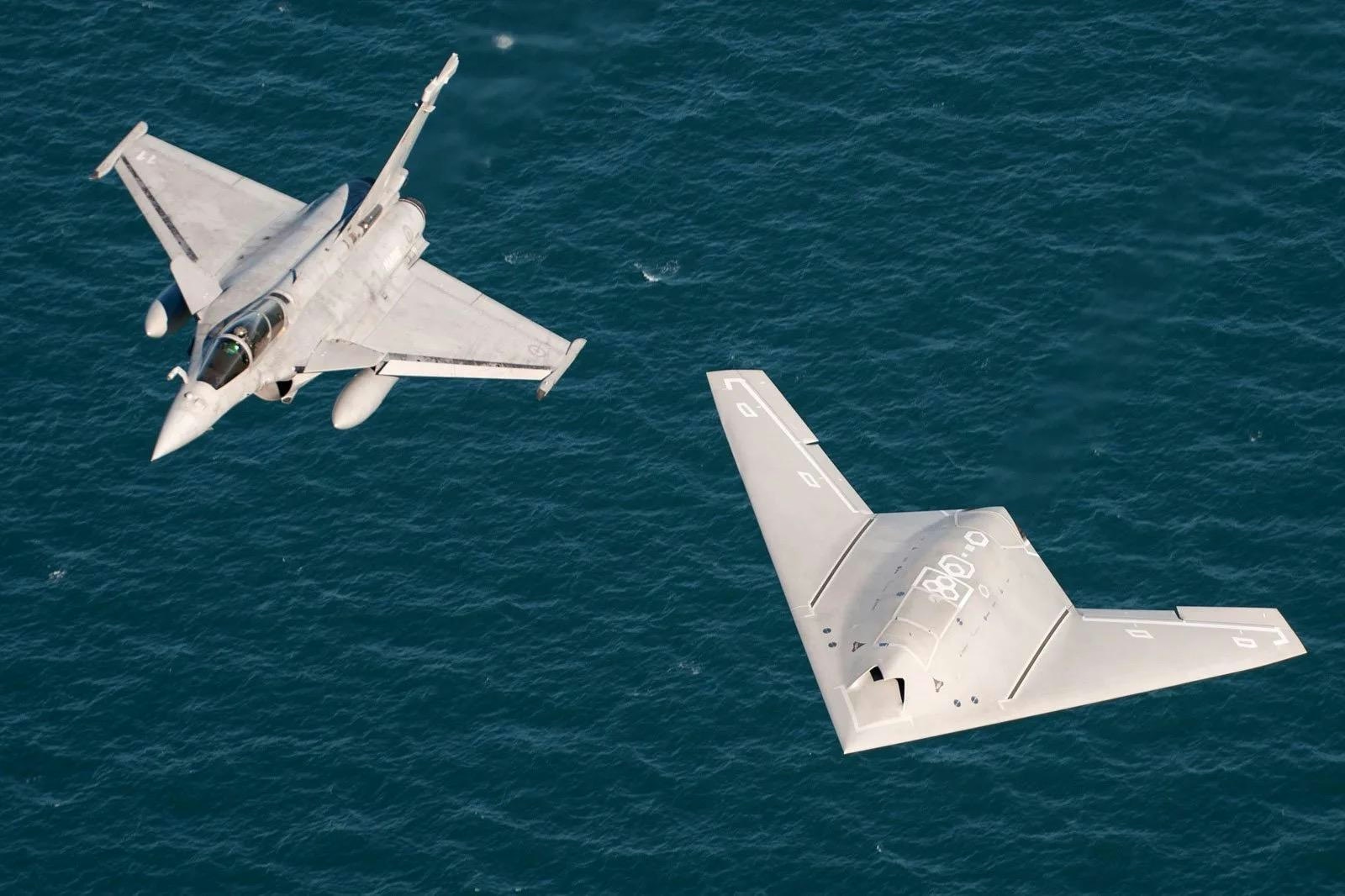
France and Germany Compete for Sweden’s Sixth-Generation Fighter Partnership
France has formally expressed its willingness to collaborate with Sweden on the development of a sixth-generation fighter jet, proposing extensive cooperation that notably includes the integration of French-made Safran engines. An official from the Élysée Palace confirmed this stance during a press briefing ahead of President Emmanuel Macron’s visit to Sweden, highlighting the mutual interest in designing lighter, next-generation combat aircraft. This initiative positions France in direct competition with Germany, which has also pursued Swedish defense industry involvement—primarily through Saab—in its own sixth-generation fighter ambitions.
Discussions between Germany and Sweden began over a year ago as Berlin explored alternatives following uncertainties surrounding the Franco-German-Spanish Future Combat Air System (FCAS) project. The FCAS program encountered significant setbacks in June 2026, reflecting ongoing challenges in European defense collaboration. Meanwhile, Saab continues to advance its independent “F-series” sixth-generation fighter concept, closely aligned with the Swedish defense ministry’s strategic priorities. For Sweden, joining a multinational program would require setting aside its sovereign development trajectory, a considerable decision given its historical emphasis on maintaining national control over critical defense technologies.
Strategic Implications of Engine Collaboration and International Interest
France’s proposal centers on engine collaboration, a critical area where Sweden has traditionally depended on U.S. technology. Since the introduction of the Saab 37 Viggen in 1967, Swedish fighters have utilized American engines, either produced under license or procured directly, as exemplified by the current JAS 39 Gripen E/F. Paris positions the Safran engine offer as a means for Sweden to reduce its reliance on the United States, particularly amid growing concerns over the unpredictability of U.S. foreign policy toward Europe.
This proposal arrives at a time when the U.S. Air Force has publicly expressed dissatisfaction with the state of jet engine manufacturing, citing delays and quality control issues. Such developments may prompt increased scrutiny of Safran’s capacity to meet the stringent demands of a sixth-generation fighter, potentially influencing Sweden’s decision-making process. Germany, for its part, may leverage its own technological advancements to sustain its attractiveness as a partner. Notably, Saab has not viewed the use of American engines as a disadvantage; in the late 1990s, the European Eurojet consortium offered Saab the EJ200 engine for an upgraded Gripen, though that initiative did not progress.
The outcome of Sweden’s choice carries broader strategic significance. India has demonstrated interest in France’s sixth-generation fighter program, underscoring the global implications and potential for expanded international partnerships. Concurrently, Ukraine is closely monitoring developments as it evaluates future fighter options for its air force. Saab has announced plans to establish production facilities in Ukraine, with similar commitments being sought from Dassault Aviation.
As France and Germany compete for Sweden’s partnership, the decision will not only influence the future of European airpower but also shape the balance of technological influence and strategic alliances across Europe and beyond.

Etihad Airways Suspends Airbus A380 Flights on Key Route

Aditya Birla Group Seeks Approval for Aircraft Leasing in GIFT City

Qatar Airways Highlights Innovation and Connectivity at Arabian Travel Market 2026

Hong Kong's Five-Year Plan Includes Andrew Fan's Aircraft Parts Processing Hub Proposal

ACIA Aero Leasing Delivers ATR72-600 to Air Nostrum

RTX Appoints Jill Albertelli as Head of Pratt & Whitney

TAT Technologies Joins Beyond Aero Hydrogen Aircraft Program

AURAK Study Highlights Barriers to Air Taxi Adoption in Emerging Economies

Xiamen Air Selects Altitude for 787 Maintenance at Heathrow

Etihad and Swissport Extend Global Partnership
