Image

Orchestrer les insights d’IA pour les transformer en actions

Inscrivez-vous dès aujourd’hui sur la liste d’attente d’AeroGenie !

Tendances

Categories

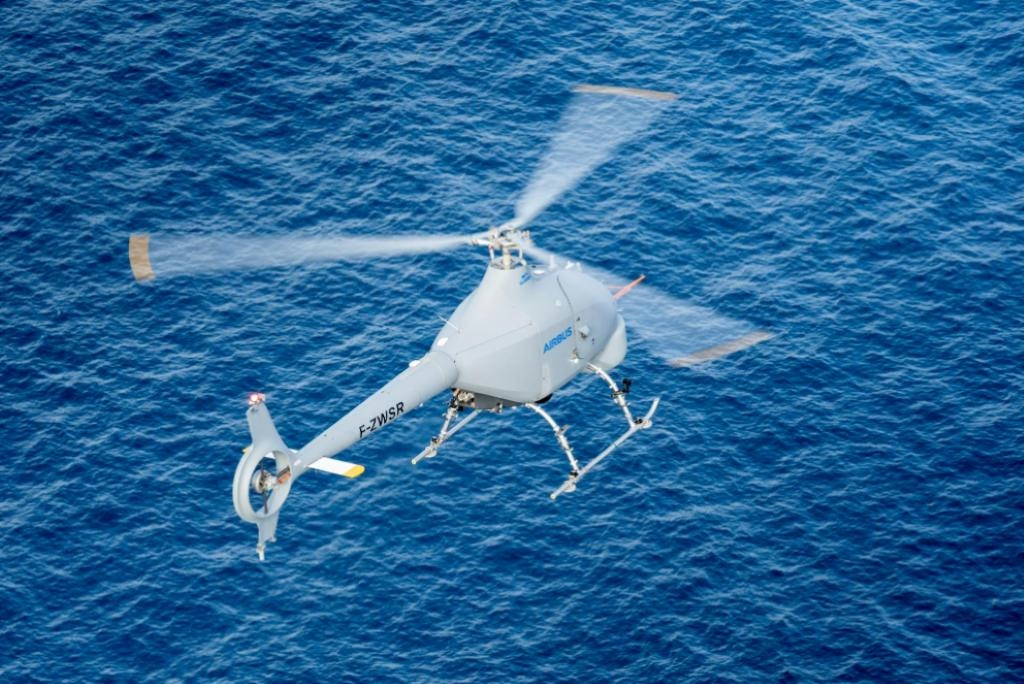
France Orders Airbus VSR700 Uncrewed Aerial Vehicle
January 16, 2026By ePlane AI
France Orders Airbus VSR700 Uncrewed Aerial Vehicle
0
0
Airbus VSR700
French Navy
Uncrewed Aerial Vehicle

France Commits to Airbus VSR700 Uncrewed Aerial Vehicles for Naval Modernization

Contract Award and Strategic Significance

On 14 January 2026, the French Armament General Directorate (DGA) officially awarded a contract to Airbus Helicopters and Naval Group for the production of six VSR700 uncrewed aerial systems. These drones are slated for deployment by the French Navy beginning in 2028, representing a pivotal advancement in France’s naval modernization efforts through the integration of cutting-edge unmanned technologies.

Bruno Even, CEO of Airbus Helicopters, expressed the company’s commitment to delivering a reliable and high-performance platform that will enhance the French Navy’s operational sovereignty and mission effectiveness. He highlighted the establishment of a dedicated industrial framework designed to support serial production while upholding stringent aeronautical safety and performance standards.

Capabilities and Integration

The VSR700 will be configured primarily for Intelligence, Surveillance, and Reconnaissance (ISR) missions. It will be equipped with a suite of advanced sensors, including a surveillance radar, an electro-optical system, and an Automatic Identification System (AIS) receiver. Naval Group will manage the integration of the VSR700 into the naval vessels’ architecture, ensuring seamless connectivity with existing combat systems through the Steeris® Mission System.

Derived from the crewed Cabri G2 helicopter developed by Hélicoptères Guimbal, the VSR700 serves as a dual-use platform. Its naval military variant was developed under the French Navy and DGA’s SDAM (Système de drone aérien de la Marine) programme in collaboration with Naval Group. The system has undergone rigorous testing both on land and at sea, designed to augment crewed helicopters by extending a vessel’s intelligence-gathering and surveillance reach. While initially focused on ISR roles, the VSR700’s versatility allows it to support logistics, armed reconnaissance, and even civil applications such as firefighting and disaster relief.

Challenges and Market Implications

The integration of the VSR700 into existing French naval systems may encounter technical challenges, potentially affecting delivery timelines as the new technology is assimilated into operational fleets. This development is anticipated to have broader implications for the defense sector, stimulating increased interest in uncrewed aerial vehicles for surveillance and reconnaissance missions.

Competitors, including Leonardo Helicopters—which has developed autonomous rotorcraft for the UK Royal Navy—may accelerate their own UAV programs in response. As global defense priorities shift towards unmanned systems, the market is expected to witness intensified innovation and competition in this domain.

Airbus has also showcased the VSR700’s capability to operate collaboratively with crewed helicopters through its HTeaming solution, further enhancing operational flexibility for the French Navy.

Comments

  • D

    donna albert

    Hello! I'm very excited to inform everyone that I'm completely cured from my HSV 1&2 recently. I have used Oregano oil, Coconut oil, Acyclovir, Valacyclovir, Famciclovir, and some other products and it's really helped during my outbreaks but I totally got cured! from my HSV with a strong and active herbal medicine I ordered from a powerful herbalist and it completely fought the virus from my nervous system and I was tested negative after 14 days of using the herbal medicine. I'm here to let y'all know that herpes virus has a complete cure, I got rid of mine with the help of Dr Osalu and his herbal exploit. Contact him via email: drosaluherbalhome@gmail.com and as well write him on WhatsApp   +2348078668950.  https://drosaluherbalhome.wixsite.com/drosaluherbshome 

  • S

    Sherry Beach

    My husband and I have been infected with HPV although I was the coursed I cheated on my husband it was when I contracted the virus for the pasted 3 years this has been a deeply situation so embarrassed every-time I looked at my self I just pissed off the virus was getting over my life. just to make the story short, few weeks ago I found a herbalist Dr. online who has cured Hpv patients with 100% excellent result and I inquire the treatment me and my husband taking it for two weeks and we got cured I just want to use this medium to thanks Dr Oyagu for his wonderful treatment he so-much saved us out from this virus. his information been attached to my post you can reach out to him via, WhatsApp number +2348101755322 . or email oyaguherbalhome@gmail.com He is capable of curing HIV/AIDS, HERPES, HPV, HSV1&2, CANCER of all kinds, DIABETES and so many other infections. I’m so glad I found you, on Google https://oyaguspellcaster.wixsite.com/oyaguherbalhome

  • M

    Mignon Wright

    DR OYAGU herbal medicine is a good remedy for herpes simplex virus cure. My name is MIGNON WRIGHT , am from USA,I am here to give my testimony about DR OYAGU who helped me in my life, I want to inform the public how I was cured from (HERPES SIMPLEX VIRUS) by DR OYAGU, I visited different hospital but they gave me list of drugs like Familiar, Zovirax, and Valtrex which is very expensive to treat the symptoms and never cured me. I was browsing through the Internet searching for remedy on HERPES and I saw comment of people talking about how DR OYAGU cured them, when I contacted him he gave me hope and send a Herbal medicine to me that I took and it seriously worked for me, am a free person now without any problem, my HERPES result came out negative, I pray to God to never let me and my family forget you in our life, am now cured permanently, you can also get your self cured my friends if you really need this doctor help, you can reach him on his website ;https://oyaguspellcaster.wixsite.com/oyaguherbalhome Email: oyaguherbalhome@gmail.com or via WhatsApp +2348101755322

  • M

    Mignon Wright

    DR OYAGU herbal medicine is a good remedy for herpes simplex virus cure. My name is MIGNON WRIGHT , am from USA,I am here to give my testimony about DR OYAGU who helped me in my life, I want to inform the public how I was cured from (HERPES SIMPLEX VIRUS) by DR OYAGU, I visited different hospital but they gave me list of drugs like Familiar, Zovirax, and Valtrex which is very expensive to treat the symptoms and never cured me. I was browsing through the Internet searching for remedy on HERPES and I saw comment of people talking about how DR OYAGU cured them, when I contacted him he gave me hope and send a Herbal medicine to me that I took and it seriously worked for me, am a free person now without any problem, my HERPES result came out negative, I pray to God to never let me and my family forget you in our life, am now cured permanently, you can also get your self cured my friends if you really need this doctor help, you can reach him on his website ;https://oyaguspellcaster.wixsite.com/oyaguherbalhome Email: oyaguherbalhome@gmail.com or via WhatsApp +2348101755322

  • C

    Chole Martins

    I still can’t believe this is real, but I actually won the lottery jackpot! It feels like a dream come true. For years, I would occasionally play without expecting much, just hoping that one day luck would finally be on my side—and it finally happened when I came across a testimony on how Dr Benjamin the great spell caster had helped alot of people win, so I reached out to him, he told me what to do and I followed his instructions, after 48 hours he gave some numbers to play, I did played the numbers as instructed. The moment I checked my numbers and realized they all matched, my heart started racing. I had to double-check multiple times because I couldn’t believe what I was seeing. Winning the Powerball jackpot of $107,000,000,00. This has completely changed my life. It’s given me financial freedom, peace of mind, and the opportunity to support my family and invest in my future. Here are his contact information. Email: drbenjaminlottospell711@gmail.com Whatsapp: +18588585788

  • M

    Mignon Wright

    DR OYAGU herbal medicine is a good remedy for herpes simplex virus cure. My name is MIGNON WRIGHT , am from USA,I am here to give my testimony about DR OYAGU who helped me in my life, i want to inform the public how i was cured from (HERPES SIMPLEX VIRUS) by DR OYAGU, i visited different hospital but they gave me list of drugs like Familiar, Zovirax, and Valtrex which is very expensive to treat the symptoms and never cured me. I was browsing through the Internet searching for remedy on HERPES and i saw comment of people talking about how DR OYAGU cured them, when i contacted him he gave me hope and send a Herbal medicine to me that i took and it seriously worked for me, am a free person now without any problem, my HERPES result came out negative, I pray to God to never let me and my family forget you in our life, am now cured permanently, you can also get your self cured my friends if you really need this doctor help, you can reach him on his website ;https://oyaguspellcaster.wixsite.com/oyaguherbalhome Email: oyaguherbalhome@gmail.com or via WhatsApp +2348101755322

  • M

    Mignon Wright

    Once again I want to appreciate Dr Oyagu for helping me with his herbal medicine to cure my herpes. virus completely, I really suffered from this virus for the past 5yrs, Right now I'm herpes negative after using the herbal medicine Dr Oyagu sent to me .I give all thanks to God for leading me to Dr Oyagu who was able to cure me completely from herpes virus , Dr Oyagu you are the best traditional doctor in the world God bless you sir, contact Dr Oyagu for cure if you have been passing through similar diseases or virus like. herpes. HIV. gastritis. fibroids .etc via. his WhatsApp contact +2348101755322 or email him oyaguherbalhome@gmail.com god bless you all https://www.facebook.com/share/17BnC15B4i

  • S

    SUSAN JOEL

    Herpes is a serious and recurring disease which can't be cured through drugs or injections by the American doctors but the best way to deal with herpes is by taking natural herbal medicine for it, and is only few American doctors that know about this herbal medicine, from Dr Uma.. I have read about Dr Uma the great herbalist doctor from African who can cure Herpes with his herbal medicine. for the people suffering from the following diseases Hiv, Herpes, Cancer, Herpatitis B, Diabetes, Hpv, Infections ETC should contact him for his herbal medicine because i am a living testimony and i was cured of HERPES. Although, i sent him what he requested and he sent me his medicine which i took for three weeks and when i went for test i was tested Herpes Negative. you can reach him through his email address:Dr.umaherbalcenter@gmail.com or Whatsapp +2347035619585 Thanks Dr Uma.

  • S

    SUSAN JOEL

    Herpes is a serious and recurring disease which can't be cured through drugs or injections by the American doctors but the best way to deal with herpes is by taking natural herbal medicine for it, and is only few American doctors that know about this herbal medicine, from Dr Uma.. I have read about Dr Uma the great herbalist doctor from African who can cure Herpes with his herbal medicine. for the people suffering from the following diseases Hiv, Herpes, Cancer, Herpatitis B, Diabetes, Hpv, Infections ETC should contact him for his herbal medicine because i am a living testimony and i was cured of HERPES. Although, i sent him what he requested and he sent me his medicine which i took for three weeks and when i went for test i was tested Herpes Negative. you can reach him through his email address:Dr.umaherbalcenter@gmail.com or Whatsapp +2347035619585 Thanks Dr Uma.

  • M

    magriet dennis

    Get rid of all kinds of Herpes and virus infections, Diabetes, Hepatitis A B C, Menopause and HIV with Natural Roots and Herbs, i was once infected with HERPES and after using Dr UMA Herbal Medicine for couple of weeks i couldn't trace it anymore, i even went for checkup and my test came out Negative. Get your cure today from this wonderful herbalist, Dr. UMA. You can also reach doctor UMA on WhatsApp +2347035619585 or Email dr.umaherbalcenter@gmail.com.

  • M

    Michael Kelly

    ATTENTION PLEASE!!! Am so glad to be expressing my profound gratitude to a man that is so concerned about other people’s well being. I was suffering from (HERPES SIMPLEX VIRUS TYPE II) The doctors keep telling me that there is no cure but i believe that there is a cure somewhere and they don’t want people to get cured. I tried searching online if I could see anything that will help me and a comment on YouTube on how Dr Omofuma help to cure herpes with herbs and i also saw so many comments about him on many web pages on how he had helped and cured so many people suffering from HERPES , HPV, CANCER, HIV/AIDS, COLD SORE etc. So I contacted him through his email and I shared my problems with him and he sent me the herbs through UPS and gave me instructions on how to use it. It took me two weeks to finish the herbs and after I finished using it, he told me to go for a medical test, behold the result was negative, now I am HERPES VIRUS free. I just want to use this platform to thank Dr Omofuma for curing me from that horrible disease and also for exposing his herbal cure to the world at large, please you can as well contact Dr Omofuma on his email below. Email: dromofuma97@gmail.com On whatsapp/call his cell phone +2348084139974. Together we stand a chance to fight herpes. Let’s continue to share this till The whole world Gets to know that there is a herbal cure for herpes,E,T.C. God bless you all

  • E

    Esther

    Doctor Agbonhale treatment is 100% guarantee for HSV Cure, the reason why most people are finding it difficult to cure HSV is because they believe on medical report, drugs and medical treatment which is not helpful to cure HSV, Natural root/ herbs are the best remedy which can easily eradicate herpes forever for more information write for any health challenges. WhatsApp👉 +2349073130326 Email: dragbonhaleherbalhome@gmail.com God bless you.🙏

More news
Inside AAV's September-October Issue: Inclusion, Connection, Visibility

Inside AAV's September-October Issue: Inclusion, Connection, Visibility

Inside AAV’s September-October Issue: Inclusion, Connection, Visibility The September-October edition of *Asian Aviation* offers an in-depth examination of the commercial aviation sector’s evolving landscape, emphasizing themes of inclusion, connection, and visibility. Released to coincide with MRO Asia and MRO Europe events, this issue addresses the industry’s critical challenges and emerging opportunities amid rapid transformation. The Future of MRO and Industry Innovation A key feature explores the trajectory of the maintenance, repair, and overhaul (MRO) sector through to 2035. With global MRO expenditure expected to exceed US$150 billion, the industry confronts significant pressures from expanding aircraft fleets, ageing airframes, and ongoing engine reliability issues. The analysis highlights the technological advancements, innovative business models, and regional market dynamics—particularly within the fast-growing Asia-Pacific region—that will shape the competitive landscape over the coming decade. In parallel, the issue examines advancements in in-flight connectivity, where satellite operators and IFEC providers are revolutionizing passenger experience. Enhanced network capabilities now support ultra-fast internet access, high-definition streaming, and increased passenger engagement, enabling airlines to maintain competitiveness in an increasingly digital environment. The shift towards software-defined avionics is also scrutinized, revealing a growing preference among leasing companies and airlines for software-centric upgrades over hardware replacements. This approach facilitates more agile, cost-effective enhancements to flight management systems, reflecting a broader industry trend toward digital flexibility. Supply Chain Challenges and Strategic Adaptations Persistent disruptions in aviation supply chains continue to affect the timely delivery of engines, components, and critical systems. These shortages have significant implications for maintenance schedules and fleet availability, compelling airlines and suppliers to collaborate closely on bolstering supply chain resilience. Such efforts are essential to sustaining operational efficiency and meeting the rising demand for air travel. The issue further reflects on the lessons learned from the Trent 1000 engine crisis, which exposed the vulnerabilities associated with engine exclusivity. In response, airlines are increasingly adopting strategies that incorporate multiple engine options. Although this approach may involve higher initial costs, it enhances operational resilience, flexibility, and customer choice. Digital Inclusion and Market Visibility As the aviation industry integrates new technologies, the importance of digital inclusion and visibility has become more pronounced. Insights from Somantra’s report on the AI search visibility gap among Australian insurance brands underscore the necessity for robust digital strategies. Competitors are actively enhancing their digital content to secure prominence in AI-driven search results, a development that holds significant relevance for aviation brands striving to maintain visibility in a rapidly evolving digital marketplace. Broader market trends also influence industry dynamics. The inclusion of Precision BioSciences in the Russell 2000 Index exemplifies how increased visibility can attract institutional investment. Concurrently, a softening market for independent agents, as noted by PropertyCasualty360, is prompting companies to reevaluate their competitive approaches. Additionally, geopolitical tensions, such as those in Israel reported by Crypto Briefing, highlight the ongoing need for resilience and adaptability amid uncertainty. Advertising Deadlines Advertisers aiming to achieve inclusion, connection, and visibility in this pivotal issue should observe the booking deadline of 24 August and the material submission deadline of 26 August. Reservations can be made by contacting Head of Sales Sally Passey at [email protected]. *Reserve your space in AAV’s September-October issue to stay at the forefront of a rapidly changing industry.*
Airbus Nears Two A330neo Orders Ahead of Farnborough Airshow

Airbus Nears Two A330neo Orders Ahead of Farnborough Airshow

Airbus Nears Major A330neo Orders Ahead of Farnborough Airshow Airbus is on the cusp of securing two significant orders for its A330neo widebody aircraft, just days before the Farnborough Airshow. Reports from Bloomberg and Reuters indicate that Saudi Arabia’s low-cost carrier Flynas and Germany’s Condor are in advanced negotiations with the European aerospace manufacturer. Flynas is expected to finalize a deal for eight A330neo jets, while Condor is preparing to acquire six additional aircraft to expand its fleet. Strategic Expansion for Flynas and Condor These prospective agreements mark a substantial investment in the long-haul market for both airlines. Flynas’s anticipated order will augment its existing backlog of 30 A330-900s, with initial deliveries slated for 2027. Since pioneering low-cost air travel in Saudi Arabia in 2007, Flynas has been intensifying its long-haul operations to support the Kingdom’s Vision 2030 initiative. This national strategy aims to connect Saudi Arabia to 250 global destinations and attract 330 million travelers, positioning Flynas as a pivotal player in the country’s tourism ambitions. Condor, on the other hand, is transitioning from fleet modernization to expansion. Having recently replaced older A330ceo and Boeing 767 models with the A330neo, the airline’s new order would increase its A330neo fleet by 20%, bringing the total to 24 aircraft. This move reflects Condor’s confidence in sustained demand for long-haul travel and its commitment to enhancing capacity. Airbus’s Position and Market Challenges Christian Scherer, Airbus’s Chief Commercial Aircraft Officer, emphasized the strategic advantages the A330neo offers Flynas. He noted that the aircraft would enable Flynas to expand into widebody markets by leveraging Airbus’s unique commonality between the A330neo and the A320. This commonality provides the airline with operational versatility and economic efficiency, while delivering an enhanced cabin experience for passengers. As Airbus approaches the finalization of these deals, the company faces the challenge of maintaining production efficiency and adhering to delivery schedules amid rising demand. Industry observers are closely monitoring how Airbus manages its order backlog, particularly as its total orders for the year surpass those of its main competitor, Boeing. The forthcoming Farnborough Airshow is expected to heighten competition, with Boeing likely to intensify its marketing and sales efforts in response to Airbus’s momentum. Flynas’s expansion highlights the growing significance of affordable long-haul travel in the Middle East. Operating a fleet of over 60 aircraft, the airline conducts more than 1,500 weekly flights and serves over 110 million passengers across nearly 140 routes. Its investment in the A330neo is central to its strategy of establishing year-round, low-cost travel to distant destinations as a core business focus. With both Flynas and Condor poised to finalize their orders, Airbus is set to reinforce its leadership in the widebody market, even as it navigates the pressures of production and intense competition ahead of one of the aviation industry’s most prominent events.
Asian airlines are cashing in on the AI boom, and it's not from passenger tickets

Asian airlines are cashing in on the AI boom, and it's not from passenger tickets

Asian Airlines Capitalize on AI Boom Through Cargo Operations Asian airlines are emerging as significant beneficiaries of the global artificial intelligence surge, not through increased passenger traffic but by transporting the critical hardware that underpins AI development. Korean Air, China Airlines, and EVA Airways have all reported record cargo revenues in the second quarter of 2026, driven by a substantial rise in shipments of AI servers and semiconductor chips along transpacific routes. Cargo Demand Soars Amid AI Hardware Shipments Korean Air’s cargo revenue experienced a remarkable 46% year-on-year increase in Q2 2026, reaching 1.54 trillion won. This growth reflects a broader industry trend, with global air cargo demand rising 7% in June, largely propelled by shipments of AI-related hardware. Spot freight rates on transpacific routes have surged accordingly, with rates from Northeast Asia to North America climbing 41% year-over-year by late June, and those from Southeast Asia to North America increasing by 42%. The geographic significance of these routes cannot be overstated. Taiwan, South Korea, and Southeast Asian countries serve as key hubs for semiconductor manufacturing, while North America hosts the majority of hyperscale data centers that consume these components. Consequently, the transpacific air corridor has become an essential supply chain artery supporting the rapid expansion of AI infrastructure. Mitigating Rising Costs Through AI-Driven Cargo Revenues This surge in cargo demand arrives at a critical juncture for Asian carriers, which have been contending with escalating jet fuel prices amid geopolitical tensions in the Middle East. The influx of revenue from transporting high-value AI equipment such as Nvidia GPUs and server racks is providing a vital counterbalance to these rising operational costs, effectively serving as a natural hedge against fuel price volatility. In addition to capitalizing on cargo opportunities, Asian airlines are investing in advanced technologies aimed at improving operational efficiency, customer service, and data analytics. These initiatives are designed to reduce costs and enhance passenger experiences, positioning carriers to maintain competitiveness in an evolving industry landscape. Market Perspectives and Future Outlook Investor sentiment regarding the sustainability of AI-driven cargo demand remains divided. While some express skepticism about the long-term durability of this growth, others recognize the strategic importance of airlines’ technological investments for future competitiveness. Rival carriers are expected to adopt similar AI technologies to safeguard their market positions, though the ultimate effects on profitability and industry dynamics remain uncertain amid ongoing economic and technological shifts. For observers monitoring the convergence of AI and traditional industries, cargo revenues from airlines such as Korean Air, China Airlines, and EVA Airways now serve as a tangible indicator of AI infrastructure investment trends. However, potential risks persist, including trade policy changes, export controls on advanced semiconductors, and tariffs between the United States and China, all of which could disrupt transpacific supply chains. Airlines with dedicated freighter fleets and established transpacific routes are best positioned to navigate these challenges. Leveraging their geographic advantages and technological investments, carriers like Korean Air, China Airlines, and EVA Airways stand to benefit as the AI boom continues to reshape global logistics networks.
Advances Propel Growth in Low-Altitude Business Sector

Advances Propel Growth in Low-Altitude Business Sector

Advances Propel Growth in Low-Altitude Business Sector Technological Milestones and Industry Progress Volant Aerotech’s VE25-100 electric vertical take-off and landing (eVTOL) aircraft captured significant attention at a recent Shanghai exposition, underscoring China’s rapid advancements in the low-altitude economy. The sector is transitioning from conceptual planning to active implementation, with industry stakeholders making notable progress supported by favorable government policies, a strengthening domestic supply chain, and sustained research and development efforts. Experts suggest these developments are establishing a solid foundation for the sector’s anticipated expansion. In a June interview, Dong Ming, founder and CEO of Shanghai-based Volant Aerotech, emphasized that the long-term success of the low-altitude economy depends on proven commercial viability. He highlighted the importance of delivering travel solutions that are comfortable, safe, and cost-effective for passengers, while ensuring sustainable returns for operators and growth opportunities for manufacturers and suppliers. A significant milestone was achieved on May 28 when Volant Aerotech completed China’s first piloted transition flight of a commercial passenger eVTOL aircraft in Zigong, Sichuan province. This accomplishment positions Volant as the third company worldwide to reach such a stage in eVTOL development. Dong noted that this success is expected to accelerate subsequent test flights and the overall development of the model. Challenges and Market Dynamics Despite these advances, the sector faces considerable challenges. Safety concerns have intensified following a recent plane crash in Beijing, leading to uncertainty and temporary suspensions of services in parts of the industry. These incidents have triggered mixed reactions in the market, with some investors diverting their focus to other high-profile opportunities, such as the anticipated SpaceX initial public offering, which has caused temporary declines in space-related stocks. Moreover, escalating geopolitical tensions, including the ongoing conflict involving Iran and recent military interceptions of Iranian drones, highlight the complex and volatile environment in which low-altitude operations must evolve. These factors add layers of uncertainty to the sector’s development trajectory. Dong stressed that the gradual commercialization of the low-altitude economy depends on establishing a comprehensive and sustainable industrial value chain. He projected that over the next three to five years, Volant Aerotech aims to achieve revenues of 10 billion yuan (approximately $1.47 billion) and a market valuation of 100 billion yuan, reflecting the sector’s promising outlook. Policy Support and Emerging Innovations Luo Jun, an expert on the low-altitude economy, pointed out that the industry has been officially recognized as an emerging pillar alongside aerospace in China’s 15th Five-Year Plan (2026–30). This formal policy endorsement is expected to further stimulate innovation and market exploration. On June 4, another significant development occurred with the public unveiling of the WaveFly 5X, a consumer-grade wing-in-ground craft developed by Suzhou-based Navee. The craft operates just 50 to 60 centimeters above water at speeds reaching 85 kilometers per hour and is claimed to be the first of its kind globally. Wang Yaozhang, Navee’s chief product officer, announced plans to commence production by the end of the year, initially targeting an output of 100 units. The company intends to scale production to 2,000 units annually by 2027, contingent on market demand, with a focus on high-end overseas markets before expanding regionally. Despite recent setbacks and global uncertainties, China’s low-altitude business sector continues on a growth trajectory, propelled by technological breakthroughs, supportive policies, and a clear vision for commercial viability.
Airbus and Pratt & Whitney Aim to Resolve A220 Engine Issues by Year-End

Airbus and Pratt & Whitney Aim to Resolve A220 Engine Issues by Year-End

Airbus and Pratt & Whitney Aim to Resolve A220 Engine Issues by Year-End Progress and Current Status of the A220 Engine Reliability Airbus and Pratt & Whitney have announced that they are on course to resolve the longstanding reliability issues affecting the geared turbofan (GTF) engines powering the A220 family by the end of 2026. Speaking at a recent media briefing at the Mirabel production facility, Guillaume Chevasson, head of the A220 program and CEO of Airbus Canada, declared that the "AOG crisis is over," emphasizing that technical problems impacting the fleet have now been reduced to nearly zero. The PW1500G engine, which exclusively powers the A220, has been at the heart of a broader crisis within Pratt & Whitney’s GTF engine family. As recently as November 2025, approximately 17% of the global A220 fleet was grounded or inactive. This figure has since declined sharply, with only 2 to 3 percent of A220 aircraft currently sidelined due to GTF engine issues. Other aircraft remain parked for reasons unrelated to engine reliability, such as scheduled heavy maintenance or storage. Both Airbus and Pratt & Whitney confirm that ongoing technical improvements and expanded maintenance capacity are expected to eliminate any A220 groundings caused by GTF engine problems by late 2026. The A220 program has been particularly vulnerable because it relies solely on the PW1500G engine, unlike the A320neo family, which offers operators a choice between Pratt & Whitney’s GTF and the CFM LEAP engines. Impact on Operators and Industry Response The engine difficulties have had a significant operational and financial impact on several airlines. Air Baltic has publicly criticized the situation, citing substantial financial losses due to grounded aircraft. Swiss International Air Lines grounded its entire sub-fleet of nine A220-100s in 2026 to conserve engines for its larger A220-300s. Meanwhile, ITA Airways is pursuing approximately €150 million in damages from Pratt & Whitney after several aircraft were grounded in Naples for over a year. Pratt & Whitney has made strides in reducing maintenance turnaround times. The PW1500G engines require about 200 days for a shop visit, compared to roughly 300 days for the larger PW1100G engines used on the A320neo. These repair times are improving as the manufacturer increases capacity and streamlines its maintenance processes. The A220 engine issues are related to, but distinct from, the powder metal contamination problem that affected the PW1100G engines, which led to a large-scale inspection program initiated by RTX in 2023. The severity of the crisis has even prompted some early retirements of aircraft to provide engines for grounded jets. In March 2026, Airbus filed a formal damages claim against Pratt & Whitney over GTF engine delivery failures, which caused deliveries in early 2026 to fall approximately 20% below the previous year’s pace. Production Adjustments and Market Implications Looking ahead, Airbus has reduced its 2026 A220 production target to 12 aircraft per month, reflecting both engine availability constraints and a recalibration of supply and demand. The A220 faces additional challenges amid declining orders compared to the more popular A320neo family. Market reactions have led some airlines to reassess their fleet strategies due to ongoing engine reliability concerns, potentially affecting both Airbus’s sales and Pratt & Whitney’s market position. Competitors such as Boeing and Embraer are poised to capitalize on these difficulties, seeking to strengthen their presence in the 100-160 seat market segment. Despite these challenges, Airbus and Pratt & Whitney remain confident that the technical and operational improvements underway will restore full reliability to the A220 fleet by the end of next year.
Cambodia Signs International Agreements to Enhance Aviation Sector

Cambodia Signs International Agreements to Enhance Aviation Sector

Cambodia Advances Aviation Sector Through International Agreements Cambodia’s aviation industry is set to undergo substantial development following the National Assembly’s unanimous endorsement of a draft law to join two pivotal international agreements. These accords aim to strengthen the country’s aviation legal framework, reduce aircraft leasing costs, and enhance access to global aviation financing. Legal and Economic Implications of Accession On July 14, all 110 members of the National Assembly voted in favor of Cambodia’s accession to the Convention on International Interests in Mobile Equipment, commonly known as the Cape Town Convention, along with its Aircraft Protocol. This strategic move is anticipated to bolster Cambodia’s legal infrastructure, facilitate fleet expansion, and attract increased foreign investment within the aviation sector. Mao Havannall, Minister overseeing the State Secretariat of Civil Aviation (SSCA), highlighted the dual legal and economic advantages of ratifying these agreements. The new legal regime will streamline debt guarantee agreements, conditional sales, and leasing arrangements for high-value mobile equipment such as aircraft, engines, and helicopters—assets that are recognized under the convention by all state parties. Havannall emphasized that Cambodia’s accession signals a firm commitment to integrating with the global commercial legal system, providing internationally recognized rights related to repossession, deregistration, export of aircraft, and compensation payments. These provisions are expected to enhance investor and lender confidence in financing aircraft acquisitions or leases. For domestic carriers, including the national airline Air Cambodia, the agreements promise to lower leasing costs and secure more favorable financing terms when negotiating with major manufacturers such as Boeing and China’s COMAC. Havannall noted that the agreements will instill greater confidence among aircraft suppliers leasing to Air Cambodia, thereby supporting fleet modernization and expansion. Regional Context and Broader Economic Integration As of June 2026, 124 countries have ratified the Cape Town Convention, with 104 parties to the Aircraft Protocol. Within the Association of Southeast Asian Nations (ASEAN), Malaysia, Indonesia, Singapore, Myanmar, and Vietnam have already joined both agreements, positioning Cambodia alongside its regional counterparts in adopting internationally recognized aviation standards. The National Assembly’s approval aligns with Cambodia’s broader efforts to enhance economic integration, trade, and investment. Recent legislative measures include the ratification of the ASEAN Framework Agreement on Mutual Recognition Arrangements, further harmonizing Cambodia’s regulatory environment with regional norms. While these agreements are expected to stimulate growth in aviation, tourism, and trade, Cambodia faces challenges related to regulatory compliance and infrastructure development. The necessity for upgraded airport facilities and strengthened regulatory oversight is underscored by the World Bank’s recent approval of a $150 million connectivity program aimed at improving the country’s transport infrastructure. Market responses to these developments are likely to include increased foreign investment and a surge in tourism. Regional competitors may pursue strategic partnerships and collaborations to enhance their market positions and operational efficiencies in response. Cambodia’s accession to these international aviation agreements represents a significant milestone toward sustainable sector development, enhanced investor confidence, and deeper integration into the global aviation community.
Orlando International Airport to Add Flying Taxi Landing Pad Near Train Station

Orlando International Airport to Add Flying Taxi Landing Pad Near Train Station

Orlando International Airport to Develop Flying Taxi Landing Pad Near Train Station Orlando International Airport is progressing with plans to establish a dedicated landing pad for flying taxis, following recent approval by the Greater Orlando Aviation Authority board. The proposed facility, known as a “vertistop,” will be a compact electric aircraft takeoff and landing pad situated near the airport’s train station. This initiative aims to facilitate demonstrations of electric Vertical Takeoff and Landing (eVTOL) aircraft in partnership with the Federal Aviation Administration (FAA), Florida Department of Transportation (FDOT), NASA, local air traffic control, and the National Air Traffic Controllers Association. While the project has secured local approval, it still awaits final authorization from the FAA and continued support from FDOT. The Emergence of eVTOL Air Taxis eVTOL air taxis represent a new class of small electric aircraft designed to transport between two and six passengers on short urban or regional routes, typically spanning 25 to 60 miles. These vehicles combine the vertical takeoff and landing capabilities of helicopters with the efficient cruising performance of fixed-wing aircraft, utilizing multiple electric rotors. Potential routes under consideration include connections from downtown Orlando to the airport, as well as intercity travel between metropolitan areas such as Tampa and Orlando. Although pricing remains tentative, industry estimates from companies like Joby Aviation suggest fares could range from $100 to $200 for city-to-city trips, equating to approximately $3 per mile. The vertistop project builds upon Florida’s selection in March 2026 as one of eight sites participating in the FAA’s eVTOL and Advanced Air Mobility Integration Pilot Program. This three-year federal initiative seeks to accelerate the safe integration of air taxis into the national airspace system. The Orlando vertistop is envisioned as an initial phase toward developing a full-scale vertiport on airport grounds by 2030. This facility would form part of a comprehensive multimodal transportation hub, leveraging its proximity to the SunRail train station to connect passengers arriving by rail, road, or air. Challenges and Industry Developments Despite the promising outlook, the deployment of flying taxi infrastructure faces considerable challenges, particularly regarding safety and regulatory compliance. Recent legal actions, such as a lawsuit against Wisk Aero—a Boeing-owned eVTOL developer—highlight the scrutiny surrounding autonomous air taxi safety. The suit alleges wrongful termination of a former software manager who raised safety concerns, underscoring the rigorous standards the industry must meet before achieving widespread adoption. The eVTOL market is rapidly evolving and highly competitive. Within the FAA’s pilot program, companies like Beta have already completed initial test flights, while internationally, Dubai has certified the world’s first commercial vertiport to support Joby Aviation’s eVTOL operations. Joby’s partnership with Toyota to scale air taxi production further signals significant industry investment and momentum. In Florida, both Archer Aviation and Joby Aviation have forged collaborations with local stakeholders, and FDOT is advancing a statewide Aerial Highway Network concept aimed at linking Tampa, Orlando, and Miami via air taxi routes. As Orlando International Airport advances its vertistop project, it positions itself at the forefront of the emerging advanced air mobility sector. However, the journey toward integrating flying taxis into daily transportation will require careful navigation of regulatory frameworks, safety assurances, and competitive pressures.
Korean Air Introduces AI Pilot Technology at South Korea Expo

Korean Air Introduces AI Pilot Technology at South Korea Expo

Korean Air Unveils AI Pilot Technology at South Korea Expo Korean Air introduced its latest artificial intelligence (AI) pilot system at the 2026 Korea Drone & Urban Air Mobility (UAM) Expo, South Korea’s premier event for drone and urban air mobility technologies. The expo, held this week at Songdo Convensia in Incheon, is jointly organized by the Ministry of Land, Infrastructure and Transport and the Incheon metropolitan government. It serves as a platform to showcase cutting-edge advancements in drones and air taxi services and will continue through Friday. Advancements in Autonomous Flight and Traffic Management At the forefront of Korean Air’s exhibition was the AI Pilot, an advanced autonomous system designed to operate future combat and urban air mobility aircraft without human intervention. Complementing this technology, the airline also presented ACROSS, an integrated traffic management platform for advanced air mobility vehicles. ACROSS enables real-time monitoring of multiple aircraft and optimizes flight routes to enhance operational efficiency. This platform has successfully completed two demonstration phases under the Korean Urban Air Mobility Grand Challenge, a government initiative aimed at validating technologies and procedures for commercial air taxi operations. Korean Air’s display extended beyond AI pilot systems to include a variety of next-generation technologies. These featured uncrewed aircraft platforms, digital aircraft maintenance systems, and integrated air taxi operating solutions. Notably, the airline showcased a low-observable collaborative combat aircraft capable of formation flying, as well as a flight-test aircraft developed in partnership with U.S. defense technology firm Anduril Industries. The two companies formalized their collaboration in 2025, agreeing to jointly develop uncrewed aircraft systems and explore production opportunities within South Korea. Innovations in Digital Maintenance and Industry Challenges The airline also highlighted its digital maintenance system, which employs robotics and AI to streamline aircraft inspections. Utilizing inspection drones and ground rovers, the system captures detailed images of aircraft surfaces, with AI algorithms capable of detecting defects as small as one millimeter. Korean Air reports that this technology has reduced exterior inspection times from approximately ten hours to just one, and the company is preparing for its commercial deployment. Despite these technological strides, Korean Air faces significant challenges in advancing AI-driven aviation. Regulatory scrutiny remains a major obstacle, as authorities rigorously evaluate the safety and reliability of autonomous flight systems. Public acceptance also poses a concern, with some skepticism surrounding AI-operated aircraft. Furthermore, integrating these new technologies with existing aviation infrastructure presents complex technical and operational difficulties. Market responses to Korean Air’s AI initiatives have been mixed. South Korean stock markets have experienced volatility amid concerns over the sustainability of AI-driven growth, reflecting broader uncertainties within the sector. Nevertheless, Korean Air’s assertive promotion of AI technologies is expected to prompt competitors to accelerate their own AI development efforts in order to remain competitive. A company representative emphasized the airline’s commitment to innovation, stating, “We will widely promote Korean Air’s advanced strategic aviation technologies in the global market. We will continue to lead the digital transformation of South Korea’s aerospace industry through sustained technological innovation.” Now in its sixth year, the Korea Drone & UAM Expo continues to feature exhibitions, conferences, flight demonstrations, and programs designed to support South Korean companies in expanding their presence in international markets.
Archer Unveils Zee AI Flight Platform to Advance Aviation Technology

Archer Unveils Zee AI Flight Platform to Advance Aviation Technology

Archer Unveils Zee AI Flight Platform to Advance Aviation Technology Archer Aviation has introduced Zee, a foundational artificial intelligence platform designed specifically for the aviation sector. This platform aims to consolidate real-time flight data from diverse sources, including ADS-B signals, air traffic control communications, maps, aircraft state information, terrain, and weather conditions. Engineered to function both on-device and via cloud infrastructure, Zee is intended to serve a wide range of applications, encompassing air taxis, unmanned aerial vehicles (UAVs), commercial airlines, and air traffic management systems. By integrating these varied data streams into a unified aviation intelligence platform, Archer is expanding its role beyond that of an electric vertical takeoff and landing (eVTOL) aircraft manufacturer. The company aspires to become a pivotal provider of software and data infrastructure within the broader airspace ecosystem. To validate Zee’s capabilities, Archer has initiated pilot programs in collaboration with governments and airlines, emphasizing the platform’s potential as an offline-capable aviation intelligence solution. Strategic Implications and Investment Considerations Archer’s primary value proposition to investors has traditionally focused on the certification and scaled deployment of its Midnight eVTOL aircraft, alongside managing substantial cash expenditures. The launch of Zee does not alter these immediate operational milestones but introduces a new strategic dimension: the prospect of generating higher-margin revenue through aviation software. This initiative aligns with Archer’s broader ambitions in software development, building upon prior partnerships with technology leaders such as Palantir, NVIDIA, and SpaceX’s Starlink. Zee now represents a concrete product that supports Archer’s vision of establishing software and data services as a significant revenue stream complementing aircraft sales and operational offerings. Nonetheless, the company faces considerable challenges in executing this expansion. Funding and operational execution remain critical, particularly as Archer manages multiple concurrent programs. Financial forecasts project revenues of $716 million and earnings of $62.9 million by 2029, contingent on aggressive growth assumptions. However, some analysts express caution, with more conservative estimates anticipating revenues closer to $199.7 million by the same year. These lower projections reflect concerns regarding the pace of software monetization and the substantial upfront investments required for artificial intelligence and autonomy initiatives. Market Dynamics and Competitive Environment Archer’s advancement into AI-driven aviation intelligence emerges amid growing public skepticism toward artificial intelligence technologies. Recent surveys reveal that approximately 80% of Americans harbor distrust toward AI-generated information, primarily due to issues surrounding transparency and control. This pervasive apprehension may temper enthusiasm for Zee, as industry stakeholders carefully evaluate the trade-offs between the benefits of advanced automation and the associated risks. The competitive landscape is also intensifying. Leading aerospace companies are accelerating their own AI initiatives, exemplified by Airbus’s recent partnership with Mistral AI to enhance documentation processes and pilot assistance systems. Such developments highlight the rapidly evolving nature of the sector and suggest that competitors will actively leverage their AI capabilities to challenge Archer’s new platform. Outlook Zee marks a significant milestone in Archer’s transformation from a hardware-centric manufacturer to a provider of aviation intelligence solutions. The platform’s ultimate success will depend on effective execution, market acceptance, and the company’s ability to address both investor concerns and public skepticism regarding artificial intelligence. As the aviation industry navigates the broader AI infrastructure supercycle, Archer’s strategy will face rigorous tests from internal operational demands and external competitive pressures.
NASA Advances Flight Technology with Subscale Aircraft Tests

NASA Advances Flight Technology with Subscale Aircraft Tests

NASA Advances Flight Technology with Subscale Aircraft Tests NASA is advancing aerospace innovation by employing subscale aircraft to test and refine emerging flight technologies. This approach enables the agency to accelerate development cycles and mitigate risks prior to full-scale implementation. At the Dale Reed Subscale Flight Research Laboratory, located within NASA’s Armstrong Flight Research Center in Edwards, California, engineers and pilots utilize small, remotely piloted and autonomous aircraft as cost-effective platforms to mature novel concepts and facilitate their transition into operational systems. Innovative Testing and Diverse Platforms Recent demonstrations have highlighted the flexibility and capability of these subscale platforms. On October 22, 2024, a model atmospheric probe, designed and constructed at Armstrong, was carried aloft by a quadrotor drone and released over Rogers Dry Lake. This test exemplified the center’s ability to rapidly prototype and evaluate new flight hardware. The laboratory’s fleet includes several specialized aircraft: the Alta-X quadrotor, the Dryden Remotely Operated Integrated Drone (DROID) with a 10-foot wingspan, and the Multi-Use Cub, a 14-foot fixed-wing aircraft featuring an expandable payload bay. For research into electric vertical takeoff and landing (eVTOL) technologies, the HQ-90 quadrotor provides additional testing capabilities. The expertise of Armstrong’s flight research staff is a critical asset. Each pilot is certified to operate subscale aircraft, including unique or modified commercial models, across a variety of environments. This proficiency was recently demonstrated during NASA’s FireSense project in Alabama’s Geneva State Forest, where an Alta-X drone equipped with a NASA-developed sensor collected localized weather data. The information gathered on smoke movement and fire behavior aims to enhance wildfire response strategies and improve resource allocation for firefighting agencies. Advancing Aerospace Research and Overcoming Challenges Closer to home, the Enhancing Parachutes by Instrumenting the Canopy (EPIC) project involved air-launching a capsule equipped with a parachute and flexible sensor from the Alta-X platform. These tests are designed to address gaps in computational models of supersonic parachute dynamics, with the ultimate goal of improving the safety and reliability of future Mars landings. While subscale testing offers significant advantages in terms of cost efficiency and rapid iteration, NASA continues to confront challenges related to scaling these technologies for integration into existing commercial and military aviation systems. Ensuring compatibility and effective scalability remains a critical hurdle as these concepts advance toward full-scale application. The aerospace industry is closely monitoring NASA’s progress, with growing interest from commercial partners potentially fostering new collaborations and investments. Internationally, competitors such as China, which has recently expanded its J-20 stealth fighter fleet, may intensify their own advanced flight technology programs in response, seeking to maintain a competitive technological edge. By combining technical expertise, innovative testing platforms, and strategic partnerships, NASA’s subscale flight research is playing a pivotal role in shaping the future of aerospace, offering promising solutions for both scientific exploration and practical challenges.
line









