
Orchestrer les insights d’IA pour les transformer en actions

Tendances
Categories
Fuel Consumption of the Airbus A350-1000 During Takeoff
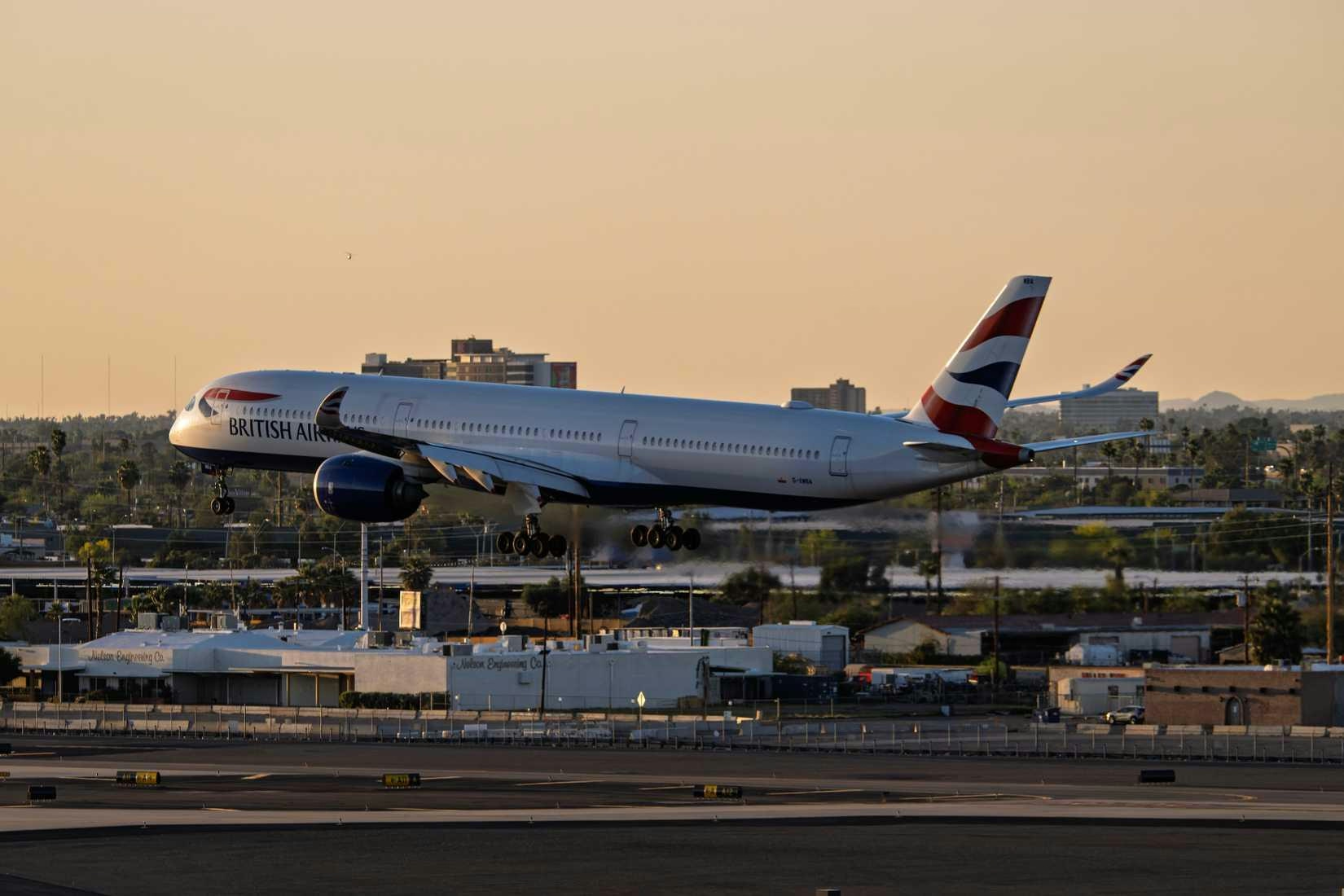
Fuel Consumption of the Airbus A350-1000 During Takeoff
The Airbus A350-1000, the largest aircraft currently produced by Airbus, is distinguished by its impressive size and advanced efficiency. Equipped with two Rolls-Royce XWB-97 turbofan engines, each generating 97,000 pounds of thrust, this twin-engine jet can lift over 300 tons into the air. However, this remarkable capability comes with a significant fuel consumption cost during takeoff, a concern that has gained heightened importance amid the ongoing global fuel crisis of 2026.
Takeoff Fuel Burn and Economic Impact
During takeoff and the initial climb phase, the A350-1000 consumes between 2.5 and 3 tons of jet fuel within the first few minutes, an amount comparable to approximately ten minutes of cruising flight. This equates to a fuel burn rate exceeding 1,000 kilograms per minute. Under typical market conditions, the cost of this fuel consumption ranges from $500 to $1,000 per minute. However, with jet fuel prices having doubled over the past eight weeks due to the crisis, these costs have surged beyond $2,000 per minute, exerting considerable pressure on airline operating budgets.
Despite the substantial fuel burn required to achieve takeoff, the A350-1000 is engineered for optimal efficiency at cruising altitudes. Once stabilized in cruise, its fuel consumption decreases dramatically to around 100 kilograms per minute, roughly one-tenth of the takeoff rate. This efficiency is largely attributable to the aircraft’s advanced carbon-fiber composite structure and the latest generation Rolls-Royce Trent XWB engines, which collectively render the A350-1000 approximately 25% more fuel-efficient than earlier widebody aircraft.
Strategic Advantages Amid the Fuel Crisis
The current fuel crisis has compelled airlines to reassess their fleets and operational strategies. Carriers such as KLM are incorporating the A350-1000 into their fleet renewal programs, aiming to phase out older, less efficient models like the Boeing 777-200ER. The A350-1000’s reduced fuel consumption—estimated to be 25% lower than that of its competitors—provides a critical advantage as airlines grapple with soaring fuel costs and potential supply constraints. To mitigate these rising expenses, many airlines have been forced to increase ticket prices by at least 20%, a challenging adjustment given the unique logistical and policy limitations imposed by the 2026 crisis.
The A350-1000’s capacity to deliver high thrust during takeoff, even from demanding “hot and high” airports, is balanced by its exceptional long-range fuel efficiency. This balance enables airlines to maintain operational flexibility while optimizing fuel consumption on ultra-long-haul routes. In a competitive market that includes the Boeing 777 and 787 Dreamliner, the A350-1000’s combination of payload capacity and fuel economy positions it as a preferred choice for airlines navigating the complexities of today’s volatile fuel environment.
While the A350-1000’s fuel consumption during takeoff remains substantial, its overall efficiency and cutting-edge technology make it an indispensable asset for airlines striving to control costs and sustain service amid unprecedented fuel price volatility.

Etihad Airways Suspends Airbus A380 Flights on Key Route

Aditya Birla Group Seeks Approval for Aircraft Leasing in GIFT City

Qatar Airways Highlights Innovation and Connectivity at Arabian Travel Market 2026

Hong Kong's Five-Year Plan Includes Andrew Fan's Aircraft Parts Processing Hub Proposal

ACIA Aero Leasing Delivers ATR72-600 to Air Nostrum

RTX Appoints Jill Albertelli as Head of Pratt & Whitney

TAT Technologies Joins Beyond Aero Hydrogen Aircraft Program

AURAK Study Highlights Barriers to Air Taxi Adoption in Emerging Economies

Xiamen Air Selects Altitude for 787 Maintenance at Heathrow

Etihad and Swissport Extend Global Partnership
