
Orchestrer les insights d’IA pour les transformer en actions

Tendances
Categories
Garmin Autoland Enables First Real-World Emergency Automated Landing
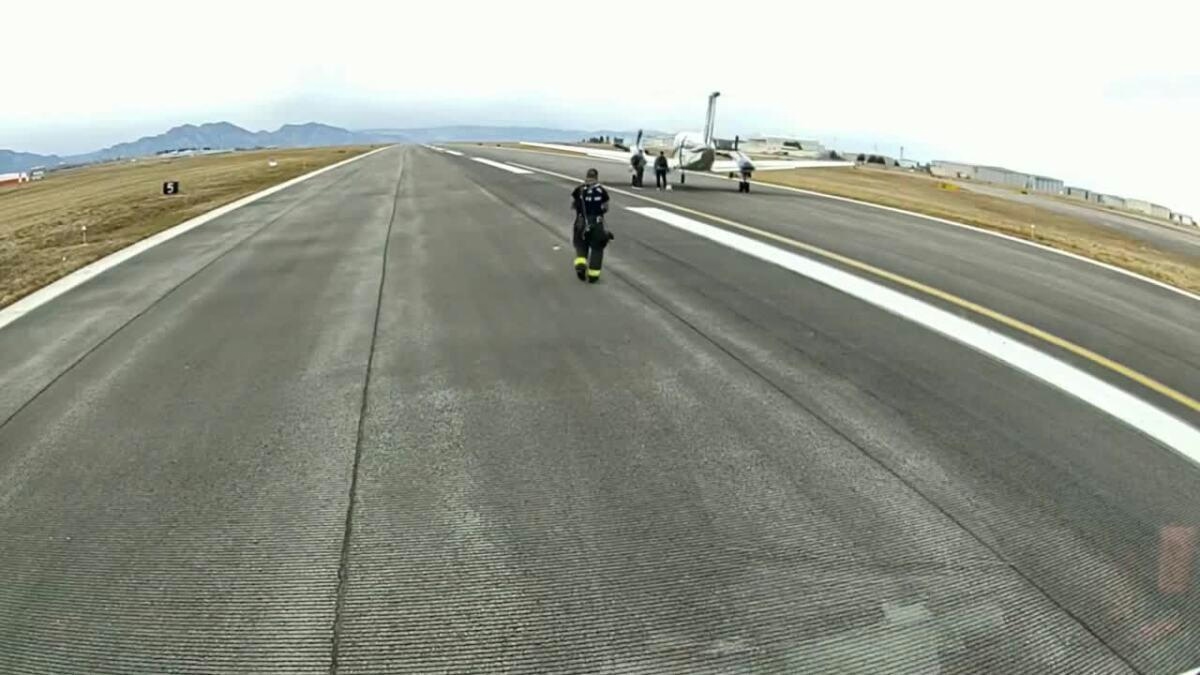
Garmin Autoland Enables First Real-World Emergency Automated Landing
Garmin’s Autoland system has achieved a significant milestone in aviation safety by successfully executing its first real-world emergency landing. A Beechcraft Super King Air 200, equipped with the Autoland technology, safely landed at Rocky Mountain Metropolitan Airport after the pilot became incapacitated mid-flight due to a medical emergency. The system autonomously took control of the aircraft, managing navigation, communicating with air traffic control, and performing a precise landing without any human intervention.
The Emergency and System Response
The incident occurred during a routine flight when the pilot suddenly experienced a medical emergency, triggering the Autoland system. The technology immediately assumed command, guiding the aircraft through all stages of descent and landing. All passengers on board were unharmed, underscoring the system’s effectiveness and reliability in a critical situation.
Regulatory and Industry Implications
The Federal Aviation Administration (FAA) is conducting a standard review of the event, focusing on safety protocols and the performance of the Autoland system. This evaluation aims to enhance safety standards and incorporate insights from the incident into future aviation regulations. Given the FAA’s influential role, aviation authorities worldwide are likely to consider these findings, potentially accelerating the global adoption of automated landing technologies.
The successful deployment of Autoland has been met with widespread approval from aviation experts and industry stakeholders, who regard it as a transformative advancement for flight safety, particularly in private and charter aviation sectors. The event has intensified discussions about the expanding role of automation in aviation, including its implications for pilot training and the evolving responsibilities of human pilots.
Competitors in the aviation technology market now face increased pressure to develop or improve their own automated landing systems. The incident has sparked broader conversations about integrating such advanced technologies into existing aircraft fleets and navigating the complex regulatory approval landscape. Ensuring the reliability and safety of these systems remains a critical challenge as their adoption grows.
Impact on Travelers and Future Prospects
While in-flight emergencies remain rare, the success of Garmin’s Autoland system offers travelers a new level of assurance. Automated landing technologies provide a vital safety net, especially for passengers on private and general aviation flights. As these systems become more widespread, commercial airlines may also consider adopting similar technologies to enhance passenger safety.
The presence of automated emergency systems like Autoland can increase passenger confidence in air travel, knowing that advanced technology can independently manage unforeseen situations. This innovation may also influence the travel insurance industry, with insurers potentially viewing flights equipped with such systems as lower risk.
Looking Ahead
Garmin Autoland’s first real-world emergency landing represents a pivotal moment in the evolution of aviation safety. As technological capabilities advance and regulatory frameworks adapt, passengers worldwide can anticipate safer and more secure air travel. This event highlights the potential for automation to complement human expertise, working in tandem to safeguard lives in the skies.

Etihad Airways Suspends Airbus A380 Flights on Key Route

Aditya Birla Group Seeks Approval for Aircraft Leasing in GIFT City

Qatar Airways Highlights Innovation and Connectivity at Arabian Travel Market 2026

Hong Kong's Five-Year Plan Includes Andrew Fan's Aircraft Parts Processing Hub Proposal

ACIA Aero Leasing Delivers ATR72-600 to Air Nostrum

RTX Appoints Jill Albertelli as Head of Pratt & Whitney

TAT Technologies Joins Beyond Aero Hydrogen Aircraft Program

AURAK Study Highlights Barriers to Air Taxi Adoption in Emerging Economies

Xiamen Air Selects Altitude for 787 Maintenance at Heathrow

Etihad and Swissport Extend Global Partnership
