
Orchestrer les insights d’IA pour les transformer en actions

Tendances
Categories
GE Aerospace Stock Approaches 52-Week High
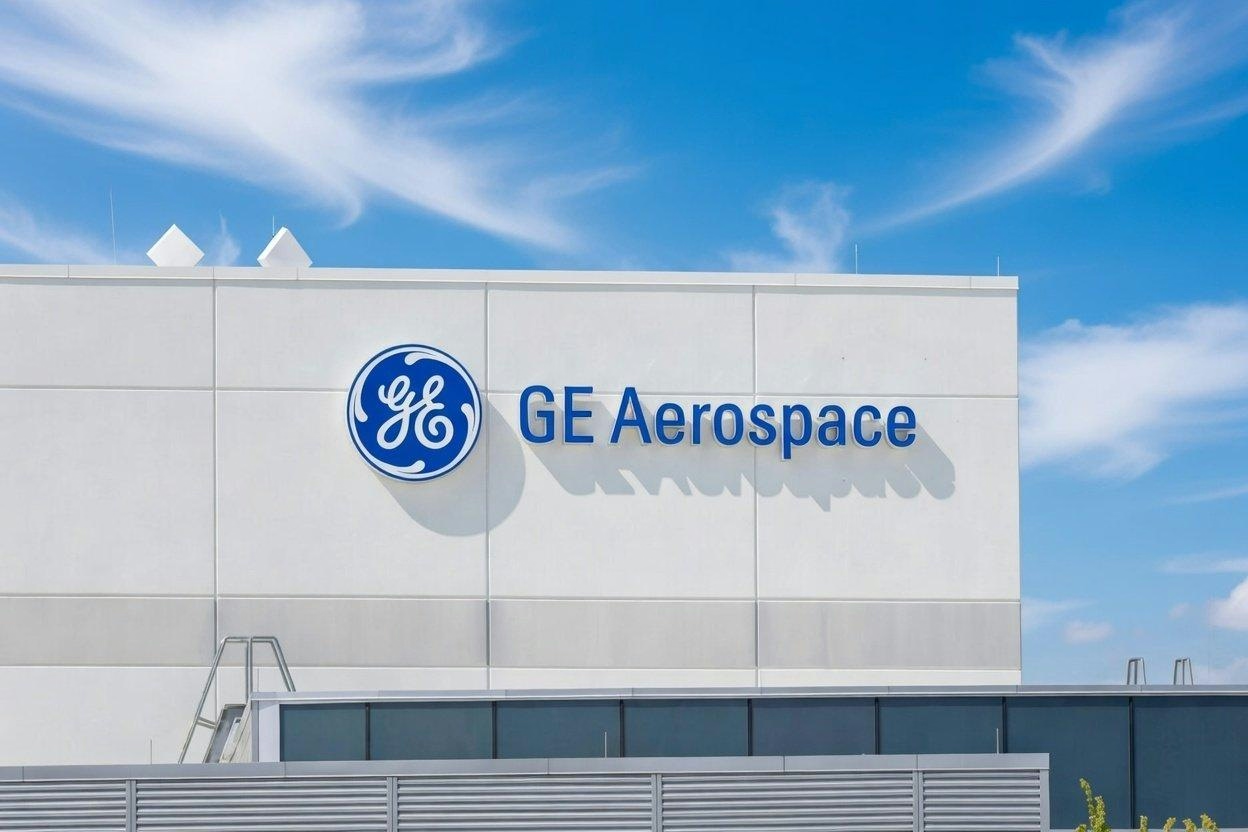
GE Aerospace Stock Nears 52-Week High on Strong Growth and AI Innovation
Shares of GE Aerospace closed at $339.81 on Wednesday, approaching their 52-week high of $348.48 by just 2.5%. The company has demonstrated remarkable performance, significantly outpacing both the broader market and its industry peers. Over the past year, GE Aerospace’s stock has surged 73.3%, compared to the S&P 500’s 21.6% gain, and has outperformed competitors such as RTX Corp, which rose 62.8%, and L3Harris Technologies, up 72.5%.
Robust Financial Results and Dividend Increase
Investor confidence has been bolstered by GE Aerospace’s strong financial results. In the fourth quarter, the company reported earnings per share (EPS) of $1.57, surpassing the consensus estimate of $1.43. Revenue reached $11.90 billion, exceeding analyst expectations and representing a 17.6% increase year-over-year. Looking ahead, GE has provided guidance for full-year 2026 EPS in the range of $7.10 to $7.40, slightly below the Zacks consensus estimate of $7.44, which implies an annual growth rate of 16.8%.
Reflecting its positive outlook, GE Aerospace raised its quarterly dividend by 30.6% to $0.47 per share, payable on April 27. The stock is currently trading above both its 50-day and 200-day moving averages, indicating sustained technical strength.
Drivers of Growth: Defense, Commercial Engines, and Artificial Intelligence
The company’s momentum is supported by robust demand across both commercial and defense sectors. At the 2025 Dubai Airshow, GE Aerospace secured over 500 engine orders, including significant agreements with flydubai, Riyadh Air, and a landmark deal with Qatar Airways for more than 400 GE9X and GEnx engines—the largest widebody engine contract in the company’s history. Additionally, United Airlines selected GE to supply 300 GEnx engines for its new Boeing 787 Dreamliners.
On the defense side, GE Aerospace secured a $5 billion contract with the U.S. Air Force for F110 engines and support services, alongside an indefinite delivery/indefinite quantity (IDIQ) contract with the U.S. Army. The company plans to invest over $1 billion in maintenance, repair, and overhaul (MRO) facilities worldwide over the next five years, including the establishment of a dedicated LEAP engine test cell.
A key factor distinguishing GE Aerospace is its strategic integration of artificial intelligence. Its Flight Deck lean-management platform utilizes AI to optimize operations, positioning the company at the forefront of AI-driven transformation within the aerospace industry. This technological innovation has enhanced investor confidence and prompted competitors such as Lockheed Martin to increase their own investments in AI and technology to maintain competitive positioning.
Valuation Concerns and Market Outlook
Despite its strong operational and financial performance, GE Aerospace’s valuation remains a point of contention among analysts. The stock trades at a forward price-to-earnings (P/E) ratio of 44.43, significantly above the industry average of 33.65. By comparison, RTX trades at 30.12 and L3Harris at 30.49. This premium valuation has resulted in mixed analyst sentiment. BNP Paribas Exane recently downgraded the stock to “underperform” with a price target of $290, while UBS maintains a “buy” rating with a target of $374. The consensus rating stands at “Moderate Buy” with an average price target of $331.12.
Potential challenges include market saturation in defense contracts and intensifying competition from other aerospace giants. Nevertheless, GE Aerospace’s commitment to innovation and its strong financial trajectory continue to support positive market sentiment, keeping the stock near its all-time highs as it approaches 2026.

Etihad Airways Suspends Airbus A380 Flights on Key Route

Aditya Birla Group Seeks Approval for Aircraft Leasing in GIFT City

Qatar Airways Highlights Innovation and Connectivity at Arabian Travel Market 2026

Hong Kong's Five-Year Plan Includes Andrew Fan's Aircraft Parts Processing Hub Proposal

ACIA Aero Leasing Delivers ATR72-600 to Air Nostrum

RTX Appoints Jill Albertelli as Head of Pratt & Whitney

TAT Technologies Joins Beyond Aero Hydrogen Aircraft Program

AURAK Study Highlights Barriers to Air Taxi Adoption in Emerging Economies

Xiamen Air Selects Altitude for 787 Maintenance at Heathrow

Etihad and Swissport Extend Global Partnership
