
Orchestrer les insights d’IA pour les transformer en actions

Tendances
Categories
Global Aircraft Landing Gear and Brakes Market Outlook to 2035
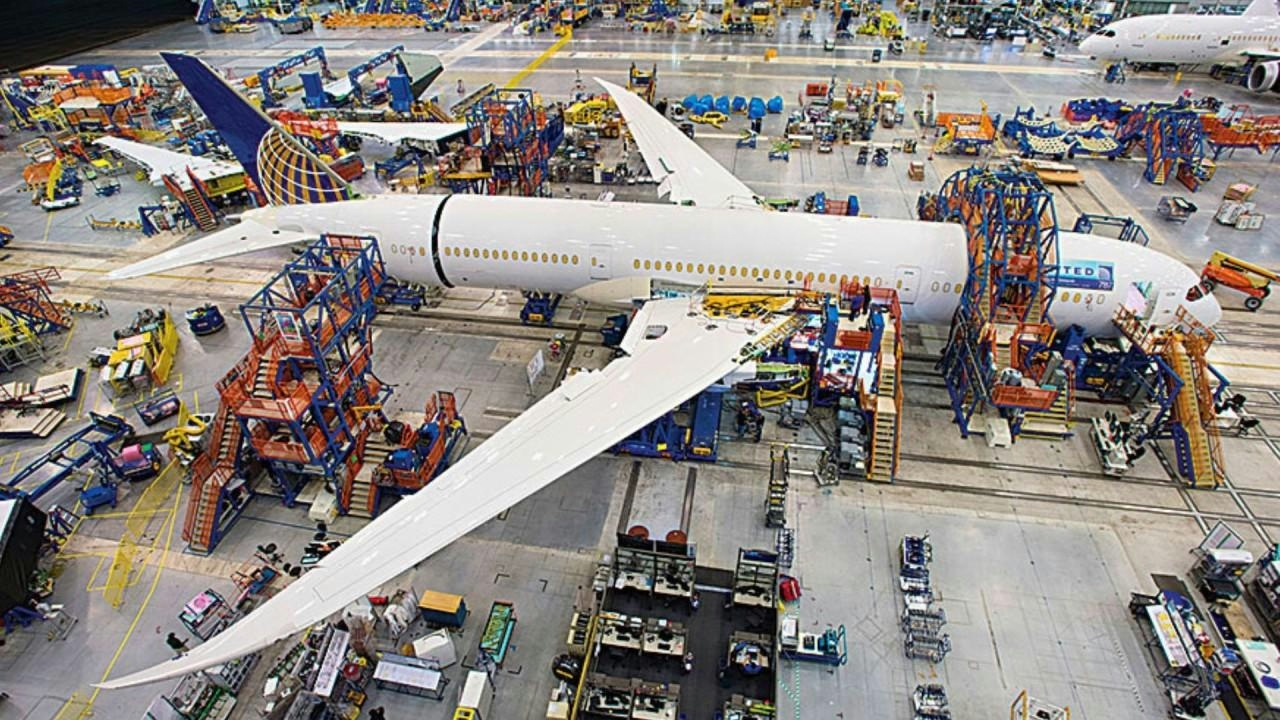
Global Aircraft Landing Gear and Brakes Market Outlook to 2035
The global market for aircraft landing gear and brakes is anticipated to expand significantly, growing from USD 827.52 million in 2026 to USD 1,244.7 million by 2035. This growth corresponds to a compound annual growth rate (CAGR) of 4.7% over the forecast period. Landing gear systems are a vital element of aerospace engineering, with the undercarriage constituting approximately 3.8% to 6.2% of the total maximum takeoff weight in both narrow-body and wide-body aircraft.
Market Composition and Technological Advancements
Within this sector, the main landing gear assembly holds a dominant position, accounting for 72.4% of the total shipset value, while the nose landing gear represents the remaining 27.6%. A significant technological trend is the increasing adoption of carbon-carbon composite braking systems, which now feature in approximately 64.5% of new installations. These advanced braking systems provide a substantial 40.2% reduction in weight compared to traditional steel brakes, thereby enhancing fuel efficiency and overall operational performance.
Landing gear systems are generally rated for 60,000 to 75,000 flight cycles, with major overhauls required every 10 to 12 years. This maintenance schedule sustains a steady aftermarket demand, which contributes 55.8% of the sector’s global revenue.
Market Dynamics and Regional Insights
The United States remains the largest contributor to the global aircraft landing gear and brakes market, with 38.4% of the world’s aircraft fleet operating within North American airspace. In the U.S., narrow-body aircraft such as the Boeing 737 MAX dominate commercial deliveries, comprising 78.5% of the total. These aircraft require high-cycle landing systems capable of enduring three to five daily rotations. The defense sector further bolsters market demand, with 42.6% of the U.S. military aviation maintenance budget allocated to undercarriage and braking components for platforms including the F-35 and specialized transport aircraft.
Moreover, the U.S. commands a 32.1% share of global aerospace material exports, focusing on titanium alloys and carbon-carbon composites essential for high-performance braking assemblies. Domestic manufacturing efficiency in these materials has improved by 15.4% over the past three years, enhancing the country’s competitive position in the aerospace supply chain.
Key Trends and Challenges
A primary driver of market growth is the 12.8% annual increase in global narrow-body aircraft deliveries, which accounts for 85.2% of the demand for lightweight landing gear systems. These systems contribute to a 3.5% improvement in fuel efficiency by reducing the overall shipset weight by 22.4%.
Despite these positive trends, the market faces considerable challenges. High raw material costs, particularly for titanium alloys that constitute 45.6% of component weight, have resulted in a 14.8% increase in production lead times for 68.2% of Tier-1 aerospace suppliers. Additionally, a growing shortage of narrow-body landing gears, especially for the Airbus A320neo and Boeing 737 MAX, is emerging as a critical constraint in the aftermarket. Supply for these newer aircraft models remains extremely limited, with little improvement anticipated in the near term. This scarcity is driving up both demand and prices for these components, creating a stark contrast with the availability of parts for older aircraft models.
Despite ongoing supply chain pressures and geopolitical uncertainties, the business jet segment continues to demonstrate resilience. This sector supports a robust outlook for aircraft component demand across both commercial and private aviation markets.

Etihad Airways Suspends Airbus A380 Flights on Key Route

Aditya Birla Group Seeks Approval for Aircraft Leasing in GIFT City

Qatar Airways Highlights Innovation and Connectivity at Arabian Travel Market 2026

Hong Kong's Five-Year Plan Includes Andrew Fan's Aircraft Parts Processing Hub Proposal

ACIA Aero Leasing Delivers ATR72-600 to Air Nostrum

RTX Appoints Jill Albertelli as Head of Pratt & Whitney

TAT Technologies Joins Beyond Aero Hydrogen Aircraft Program

AURAK Study Highlights Barriers to Air Taxi Adoption in Emerging Economies

Xiamen Air Selects Altitude for 787 Maintenance at Heathrow

Etihad and Swissport Extend Global Partnership
