
Orchestrer les insights d’IA pour les transformer en actions

Tendances
Categories
Government and Industry Efforts Advance Sustainable Aviation in US Air Travel
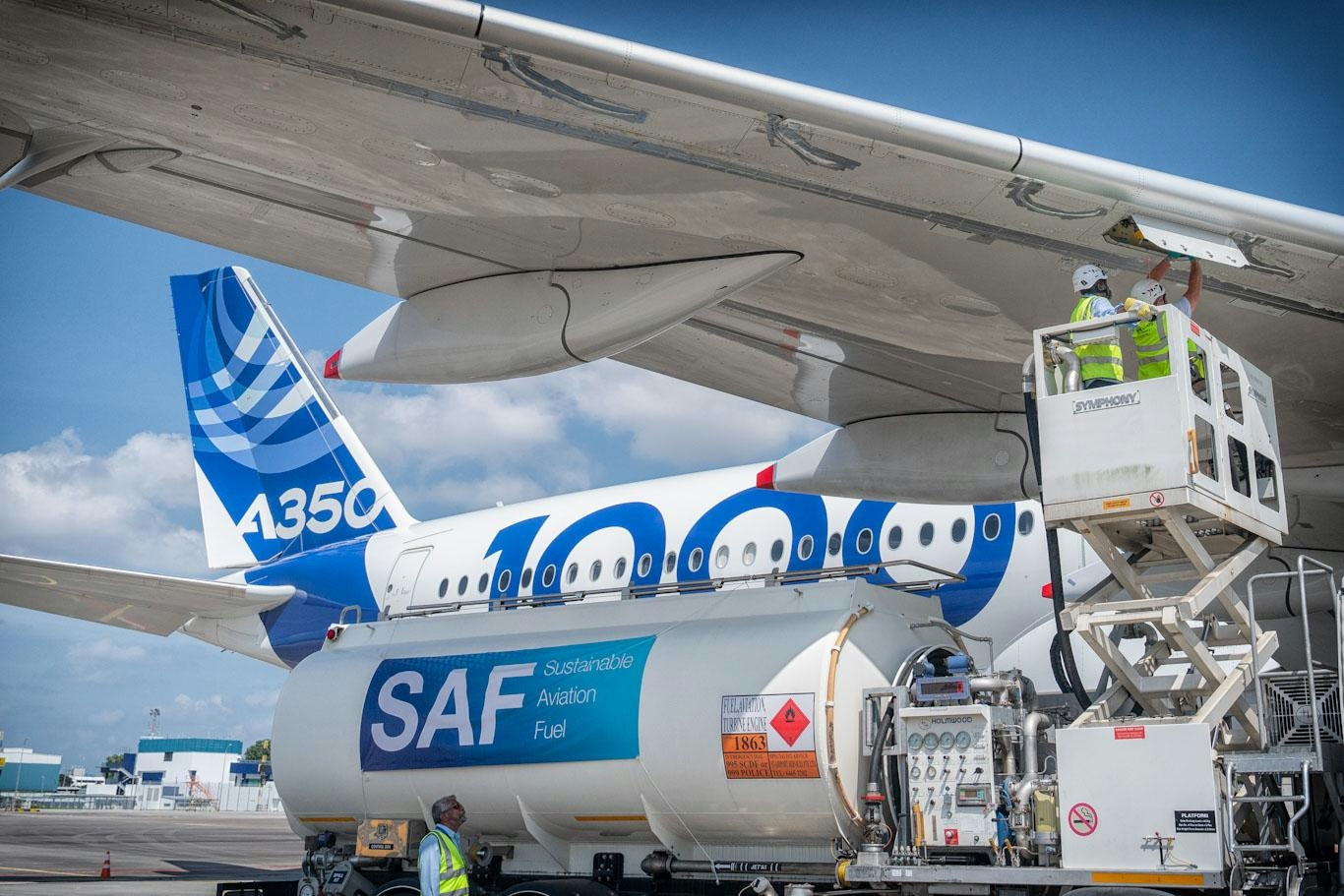
Government and Industry Efforts Advance Sustainable Aviation in US Air Travel
As the aviation sector undergoes significant transformation, the United States is making concerted efforts to promote sustainable air travel through a combination of government initiatives and industry innovation. Central to this evolution is the rise of Advanced Air Mobility (AAM), particularly electric vertical take-off and landing (eVTOL) aircraft, which promise to revolutionize domestic travel by offering cleaner and more efficient alternatives to traditional aviation.
Government Framework for Advanced Air Mobility
The U.S. Department of Transportation (DOT) has identified AAM as a critical component of the future transportation landscape. Its Advanced Air Mobility National Strategy, unveiled in 2025, sets forth a comprehensive vision for integrating emerging aviation technologies such as eVTOLs and autonomous systems into the National Airspace System (NAS). This strategy underscores the importance of fostering public-private partnerships to drive innovation, investing in essential infrastructure including vertiports and charging stations, and establishing clear regulatory frameworks to safeguard both safety and environmental standards. The approach relies on close collaboration among federal agencies, local governments, and private sector stakeholders to develop a secure, efficient, and sustainable airspace capable of accommodating next-generation aircraft.
FAA’s Role and Safety Oversight
The Federal Aviation Administration (FAA) plays a central role in the safe incorporation of AAM technologies into the national airspace. Through initiatives like the eVTOL and AAM Integration Pilot Program (eIPP), the FAA collaborates with industry leaders to conduct rigorous testing of advanced aircraft, formulate operational procedures, and implement robust safety protocols. The agency is actively streamlining certification processes and engaging with manufacturers to expedite the deployment of these innovative technologies, all while upholding stringent safety and risk management standards essential to public confidence and operational integrity.
Industry Challenges and Competitive Pressures
Despite the promising outlook, the journey toward sustainable aviation is confronted by significant challenges. Regulatory scrutiny has intensified, exemplified by the recent investigation by the U.S. International Trade Commission into Joby Aviation over potential import violations. Additionally, legal disputes between major industry players such as Joby Aviation and Archer Aviation concerning trade secrets and business practices highlight the competitive tensions shaping the sector. These conflicts not only affect investor sentiment but also have the potential to influence the pace and trajectory of technological advancement within the industry.
Operational and Market Realities
The drive toward sustainable aviation is unfolding amid record-high passenger volumes and growing demand for air travel, which present considerable logistical challenges. These include the risk of flight delays and the complexities involved in scaling environmentally friendly practices across a heavily trafficked national airspace. Striking a balance between rapid technological innovation, operational reliability, and environmental objectives remains a formidable task for regulators and industry participants alike.
Looking Ahead
The combined efforts of government agencies and private companies are laying the groundwork for a transformative era in U.S. aviation—one that emphasizes safety, sustainability, and innovation. Nonetheless, ongoing regulatory, legal, and operational challenges will necessitate continued collaboration and adaptability as the industry advances toward a greener future.

Etihad Airways Suspends Airbus A380 Flights on Key Route

Aditya Birla Group Seeks Approval for Aircraft Leasing in GIFT City

Qatar Airways Highlights Innovation and Connectivity at Arabian Travel Market 2026

Hong Kong's Five-Year Plan Includes Andrew Fan's Aircraft Parts Processing Hub Proposal

ACIA Aero Leasing Delivers ATR72-600 to Air Nostrum

RTX Appoints Jill Albertelli as Head of Pratt & Whitney

TAT Technologies Joins Beyond Aero Hydrogen Aircraft Program

AURAK Study Highlights Barriers to Air Taxi Adoption in Emerging Economies

Xiamen Air Selects Altitude for 787 Maintenance at Heathrow

Etihad and Swissport Extend Global Partnership
