
Orchestrer les insights d’IA pour les transformer en actions

Tendances
Categories
GTF Engine Certified for A320neo Family
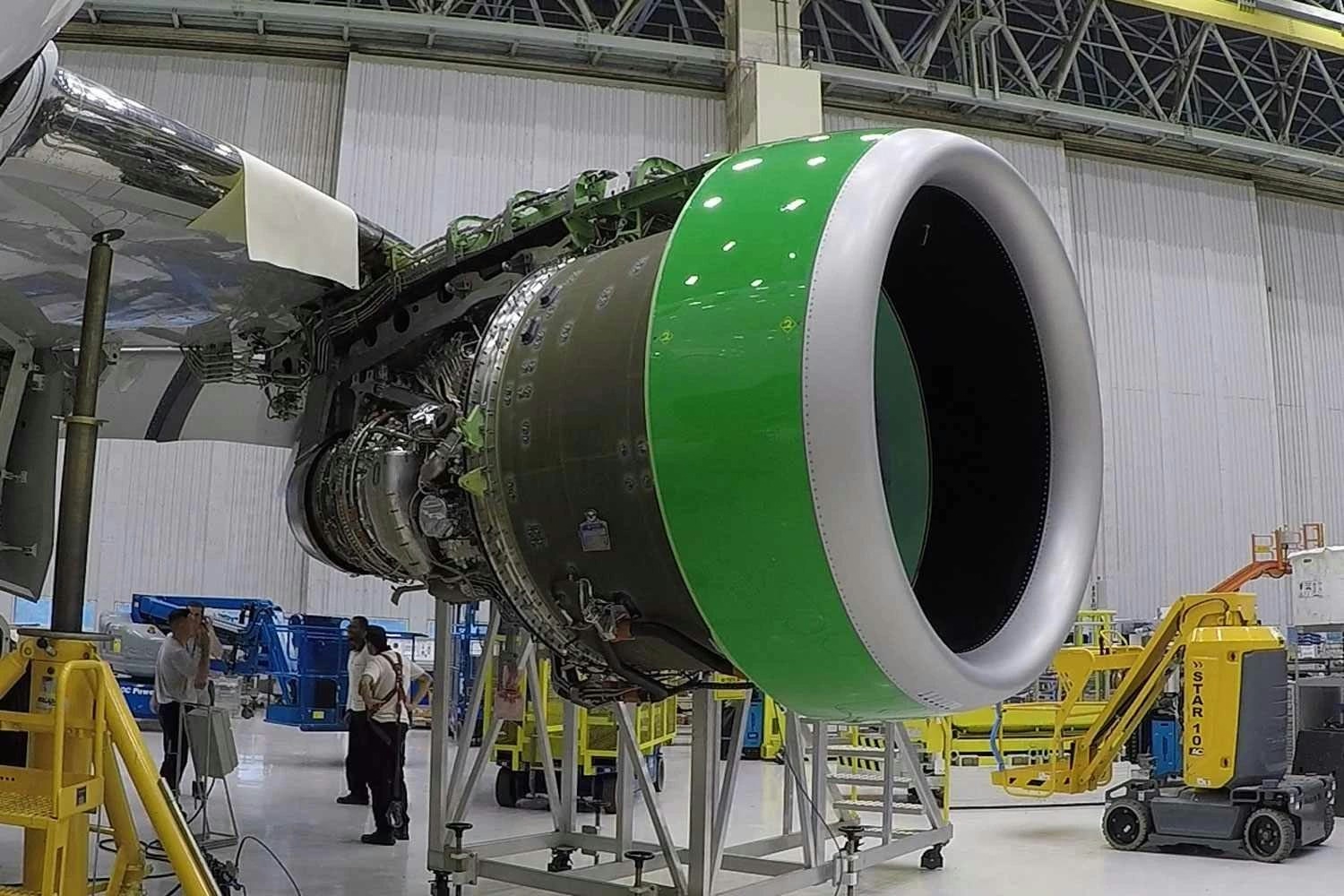
GTF Advantage Engine Receives EASA Certification for Airbus A320neo Family
Pratt & Whitney’s GTF Advantage engine has secured certification from the European Union Aviation Safety Agency (EASA) for integration with the Airbus A320neo family. This approval paves the way for production deliveries and the engine’s entry into service later this year. The certification follows the U.S. Federal Aviation Administration’s endorsement in February 2025 and represents a crucial milestone for Pratt & Whitney as the company works to rebuild market confidence after manufacturing challenges grounded over a thousand aircraft in 2023.
Enhanced Performance and Market Impact
The GTF Advantage engine is engineered to offer superior fuel efficiency and enhanced durability, positioning it as a significant competitive advantage in the single-aisle aircraft sector. Rick Deurloo, president of Commercial Engines at Pratt & Whitney, emphasized the engine’s benefits, stating that the GTF engine already delivers the lowest fuel consumption in its class, while the Advantage variant extends this lead by offering up to twice the time on wing and improved aircraft capabilities. This certification marks a pivotal step in the GTF Advantage program ahead of its operational debut.
Airlines adopting the GTF Advantage can anticipate an increase of 4 to 8 percent in takeoff thrust, which translates into higher payload capacity and extended range, potentially enabling new route opportunities. The engine is designed to be fully intermixable and interchangeable with the existing GTF model, and it is slated to become the production standard, with a complete transition expected by 2028.
To support operators of current GTF engines, Pratt & Whitney plans to introduce the GTF Hot Section Plus (HS+) upgrade for the PW1100G-JM engine later this year. This upgrade, which can be implemented during routine maintenance, is expected to deliver up to 90 to 95 percent of the durability improvements found in the GTF Advantage.
Manufacturing Investments and Industry Implications
In response to increasing demand and to ensure timely delivery schedules, Pratt & Whitney is making substantial investments in its manufacturing infrastructure. This includes nearly $1 billion allocated to its turbine airfoil facility in Asheville, North Carolina, and an additional $200 million directed toward its forging facility in Columbus, Georgia.
Industry analysts observe that the EASA certification not only facilitates the GTF Advantage’s market entry but also reinforces Pratt & Whitney’s competitive standing. The development is anticipated to trigger responses from rival engine manufacturers as airlines continue to prioritize more efficient and reliable propulsion systems.
Related Developments in Engine Maintenance
In a related announcement, CFM International and International Airlines Group (IAG) have entered into an agreement granting a CFM Premier MRO license covering both LEAP-1A and LEAP-1B engines. Iberia’s engine maintenance facility in La Muñoza, near Madrid-Barajas Airport, is set to become a strategic hub for LEAP engine maintenance, repair, and overhaul (MRO) activities in Europe. Initial engine inductions are scheduled for the first quarter of 2027. This partnership aims to expand maintenance capabilities and support operators globally, further strengthening IAG’s position as a leading provider of engine maintenance services for single-aisle aircraft.

Etihad Airways Suspends Airbus A380 Flights on Key Route

Aditya Birla Group Seeks Approval for Aircraft Leasing in GIFT City

Qatar Airways Highlights Innovation and Connectivity at Arabian Travel Market 2026

Hong Kong's Five-Year Plan Includes Andrew Fan's Aircraft Parts Processing Hub Proposal

ACIA Aero Leasing Delivers ATR72-600 to Air Nostrum

RTX Appoints Jill Albertelli as Head of Pratt & Whitney

TAT Technologies Joins Beyond Aero Hydrogen Aircraft Program

AURAK Study Highlights Barriers to Air Taxi Adoption in Emerging Economies

Xiamen Air Selects Altitude for 787 Maintenance at Heathrow

Etihad and Swissport Extend Global Partnership
