Image

Orchestrer les insights d’IA pour les transformer en actions

Inscrivez-vous dès aujourd’hui sur la liste d’attente d’AeroGenie !

Tendances

Categories

Hop-A-Jet Calls on FAA to Broaden Engine Corrosion Regulations

June 17, 2026By ePlane AI
Hop-A-Jet Calls on FAA to Broaden Engine Corrosion Regulations
0
0
Engine Corrosion
FAA Regulations
General Electric CF34

Hop-A-Jet Calls on FAA to Broaden Engine Corrosion Regulations

Fatal Crash Spurs Calls for Stricter Oversight

Hop-A-Jet has urged the Federal Aviation Administration (FAA) to enhance inspection requirements for General Electric CF34 engines following a fatal crash involving a Bombardier Challenger 604. The National Transportation Safety Board (NTSB) determined that corrosion within the engines’ variable geometry (VG) systems led to compressor stalls and a near-simultaneous loss of thrust in both engines as the aircraft approached Naples Airport. The flight crew attempted an emergency landing on Interstate 75, but the jet collided with roadside structures and was destroyed by fire. Both pilots perished, while the cabin attendant and two passengers survived.

In response to the NTSB’s findings, the FAA earlier this year proposed an airworthiness directive mandating borescope inspections and operational checks for over 1,100 CF34-series engines installed on Bombardier Challenger and regional jets. However, Hop-A-Jet contends that these measures fall short of addressing the full scope of the corrosion risk. In formal comments submitted to the FAA, the company called for direct corrosion inspections, mandatory reporting of inspection results, and heightened scrutiny of engines previously cleared under inspection protocols that may have overlooked corrosion-prone areas.

Challenges in Detecting Corrosion and Environmental Concerns

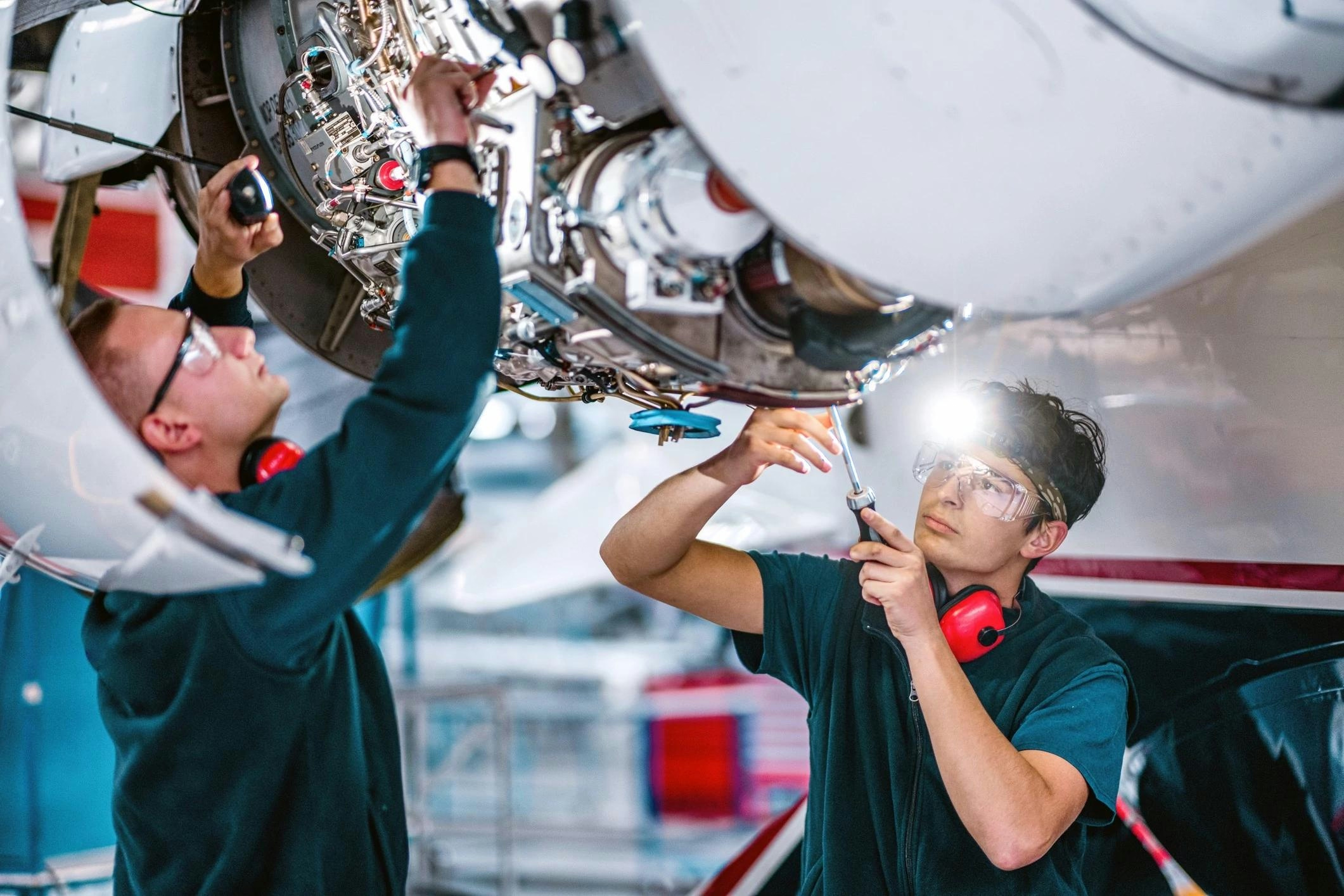
Hop-A-Jet highlights the limited capacity of operators to identify corrosion independently, noting that specialized inspections are typically conducted by engine manufacturers or authorized maintenance providers using proprietary methods. A post-accident review of archived borescope images revealed corrosion that had gone undetected by the operator, underscoring the difficulty in identifying such issues without enhanced inspection protocols.

The company also advocates for additional safeguards tailored to aircraft operating in coastal environments, where salt exposure accelerates corrosion. Furthermore, Hop-A-Jet calls for clearer FAA guidance on recognizing engine-start anomalies such as hung starts and slow starts—factors that were central to the NTSB’s investigation.

Industry Implications and Regulatory Outlook

Hop-A-Jet’s recommendations emerge amid growing industry concerns regarding engine reliability and maintenance. Recent data and discussions at industry summits have underscored persistent challenges with engine corrosion and maintenance delays, with airline executives criticizing manufacturers for slow responses. These issues have heightened apprehension among business aviation operators about engine safety, potentially driving demand for more rigorous inspection and maintenance standards.

The proposed expansion of regulations may encounter resistance, including potential regulatory pushback from the FAA, which could result in increased scrutiny and delays in finalizing broader rules. Competitors may respond by adopting similar safety measures or lobbying against regulations perceived to increase operational costs.

Hop-A-Jet maintains that its proposals are intended to enhance safety across the CF34 fleet and prevent future accidents. The FAA is currently reviewing public comments on the proposed directive before issuing a final rule.

More news
AI Struggles to Interpret Airline Fare Data

AI Struggles to Interpret Airline Fare Data

AI Struggles to Interpret Airline Fare Data Artificial intelligence is significantly increasing traffic to U.S. travel websites, with visitors arriving through AI-driven sources demonstrating longer engagement, lower bounce rates, and deeper interaction, according to new research from Adobe released on Wednesday. The study, which examined over eight million direct online transactions, revealed that AI-generated traffic to travel sites surged by 194% year over year in May. These visitors spent 70% more time per session, bounced 41% less frequently, and showed 21% higher engagement compared to users from non-AI sources. Challenges in Fare Data Interpretation Despite these promising engagement metrics, Adobe’s findings also expose a critical technical challenge: AI systems frequently struggle to accurately interpret the complex and nuanced data associated with airline fares, a vital component for successful booking processes. This difficulty was emphasized by travel technology leaders at the recent Skift Data + AI Summit, who identified both operational and organizational barriers that limit AI’s effectiveness in fare management. They stressed the importance of clear data ownership, robust technological infrastructure, and fostering trust among customers and employees as essential measures to overcome these challenges. Industry Response and Market Skepticism Market reactions reveal a cautious skepticism regarding AI’s capacity to fulfill its promises of enhanced efficiency and improved fare management. In response, some industry players are intensifying investments in data infrastructure to address these limitations. For instance, Air Canada has taken proactive steps to reinforce its systems following notable incidents, including a chatbot error that led to a tribunal ordering compensation to a customer. Such episodes highlight the risks inherent when AI misinterprets fare rules or booking conditions, underscoring the need for vigilance. As AI continues to transform how travelers discover and engage with travel brands, the industry confronts a dual challenge: harnessing AI to boost user engagement while ensuring these systems can reliably decode the intricate data that underpins airline pricing. Experts suggest that progress will depend not only on technological innovation but also on organizational clarity and a renewed commitment to building trust across the travel ecosystem.
Aviation Innovation Coalition Adds NATCA Member and Board Liaison

Aviation Innovation Coalition Adds NATCA Member and Board Liaison

Aviation Innovation Coalition Strengthens Board with NATCA Membership **WASHINGTON, D.C., June 17, 2026** — The Aviation Innovation Coalition (AIC) has formally welcomed the National Air Traffic Controllers Association (NATCA) as its newest member, granting the organization a Board Liaison seat. This strategic inclusion ensures that the operational expertise of air traffic controllers is directly represented in ongoing efforts to modernize the U.S. National Airspace System (NAS). Enhancing Modernization Through Operational Expertise Founded as a collaborative platform uniting leaders across aviation, technology, infrastructure, operations, and policy, AIC supports the Department of Transportation (DOT) and the Federal Aviation Administration (FAA) in shaping a future-ready NAS. The coalition’s mission focuses on advancing modernization through industry collaboration, research, and policy recommendations that emphasize technology, infrastructure, safety, and efficiency. Additionally, AIC is committed to fostering U.S. job creation and maintaining the nation’s global leadership in air traffic control. NATCA, representing nearly 20,000 aviation safety professionals—including FAA air traffic controllers, engineers, and support specialists—brings invaluable frontline experience to the coalition. The association has long championed a comprehensive approach to modernization, advocating for the upgrade of safety-critical systems, investment in aging infrastructure, and resolution of persistent staffing and operational challenges. Nick Daniels, NATCA President, underscored the significance of this partnership: “As the aviation community works to modernize the NAS, the people who operate and maintain the system must have a seat at the table. NATCA is pleased to join AIC and contribute the firsthand knowledge of our members, who understand the complexity of the NAS, the realities inside air traffic control facilities, and the workforce challenges that must be addressed for modernization to succeed. We look forward to working with AIC’s members to help ensure that innovation strengthens safety, supports the workforce, and delivers real benefits to the flying public.” A Collaborative Approach Amid Industry Challenges Gene Hayman, Chairman of the Aviation Innovation Coalition, highlighted the critical role of NATCA’s perspective in grounding modernization efforts in operational realities. “Modernization driven by technology advances is critical, but it must be grounded in the real-world operating environment of the NAS, the condition of the facilities that support it, and the needs of the highly skilled workforce that keeps it safe every day. NATCA brings an unmatched understanding of those realities, and AIC will be stronger, more practical, and more effective because of their participation.” The coalition’s expanded membership arrives at a pivotal moment for the aviation sector, which faces increasing pressures from regulatory compliance, shifting market dynamics, and intensifying competition. Recent developments in Europe, including proposals for business jet tax reforms to support electric aviation, illustrate the evolving landscape. Meanwhile, progress on electric propulsion standards has encountered bureaucratic hurdles, and the push for sustainable aviation fuels (SAF) continues to gain urgency as the industry seeks viable decarbonization pathways. These challenges underscore the necessity for modernization strategies that are both innovative and informed by operational experience. By integrating NATCA’s expertise at the board level, AIC aims to ensure that modernization initiatives are technologically advanced, workforce-informed, and responsive to the broader regulatory and market environment. “Assigning NATCA a Board Liaison seat reflects AIC’s commitment to ensuring that modernization is informed by the operational experts who know the system best,” Hayman added. “The NAS will benefit from this strengthened collaboration as we navigate the challenges and opportunities ahead.”
Lufthansa Technik Optimistic About Growth of Philippine MRO Sector

Lufthansa Technik Optimistic About Growth of Philippine MRO Sector

Lufthansa Technik Optimistic About Growth of Philippine MRO Sector Expansion Plans and Strategic Focus Lufthansa Technik Philippines (LTP) has expressed strong confidence in the growth potential of the country’s maintenance, repair, and overhaul (MRO) industry as it advances plans to expand its operations at Clark International Airport while maintaining a long-term presence in Manila. Holger Beck, President and CEO of LTP, emphasized the company’s commitment to contributing to the development of the Philippine MRO sector, describing the country as a neutral and strategic location for their operations. Recently, LTP formalized its expansion through a lease agreement with the Bases Conversion and Development Authority (BCDA) and Luzon International Premiere Airport Development Corp. (LIPAD), which manages Clark International Airport. The agreement covers a 157,000-square-meter site intended to accommodate future engine support and repair facilities. Noel F. Manankil, CEO of LIPAD, highlighted that this investment reflects the confidence of global aviation leaders in Clark’s potential as a growing aviation and logistics hub in Central Luzon. Despite this expansion, Beck clarified that LTP’s operational focus remains concentrated on Manila and Clark, with no immediate plans to establish additional maintenance hubs elsewhere in the Philippines. He noted the complexities involved in setting up new hubs, including logistical considerations and supply chain management, affirming that Manila and Clark currently represent the most viable locations for their activities. The new Clark facility is expected to be operational by early 2028, with construction and setup projected to take between 18 and 24 months. Industry Challenges and Competitive Landscape While optimistic about growth, LTP acknowledges the challenges facing the Philippine MRO sector. Industry analyses, such as those by consulting firm Oliver Wyman, point to persistent labor and material shortages, rising operational costs, and concerns over overall market performance. These factors pose potential risks to both LTP’s expansion plans and the broader competitiveness of the sector. Additionally, regional competitors may respond by expanding their own maintenance capacities or capitalizing on geopolitical tensions and tariff fluctuations, which have been identified as disruptive influences within the industry. Beck emphasized that LTP’s primary competition is regional rather than domestic, underscoring the Philippines’ competitive advantage in attracting skilled and motivated personnel willing to work in the aviation maintenance industry. This regional focus shapes LTP’s strategic positioning as it seeks to leverage the country’s talent pool and infrastructure. Corporate Structure and Regulatory Environment Lufthansa Technik Philippines operates as a joint venture between Germany-based Lufthansa Technik AG and MacroAsia Corporation, a listed aviation services provider under the Lucio Tan Group. The company’s competitive edge is further supported by its recent diversification into defense-related activities and securing regulatory approvals for cabin modifications on the Airbus A320ceo family. In May, MacroAsia announced that Lufthansa Technik had signed a lease contract with New NAIA Infra Corp. (NNIC), the new operator of Ninoy Aquino International Airport (NAIA). Since NNIC assumed operations in September 2024, it has implemented increased airport fees, including higher monthly lease charges, under a revised administrative order linked to its concession agreement. LTP continues to operate within the NAIA complex through a sublease agreement with MacroAsia Properties Development Corporation. As Lufthansa Technik Philippines advances its expansion initiatives, the company remains dedicated to fostering the growth of the Philippine MRO industry while navigating the evolving challenges and competitive dynamics of the regional aviation sector.
Aviation Safety Solutions Chosen for Starr Safety Partnership

Aviation Safety Solutions Chosen for Starr Safety Partnership

Aviation Safety Solutions Joins Starr Safety Partnership Amid Industry Safety Cost Debate JANESVILLE, Wis., June 17, 2026 — Aviation Safety Solutions, LLC (AvSafety), a prominent provider of aviation Safety Management System (SMS) consulting, auditing, and training services, has been selected to join the Starr Safety Partnership. This collaboration unites leading organizations committed to advancing aviation safety, operational excellence, and risk management for Starr Aviation clients. Expanding Access to Comprehensive Safety Services Through this partnership, Starr Aviation clients will gain access to AvSafety’s extensive range of SMS offerings. These include FAA SMS workshops tailored for safety managers, SMS manual development, safety assistance programs, audits and gap assessments, internal auditor training, and customized SMS training solutions. Since its establishment in 2013, AvSafety has supported a diverse array of aviation entities—including Part 91, Part 135, and Part 121 operators, airports, repair stations, and business aviation companies—in developing scalable safety programs that extend beyond regulatory compliance to enhance operational effectiveness. Amanda Ferraro, CEO of Aviation Safety Solutions, expressed enthusiasm about the collaboration, stating, “Joining the Starr Safety Partnership is an exciting opportunity for our organization. We are passionate about helping organizations create sustainable safety programs that deliver lasting operational value. Supporting Starr clients as they strengthen safety culture and adapt to evolving regulations is an honor.” Industry Challenges Amid Regulatory and Cost Pressures The announcement arrives at a time when the aviation sector is under increased scrutiny regarding safety standards and regulatory compliance. The Federal Aviation Administration (FAA) continues to advance recommendations from the National Transportation Safety Board (NTSB), yet significant challenges remain as regulatory requirements expand. A particularly contentious issue is the estimated $50,000 per aircraft cost associated with implementing certain safety measures, which has sparked debate among industry stakeholders and policymakers in Washington. This divide centers on balancing the financial burden against the anticipated benefits of enhanced safety. This complex environment presents both opportunities and challenges for companies like Aviation Safety Solutions. While many operators welcome the expertise and resources offered through partnerships such as Starr’s, others express concern over the high costs linked to comprehensive safety upgrades. Competitors within the aviation safety sector may respond by adopting similar initiatives or developing alternative, potentially more cost-effective solutions to maintain their competitive edge. Andrew Madison, AVP and Director of Safety & Loss Control for Starr Aviation, highlighted the significance of the partnership: “The Starr Safety Partnership is built around providing our clients access to trusted safety resources and subject matter experts. Aviation Safety Solutions brings extensive experience in SMS implementation, training, auditing, and safety program development, making them a valuable addition to our partnership.” As the industry continues to navigate evolving regulatory landscapes and cost pressures, the Starr Safety Partnership seeks to equip aviation organizations with leading solutions that enhance safety performance, mitigate risk, and promote operational excellence. For further information about the Starr Safety Partnership, visit starr.com/coverages/safety-alliance. Details on Aviation Safety Solutions are available at avsafetysolutions.com.
Global Fuel Shortages and Rising Energy Costs Impact Multiple Countries Amid Geopolitical Tensions

Global Fuel Shortages and Rising Energy Costs Impact Multiple Countries Amid Geopolitical Tensions

Global Fuel Shortages and Rising Energy Costs Amid Geopolitical Tensions A severe wave of fuel shortages and escalating energy costs is affecting major economies worldwide, including Russia, France, the United States, the United Kingdom, Germany, Vietnam, South Africa, and India. This crisis is unfolding against a backdrop of intensifying geopolitical tensions, refinery disruptions, and supply chain breakdowns. The resulting strain on global transport networks, aviation operations, and tourism sectors extends far beyond the immediate scarcity at fuel stations, revealing vulnerabilities in critical infrastructure and economic systems. Disruptions in Supply Chains and Economic Impact Repeated refinery outages, shipping bottlenecks, and volatile crude oil markets have destabilized fuel supply chains on a global scale. These factors have driven petrol and diesel prices sharply higher, squeezed aviation fuel margins, and increased operational costs for industries reliant on affordable energy. In many affected regions, the consequences are already evident through fuel rationing, transport delays, and rising expenses for airlines and tourism operators. The International Air Transport Association (IATA) has issued warnings that surging fuel costs could reduce global airline profitability by half by 2026, with fuel expenses projected to increase by $100 billion. The outgoing IATA director general attributed the spike in oil and jet fuel prices to the fallout from the U.S.-Iran conflict, which has compounded challenges stemming from the Covid-19 pandemic and the ongoing war in Ukraine. These pressures are compelling airlines to reassess route viability and pricing strategies, while tourism-dependent economies face declining demand as travel becomes more costly and operationally constrained. The energy crisis is also contributing to broader economic instability. In the United States, rising input costs are driving higher food inflation, with RaboResearch highlighting the elevated inflation risk posed by geopolitical and energy market dynamics across the food system. In Asia, share markets have declined amid fresh drone attacks in the Gulf, which have pushed oil prices and bond yields upward. Analysts caution that if the Strait of Hormuz remains closed through the end of the year and oil prices sustain levels near $150 per barrel into 2027, the likelihood of a global recession will increase significantly. Global oil inventories are under mounting pressure as well. UBS estimates that stocks fell to approximately 7.8 billion barrels by the end of April and could approach a historic low of 7.6 billion barrels by the end of May. This tightening of supply is expected to intensify the fuel crunch and exacerbate price volatility. Russia’s Refinery Disruptions and Regional Fuel Stress Russia is experiencing some of the most acute internal disruptions, with fuel shortages reported across more than 50 regions and occupied territories. Authorities have responded by implementing regional rationing and temporary limits on fuel purchases. These measures come amid refinery damage and logistical challenges that have worsened uneven fuel availability, particularly between western regions and other parts of the country. A Deepening and Interconnected Global Crisis What initially appeared as localized disruptions has evolved into a deeply interconnected global energy crisis. The convergence of refinery interruptions, geopolitical tensions, infrastructure vulnerabilities, and unpredictable crude oil flows is fundamentally reshaping how nations manage mobility, transport goods, and sustain economic growth. As energy security becomes increasingly fragile, countries and industries worldwide are being compelled to adapt to a new era marked by persistent fuel stress and economic uncertainty.
Brussels Airport and Safran Expand LEAP Engine Maintenance Facility with New Module Factory

Brussels Airport and Safran Expand LEAP Engine Maintenance Facility with New Module Factory

Brussels Airport and Safran Expand LEAP Engine Maintenance Facility with New Module Factory Brussels Airport and aerospace leader Safran have embarked on a significant expansion of their partnership with the construction of a new maintenance facility dedicated to aircraft engine modules. The 15,000 square meter extension at Safran Aircraft Engine Services Brussels will specialize in modular maintenance for CFM LEAP engine components, allowing individual engine parts to be serviced independently. This modular approach is anticipated to enhance operational efficiency, reduce turnaround times, and address the growing global demand for engine maintenance services. Expansion and Economic Impact The expanded facility is expected to handle up to 1,500 engine modules annually by 2028, creating approximately 250 new jobs and increasing the site’s workforce to over 600 employees. This development builds upon Safran’s existing LEAP engine maintenance workshop, which opened in 2024 and currently services engines for next-generation aircraft such as the Airbus A320neo and Boeing 737 MAX families. Arnaud Feist, CEO of Brussels Airport, described the investment as a strong endorsement of the airport’s industrial ecosystem and its role as a high-value economic hub in Belgium. Safran executives highlighted the project’s strategic importance in scaling global LEAP engine support and consolidating operations within a single, specialized location. Challenges and Industry Implications Despite the promising outlook, the expansion introduces new challenges. Managing increased operational complexity and maintaining strict compliance with aviation maintenance regulations will be essential as the facility grows. The move is also expected to intensify competition among engine manufacturers and maintenance providers, potentially prompting rivals to accelerate investments in their own maintenance capabilities to safeguard market share. Safran’s broader strategy, including its joint venture with SIA Engineering to expand maintenance, repair, and overhaul (MRO) services for LEAP engines, reflects a proactive approach to meeting global demand. This initiative may trigger further competitive responses across the aerospace industry. Commitment to Sustainability Sustainability is a central element in the design of the new facility. The site aims to achieve energy neutrality through on-site renewable energy production, incorporates rainwater reuse systems, and employs construction methods aligned with circular economy principles. This focus underscores both Brussels Airport’s and Safran’s commitment to environmentally responsible development. With this expansion, Brussels Airport is poised to reinforce its status as a leading European aerospace maintenance hub, while Safran strengthens its dedication to supporting the next generation of aircraft engines amid a rapidly evolving and competitive market.
FedEx Signs Agreement with Chinese Airline to Expand Air Cargo Network

FedEx Signs Agreement with Chinese Airline to Expand Air Cargo Network

FedEx Signs Agreement with Chinese Airline to Expand Air Cargo Network Strategic Partnership to Enhance Global Connectivity FedEx has entered into a Strategic Memorandum of Understanding (MOU) with China Southern Air Logistics, marking a significant step toward expanding their global air cargo network. Announced on June 2, the agreement focuses on enhancing supply chain efficiency and route connectivity by sharing resources across five critical areas: cargo space, routes, fleet, operations, and digitalization. This collaboration is intended to create a more agile and resilient air logistics ecosystem, particularly serving the cross-border logistics needs of shippers based in China. Central to this partnership is the reinforcement of Guangzhou, China, as a major international air cargo hub. FedEx’s existing operations at Guangzhou Baiyun International Airport (CAN) already play a pivotal role in the company’s intra-Asia and international express shipments, with a sorting capacity of 36,000 packages per hour. Poh-Yian Koh, President of FedEx China, emphasized the goal of building a smarter logistics network through this alliance. Industry experts, such as Derek Lossing of Cirrus Global Advisors, view the partnership as a logical progression for FedEx, given China Southern’s established fleet, reliable schedules, and strong local presence at CAN. Market Context and Operational Implications This strategic move aligns with broader industry practices, where global integrators like DHL Express have long utilized block space agreements with carriers on key international routes. Analysts suggest that FedEx may similarly integrate its operations with China Southern’s by purchasing blocks of capacity, thereby ensuring dependable transit times and connections. This is particularly relevant for shipments originating in the United States and destined for Southeast Asia, which are likely to transit through the combined FedEx and China Southern hub in Guangzhou. The MOU arrives amid FedEx’s ongoing efforts to adapt its air cargo network to evolving market conditions. In 2023, the company introduced its “Tricolor” network redesign, segmenting operations to better match capacity with demand. FedEx has also signaled a strategic shift toward greater reliance on third-party providers for less time-sensitive shipments, while concentrating its own fleet resources on priority volumes. These adjustments included a reduction in air cargo capacity between Asia and the Americas, encompassing both owned and third-party capacity. Challenges and Competitive Landscape Despite the potential benefits, the partnership with China Southern Air Logistics presents several challenges. Regulatory and logistical complexities, particularly in the context of ongoing geopolitical tensions, may complicate efforts to integrate and expand the joint network. Furthermore, the air cargo sector remains fiercely competitive. FedEx faces pressure from rivals such as UPS, which may respond by recalibrating their own strategies to protect market share. Additionally, FedEx Freight’s stock has experienced volatility, influenced in part by Amazon’s growing presence in trucking services, which poses a threat to traditional carriers. As FedEx and China Southern advance their collaboration, the global air cargo industry is poised for intensified competition and continued transformation, driven by shifting market dynamics and regulatory developments.
AJW Group Appoints Whiteside to Board of Directors

AJW Group Appoints Whiteside to Board of Directors

AJW Group Welcomes Angus Whiteside to Board of Directors AJW Group, a leading independent provider of aircraft component parts, repair, and supply chain solutions, has announced the appointment of Angus Whiteside to its board of directors. The company highlighted Whiteside’s distinctive blend of technical expertise, commercial insight, and competitive drive as key attributes that will enhance the board’s capabilities. Professional Journey and Expertise Whiteside’s career in aviation began as a mechanic at AJW Technique in Montreal. He subsequently advanced to roles at Bombardier before qualifying as a B1 Aircraft Engineer at Volare Aviation. During his tenure there, he gained extensive experience in technical operations, regulatory compliance, and engineering excellence. In 2025, Whiteside returned to AJW Group, where he gained comprehensive exposure across various departments before focusing on the commercial side of the business. Beyond his professional achievements in aviation, Whiteside is also an accomplished racing driver. He is a former Porsche Carrera Cup GB champion and currently competes in the GT World Challenge Endurance series, demonstrating a relentless commitment to performance both on and off the track. Leadership Endorsement and Future Outlook Clyde Buntrock, Chief Executive of AJW Group, praised Whiteside’s appointment, emphasizing his technical depth, commercial understanding, and unwavering focus on performance. Buntrock described the appointment as well-deserved and indicative of Whiteside’s past accomplishments and the valuable contributions he is expected to make as the company pursues its long-term growth objectives. In response, Whiteside expressed his honour at joining the board and his eagerness to collaborate with fellow directors and colleagues. He affirmed his commitment to building on AJW Group’s success and driving the next phase of growth and innovation.
Southwest Airlines Moves to AWS Cloud, Aims for AI Integration by 2028

Southwest Airlines Moves to AWS Cloud, Aims for AI Integration by 2028

Southwest Airlines Partners with AWS to Modernize Operations and Integrate AI by 2028 **NEW YORK, June 17, 2026** – Southwest Airlines Co. (NYSE: LUV) has announced a strategic partnership with Amazon Web Services (AWS) to transform its technology infrastructure, with the goal of achieving a fully cloud-based, AI-enabled architecture by 2028. This initiative is intended to enhance the airline’s operational speed, flexibility, and reliability, supporting its evolving business model and workforce of over 70,000 employees. Transition to Cloud and AI-Driven Modernization Under the terms of the agreement, Southwest will migrate from its existing on-premises systems to AWS’s cloud platform, utilizing advanced artificial intelligence and agent-based technologies. This modernization effort aims to streamline processes ranging from ticket sales and daily operations to customer service, simplifying the airline’s technology environment and improving system integration on a large scale. Lauren Woods, Executive Vice President and Chief Information Officer at Southwest Airlines, emphasized the strategic importance of this transition. She stated, “Southwest has always evolved our business with a focus on improving performance, efficiency, and reliability—and applying that same mindset to our technology with AWS is a core part of that strategy. From customer experience to operations, to how we build the systems behind it—all of it is coming together in a way that helps our teams move faster, make better decisions, and deliver for our customers.” Expanding AI Capabilities and Development Processes As part of the modernization, Southwest is expanding its use of AI and agent-based tools, including Amazon Quick and Kiro, AWS’s agentic coding service. Kiro is currently employed by more than 2,700 Southwest developers to refactor legacy code, automate testing, and generate cloud infrastructure. This has significantly accelerated the modernization of critical platforms such as Southwest.com. Swami Sivasubramanian, Vice President of Agentic AI at AWS, highlighted the impact of AI integration on the airline’s operations. He noted, “Southwest Airlines is using AI to deliver on its commitment to being a customer-obsessed airline. By deploying AI agents across customer experience, operations, and software development, they’re accelerating innovation for 134 million travelers—and proving that pioneering ambition paired with AWS’s agentic AI capabilities delivers real, measurable results at scale.” Beyond individual tools, Southwest is also adopting an AI-Driven Development Lifecycle (AIDLC) built on AWS. This approach introduces intelligent, agent-driven workflows designed to automate engineering tasks and accelerate project timelines, further enhancing the airline’s software development processes. Industry Context and Future Outlook Southwest’s ambitious cloud and AI integration initiative comes amid intensifying competition in the enterprise AI market. Leading technology providers such as Microsoft, Salesforce, ServiceNow, AWS, and Google are all competing to establish dominance in autonomous operational systems and AI governance. Southwest’s selection of AWS as its preferred cloud provider may prompt competitive responses, with rivals potentially accelerating their own AI initiatives or leveraging proprietary platforms to secure strategic advantages. Industry analysts suggest that Southwest’s reliance on AWS will also raise important discussions around interoperability, governance, and operational trust in enterprise AI. As the airline progresses toward its 2028 target, market attention is expected to focus on the pace of AI integration and its tangible effects on operational efficiency. Through this partnership, Southwest Airlines aims to position itself at the forefront of digital transformation within the airline industry, while navigating the broader challenges and opportunities presented by the rapidly evolving enterprise AI landscape.
Europe Strengthens Duty-Free Sector with Nigel Keal’s New ETRC Mandate

Europe Strengthens Duty-Free Sector with Nigel Keal’s New ETRC Mandate

Europe Strengthens Duty-Free Sector with Nigel Keal’s New ETRC Mandate Europe’s travel retail and duty-free industry is poised for a consequential year following the unanimous re-election of Nigel Keal as President of the European Travel Retail Confederation (ETRC) at its Annual General Meeting (AGM) in Madrid. Keal’s renewed leadership comes at a critical moment as the sector contends with evolving passenger expectations, emerging sustainability mandates, and shifting travel regulations. Strategic Priorities Amidst Regulatory and Economic Challenges Under Keal’s guidance, the ETRC aims to further unify Europe’s travel retail community, reinforcing the sector’s role as a vital contributor to international tourism and cross-border commerce. The AGM highlighted several strategic priorities for the coming year, including the implementation of the European Union’s Entry/Exit System (EES), adaptation to new sustainability legislation, and responses to geopolitical developments affecting international travel. Additionally, broader economic uncertainties such as inflation and fluctuating consumer demand remain pressing concerns for industry stakeholders. A notable challenge confronting the sector is the increasing complexity of trade defense measures. The European Commission’s expanded use of import quotas and tariffs—particularly targeting Chinese goods—has compelled manufacturers and retailers to reassess supply chains and sourcing strategies. These regulatory changes may influence consumer behavior and market dynamics, prompting competitors to realign sourcing or invest in domestic production to mitigate the impact of higher tariffs and duties. This evolving landscape adds further complexity to the duty-free market. Leadership and Industry Representation Following his re-election, Keal expressed gratitude to ETRC members for their continued trust and emphasized the importance of collaboration within the sector. He stated, “Our greatest strength lies in sharing expertise and a collective vision,” underscoring the industry’s capacity to adapt to changing market conditions. Expanding ETRC’s membership was identified as a key objective, with Keal pledging to work closely alongside the Managing Board, Supervisory Board, Secretariat, and member organizations to advocate for European travel retail interests at both national and EU levels. The ETRC leadership team represents all major segments of Europe’s travel retail ecosystem. Vice-President Brands Sarah Branquinho, who also serves as President of the Tax Free World Association, leads alongside Pedro Castro (External Affairs), Piret Mürk-Dubout (Maritime Affairs), Paul Neeson (Aviation Affairs), Nina Semprecht (Communications and Public Affairs), and Lylian Vignau (Marketing). This broad representation ensures that airports, airlines, ferry operators, maritime businesses, global brands, and duty-free retailers collectively influence policies shaping European travel and tourism. During the AGM, the ETRC Secretariat and representatives from national and regional associations reviewed the sector’s achievements over the past year and outlined future strategies. With passenger traffic rebounding and international tourism on the rise, the ETRC is focused on reinforcing advocacy efforts, supporting innovation, and promoting seamless travel experiences across Europe. As the duty-free sector navigates regulatory and market challenges, Keal’s renewed mandate is widely regarded as a stabilizing force guiding the industry through a period of significant transformation.
line