
Orchestrer les insights d’IA pour les transformer en actions

Tendances
Categories
Horizon Seeks Dual-Use Certification for Cavorite X7 Aircraft
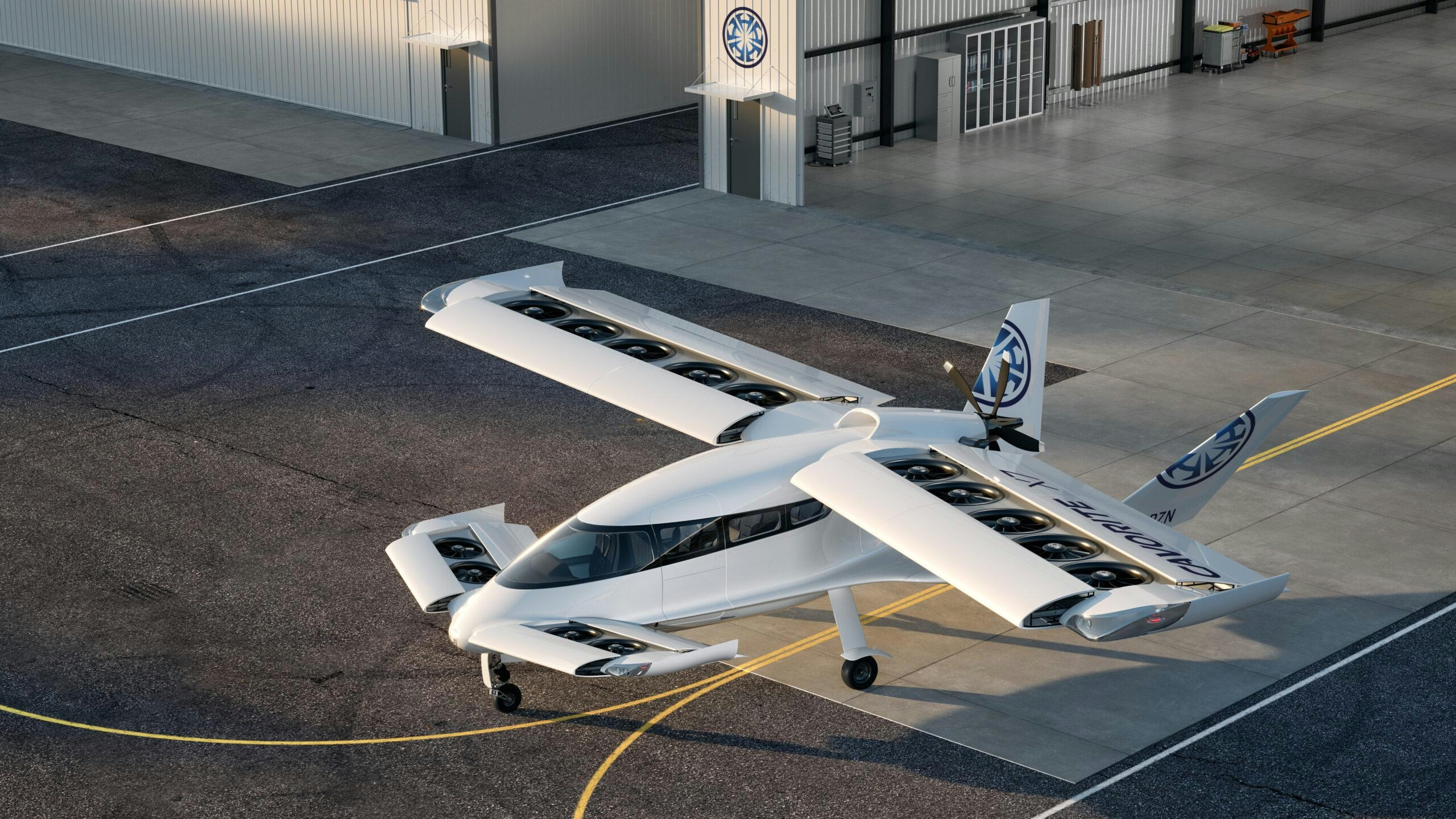
Horizon Advances Dual-Use Certification for Cavorite X7 Hybrid-Electric Aircraft
New Horizon Aircraft is progressing with the dual-use certification of its hybrid-electric Cavorite X7 vertical takeoff and landing (VTOL) aircraft, in collaboration with Cert Center Canada (3C). As the nation’s sole independent flight test and certification design approval organization recognized by Transport Canada, 3C plays a pivotal role in guiding the Cavorite X7 through the complex regulatory landscape. Designed from the outset to serve both civilian and military markets, the aircraft responds to growing demand for high-speed, low-noise VTOL platforms capable of fulfilling a broad range of commercial and defense missions.
Integrating Dual-Use Requirements from Inception
Horizon’s partnership with 3C began during the early design stages, allowing the company to embed dual-use certification requirements directly into the aircraft’s development program. This strategic collaboration leverages 3C’s extensive expertise in both military and civilian aviation sectors. Dr. John Maris, founder of 3C, explained that achieving dual-use certification necessitates compliance with a complex array of regulatory standards, encompassing both civilian aviation regulations and military operational criteria. He highlighted that Horizon has meticulously tailored the Cavorite X7 to meet these multifaceted challenges and emphasized 3C’s ongoing commitment to supporting the project through to its eventual commercial and military deployment.
Navigating Regulatory Complexities and Market Responses
Despite these efforts, the path to dual-use certification remains fraught with challenges. Horizon must carefully navigate overlapping regulatory frameworks and ensure the aircraft satisfies the stringent requirements of both sectors. The certification process demands rigorous testing and validation across diverse operational scenarios, adding layers of complexity to the project.
Market reactions to Horizon’s dual-use strategy have been varied. Some investors regard the pursuit of dual certification as a prudent approach to expanding market opportunities across commercial and defense domains. Conversely, others view it as a high-risk endeavor due to the technical and regulatory hurdles involved. Competitors within the hybrid-electric aircraft industry are closely observing Horizon’s progress, with some anticipated to accelerate their own development programs or adjust product strategies to maintain competitive positioning.
The collaboration with Cert Center Canada aims to streamline the certification process, yet the ultimate success of the Cavorite X7 will depend on its operational performance and ability to meet the demanding dual-use standards.
Strategic Context within Canada’s Aerospace Sector
Horizon’s certification efforts align with Canada’s intensified focus on national security and domestic aerospace capabilities, following the introduction of the Defence Industrial Strategy in February 2026. This policy prioritizes the procurement of Canadian-built aircraft and technologies, potentially positioning the Cavorite X7 as a significant asset within the country’s evolving aerospace landscape.

Etihad Airways Suspends Airbus A380 Flights on Key Route

Aditya Birla Group Seeks Approval for Aircraft Leasing in GIFT City

Qatar Airways Highlights Innovation and Connectivity at Arabian Travel Market 2026

Hong Kong's Five-Year Plan Includes Andrew Fan's Aircraft Parts Processing Hub Proposal

ACIA Aero Leasing Delivers ATR72-600 to Air Nostrum

RTX Appoints Jill Albertelli as Head of Pratt & Whitney

TAT Technologies Joins Beyond Aero Hydrogen Aircraft Program

AURAK Study Highlights Barriers to Air Taxi Adoption in Emerging Economies

Xiamen Air Selects Altitude for 787 Maintenance at Heathrow

Etihad and Swissport Extend Global Partnership
