
Orchestrer les insights d’IA pour les transformer en actions

Tendances
Categories
How Many Previous-Generation Airbus and Boeing Aircraft Remain in Production?
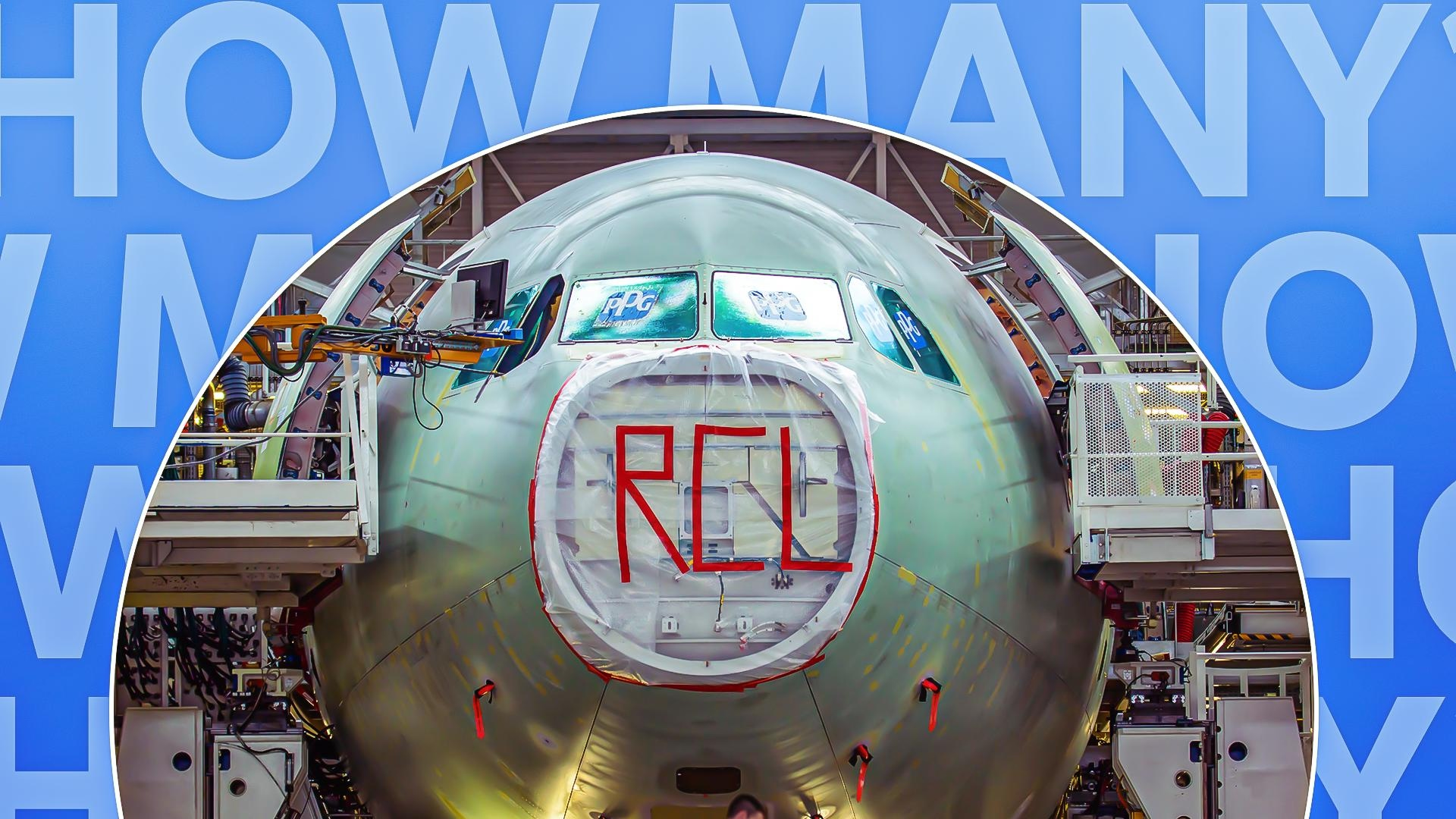
Production Status of Previous-Generation Airbus and Boeing Aircraft
A total of 270 previous-generation aircraft from Airbus and Boeing remain on order, encompassing five uncertain civilian passenger jets, 111 civilian freighters, and 154 military variants derived from civilian models. While additional military contracts may still be secured before production lines close, no further civilian freighter orders are anticipated. Both manufacturers continue to face significant challenges due to ongoing supply chain disruptions and regulatory delays, complicating efforts to fulfill these outstanding commitments. These difficulties have elicited mixed reactions within the market, with investors closely monitoring developments as competitors seek to exploit any production setbacks.
Airbus and Boeing: Transition to Current-Generation Models
Airbus has completed its transition to current-generation passenger aircraft, focusing production on the A220 series (formerly the Bombardier CSeries), the A320neo and A321neo, the A330neo series, and the A350 family. The final delivery of a previous-generation Airbus A330-300 occurred in March 2020 to Aer Lingus, while the last A320ceo family aircraft—a Delta Air Lines A321-200—was delivered in December 2021. On the same day, Airbus also handed over its final A380 to Emirates, marking the conclusion of the world’s last clean-sheet, previous-generation widebody program. The A380, introduced in 2007, was discontinued in 2021 following Emirates’ cancellation of 39 outstanding orders.
Similarly, Boeing is nearing the completion of its previous-generation aircraft deliveries. The final Boeing 737 Next Generation was delivered in January 2020, completing the transition to the 737 MAX series. Production of the iconic Boeing 747 ended in 2023 with the delivery of the last freighter variant. The Boeing 787 Dreamliner now serves as the company’s flagship widebody aircraft, effectively replacing the 767 in its commercial lineup.
Industry Challenges and Future Outlook
Both Airbus and Boeing remain under considerable pressure to fulfill remaining orders for previous-generation aircraft amid persistent supply chain bottlenecks and heightened regulatory scrutiny. These challenges have resulted in delivery delays and increased uncertainty, prompting some airline and military customers to reconsider their fleet strategies. Meanwhile, rival manufacturers are actively seeking to capitalize on any vulnerabilities as the two aerospace leaders navigate these obstacles.
Looking ahead, sustainability and innovation are set to define the future of aircraft production. Airbus and Boeing have both committed to achieving net-zero carbon emissions by 2050, emphasizing research into hydrogen propulsion, sustainable aviation fuels, and more aerodynamically efficient designs. This shift toward greener technologies is expected to influence not only the development of new aircraft but also the competitive dynamics within the aerospace industry.
Corporate Snapshot: Airbus
Founded on December 18, 1970, Airbus is headquartered in Toulouse, France, and is currently led by CEO Guillaume Faury. The company is publicly traded under the stock code AIR.

Etihad Airways Suspends Airbus A380 Flights on Key Route

Aditya Birla Group Seeks Approval for Aircraft Leasing in GIFT City

Qatar Airways Highlights Innovation and Connectivity at Arabian Travel Market 2026

Hong Kong's Five-Year Plan Includes Andrew Fan's Aircraft Parts Processing Hub Proposal

ACIA Aero Leasing Delivers ATR72-600 to Air Nostrum

RTX Appoints Jill Albertelli as Head of Pratt & Whitney

TAT Technologies Joins Beyond Aero Hydrogen Aircraft Program

AURAK Study Highlights Barriers to Air Taxi Adoption in Emerging Economies

Xiamen Air Selects Altitude for 787 Maintenance at Heathrow

Etihad and Swissport Extend Global Partnership
