image

AeroGenie — Votre copilote intelligent.

Posez toutes vos questions. Analysez tout. Agissez instantanément.

Tendances

Categories

Hydrogen Aviation Advances Low-Carbon, Quieter Air Travel
December 10, 2025By ePlane AI
Hydrogen Aviation Advances Low-Carbon, Quieter Air Travel
0
0
Hydrogen Aviation
Low-Carbon Flight
Sustainable Aviation Fuel

Hydrogen Aviation Advances Low-Carbon, Quieter Air Travel

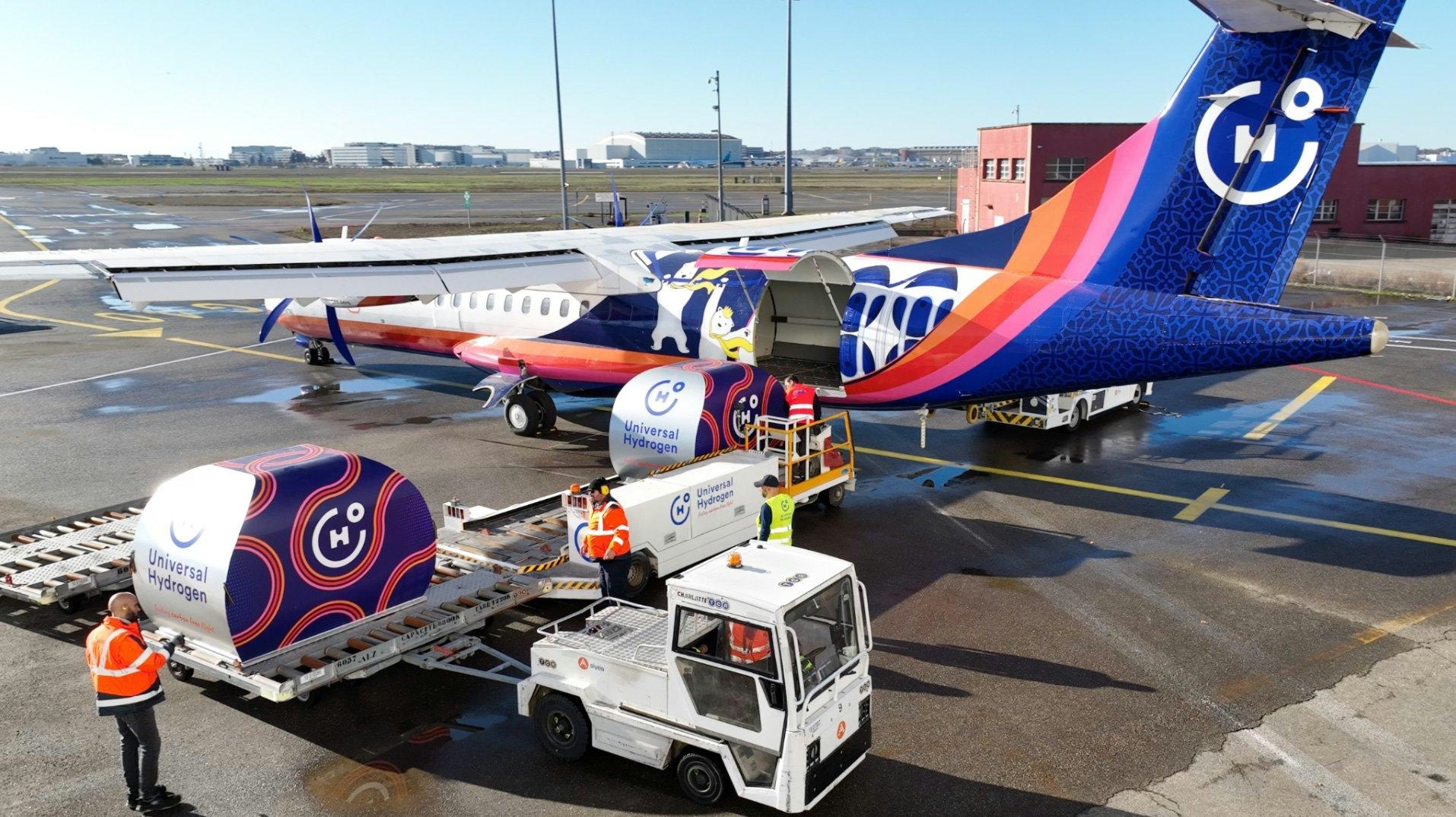
Hydrogen-powered aviation is transitioning from experimental research to practical implementation, heralding a transformative period for global air travel. A recent industry study underscores the potential of hydrogen aircraft to significantly reduce carbon emissions, thereby supporting the sustainable growth of air travel while addressing pressing environmental concerns. This shift promises to alter flight routes, airport operations, and travel planning in the near future.

A New Era for Eco-Conscious Flyers

Hydrogen is rapidly gaining recognition as a key solution to decarbonize commercial aviation. Aircraft manufacturers and airport authorities are preparing for a future in which hydrogen, alongside sustainable aviation fuels, serves as a primary clean energy source. The initial phase of this transition is expected to focus on short- and medium-haul flights—routes frequently used for leisure travel, city breaks, and regional connectivity.

For passengers, hydrogen-powered flights offer the prospect of quieter, cleaner journeys with a substantially reduced carbon footprint, all without compromising convenience. These aircraft are anticipated to provide quieter cabins and smoother propulsion systems, enhancing the overall travel experience by reducing noise pollution and vibration.

Airports Transforming into Hydrogen Hubs

The integration of hydrogen technology will necessitate significant changes to airport infrastructure. International transport authorities and government agencies are actively exploring how terminals can safely handle both liquid and gaseous hydrogen. Several airports across Europe, the United Kingdom, and parts of the United States—regions where governments are already investing in hydrogen infrastructure—are poised to become pioneering “hydrogen hubs.” These facilities will feature new fueling stations and dedicated storage systems designed to support hydrogen-powered aircraft.

Travelers passing through these hubs may soon benefit from clean-flight corridors, representing a tangible step toward sustainable aviation. For frequent flyers aiming to reduce their environmental impact, selecting airlines and airports that prioritize hydrogen infrastructure will become an increasingly practical and responsible choice.

Industry and Government Drive Change

Government initiatives are playing a crucial role in advancing hydrogen aviation. The United Kingdom’s innovation programs have supported the development and early testing of hydrogen aircraft concepts, while European Union policies promote the advancement of clean fuels and encourage airports to prepare for low-carbon operations. In the United States, federal hydrogen programs are assessing how airports can safely incorporate hydrogen into ground operations and future flight activities.

Simultaneously, the aviation industry is exhibiting cautious optimism. Real-world pilot projects and technological advancements are underway, with major companies such as Pratt & Whitney and General Electric developing next-generation hydrogen engines. Innovators like ZeroAvia and Hybrid Air Vehicles are exploring hydrogen-electric airships, expanding the scope of hydrogen applications in aviation. Industry forums, including the Skift Aviation Forum, are highlighting these developments and fostering discussions on future fleet innovations and operational efficiencies.

Challenges and Opportunities Ahead

Despite the promising momentum, significant challenges remain. The cost disparity between fossil-based fuels and clean hydrogen, regulatory complexities—particularly within Europe—and the necessity for high carbon capture rates to ensure genuine emissions reductions are critical obstacles. Nevertheless, the industry’s response has been vigorous, with sustained investment and collaboration aimed at overcoming these barriers and accelerating the adoption of hydrogen aviation.

What Travelers Can Expect—and Do—Now

The rollout of hydrogen-powered flights will begin gradually, initially focusing on short-haul routes popular for weekend getaways and regional travel. Meanwhile, travelers can already contribute to greener aviation by choosing airlines committed to sustainable practices, including those investing in hydrogen partnerships or utilizing sustainable aviation fuels. Similarly, selecting airports that are developing sustainable fuel infrastructure offers passengers an opportunity to support cleaner travel options.

As hydrogen aviation approaches mainstream adoption, travelers can anticipate a future marked by quieter, cleaner, and more efficient journeys, while actively participating in the industry’s transition toward sustainability.

More news
Dexa Gains Momentum in the Birthplace of Aviation

Dexa Gains Momentum in the Birthplace of Aviation

Dexa Gains Momentum in the Birthplace of Aviation Pioneering Autonomous Drone Deliveries in Dayton Dayton-based Dexa has achieved a significant breakthrough by securing a rare Federal Aviation Administration (FAA) waiver for autonomous, beyond-line-of-sight (BVLOS) drone flights. This milestone not only advances the company’s ambitions but also reinforces Dayton’s legacy as the "Birthplace of Aviation." Under the leadership of CEO Beth Flippo, Dexa is harnessing artificial intelligence to revolutionize local delivery services, enabling businesses to transport goods within 15 minutes and deposit packages at precise locations—even in the absence of traditional addresses. From meals delivered directly to doorsteps to sunscreen airdropped onto beach blankets, Dexa is quietly transforming futuristic concepts into practical realities in Ohio. Beth Flippo’s journey began in her parents’ defense contracting firm in New Jersey, where she developed a wireless mesh network that allows drones to communicate in real time without relying on a central hub. Originally designed for military applications, this technology caught the attention of delivery companies, prompting Flippo to identify a unique commercial opportunity. In 2020, amid the uncertainties of the pandemic, she relocated her family to Dayton after securing a partnership with Kroger, positioning Dexa—formerly known as Drone Express—as a frontrunner in the emerging field of commercial drone deliveries. Navigating Regulatory Hurdles and Industry Growth The strategic move quickly yielded results, attracting media attention and a surge in demand from diverse sectors, including prepared food and medical supplies. Flippo acknowledges the challenges posed by aviation regulations, emphasizing the necessity of compliance despite growing market interest. Over the subsequent five years, Dexa evolved into a certified airline, attaining the highest levels of FAA certification for unmanned aircraft systems. The recent BVLOS waiver places Dexa in an exclusive cohort alongside industry giants such as Amazon, Walmart, and Zipline, a remarkable feat for a company with fewer than 30 employees. Flippo views Dexa’s small size as a competitive advantage, asserting, “The little guys are the hungry ones; we’re the ones that want it. We’re the ones who have suffered for it. It’s just like in life. Who would you bet on?” Dexa’s collaboration with Microsoft has further enhanced its technological capabilities. By integrating AI, the company has developed sophisticated mapping tools that identify safe and efficient airspace routes. The drones can analyze landscapes in real time, distinguishing between rooftops, porches, and swimming pools to determine optimal drop-off points, achieving an accuracy rate of 86 percent. Challenges and the Future of Sustainable Aviation Despite Dexa’s rapid progress, the broader drone and aviation industries face significant challenges, particularly regarding sustainability. The growing emphasis on sustainable aviation fuel (SAF) is reshaping market dynamics, with legislative efforts underway to restore SAF credits that reflect both regulatory support and the economic complexities of adoption. As demand for SAF intensifies—a trend underscored by experts at Bombardier—Dexa and its competitors may encounter new pressures. Some industry players are likely to accelerate their SAF initiatives, while others may continue relying on traditional fuels, depending on their strategic priorities and market positions. As Dexa continues to innovate from Dayton, its trajectory will depend not only on technological and regulatory achievements but also on its ability to adapt within an evolving landscape of sustainable aviation. In the historic birthplace of flight, the race to define the future of drone delivery is gaining unprecedented momentum.
uAvionix Software Update Integrates ForeFlight Compatibility

uAvionix Software Update Integrates ForeFlight Compatibility

uAvionix Introduces AV-30 Software Update with ForeFlight Integration uAvionix has unveiled version 3.2.0 of the software for its experimental AV-30-E instrument, marking a significant advancement through direct compatibility with ForeFlight, a widely used flight planning application. The update for the certified AV-30-C model is anticipated to be released shortly. Enhanced Flight Planning and Autopilot Functionality This software upgrade allows pilots to plan routes within ForeFlight and seamlessly transfer them to the AV-30 instrument. Once uploaded, the autopilot can follow the ForeFlight-defined flight plan, enhancing operational efficiency and situational awareness. Key features of the integration include the ability to use ForeFlight as a primary navigation source, direct transfer of waypoints and routes to the AV-30, and real-time in-flight updates. Pilots can modify active flight plans mid-flight—adding waypoints or rerouting to avoid adverse weather or comply with air traffic control instructions—with changes immediately reflected on the AV-30 display. John Chargo, an engineer at uAvionix, emphasized the transformative nature of the update, stating, “With 3.2.0, pilots get a truly streamlined and seamless ForeFlight-to-panel experience. Building a route in ForeFlight and having it appear instantly on the AV-30, ready for the autopilot to follow, transforms how we plan and fly. It’s an exciting step forward for making advanced capability accessible to every GA cockpit.” To utilize ForeFlight integration, users must install the AV-Link Wi-Fi bridge, which facilitates the transfer and updating of flight plans. Additionally, autopilot coupling requires the Advanced Autopilot Unlock feature. Considerations and Market Impact While the update promises a more integrated cockpit experience and improved situational awareness, it also presents potential challenges. Ensuring flawless interoperability with existing avionics and maintaining the reliability of real-time ADS-B data integration will be essential. Users may encounter technical compatibility issues that necessitate careful installation and operational oversight. Industry analysts anticipate a positive reception from operators seeking enhanced safety and situational awareness. The move is also expected to prompt competitors to accelerate similar software updates, focusing on integration with other popular flight tracking platforms to sustain their market positions. The AV-30-E software update is currently available, with the AV-30-C version expected soon. Further details are accessible at uAvionix.com.
Why the Airbus A320neo Family Uses Multiple Engine Options

Why the Airbus A320neo Family Uses Multiple Engine Options

Why the Airbus A320neo Family Uses Multiple Engine Options Among modern narrowbody airliners, the Airbus A320neo family is unique in offering multiple engine options. Unlike its competitors—the Airbus A220 (formerly Bombardier CSeries), COMAC C919, and Embraer E-Jet E2—which each rely on a single engine type, the A320neo provides airlines with a choice between two engines. Even Boeing’s direct competitor, the 737 MAX, is powered exclusively by the CFM International LEAP-1B engine. Market Strength and Design Considerations Airbus’s decision to equip the A320neo with both the Pratt & Whitney PW1100G Geared Turbofan and the CFM International LEAP-1A engines was influenced by several strategic factors, including the size of the market, risk tolerance, and the willingness of engine manufacturers to invest in new technologies. The A320neo’s design, particularly its higher landing gear compared to the Boeing 737, allowed it to accommodate larger, more advanced engines, providing a technical foundation for this dual-engine approach. The commercial success of the A320 family has been instrumental in enabling this strategy. By 2025, the A320 surpassed the Boeing 737 in cumulative deliveries, becoming the most-produced commercial passenger jet in history. Airbus’s scale and reputation afford it the capacity to absorb substantial development costs and instill confidence in original engine manufacturers (OEMs) to invest in new engine programs without requiring exclusivity. This contrasts with smaller manufacturers like Bombardier, which often face limitations in securing multiple engine partners due to their comparatively modest market presence. While much attention is given to aircraft manufacturers’ engine choices, less is discussed about OEMs’ decisions to decline participation in smaller programs. The sheer scale of the A320neo program provided Airbus with the leverage to secure two engine suppliers, a rare achievement in the narrowbody segment. Engine Suppliers and Industry Dynamics Initially, three OEMs vied to supply engines for the A320neo: Pratt & Whitney, CFM International (a joint venture between GE Aerospace and Safran), and Rolls-Royce. Although Rolls-Royce explored narrowbody engine options during the 2010s, it ultimately withdrew from this market segment to concentrate on business and widebody jet engines. This left Pratt & Whitney’s PW1100G and CFM’s LEAP-1A as the primary contenders. The following table illustrates the engine options and approximate total orders for several key narrowbody aircraft: | Aircraft | Engine Option(s) | Total Orders (approx.) | |--------------------|---------------------------------------|-----------------------| | Airbus A220 | PW1500G | 940 | | Airbus A320neo | PW1100G or CFM LEAP-1A | 11,366 | | Boeing 737 MAX | CFM LEAP-1B | 6,814 | | COMAC C919 | CFM LEAP-1C | 700–1,000 | | Embraer E2 | PW1900G | 490 | Challenges and Future Outlook While offering two engine options grants airlines greater flexibility, it also introduces complexity in production and supply chains. The competition between Pratt & Whitney and CFM International has led to challenges such as engine shortages and aircraft groundings. Recent issues, including software recalls and quality concerns, have raised investor apprehension and contributed to notable declines in Airbus’s share price. The competitive landscape remains dynamic. Ongoing negotiations between Pratt & Whitney and Airbus focus on securing future engine supplies, while Safran is investing in expanded maintenance facilities to support the growing demand for the LEAP engine. Concurrently, Airbus is preparing to make critical decisions regarding future engine and wing technologies by 2026, aiming to sustain its leadership position in the narrowbody market. The A320neo’s dual engine strategy thus reflects Airbus’s market strength, design advantages, and capacity to manage risk, even as it navigates the complexities of production and supply that will influence the future of narrowbody aviation.
Air Taxi Companies Excel at Public Relations

Air Taxi Companies Excel at Public Relations

Air Taxi Companies Excel at Public Relations The PR Race in the Electric Air Taxi Industry In the rapidly advancing sector of electric air taxis, public relations efforts have become as vital as technological innovation. Leading US eVTOL (electric vertical takeoff and landing) companies—namely Archer Aviation, Joby Aviation, and the recently public Beta Technologies—are highly active in their media outreach. These firms frequently announce new partnerships, acquisitions, market expansions, and certification milestones, often releasing multiple updates in quick succession. This intense communication strategy reflects a competitive drive to capture investor interest and maintain public visibility. A recent analysis by boutique firm SMG Consulting has quantified the disparity between PR activity and actual flight testing within the industry. Through a “tongue-in-cheek infographic,” SMG calculated the ratio of flight hours to press releases for major US electric aircraft companies up to December, providing insight into the communication dynamics at play. According to SMG’s findings, Beta Technologies leads with 63.5 flight hours per press release, while Archer Aviation issues a press release approximately every 18 minutes of flight time. Joby Aviation’s ratio falls between these two extremes. SMG notes that these figures may be influenced by differences in aircraft types; for example, Beta manufactures runway-capable aircraft in addition to eVTOLs, which affects flight hour accumulation. When focusing exclusively on eVTOL flight hours, the ratios become more concentrated. Joby Aviation emerges as the most prolific in PR relative to flight time, issuing one press release for every 3.2 flight hours. Beta follows with a press release every 36 minutes, and Archer maintains a release every 18 minutes of flight. This data highlights the industry’s heavy reliance on communications to sustain momentum and investor confidence, even as actual operational flight time remains limited. Challenges Beyond Public Relations Despite the prominence of PR, air taxi companies face significant challenges behind the scenes. Legal disputes have surfaced, most notably Joby Aviation’s lawsuit against Archer Aviation. Joby alleges that Archer improperly used proprietary information obtained from a former Joby employee to secure a critical partnership. This legal conflict underscores the high stakes and intense competition inherent in the race to commercialize electric air taxis. Market skepticism also persists, particularly as some companies announce plans to launch operations in regions such as the Middle East before obtaining necessary certifications in the United States and Europe. This approach has raised questions about regulatory preparedness and whether international market ambitions are being prioritized over domestic deployment. Meanwhile, competitive strategies continue to evolve. Archer Aviation, for example, is actively expanding its air taxi network in Miami, complementing its existing operations in the San Francisco Bay Area, New York, and Los Angeles. These expansions reflect both the ambition and pressure faced by eVTOL companies as they strive to translate media attention into tangible operational progress. As the industry accelerates toward commercial service, the interplay between publicity and actual advancement remains a defining characteristic—one that will be closely monitored by investors, regulators, and the public alike.
Cowling Detaches in Flight and Strikes Windshield

Cowling Detaches in Flight and Strikes Windshield

Cowling Detaches in Flight and Strikes Windshield A Piper PA-28-180 encountered a mid-flight mechanical failure when the right side of its engine upper cowling became unlatched and struck the windshield during cruise between airports. Despite the left side of the cowling remaining secured, the incident caused substantial damage to the windshield. The pilot was able to maintain control and safely land the aircraft at an airport in Mesa, Arizona. Fortunately, no injuries were reported. Investigation and Findings A post-incident examination determined that the right front fastener pin, responsible for securing the upper cowling near the air intake, had separated from the cowling structure. This separation likely allowed the forward right side of the cowling to detach from the lower section and lift into the airstream. The resulting aerodynamic forces caused the right side latches to fail under overload. The National Transportation Safety Board (NTSB) identified the probable cause as the failure of the engine cowling’s right side latch pin and fasteners, which led to the partial separation of the cowling during flight. This event, documented under NTSB Identification 193480, underscores the critical importance of thorough pre-flight inspections and the secure fastening of engine components. Context Within Industry Safety Concerns This incident occurs amid heightened industry scrutiny regarding aircraft reliability and safety. Airbus, for example, has recently faced significant challenges following a major software recall affecting approximately 6,000 A320 family jets. The recall was initiated due to a vulnerability in the flight-control computers linked to a recent in-flight incident, resulting in the grounding of thousands of aircraft and widespread travel disruptions during a peak holiday travel period. Compounding these issues, reports of windscreen problems have caused diversions for flights operated by American Airlines and United Airlines, further intensifying concerns over product reliability. These developments have contributed to a sharp decline in Airbus shares, marking their steepest drop since April and reflecting broader market anxiety over ongoing technical difficulties. The NTSB continues to publish detailed accident reports such as this to serve as educational tools for pilots and operators, aiming to improve aviation safety through lessons learned from past events.
SMBC Aviation Capital Signs Agreement for 737 MAX 9 with United

SMBC Aviation Capital Signs Agreement for 737 MAX 9 with United

SMBC Aviation Capital Secures Agreement with United Airlines for 737 MAX 9 Fleet Expansion Aircraft lessor SMBC Aviation Capital has finalized a significant agreement with United Airlines for the purchase and lease-back of twenty Boeing 737 MAX 9 aircraft, with deliveries slated for 2025 and 2026. This transaction represents the third major collaboration between the two companies in recent years, following previous deals involving the lease of 20 Airbus A321neo aircraft from SMBC’s orderbook and a separate purchase-and-leaseback arrangement for 20 Boeing 737 MAX 8 jets. Strategic Alignment and Fleet Modernization United Airlines has emphasized that the latest agreement aligns closely with its long-term fleet strategy. Michael Leskinen, United’s Chief Financial Officer, underscored that the deal supports the airline’s ongoing efforts to modernize its fleet and enhance the overall customer experience. Leskinen also highlighted the strength of United’s partnership with SMBC Aviation Capital, noting the lessor’s pivotal role in the continued evolution of the airline’s fleet composition. Market Context and Competitive Pressures This agreement emerges amid heightened activity and intensifying competition within the global aircraft leasing sector. SMBC Aviation Capital faces challenges including regulatory scrutiny and the need to ensure compliance with evolving safety standards for the 737 MAX series. The market is witnessing increased rivalry from major lessors such as AerCap and Air Lease Corporation, who may respond with aggressive pricing or by expanding their own orders for the 737 MAX family. Further illustrating the competitive environment are recent commitments from airlines such as Ethiopian Airlines and Air Senegal to additional 737 MAX orders. Meanwhile, substantial orders from Middle Eastern carriers including Flydubai and Etihad Airways continue to influence market dynamics, intensifying competition among lessors vying to secure contracts with leading airlines. As the aviation industry advances in its recovery and fleet modernization efforts, the partnership between SMBC Aviation Capital and United Airlines exemplifies both companies’ strategic responses to evolving market conditions and their pursuit of a competitive advantage.
AerFin Acquires CFM56-5B PIP Engines for Teardown

AerFin Acquires CFM56-5B PIP Engines for Teardown

AerFin Expands Aftermarket Capabilities with Acquisition of CFM56-5B PIP Engines AerFin has significantly enhanced its aviation aftermarket portfolio through the acquisition of a package of CFM56-5B performance improvement package (PIP) engines from a leading European operator. These engines, equipped with the latest hardware configurations, are set to provide a valuable supply of high-quality used serviceable material (USM) to operators, lessors, and maintenance, repair, and overhaul (MRO) providers worldwide. Teardown operations are currently underway at AerFin’s expanded engine facility in South Wales, where components are being released to support global fleet operations. Advanced Technical Expertise and Facility Expansion Simon Bayliss, AerFin’s Chief Operating Officer, emphasized that processing these advanced PIP engines at the Newport-based Indurent Park facility demonstrates the company’s growing in-house technical expertise. While AerFin has previously managed PIP material, Bayliss highlighted that the integration of more sophisticated engine configurations alongside increased facility capacity now enables tighter inventory control and more responsive customer service. This development marks a significant step forward in AerFin’s ability to support complex engine teardown and parts distribution. Navigating a Competitive and Regulated MRO Environment The acquisition arrives amid intensifying competition and regulatory scrutiny within the global MRO sector. AerFin’s expansion of its teardown and USM offerings requires careful navigation of complex regulatory frameworks, particularly in emerging MRO hubs such as India. Recent industry developments, including Safran’s new facility in Hyderabad and Inavia’s planned investment in Bhopal, illustrate the escalating competition among MRO providers. Industry analysts anticipate that competitors will similarly enhance their maintenance and teardown capabilities to meet growing demand, especially as a surge in engine maintenance for models like the CF34 approaches and technological advancements among engine manufacturers accelerate. AerFin’s ongoing teardown activities have already produced a diverse range of USM, including components from its A320neo programme and an extensive inventory of B777-300ER parts. With strategically positioned stock across facilities in Newport, Gatwick, Miami, and Singapore, the company aims to ensure rapid and reliable access to critical components for its global customer base. As the aftermarket landscape continues to evolve, AerFin’s latest acquisition not only strengthens its technical and inventory capabilities but also positions the company to respond swiftly to shifting market dynamics and regulatory challenges.
xCelle Asia Expands APAC Nacelle Support Network

xCelle Asia Expands APAC Nacelle Support Network

xCelle Asia Expands APAC Nacelle Support Network AAR CORP. and Air France Industries KLM Engineering & Maintenance (AFI KLM E&M) have officially launched xCelle Asia, a joint venture that significantly broadens their nacelle maintenance, repair, and overhaul (MRO) capabilities within the Asia-Pacific region. Following regulatory approval, the new facility in Chonburi, Thailand, is now fully operational and will primarily focus on servicing nacelles for next-generation aircraft. This expansion builds upon the partners’ successful collaboration in the Americas, aiming to replicate and extend their proven service model in a dynamic and rapidly growing market. Comprehensive Nacelle MRO Services in Asia-Pacific xCelle Asia’s facility holds multiple original equipment manufacturer licenses and is equipped to deliver a full range of nacelle MRO services. These include on-wing and on-site inspections, as well as rotable support for advanced nacelles used on prominent engine types such as GEnx, Trent 1000, and LEAP-1A/1B. The joint venture anticipates broadening its service offerings to encompass additional aircraft and engine platforms in the near future, thereby enhancing its technical scope and operational reach. Representatives from AAR emphasized that the venture is designed to provide superior service and support tailored to operators across the Asia-Pacific, a region noted for its vibrant and evolving aviation sector. By integrating AAR’s Thailand-based Component Services team with AFI KLM E&M’s extensive global maintenance network, the partners intend to expand their service portfolio substantially and deliver a level of performance comparable to their established operations in the Americas. AFI KLM E&M characterized the establishment of xCelle Asia as a significant reinforcement of its global MRO footprint. The company highlighted that extending nacelle maintenance capabilities into the Asia-Pacific will allow it to offer next-generation support closer to regional customers. This strategic move aligns with AFI KLM E&M’s broader commitments to innovation, sustainability, and operational excellence within the aviation maintenance industry. Navigating Regional Market Dynamics and Technological Challenges The expansion of xCelle Asia occurs against a complex backdrop of regional market conditions. According to Fitch Ratings, the Asia-Pacific insurance market, which underpins much of the aviation sector’s risk management, is expected to remain generally stable through 2026. While strong capital reserves and disciplined underwriting practices foster cautious optimism, the market remains highly competitive. In particular, India’s aviation insurance sector faces challenges such as moderating premium growth and ongoing underwriting losses, as reported by Gallagher Re, which could impact service providers operating in the region. Additionally, the rapid development of the Asia-Pacific smart manufacturing sector presents both opportunities and challenges for xCelle Asia. The integration of advanced manufacturing technologies will be critical to maintaining a competitive advantage, yet it will also require significant investment and adaptation to evolving industry standards and practices. Despite these complexities, both AAR and AFI KLM E&M express confidence in xCelle Asia’s ability to meet the demands of one of the world’s most dynamic aviation markets. The joint venture is poised to enhance regional support for next-generation aircraft, reinforcing the partners’ shared commitment to delivering high-quality, industry-leading solutions across the Asia-Pacific.
Boeing Shares Fall 0.8% Amid DHS 737 Contract and Airbus Competition

Boeing Shares Fall 0.8% Amid DHS 737 Contract and Airbus Competition

Boeing Shares Decline Amid DHS Contract and Intensifying Airbus Competition Boeing (NYSE: BA) shares closed down 0.8% at $198.72 on December 2025, reflecting a complex interplay of corporate developments, government contracts, and mounting rivalry with Airbus. The stock opened at $200.37 and fluctuated between $201.35 and $198.35 during the trading session, with volume slightly above average at just under 15 million shares. After-hours trading saw shares dip further into the low $198 range, underscoring persistent investor caution. DHS Contract and Its Implications Investor focus centered on the U.S. Department of Homeland Security’s recent acquisition of six Boeing 737 aircraft for Immigration and Customs Enforcement deportation flights. Valued at nearly $140 million and executed through Daedalus Aviation, the contract contributes incremental revenue to Boeing but has ignited reputational concerns due to the political sensitivity surrounding deportation operations. Although modest relative to Boeing’s approximately $150 billion market capitalization, the deal signals sustained government demand for the 737 model. Nevertheless, the association with contentious immigration policies has raised environmental, social, and governance (ESG) considerations, which may have dampened investor sentiment and contributed to the day’s share decline. Competitive Dynamics with Airbus Boeing’s share performance unfolds against a backdrop of challenges faced by its European rival Airbus. Recently, Airbus issued a software recall affecting 6,000 A320 jets, unsettling investors and prompting a significant drop in its share price. This quality issue compelled Airbus to reduce its full-year delivery target by 4%. In November, Airbus delivered 72 jets, surpassing Boeing’s 44 deliveries—a 17% decrease for the American manufacturer. Despite this, Airbus’s operational setbacks have narrowed the competitive gap. Notably, Boeing has outpaced Airbus in net aircraft orders for the first time in six years. By the end of November, Boeing had secured approximately 908 net orders compared to Airbus’s 700. Airbus CEO Guillaume Faury acknowledged Boeing’s strong order performance, attributing it partly to trade settlements and diplomatic factors favoring Boeing in long-haul aircraft contracts. Analysts characterize the current market dynamic as “orders win, deliveries lag,” suggesting that Boeing’s momentum in securing orders is bolstering investor confidence in its long-term outlook. Defense Contracts and Analyst Perspectives Boeing’s defense segment has provided a degree of resilience amid commercial challenges. The company has secured over $7 billion in new defense contracts, offering support to its stock price despite ongoing difficulties in commercial jet deliveries. Analyst sentiment remains cautiously optimistic. UBS recently reaffirmed a “Buy” rating on Boeing with a $275 price target, implying a potential upside of 35 to 40 percent from current levels. The firm highlighted Boeing’s robust order backlog—exceeding 1,000 gross orders year-to-date—and emphasized the strategic significance of the Spirit AeroSystems acquisition in stabilizing the supply chain. However, analysts also note that Boeing remains unprofitable and faces risks including high debt levels, regulatory scrutiny, and execution challenges. The positive outlook hinges on Boeing’s ability to deliver on its free cash flow commitments and capitalize on macroeconomic tailwinds, such as the Federal Reserve’s recent interest rate cut, which could reduce capital costs for the heavily leveraged company. Outlook Despite recent volatility, Boeing shares remain substantially above late November levels, supported by a strong rally earlier in December following management’s guidance toward positive free cash flow in 2026. Year-to-date, the stock has recorded low double-digit gains, indicating early signs of recovery after several turbulent years. Nonetheless, execution risks and ongoing competition with Airbus will continue to be critical factors for investors in the coming months.
ExecuJet Malaysia Gains EASA and FAA Certifications to Enhance MRO Services

ExecuJet Malaysia Gains EASA and FAA Certifications to Enhance MRO Services

ExecuJet Malaysia Secures EASA and FAA Certifications, Expanding MRO Capabilities ExecuJet MRO Services Malaysia, a wholly owned subsidiary of Dassault Aviation, has reinforced its position in the maintenance, repair, and overhaul (MRO) sector by obtaining certifications from both the European Union Aviation Safety Agency (EASA) and the US Federal Aviation Administration (FAA). These approvals significantly broaden the scope of services available at its Subang Airport facility, enhancing its ability to serve a diverse international clientele. Expanded Maintenance and Testing Authorizations The newly acquired EASA certification authorizes ExecuJet Malaysia to conduct both line and base maintenance on Falcon 7X aircraft, a key segment of its service portfolio. This certification also encompasses advanced non-destructive testing (NDT) techniques, including ultrasonic, eddy current, magnetic particle, and penetrant inspections. Complementing this, the FAA has approved two additional NDT methods—ultrasonic inspection and penetrant testing—further augmenting the facility’s diagnostic and maintenance capabilities. Ivan Lim, Regional Vice President Asia for ExecuJet MRO Services, emphasized the strategic importance of the Falcon 7X base maintenance approval, noting the strong demand from European-registered Falcons operating across Asia. He stated, “The EASA certification demonstrates our commitment to meeting stringent international standards.” Lim further highlighted that the expanded NDT capabilities enable faster detection of structural defects, which in turn reduces unscheduled downtime and enhances operational efficiency for aircraft operators. Market Implications and Industry Challenges These certifications position ExecuJet Malaysia to better serve a growing market, particularly in regions governed by EASA and FAA regulations, including nine African states and the United States. Industry analysts anticipate that the enhanced approvals will stimulate increased demand for ExecuJet’s MRO services, as operators increasingly seek providers with comprehensive international certifications and advanced technical expertise. Nonetheless, the company continues to face challenges in maintaining competitive pricing against established MRO providers, ensuring consistent service quality, and navigating the complex regulatory frameworks imposed by both EASA and FAA. The evolving competitive landscape may prompt rival firms to upgrade their own MRO capabilities or pursue strategic partnerships to match ExecuJet’s expanded certifications and service offerings. As ExecuJet Malaysia integrates these new approvals, it aims to solidify its reputation as a leading MRO provider in the region, balancing regulatory compliance, technical excellence, and customer expectations within a highly competitive industry.
Ask AeroGenie