
Orchestrer les insights d’IA pour les transformer en actions

Tendances
Categories
Impact of New Aircraft Deliveries and Debt Plans on AerCap Holdings Investors
Impact of New Aircraft Deliveries and Debt Plans on AerCap Holdings Investors
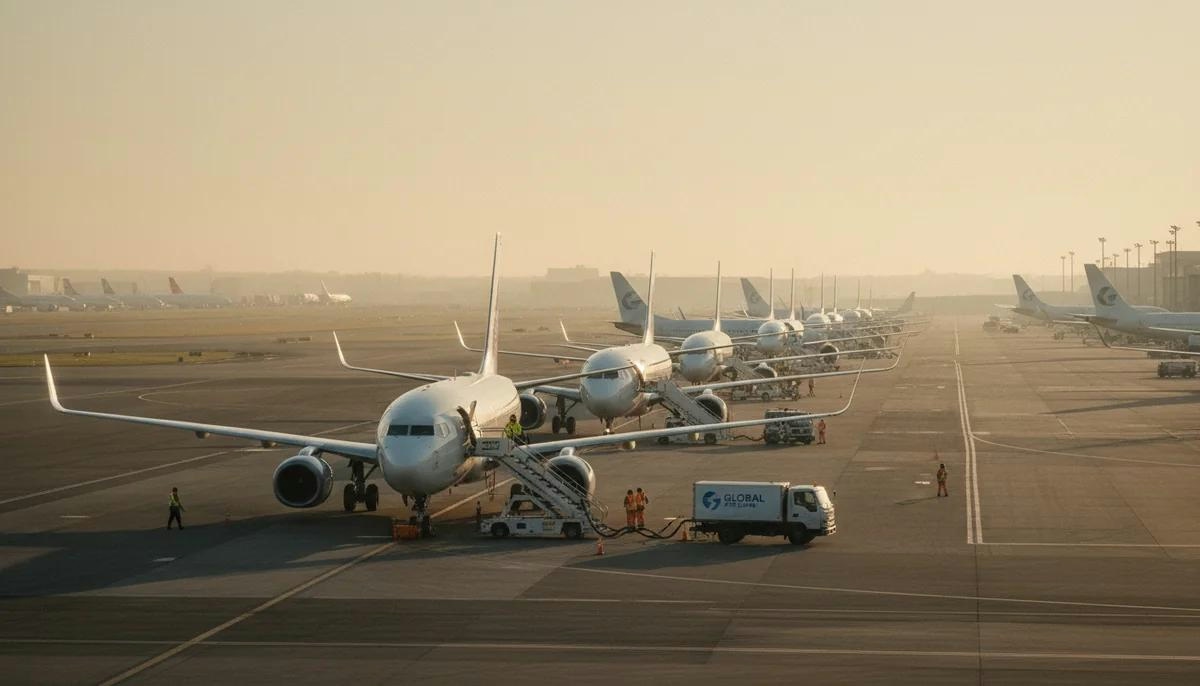
AerCap Holdings N.V. has recently advanced its role in global airline fleet modernization by delivering new, fuel-efficient aircraft to Thai Airways and Azerbaijan Airlines. The delivery of Azerbaijan Airlines’ first A321neo represents a significant milestone in the carrier’s ongoing fleet renewal strategy. These transactions occur against the backdrop of a robust global demand for aircraft, with the aerospace sector experiencing record-high delivery volumes. However, the industry continues to grapple with challenges, notably Airbus’s announcement of delays affecting A320neo series jets scheduled for delivery in 2027 and 2028. Such postponements may disrupt AerCap’s delivery schedules and have potential repercussions on its financial performance.
In parallel with these operational developments, AerCap Funding, a subsidiary of AerCap Holdings, has filed a shelf registration statement to enable the potential issuance of debt securities. This strategic move preserves the company’s flexibility in securing funding as it supports airline fleet renewal programs worldwide. For investors, the combination of ongoing fleet expansion and funding adaptability underscores AerCap’s critical position in facilitating global airline modernization, while also highlighting the capital-intensive nature of its business model.
Investment Narrative and Financial Outlook
Investing in AerCap necessitates an understanding of its capital-intensive aircraft leasing model, which depends on disciplined risk management, balanced funding strategies, and sustained airline demand. The recent deliveries to Thai Airways and Azerbaijan Airlines provide modest reinforcement to near-term lease activity. However, the new shelf registration draws attention to funding costs and leverage, which represent key risks should market conditions deteriorate or increased debt levels compress profit margins.
The broader industry context adds further complexity. While strong global demand is driving record aircraft deliveries, the announced delays by Airbus could impede AerCap’s ability to fulfill contractual obligations and meet revenue forecasts. These delays also bear significance for the aviation sector’s ambitious 2050 net-zero carbon emissions target, potentially influencing investor sentiment toward lessors like AerCap that are central to fleet renewal and sustainability initiatives.
Looking ahead, AerCap projects revenues of $8.3 billion and earnings of $2.0 billion by 2029, reflecting a 1.4% annual decline in revenue and a substantial decrease in earnings from the current $3.9 billion. Despite these projections, some analysts identify potential upside of up to 12% from the current share price. However, valuations vary widely, with fair value estimates ranging from US$92 to US$166 per share, reflecting divergent views on funding risks and market resilience.
Given AerCap’s dependence on capital markets and exposure to delivery delays, investors must carefully consider multiple perspectives before forming an investment thesis. The interplay between capital commitments, potential debt issuance, and evolving market conditions will be pivotal to AerCap’s performance in the coming years.

Etihad and Swissport Extend Global Partnership

Sepehran Airlines B737 Returns to Mashhad After Tyre and Engine Issues

Etihad Deploys Widebody Fleet to Meet Strong Demand

Korean Air Finalizes $36.2 Billion Deal with Boeing
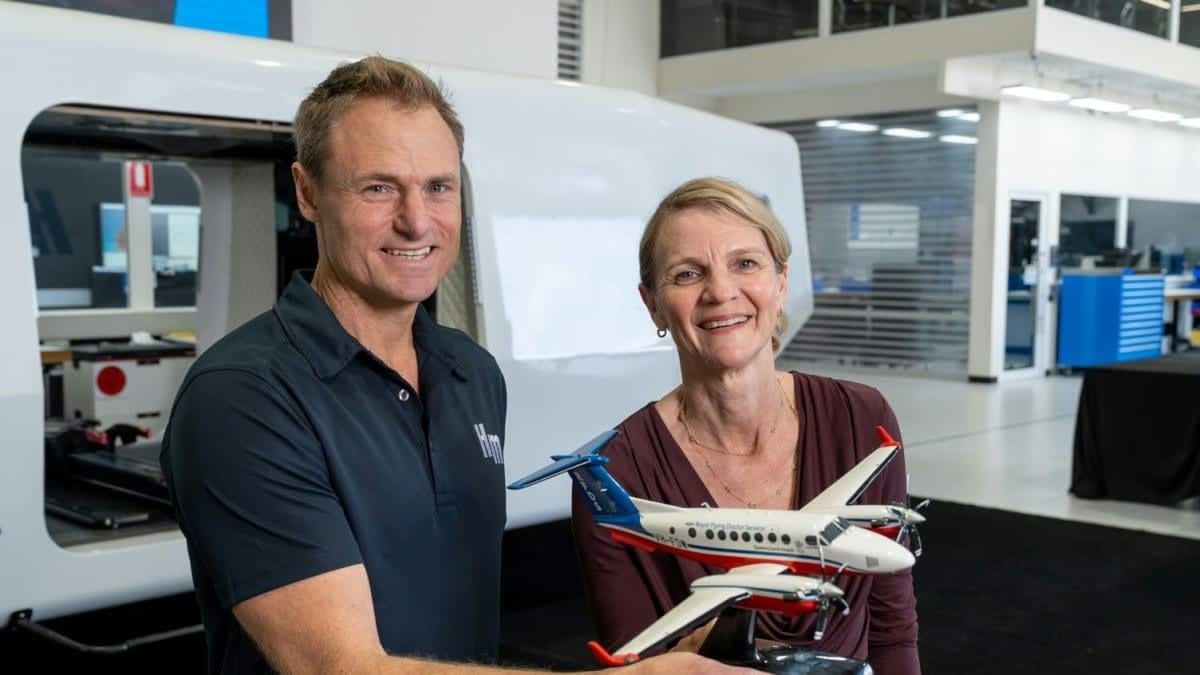
Australia’s RFDS Queensland Section Orders Six King Air 260Cs

Korean Air Finalizes Order for 103 Boeing Jets and Engines
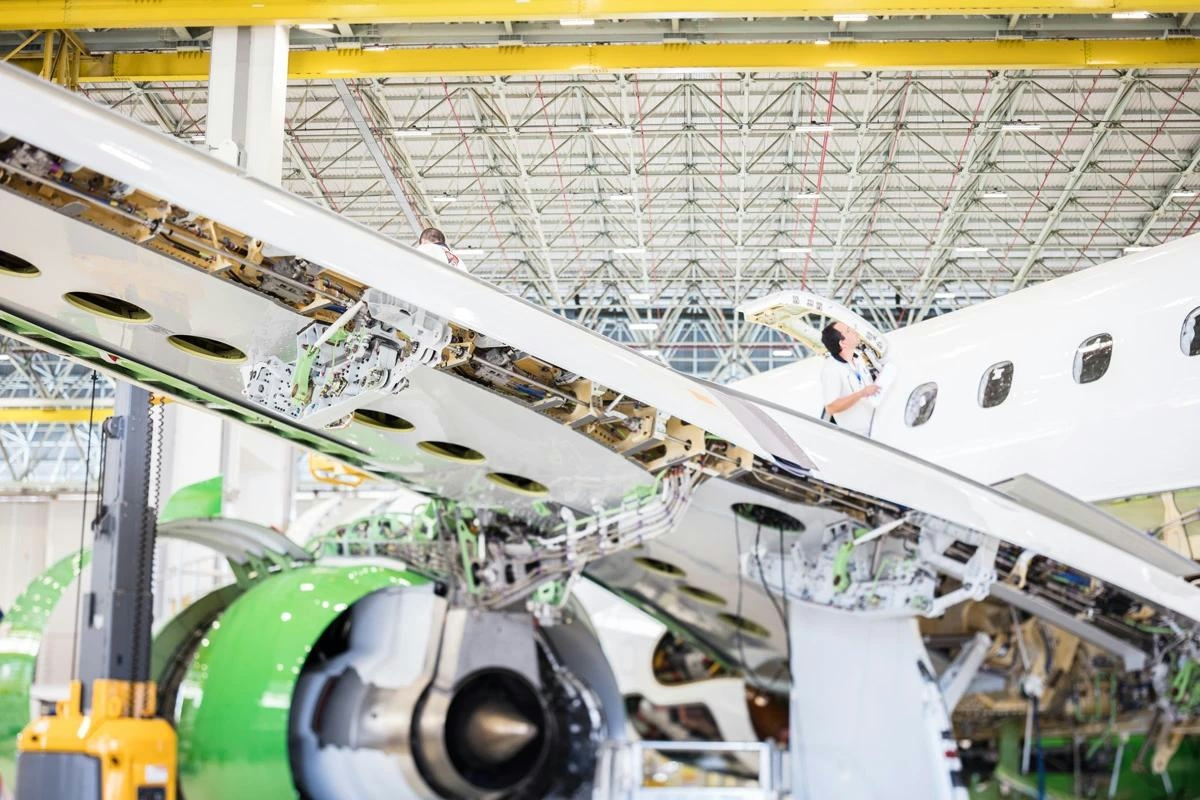
Embraer E195-E2 Features Distinctive Engine Placement Among Regional Jets

What Passengers Can Expect on Boeing’s New 777X Jet

How Ethiopian Airlines Became Africa’s Leading Carrier Amid Gulf Competition

Joby Aviation Extends Autonomous Flight Capabilities with Cross-Country Tour
