
Orchestrer les insights d’IA pour les transformer en actions

Tendances
Categories
India on way to become a global hub for aircraft Maintenance, Repair and Overhaul (MRO): Govt
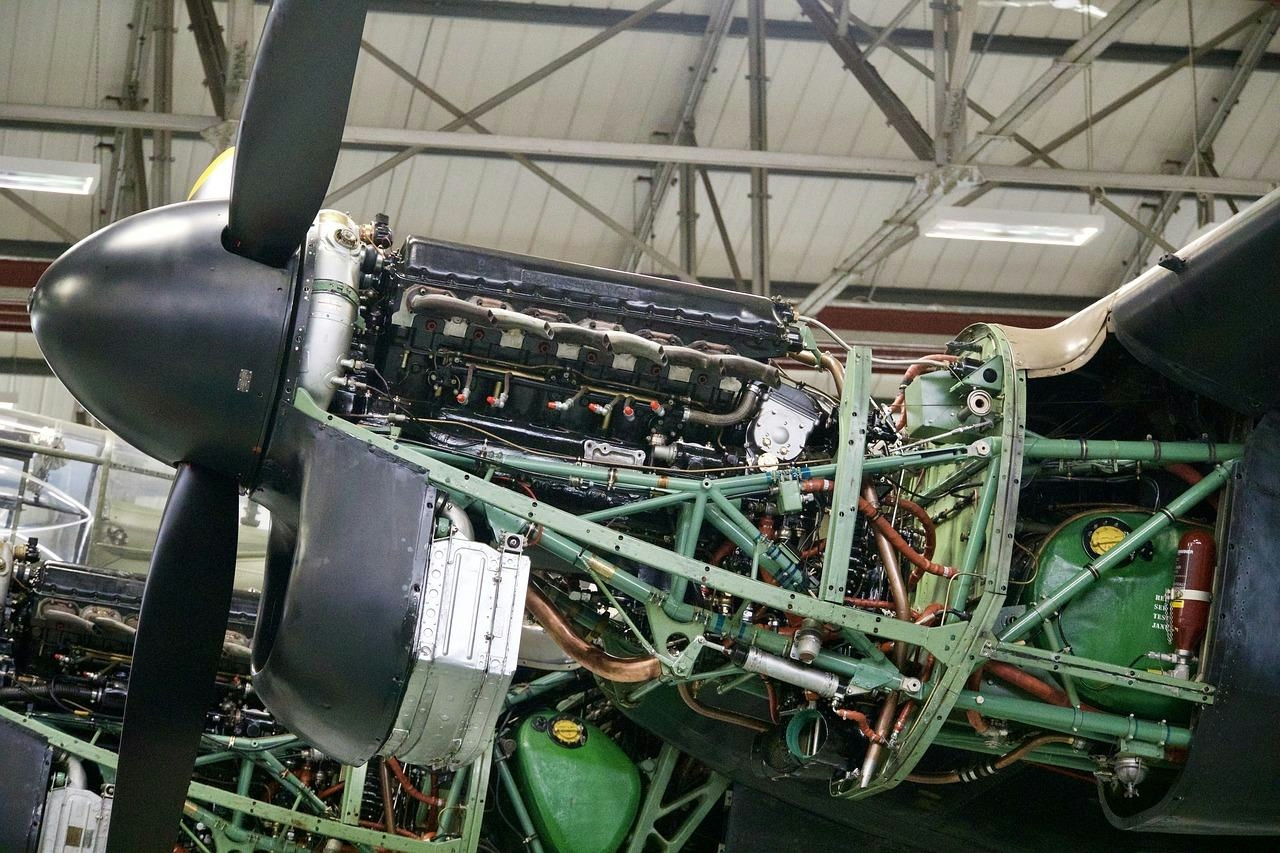
India Poised to Become a Global Hub for Aircraft Maintenance, Repair, and Overhaul
The Indian government has announced significant strides toward establishing the country as a global centre for aircraft Maintenance, Repair, and Overhaul (MRO). In a written response to the Lok Sabha, Civil Aviation Minister Kinjarapu Rammohan Naidu outlined a series of policy reforms, tax incentives, and infrastructure developments designed to foster a competitive domestic MRO ecosystem while curbing foreign exchange outflows.
Policy and Infrastructure Reforms
Since September 2021, the government has implemented new MRO guidelines aimed at creating a more transparent and investor-friendly environment. These guidelines abolished royalties and introduced clarity in land allotments for MRO facilities at Airports Authority of India (AAI) airports. Additionally, the revised framework permits MRO operators to extend land lease agreements by an additional 15 years beyond the initial 15-year term, providing long-term stability for operators.
Further incentives were introduced through an addendum to the MRO guidelines in February 2026, which offers a moratorium and rent-free period for operators constructing new hangars at AAI airports. This measure is intended to encourage investment in capital-intensive infrastructure critical to expanding India’s MRO capabilities.
Taxation Measures to Boost Competitiveness
On the taxation front, the government has taken steps to enhance the competitiveness of the domestic aerospace industry. The Integrated Goods and Services Tax (IGST) on imports of aircraft components and engine parts has been reduced to 5 percent. Similarly, the GST on MRO services has been lowered from 18 percent to 5 percent, with full Input Tax Credit (ITC) available. Transactions subcontracted by foreign Original Equipment Manufacturers (OEMs) and MRO companies to domestic firms are treated as exports and thus attract zero-rated GST.
The Union Budget for 2024-25 extended the period for exporting goods imported for repairs from six months to one year, while the re-import time limit for goods sent abroad for warranty repairs was increased from three to five years. The 2026-27 budget further provided exemptions from Basic Customs Duty (BCD) on aircraft components, including engines, used in manufacturing and maintenance, with these exemptions extended until March 31, 2028.
Private Sector Participation and Future Outlook
Highlighting private sector involvement, Minister Naidu noted the establishment of Safran Aircraft Engine Services India (SAESI) in Hyderabad, backed by an initial investment of Rs 1,300 crore. This facility is among the largest aircraft engine MRO centres globally, underscoring growing confidence in India’s MRO sector.
The government’s comprehensive approach aims to strengthen India’s aircraft maintenance capabilities, develop a globally competitive MRO ecosystem, and position the country as a preferred international destination for aircraft Maintenance, Repair, and Overhaul services.

Etihad and Swissport Extend Global Partnership

Sepehran Airlines B737 Returns to Mashhad After Tyre and Engine Issues

Etihad Deploys Widebody Fleet to Meet Strong Demand

Korean Air Finalizes $36.2 Billion Deal with Boeing

Australia’s RFDS Queensland Section Orders Six King Air 260Cs

Korean Air Finalizes Order for 103 Boeing Jets and Engines

Embraer E195-E2 Features Distinctive Engine Placement Among Regional Jets

What Passengers Can Expect on Boeing’s New 777X Jet

How Ethiopian Airlines Became Africa’s Leading Carrier Amid Gulf Competition

Joby Aviation Extends Autonomous Flight Capabilities with Cross-Country Tour
