
Orchestrer les insights d’IA pour les transformer en actions

Tendances
Categories
ITA Airways Weighs Legal Action Against Pratt & Whitney Over Engine Problems
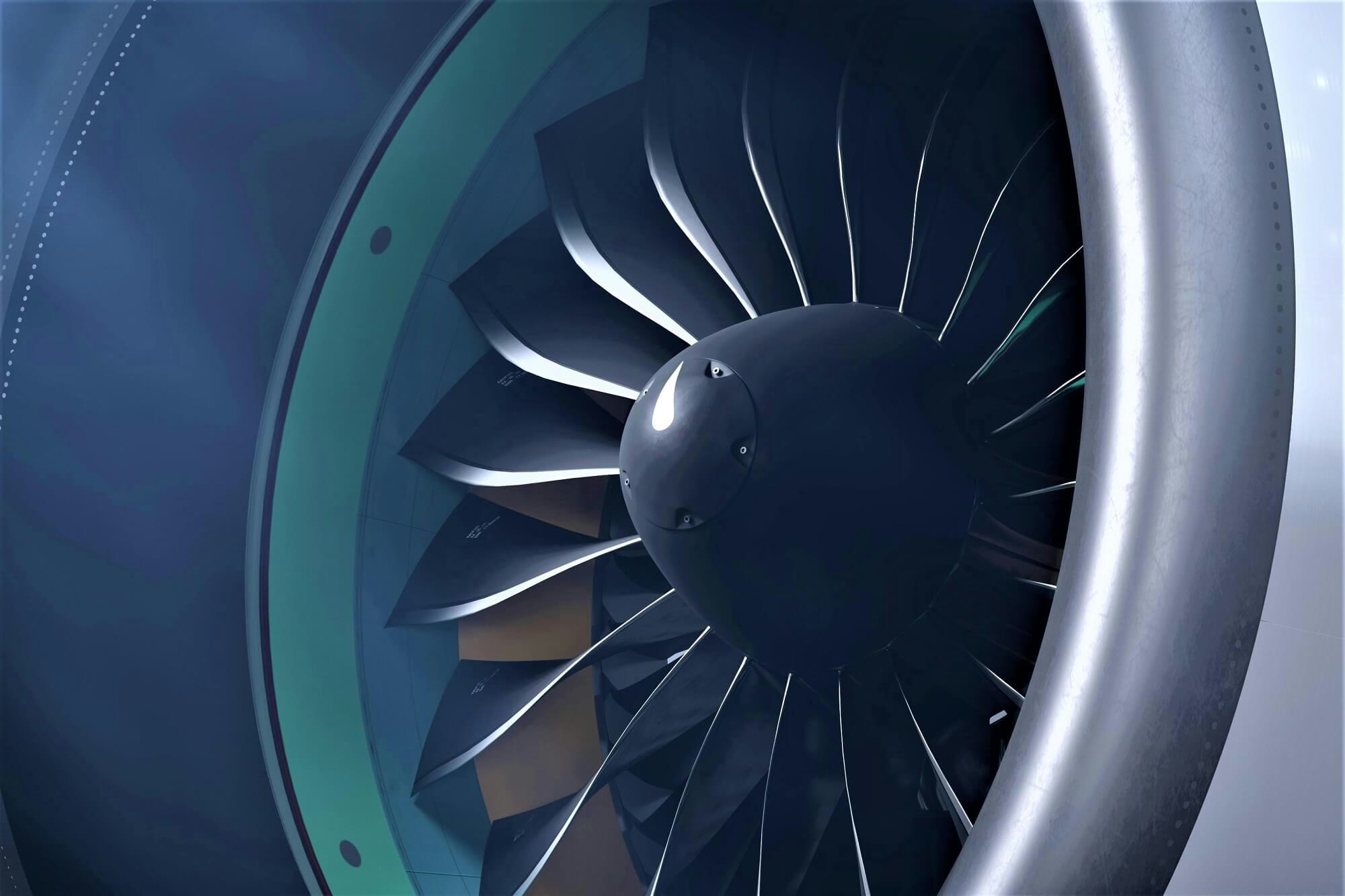
ITA Airways Considers Legal Action Against Pratt & Whitney Over Engine Troubles
ITA Airways is contemplating legal proceedings against American engine manufacturer Pratt & Whitney amid persistent issues with geared turbofan (GTF) engines that have disrupted operations across the Italian carrier’s Airbus A320neo-family fleet. The airline is expected to reach a decision by late July or early August 2026 on whether to initiate a lawsuit, as ongoing engine problems continue to significantly impact aircraft availability and operational efficiency.
Persistent Engine Defects and Operational Impact
The potential legal action arises from prolonged difficulties associated with Pratt & Whitney’s PW1100G GTF engines, which power a portion of the Airbus A320neo family. Since 2023, airlines globally have encountered extensive inspection and repair delays following Pratt & Whitney’s identification of a powder-metal manufacturing defect affecting certain engine components. This defect has necessitated accelerated inspections and additional maintenance visits, thereby reducing the number of serviceable aircraft for carriers dependent on these engines.
ITA Airways is particularly vulnerable due to its next-generation narrowbody fleet composition, which includes several Airbus aircraft equipped with Pratt & Whitney engines. The airline’s Airbus A321neo operates with the PW1100G-JM engine, while the broader A320neo family is powered by either the PW1100G-JM or the CFM International LEAP-1A. Currently, nearly 20 percent of ITA Airways’ 80-aircraft fleet remains grounded due to engine-related complications, exerting immediate operational pressure. To mitigate disruptions, the airline has resorted to measures such as aircraft swaps and schedule adjustments to sustain service levels.
Regulatory Pressures and Industry-Wide Challenges
Compounding the situation are recent regulatory developments. The U.S. Federal Aviation Administration (FAA) has mandated sensor replacements on PW4000-94 engines, intensifying the urgency for Pratt & Whitney to resolve technical issues promptly. This regulatory intervention carries potential financial and operational consequences for ITA Airways, contingent on the manufacturer’s responsiveness and effectiveness in addressing the defects.
ITA Airways is not isolated in confronting these challenges. Other carriers have adopted various strategies to manage engine-related disruptions. For instance, Swiss International Air Lines recently opted to retire two A220-100 aircraft as a response to similar engine reliability concerns. Such actions underscore the widespread impact of Pratt & Whitney’s engine issues across the aviation sector.
Market observers have responded with increased scrutiny of Pratt & Whitney’s product reliability, prompting affected airlines to reassess their operational strategies. As ITA Airways deliberates its legal options, the outcome may set a precedent influencing how other carriers address ongoing engine difficulties and shape future dynamics between airlines and engine manufacturers.

Etihad Airways Suspends Airbus A380 Flights on Key Route

Aditya Birla Group Seeks Approval for Aircraft Leasing in GIFT City

Qatar Airways Highlights Innovation and Connectivity at Arabian Travel Market 2026

Hong Kong's Five-Year Plan Includes Andrew Fan's Aircraft Parts Processing Hub Proposal

ACIA Aero Leasing Delivers ATR72-600 to Air Nostrum

RTX Appoints Jill Albertelli as Head of Pratt & Whitney

TAT Technologies Joins Beyond Aero Hydrogen Aircraft Program

AURAK Study Highlights Barriers to Air Taxi Adoption in Emerging Economies

Xiamen Air Selects Altitude for 787 Maintenance at Heathrow

Etihad and Swissport Extend Global Partnership
