
Orchestrer les insights d’IA pour les transformer en actions

Tendances
Categories
Japan Airlines Flight JL8012 Diverts Across Pacific En Route from Tokyo to Dallas
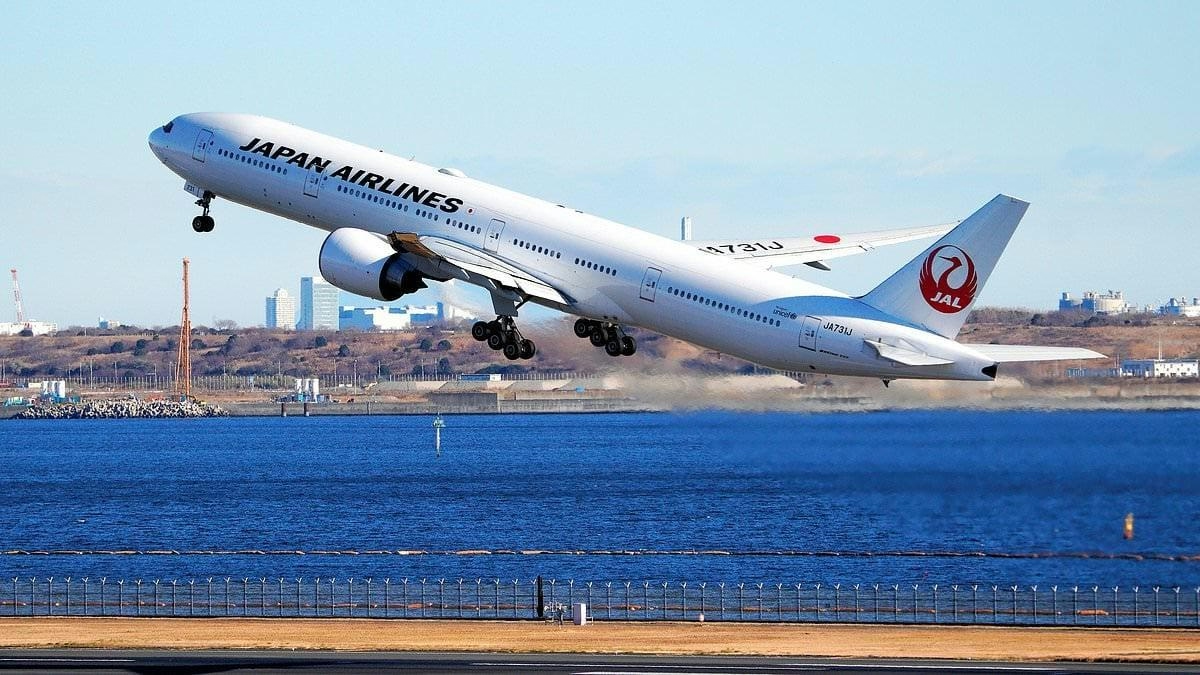
Japan Airlines Flight JL8012 Diverts Mid-Pacific Due to Technical Issues
Japan Airlines Flight JL8012, operated by a Boeing 787-9, was compelled to divert back to Tokyo Narita on Wednesday, June 24, 2026, after encountering technical difficulties approximately two hours into its trans-Pacific journey from Tokyo to Dallas/Fort Worth. The incident, rare in its nature, underscores the operational challenges airlines face when managing disruptions over vast oceanic routes.
Technical Anomaly and Immediate Response
Flight telemetry revealed that while cruising within its designated oceanic corridor, automated systems detected a persistent pressure anomaly in the aircraft’s environmental control system (ECS). Prioritizing passenger safety, the flight crew executed a 180-degree turn, opting to return to Tokyo rather than continue the trans-Pacific crossing. The aircraft remained airborne for a total of 4 hours and 12 minutes, including a holding pattern to safely reduce fuel load, a standard precaution for widebody jets operating with heavy fuel reserves.
Upon landing, ground teams at Tokyo Narita promptly facilitated the safe and orderly disembarkation of all passengers without incident. The swift response highlighted the airline’s preparedness in handling in-flight emergencies and ensuring passenger welfare.
Operational and Industry Implications
The diversion presented significant logistical challenges for Japan Airlines, necessitating rapid coordination to deploy a replacement aircraft and crew. The substitute flight departed Tokyo at 11:10 PM JST the same evening, successfully completing the journey to Dallas/Fort Worth and minimizing further disruption to the airline’s long-haul schedule.
This event draws attention to the complexities inherent in managing diversions over the Pacific, including navigating unpredictable weather conditions, adhering to international aviation regulations, and rerouting aircraft far from alternate airports. The incident also attracted scrutiny from aviation authorities and raised concerns among passengers regarding safety and operational reliability.
In the competitive landscape, rival carriers may leverage the incident to emphasize their own safety records and operational resilience. The timing is particularly significant as Japan Airlines has recently expanded its long-haul operations to meet growing demand and has actively promoted its commitment to sustainable aviation fuel. The diversion may prompt renewed evaluation of these initiatives alongside the airline’s corporate culture, which is noted for transparency and executive accountability, including senior management pay reductions following operational disruptions.
Japan Airlines’ rapid and coordinated response to Flight JL8012’s diversion illustrates the critical role of real-time telemetry and integrated operational control systems. By effectively combining live flight data with ground logistics, the airline managed the disruption efficiently, safeguarding passenger safety while maintaining network integrity.
As global aviation networks become increasingly interconnected, incidents such as this highlight the essential need for robust contingency planning and transparent communication between airlines and their passengers.

Hong Kong's Five-Year Plan Includes Andrew Fan's Aircraft Parts Processing Hub Proposal

ACIA Aero Leasing Delivers ATR72-600 to Air Nostrum

RTX Appoints Jill Albertelli as Head of Pratt & Whitney

TAT Technologies Joins Beyond Aero Hydrogen Aircraft Program

AURAK Study Highlights Barriers to Air Taxi Adoption in Emerging Economies

Xiamen Air Selects Altitude for 787 Maintenance at Heathrow

Etihad and Swissport Extend Global Partnership
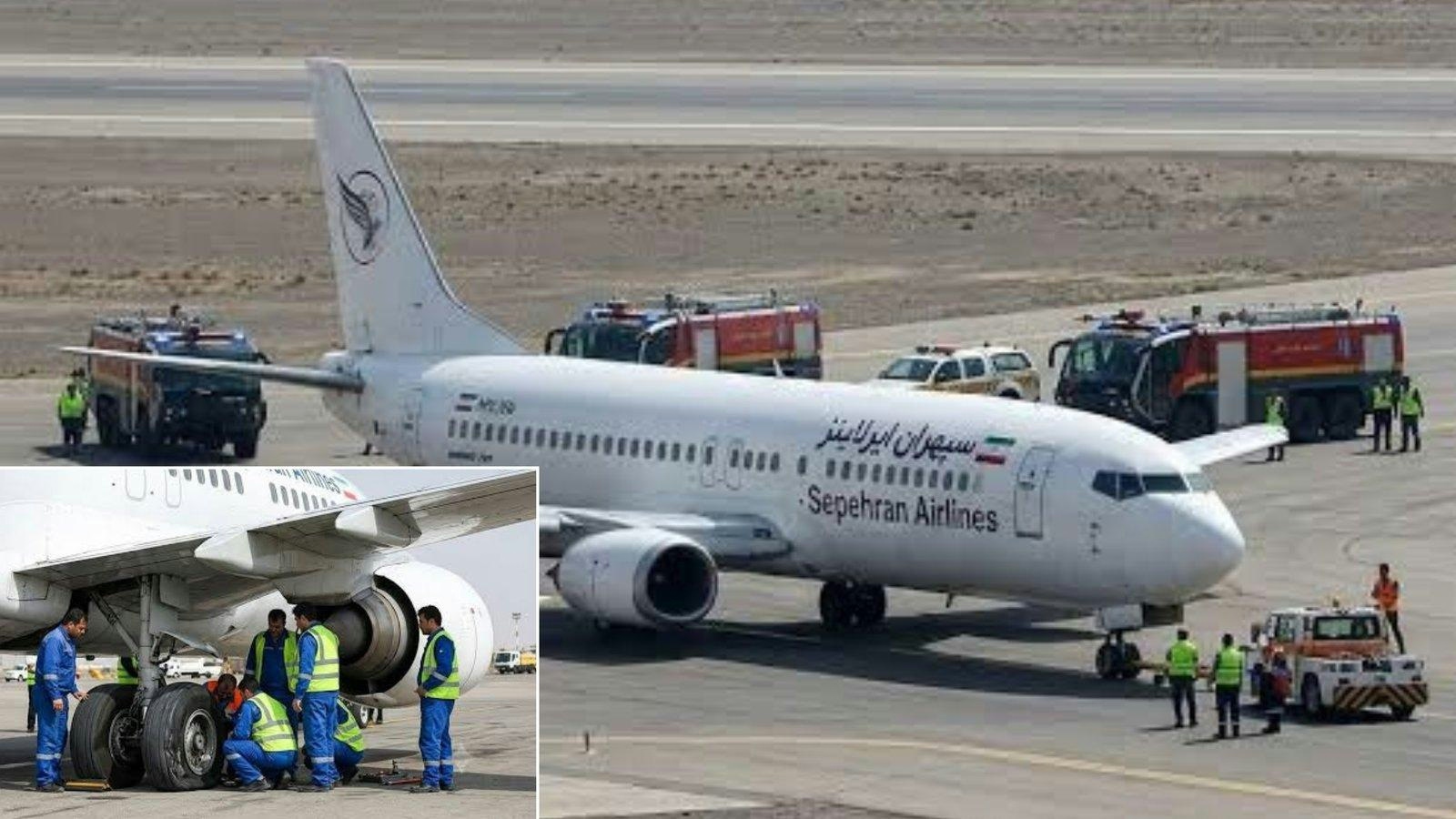
Sepehran Airlines B737 Returns to Mashhad After Tyre and Engine Issues

Etihad Deploys Widebody Fleet to Meet Strong Demand
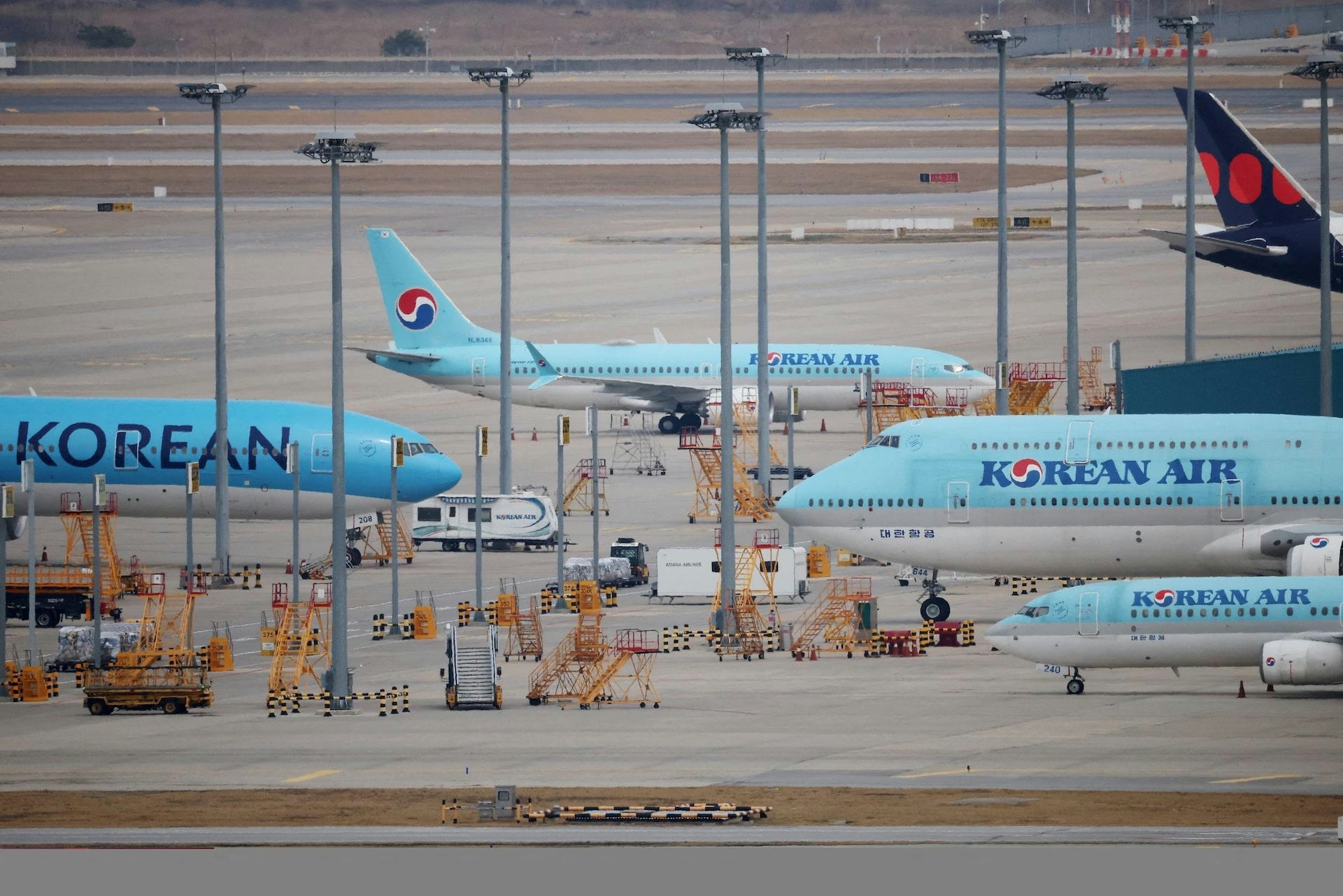
Korean Air Finalizes $36.2 Billion Deal with Boeing
