
Orchestrer les insights d’IA pour les transformer en actions

Tendances
Categories
Japanese Companies Expand Investment in Aircraft Leasing
Japanese Companies Expand Investment in Aircraft Leasing
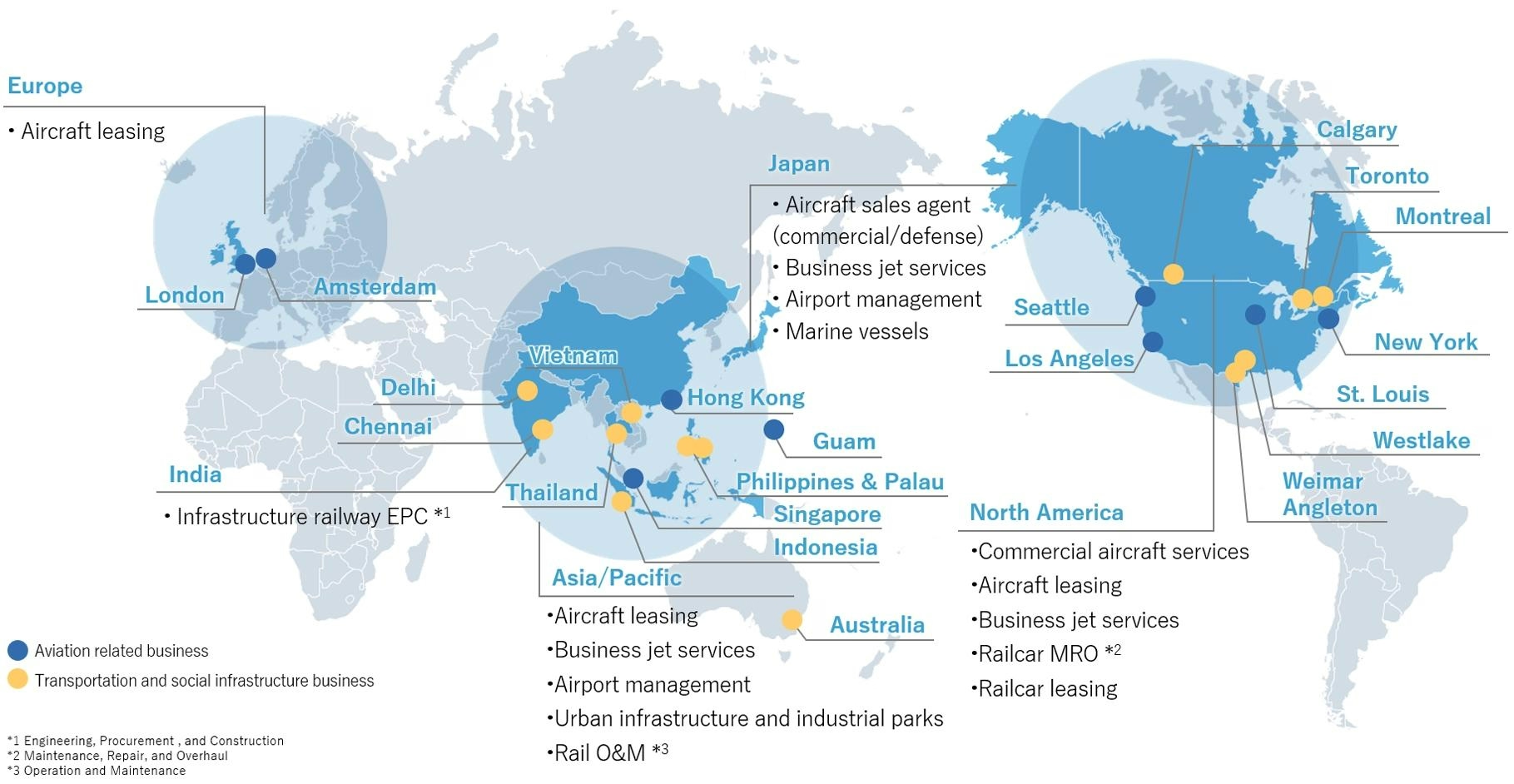
Japanese corporations are significantly increasing their investments in aircraft leasing operators, responding to a surge in global travel demand that has prompted airlines to seek additional aircraft. Leasing provides carriers with a strategic means to manage operational costs, particularly amid rising jet fuel prices, which continue to pressure airline profitability.
Major Acquisitions and Strategic Growth
At the forefront of this expansion is the trading house Sumitomo, which in April participated in a consortium to acquire the U.S.-based Air Lease Corporation for $7.4 billion. This acquisition elevates Sumitomo’s aircraft leasing business to the ownership and servicing of approximately 1,900 aircraft, positioning it as the world’s second-largest fleet operator. Sumitomo’s President and CEO, Ueno Shingo, highlighted the critical role of scale in addressing growing market demand. Speaking to NHK, Ueno stated, “The acquisition sharply expands the customer base and deepens relations with aircraft makers. Becoming the industry leader would allow us to expand even more. Our aim is to further strengthen our competitiveness.” The company has set an ambitious target to increase profits in its aircraft leasing division by over 20 percent by fiscal year 2030.
Similarly, Japanese trading company Itochu has intensified its involvement in the sector, announcing in August a nearly $1.95 billion investment in the U.S.-based Aviation Capital Group. This move underscores a broader trend among Japanese firms to secure a stronger foothold in the global aircraft leasing market.
Challenges and Competitive Dynamics
Despite the promising growth prospects, Japanese companies face considerable challenges. Navigating complex regulatory frameworks across multiple jurisdictions remains a significant hurdle, as does managing currency fluctuations that can adversely affect profitability. Additionally, the inherently high capital costs associated with aircraft leasing demand careful financial management.
The influx of Japanese investment is also reshaping the competitive landscape, intensifying rivalry in the global aircraft leasing market. This heightened competition may exert downward pressure on leasing rates, potentially compressing profit margins. In response, competitors are pursuing their own strategic initiatives. For instance, ORIX recently acquired AerFin to broaden its service offerings, reflecting a wider industry trend toward consolidation and partnership as companies strive to enhance their leasing portfolios.
As Japanese firms endeavor to establish themselves as dominant players in aircraft leasing, their capacity to effectively manage these risks and adapt to a rapidly evolving market environment will be pivotal in sustaining long-term growth and profitability.

Etihad Airways Suspends Airbus A380 Flights on Key Route

Aditya Birla Group Seeks Approval for Aircraft Leasing in GIFT City

Qatar Airways Highlights Innovation and Connectivity at Arabian Travel Market 2026

Hong Kong's Five-Year Plan Includes Andrew Fan's Aircraft Parts Processing Hub Proposal

ACIA Aero Leasing Delivers ATR72-600 to Air Nostrum

RTX Appoints Jill Albertelli as Head of Pratt & Whitney

TAT Technologies Joins Beyond Aero Hydrogen Aircraft Program

AURAK Study Highlights Barriers to Air Taxi Adoption in Emerging Economies

Xiamen Air Selects Altitude for 787 Maintenance at Heathrow

Etihad and Swissport Extend Global Partnership
