Image

AeroGenie — Votre copilote intelligent.

Posez n'importe quelle question. Analysez tout. Agissez instantanément.

Tendances

Categories

Juneyao Airlines and Lufthansa Technik Sign Engine Services Agreement
March 17, 2026By ePlane AI
Juneyao Airlines and Lufthansa Technik Sign Engine Services Agreement
0
0
Juneyao Airlines
Lufthansa Technik
Engine Maintenance Agreement

Juneyao Airlines and Lufthansa Technik Sign Engine Services Agreement

A Landmark Partnership in Engine Maintenance

Juneyao Group, a prominent player in China’s aviation industry, has entered into an exclusive, long-term engine services agreement with Lufthansa Technik. This deal represents the largest of its kind for Lufthansa Technik in China and encompasses comprehensive overhaul services for over 40 engine events across Juneyao Air, the group’s full-service airline, and its low-cost carrier subsidiary, 9 Air.

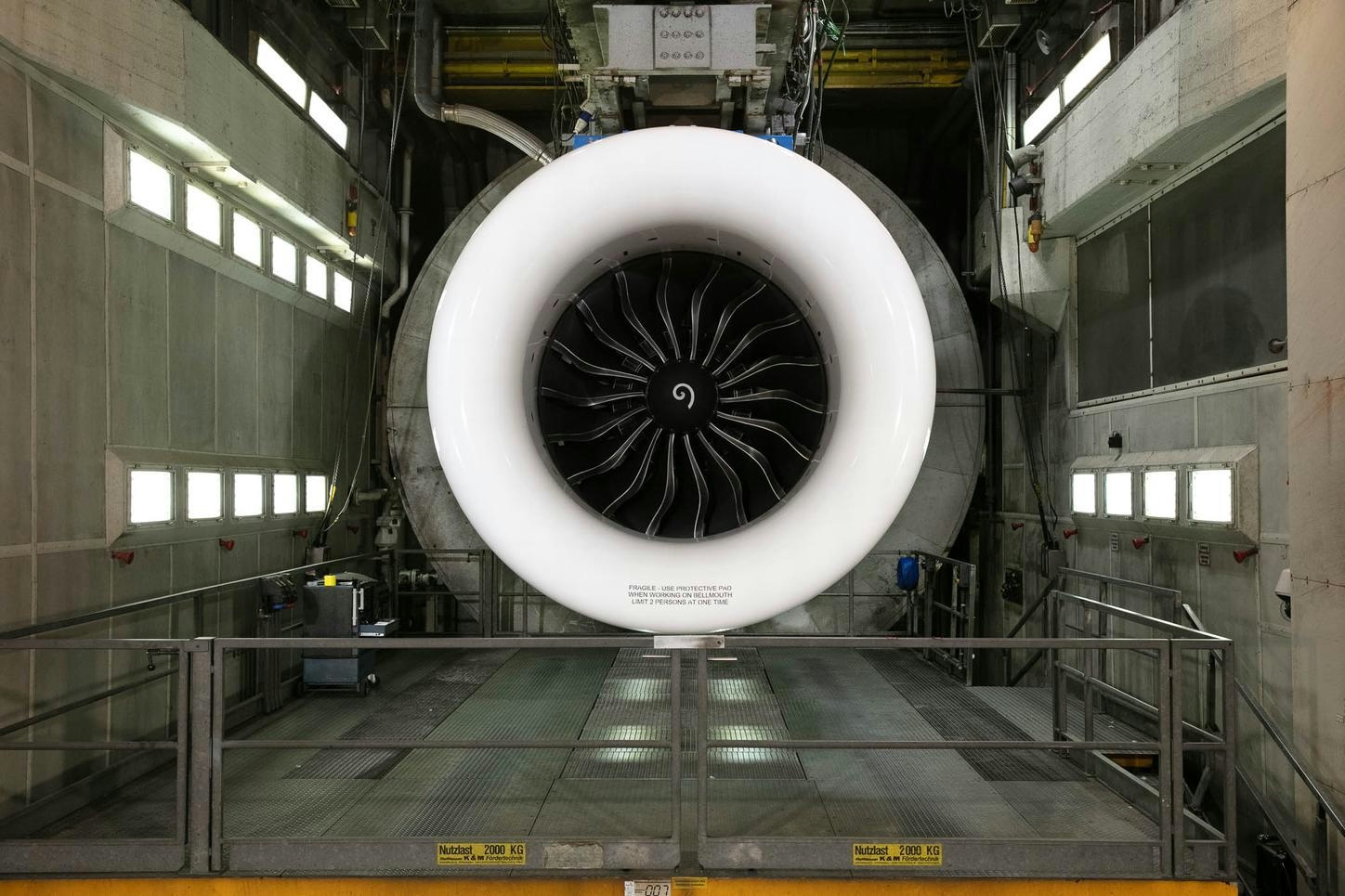
Under the terms of the agreement, Lufthansa Technik will deliver overhaul, condition monitoring, and engineering consultancy services for Juneyao Air’s CFM56-5B engines and 9 Air’s CFM56-7B engines. All maintenance activities will be conducted at Lufthansa Technik’s engine facility in Hamburg, Germany, ensuring that both airlines sustain optimal operational readiness. This collaboration builds upon more than a decade of partnership between the two companies, which previously focused on Single Component Maintenance and Mobile Engine Services, now expanding to include full engine overhaul support.

Junjin Wang, Chairman of Juneyao Group, emphasized the importance of a reliable technical partner, stating, “We require a dependable and experienced partner to support our high-performance operations, particularly during peak travel periods. Based on numerous positive experiences with Lufthansa Technik, we have placed our trust in their expertise. To ensure stable operations and seamless technical processes, it is essential for us to collaborate with a reliable partner, and we look forward to strengthening this cooperation even further.”

Navigating Industry Challenges Amid Growth Ambitions

While the agreement highlights mutual confidence in a sustained partnership, both Juneyao Group and Lufthansa Technik face a complex and evolving global aviation landscape. Lufthansa Technik, despite its aspirations for growth, must contend with ongoing geopolitical and economic challenges that continue to impact the industry worldwide. The competitive environment is intensifying, with other engine service providers such as MTU Aero Engines forecasting significant gains in their commercial series business by 2026, which may influence market dynamics and customer preferences.

Broader trends within the aviation sector also have the potential to shape market reactions to this partnership. Regions like Brazil exemplify the dual nature of the industry’s prospects, presenting both structural barriers and substantial growth opportunities. Furthermore, the sector’s dependence on financing and government support, particularly evident in markets such as the United States, could affect the implementation and strategic positioning of large-scale service agreements like this one.

Despite these challenges, the new agreement underscores the commitment of both Juneyao Group and Lufthansa Technik to operational excellence and long-term collaboration. As the aviation industry continues to evolve, the partnership aims to uphold high standards of reliability and performance across their fleets.

More news
PennAero Acquires TriMas Aerospace

PennAero Acquires TriMas Aerospace

PennAero Acquires TriMas Aerospace, Enhancing Global Aerospace Capabilities PennAero has completed the acquisition of TriMas Corporation’s aerospace assets, merging two established manufacturers to form a more comprehensive independent supplier serving the global aerospace, defense, space, and advanced energy sectors. This strategic integration significantly broadens PennAero’s product portfolio and engineering expertise, positioning the combined company as a more robust long-term partner for both existing and prospective clients. Expansion of Product Portfolio and Market Reach The acquisition incorporates several prominent TriMas Aerospace businesses into PennAero’s operations, including Monogram Aerospace Fasteners, Allfast Fastening Systems, Mac Fasteners, TFI Aerospace, Martinic Engineering, RSA Engineered Products, Weldmac Manufacturing Company, and TAG (formerly TriMas Aerospace Germany). These entities bring with them extensive customer relationships and deep technical knowledge across major commercial and defense programs worldwide. For current customers, operations are expected to continue without interruption, now supported by enhanced resources and expanded capabilities. PennAero’s increased scale offers an independent alternative to the industry’s largest consolidators, providing a competitive option for companies seeking flexibility and innovation in their supply chains. PennAero specializes in manufacturing externally threaded structural fasteners, gears, latches, manifolds, and precision components for leading airframe and engine manufacturers such as Boeing and Airbus. The company also produces high-performance components for the semiconductor and space industries. With engineering and manufacturing facilities spanning North America, Europe, and Asia, the combined organization is well positioned to deliver enhanced technical capabilities and a broader global footprint. Integration Challenges and Market Implications Despite the strategic advantages, the acquisition presents several challenges for PennAero. Integrating TriMas Aerospace’s operations will require meticulous management to ensure seamless alignment of processes and corporate cultures. The company must also navigate ongoing regulatory and tariff uncertainties, address supply chain pressures, and work diligently to realize the anticipated synergies from the transaction. These factors may influence market sentiment, potentially causing fluctuations in stock prices as investors assess the strategic fit and growth prospects of the merged entity. Competitors are likely to respond to PennAero’s expanded presence by intensifying efforts to capture market share, accelerating innovation in product development, or pursuing strategic adjustments to maintain competitiveness. This dynamic is particularly relevant as demand in the aerospace sector continues its recovery. With its enhanced capabilities and global reach, PennAero aims to solidify its position as a key independent supplier within the aerospace and advanced manufacturing industries, while carefully managing the complexities inherent in such a significant integration.
Korean Air Adopts IBS Software’s iFlight Platform for Flight Operations and Crew Management

Korean Air Adopts IBS Software’s iFlight Platform for Flight Operations and Crew Management

Korean Air Implements IBS Software’s iFlight Platform to Enhance Flight Operations and Crew Management Seoul, South Korea — Korean Air has successfully completed the deployment of IBS Software’s iFlight platform, a cloud-native, AI-driven solution designed to integrate and optimize flight operations alongside crew management. This strategic initiative represents a significant milestone in the airline’s digital transformation journey, aimed at enhancing operational resilience, improving crew productivity, and enabling more data-driven decision-making processes. A Unified Platform for Operational Efficiency After a thorough evaluation process, Korean Air selected the iFlight platform for its comprehensive capabilities to centralize operations control, crew planning, crew tracking, and training within a single system. The implementation followed a phased approach, beginning with Operations Control, then progressing to Crew Tracking and Crew Planning. This method was intended to minimize disruptions to daily operations and facilitate a smooth transition. Nevertheless, the airline acknowledged the inherent challenges involved in integrating new technology with legacy systems and managing the adaptation process among crew members. The timing of this adoption is particularly significant as Korean Air prepares for its forthcoming integration with Asiana Airlines. The scalability of the iFlight platform will be critical in supporting an expanded fleet, a larger workforce, and increasingly complex route networks. By consolidating data and leveraging advanced analytics and artificial intelligence, Korean Air anticipates achieving sustained operational efficiencies and cost reductions over the long term. Industry Impact and Strategic Collaboration Industry analysts have noted that initial skepticism from stakeholders regarding the platform’s effectiveness is to be expected. However, a successful implementation could establish a new benchmark for operational efficiency within the region. This development may prompt competitors to accelerate their own digital transformation efforts or adopt similar technologies to maintain competitive parity. Ryo Funakoshi, Senior Vice President and Head of East Asia at IBS Software, highlighted the significance of the deployment: “This is the first full-scope deployment of iFlight for a global full-service carrier, covering pilots, cabin crew, and aircraft management. It demonstrates the scalability, reliability, and innovation our customers expect as they build the airlines of the future.” Kenny Chang, Executive Vice President and Chief Marketing Officer at Korean Air, emphasized the collaborative nature of the project, stating, “By migrating to the iFlight cloud-native platform, we have unified our operations with agility that matches the scale and complexity of our global network. This transformation streamlines our internal processes, empowers our crew, and directly supports our mission to provide a seamless travel experience for our passengers.” The deployment not only underscores IBS Software’s commitment to delivering integrated, intelligent platforms for the aviation sector but also marks a key milestone in the expansion of the iFlight platform’s market presence. About Korean Air With a history spanning more than 55 years, Korean Air ranks among the world’s top 20 airlines, transporting over 25 million passengers in 2025. Operating from its global hub at Incheon International Airport, the airline serves 116 cities across 39 countries with a fleet of 165 aircraft and a workforce exceeding 20,000 employees. Renowned for its safety standards, service quality, and innovation, Korean Air holds a 5-star Skytrax rating and has received numerous industry accolades. As a founding member of the SkyTeam alliance, the airline continues to expand its global footprint and operational capabilities.
Aviation Parts Distributor Expands U.S. Supply Network for NSN Components and Aircraft Hardware

Aviation Parts Distributor Expands U.S. Supply Network for NSN Components and Aircraft Hardware

Aviation Parts Distributor Expands U.S. Supply Network for NSN Components and Aircraft Hardware Meeting Growing Demand in Aviation and Defense Sectors In response to escalating demand across the global aviation, aerospace, and defense industries, U.S.-based distributor Optiultra is broadening its sourcing network and inventory capabilities for National Stock Number (NSN) components and aircraft hardware. Renowned as a trusted supplier to government agencies, defense contractors, airlines, and Maintenance, Repair, and Overhaul (MRO) providers, the company is reinforcing its role as a dependable source of certified aviation parts, electronic components, and military-grade hardware. The increased need for NSN components and aviation hardware is largely driven by modernization efforts, expanded defense budgets, and the growth of commercial aviation fleets worldwide. Procurement teams face mounting pressure to secure high-quality parts swiftly, elevating the importance of reliable suppliers. Optiultra addresses these challenges through an extensive global sourcing network and an efficient supply chain designed to accommodate both routine and urgent procurement demands. Specialized Sourcing and Industry Challenges Optiultra’s expertise lies in supplying NSN parts, which serve as unique identifiers used by the U.S. Department of Defense and allied agencies to standardize procurement and inventory management. Given the critical role these components play in military and government supply systems, accurate sourcing and verification are paramount. The company’s sourcing specialists work closely with manufacturers, authorized distributors, and surplus inventories to locate components that meet rigorous quality and compliance standards, ensuring rapid and reliable procurement solutions. This expansion occurs amid broader industry challenges, including persistent labor shortages and a shift toward industrial automation as part of the reshoring trend. Rising domestic production costs have prompted competitors to invest in technology and reassess industrial policies to adapt to a more insular American economy. These developments highlight the necessity of robust supply networks and innovative sourcing strategies for distributors like Optiultra. Supporting MRO Operations and Strategic Partnerships Supporting aviation MRO operations remains a central focus for Optiultra. Aircraft maintenance teams require timely access to replacement parts, structural components, electronic modules, and specialized hardware to maintain safety and operational reliability. The company offers a comprehensive range of aircraft components for both commercial and military platforms, including airframe parts, avionics modules, electrical connectors, sensors, and fasteners. By leveraging its global supplier network, Optiultra helps MRO providers minimize procurement delays while ensuring compliance with industry standards. Further enhancing its market presence, Optiultra recently entered into an agreement with Otto Instrument Service to sell and support the LASEREF IV inertial reference system product line. This partnership extends Optiultra’s reach into the business aviation sector and solidifies its standing as a premier global distributor. As the aviation and defense industries continue to evolve, Optiultra’s expanded U.S. supply network and strategic alliances position the company to meet the increasing demands of procurement teams seeking reliable, certified components for mission-critical applications.
MTU Aero Engines Shares Rise on Increased Engine Orders Amid Aerospace Recovery

MTU Aero Engines Shares Rise on Increased Engine Orders Amid Aerospace Recovery

MTU Aero Engines Shares Rise on Increased Engine Orders Amid Aerospace Recovery MTU Aero Engines shares advanced on the Xetra exchange following the company’s announcement of a substantial increase in new engine orders. This surge has reinforced its order backlog and highlighted its critical role in the ongoing recovery of the aerospace sector. The German engine specialist, listed under ISIN: DE000A0D9PT0, has garnered significant attention from investors in the DACH region seeking exposure to both commercial aviation and defense markets. Robust Order Intake and Market Drivers In its latest update, MTU Aero Engines revealed the securing of significant contracts spanning both military and commercial engine segments, extending its order backlog well into the next decade. The company finalized deals worth hundreds of millions of euros for geared turbofan (GTF) modules and military engine overhauls. The uptick in commercial aviation activity, driven by increased fleet utilization, has directly benefited MTU’s maintenance, repair, and overhaul (MRO) operations, which remain a high-margin component of its business. A notable contributor to MTU’s recent performance is the ongoing servicing demand for Pratt & Whitney’s GTF engines. As a major partner in the GTF program, MTU reported that maintenance of these engines accounted for approximately 40% of its commercial maintenance revenue last year, with expectations for this figure to rise to between 40 and 45 percent in the current year. Additionally, MTU is experiencing growth in servicing the GE90 engine, which powers Boeing 777-300ER and 777F aircraft, and anticipates further increases in deliveries of GTF and GEnx engines as aircraft production rates accelerate. Defense Stability and Sector Tailwinds MTU’s defense contracts, particularly those related to the Eurofighter and A400M programs, provide a stabilizing influence on its order book. In response to geopolitical tensions, European governments—including Germany—have increased defense spending, bolstering demand for MTU’s EJ200 engines used in the Eurofighter. This combination of commercial and defense business reduces the cyclicality typically seen in pure commercial aerospace peers. The broader aerospace recovery is also contributing to MTU’s positive momentum. Global air travel demand is accelerating in the post-pandemic environment, with the International Air Transport Association (IATA) projecting 4.7 billion passengers by 2026. Engine manufacturers like MTU stand to benefit disproportionately as higher aircraft utilization drives increased maintenance and shop visits. MTU shares recently traded around €280 on Xetra, reflecting investor confidence in the company’s robust backlog and market positioning. Execution Risks and Outlook Despite these encouraging developments, MTU faces several execution risks. The company has yet to finalize the number of engines ordered by Airbus, which has negatively affected its guidance and the anticipated ramp-up for the current year. Component shortages, particularly in titanium and composite materials, have previously delayed production increases, although MTU reports progress in securing these supplies. Margin pressures stemming from inflation and rising labor costs in Germany persist, but ongoing investments in automation are intended to mitigate these challenges. While original equipment manufacturer (OEM) contracts with fixed pricing limit upside potential, they provide volume stability. Positioned at the intersection of commercial aviation recovery and increased defense spending, MTU Aero Engines offers investors focused exposure to high-margin engine production and maintenance. As the company continues to navigate supply chain and production challenges, its diversified backlog and strong sector positioning remain key drivers of market interest.
Challenges in Airline Distribution: MCP and NDC Compared

Challenges in Airline Distribution: MCP and NDC Compared

Challenges in Airline Distribution: MCP and NDC Compared The future of airline distribution is at a crossroads, with artificial intelligence (AI) and emerging protocols challenging established standards such as the New Distribution Capability (NDC), introduced by the International Air Transport Association (IATA) in 2012. These themes dominated discussions at the recent Airline Distribution 2026 conference, hosted by UATP, where industry leaders examined the evolving dynamics of airline retailing and the potential impact of technological innovation on distribution models. Balancing Direct and Indirect Sales Channels Airlines have long pursued strategies to increase direct sales while utilizing technologies like NDC to enhance their retail offerings. However, achieving an optimal balance between direct and indirect sales channels remains a complex challenge. Neil Geurin, Vice President of Sales at American Airlines, acknowledged the limitations of direct distribution, stating that although the ideal scenario would be to fill every seat through direct channels, the reality is more nuanced. Currently, approximately 55% of American Airlines’ business is conducted directly, a proportion that fluctuates with indirect sales and is unlikely to shift significantly in the near future. At United Airlines, the distribution landscape differs somewhat, with direct sales constituting 70% of bookings. Anthony Toth, Managing Director of Digital Sales at United, explained that the remaining bookings are divided between 10% through NDC outside of global distribution systems (GDSs) and 20% via legacy systems. Toth emphasized the gradual industry transition away from older standards such as EDIFACT, forecasting organic growth in both NDC and direct channels as airlines continue to modernize their distribution frameworks. The Emergence of MCP and the Role of AI NDC was designed to provide airlines with greater control over how their content is presented to consumers and travel sellers. Despite its promise, adoption has been inconsistent, and the industry’s focus has broadened toward a more comprehensive offer and order retailing ecosystem. The introduction of AI and advanced protocols like the Model Context Protocol (MCP) is now prompting a reevaluation of the necessity of traditional standards. Guido Becher, Global Head of Travel and Loyalty at Rappi, highlighted AI’s potential to streamline complex integrations that previously required extensive time and resources. He observed that AI models capable of understanding intricate distribution complexities could reduce the reliance on costly and time-consuming standardization efforts. This perspective suggests that AI might diminish the importance of existing protocols by enabling more flexible and efficient distribution solutions. Integration Challenges and Industry Implications Despite the promise of AI and MCP, integrating these technologies into existing airline systems presents considerable challenges. Legacy infrastructure often resists rapid transformation, and airlines must invest in retraining personnel and revising established operational processes. Furthermore, competitive pressures are likely to drive widespread adoption of similar technologies, accelerating industry-wide change. Consumer behavior may also evolve, with travelers increasingly favoring AI-driven booking platforms that offer enhanced personalization and efficiency. However, regulatory considerations remain a significant factor, as authorities scrutinize the implications of new distribution models and the use of AI in handling sensitive customer data. Navigating the Transition As the airline industry contemplates a shift from NDC toward potentially more advanced protocols like MCP, it must carefully balance innovation with operational realities. The transition will demand substantial technological investment alongside prudent management of regulatory, competitive, and consumer factors. Whether AI ultimately serves as a transformative force or functions primarily as an optimization tool within existing systems, the airline distribution landscape is poised for profound change.
Atlas Air Orders 20 Airbus A350 Freighters

Atlas Air Orders 20 Airbus A350 Freighters

Atlas Air Places Record Order for Airbus A350 Freighters Atlas Air, a prominent U.S.-based cargo airline, has announced a historic order for 20 Airbus A350 freighters, marking the largest single purchase of the new European cargo aircraft to date. Deliveries are slated to commence in 2029 and are expected to conclude by 2034. This acquisition represents a significant strategic development for Atlas Air Worldwide Holdings, which has traditionally operated a fleet dominated by Boeing aircraft, including the 747, 777, and 767 models. Strategic Fleet Expansion and Industry Implications The introduction of the Airbus A350F into Atlas Air’s fleet signals a deliberate effort to diversify and modernize its cargo operations. The A350 freighter is engineered to deliver enhanced fuel efficiency, reduced emissions, and advanced cargo handling capabilities, making it well-suited for long-haul freight missions. Alongside the firm order, Atlas Air has secured options for an additional 20 A350 freighters, underscoring its commitment to expanding capacity in response to growing demand within the air freight sector. Industry analysts suggest that this substantial order may alter the competitive dynamics of the air cargo market, potentially encouraging other operators to consider the A350F as a viable alternative to traditional Boeing freighters. Nevertheless, Atlas Air faces notable challenges in integrating the Airbus aircraft into a predominantly Boeing-based fleet. These challenges include harmonizing maintenance and training protocols, managing supply chain complexities, and navigating competitive pressures from other major cargo carriers. Despite these obstacles, the order reflects Atlas Air’s strategic intent to leverage cutting-edge aircraft technology to strengthen its position in the global air freight industry. This move may also prompt further shifts in fleet strategies across the sector as competitors reassess their own operational models.
The Case for Aircraft Ownership by Nigerian Banks

The Case for Aircraft Ownership by Nigerian Banks

The Case for Aircraft Ownership by Nigerian Banks Aviation’s Strategic Role in Nigeria’s Economy Commercial aviation in Nigeria extends beyond mere transportation; it constitutes a fundamental pillar of the nation’s economic infrastructure. The connectivity provided by airlines linking Lagos, Abuja, Port Harcourt, Kano, and other key commercial centers supports vital sectors such as oil and gas logistics, financial services, trade, tourism, and regional business development. As Africa’s largest economy, Nigeria relies heavily on robust air transport networks, which serve as the backbone of its commercial activities. Despite this strategic importance, a significant imbalance persists in the ownership of aircraft operating within Nigerian airspace. The majority of these aircraft are financed and leased by foreign leasing companies and international banks rather than Nigerian institutions. This dynamic results in substantial monthly lease payments being made in foreign currency, thereby exerting pressure on Nigeria’s foreign exchange reserves and channeling financial benefits to overseas entities instead of domestic stakeholders. The Case for Domestic Aircraft Ownership This situation prompts a critical question for Nigerian financial institutions: why should the aircraft that drive the nation’s economy be owned abroad? In more developed markets, leading financial institutions such as Wells Fargo, Bank of China, MUFG, SMBC, and BNP Paribas regard aircraft as structured, income-generating infrastructure assets. When managed effectively, aircraft provide predictable lease income, operate under internationally harmonized regulatory frameworks, and maintain measurable resale value. In essence, they function as mobile infrastructure assets. Nigerian banks already play a significant role in financing key infrastructure sectors including power generation, telecommunications, oil and gas, commercial real estate, and major industrial projects. Compared to many fixed infrastructure investments, aircraft offer a distinct advantage in flexibility. Unlike refineries or power stations, which are immobile and location-dependent, aircraft can be redeployed or leased to other qualified operators within Nigeria or internationally, allowing for dynamic asset management in response to market demand. The Nigerian aviation market is sufficiently large and dynamic to support structured aircraft ownership. The Lagos–Abuja route remains one of the busiest domestic corridors in Africa, regional connectivity across West Africa is expanding, and cargo demand is increasing in tandem with trade and e-commerce growth. As airlines respond to these trends, fleet expansion is inevitable. Yet, the majority of fleet financing continues to originate from outside Nigeria. Opportunities and Challenges for Nigerian Banks There is no inherent structural barrier preventing Nigerian banks from participating directly in aircraft ownership. Rather than limiting their role to lenders, financial institutions could acquire aircraft and lease them to qualified operators under structured agreements. Typical lease contracts span 10 to 15 years, generating recurring income while the aircraft remains a globally transferable asset. Nigerian banks could also explore forward orders for new-generation narrow-body aircraft from manufacturers such as Boeing and Airbus, securing early delivery slots and structuring long-term leases with domestic and regional airlines. These newer aircraft models offer enhanced fuel efficiency, extended maintenance intervals, and stronger residual values, benefiting both airlines and asset owners. Nonetheless, several challenges must be addressed. Nigerian banks would need to navigate complex regulatory frameworks, manage currency risks, and ensure sufficient financial backing. The market itself is evolving, with increased interest from lessors and banks enhancing the attractiveness of African carriers. Industry observers, including Raphael Haddad of Jetcraft, note this growing momentum. Regional airlines such as Enugu Air are rapidly expanding their fleets, exemplified by recent acquisitions of Embraer 195 aircraft. Meanwhile, the broader aerospace market demonstrates renewed confidence, evidenced by a 71% surge in aircraft orders in January 2026 despite ongoing supply chain constraints. Direct aircraft ownership would elevate Nigerian banks from mere financiers to holders of critical infrastructure assets within the aviation sector. This strategic shift has the potential to reduce foreign exchange outflows, diversify banking portfolios, and strengthen institutional balance sheets, all while supporting the sustained growth and resilience of Nigeria’s aviation industry.
Akasa Air to Establish First MRO Facility in Noida

Akasa Air to Establish First MRO Facility in Noida

Akasa Air to Launch First MRO Facility at Noida International Airport Akasa Air has announced its intention to establish its inaugural dedicated maintenance, repair, and overhaul (MRO) facility at the forthcoming Jewar Noida International Airport. Scheduled to commence operations on March 13, 2026, the facility will be situated within the premises of the new greenfield airport. This initiative aligns with both state and federal government strategies aimed at positioning Noida as a significant hub for aviation maintenance in India. Strategic Importance Amid Aviation Growth The airline emphasizes that the new MRO center will enable comprehensive aircraft maintenance capabilities, a critical development given the rapid expansion of India’s aviation sector. Vinay Dube, Akasa Air’s founder and chief executive, highlighted the necessity of robust domestic MRO infrastructure to ensure efficient and reliable airline operations at scale. The facility is expected to support Akasa Air’s growing fleet, which currently includes twenty-three Boeing 737-8s and twelve Boeing 737-8-200s, with firm orders for an additional ninety-two 737-8-200s and ninety-nine 737-10s, according to ch-aviation data. Navigating Industry Challenges and Competition The establishment of the Noida MRO facility occurs within a complex global context. The MRO industry worldwide has been grappling with logistical disruptions and deferred maintenance caused by ongoing international conflicts, challenges that Akasa Air must address as it initiates operations. Furthermore, the Asia-Pacific MRO market is increasingly focused on reducing turnaround times and implementing regionalization strategies, trends likely to influence Akasa Air’s operational model. Competition in the Indian MRO sector is intensifying, with established international players such as Embraer and Lockheed Martin maintaining substantial industrial operations in the country. These incumbents possess extensive MRO capabilities, which may present competitive pressures for Akasa Air as it seeks to carve out its position. Development of Noida International Airport The Noida airport project is overseen by Yamuna International Airport Private Limited, a wholly owned subsidiary of Zurich Airport International AG, operating under a 40-year concession agreement. The initial phase of the airport’s development includes the construction of one runway and a passenger terminal designed to accommodate up to 12 million passengers annually. As Akasa Air advances its MRO facility plans, the airline will need to balance the promising opportunities presented by India’s burgeoning aviation market with the operational complexities and competitive dynamics inherent in the evolving MRO landscape.
Brazil’s Aviation Sector Faces New Challenges and Opportunities in 2026

Brazil’s Aviation Sector Faces New Challenges and Opportunities in 2026

Brazil’s Aviation Sector Faces New Challenges and Opportunities in 2026 A Transformative Period for Brazil’s Aviation Industry Brazil’s aviation sector, a cornerstone of Latin America’s air travel market, is entering a pivotal phase in 2026. The recent Chapter 11 bankruptcy restructurings of the country’s three largest airlines—Azul, GOL, and LATAM—have reshaped the competitive landscape, fostering a more rational and efficient environment. This restructuring comes at a time when Brazil’s vast domestic market remains largely untapped, presenting significant growth potential for carriers willing to navigate the complexities ahead. Structural Barriers and Operational Challenges Despite the promising outlook, Brazil’s aviation industry continues to grapple with several structural impediments. The nation’s aviation infrastructure lags behind that of other major global markets, limiting capacity and operational efficiency. Additionally, Brazilian airlines face a disproportionately high volume of passenger lawsuits, which adds layers of legal and financial complexity. Rising fuel costs further erode profit margins, compounding the sector’s challenges. Looking ahead, the government’s impending sustainable aviation fuel (SAF) mandate, scheduled for 2027, introduces uncertainty. Airlines have expressed concerns regarding the limited supply and elevated costs of SAF, raising questions about their ability to meet regulatory requirements and maintain sustainable operations. Growth Prospects and Strategic Partnerships Amid these challenges, industry leaders maintain a cautiously optimistic stance. Azul’s CEO, John Rodgerson, highlights the airline’s extensive reach, currently serving 130 cities across Brazil—significantly more than its closest competitors. This expansive network underscores Azul’s dominant position in the domestic market. Furthermore, the airline has attracted strategic investments from American Airlines and United Airlines, both of which hold equity stakes in Azul. These partnerships reflect growing international confidence in Brazil’s aviation sector and signal potential for increased collaboration and market integration. Capacity expansion is evident at Brazilian airports, with LATAM Airlines Group and GOL Linhas Aéreas spearheading seat growth and network development. GOL’s management is actively considering fleet diversification strategies to better align with shifting market demands and operational requirements. While geopolitical tensions, such as the ongoing conflict in the Middle East, inject a degree of uncertainty into global airline demand, Brazilian carriers remain cautiously hopeful. The sector’s resilience, bolstered by expanding domestic routes and international alliances, positions Brazil’s aviation industry to capitalize on emerging opportunities—provided it can successfully address the enduring challenges of infrastructure, regulation, and sustainability.
Axiom Aviation Explores AI's Impact on Private Aviation

Axiom Aviation Explores AI's Impact on Private Aviation

Axiom Aviation Explores AI's Impact on Private Aviation Axiom Aviation, a prominent private aviation firm, is highlighting the transformative influence of artificial intelligence (AI) on the private aviation sector. The integration of AI-driven technologies into aircraft management, maintenance scheduling, and operational processes is delivering measurable improvements in safety, cost efficiency, and asset preservation for aircraft owners. The Growing Significance of AI in Private Aviation As AI technology advances at a rapid pace, its application within private jet ownership and operations is becoming increasingly critical. Aircraft owners and operators are recognizing the potential of AI to enhance flight safety, reduce maintenance expenditures, and sustain aircraft value, particularly with regard to future resale considerations. The adoption of AI is emerging not only as a tool for operational efficiency but also as a strategic necessity amid the sector’s ongoing evolution. Innovations and Industry Challenges In a report published on March 16, 2026, Axiom Aviation outlined several key AI-driven developments reshaping private aviation. AI-powered avionics systems are improving safety by reducing pilot workload and enabling smoother, more secure flights. Predictive maintenance technologies utilize advanced analytics to forecast potential mechanical issues, thereby minimizing unexpected repairs and lowering long-term maintenance costs. Additionally, AI-enabled flight planning optimizes route selection and fuel management, enhancing overall operational efficiency. Despite these advancements, the industry faces significant challenges in integrating AI technologies. Regulatory fragmentation remains a pressing concern, particularly in the Asia-Pacific region, where inconsistent oversight and the proliferation of illegal charters pose risks to legitimate operators. These regulatory complexities threaten to impede the widespread adoption of AI and complicate efforts to uphold compliance and safety standards. Market Dynamics and Competitive Landscape The private aviation market is experiencing renewed growth, driven by a rebound in business travel and continuous technological innovation. Strategic partnerships and market expansion initiatives are becoming more prevalent, exemplified by FlyHouse’s collaboration with TAM to enter the Brazilian market. Competitors are also embracing digital transformation; for instance, Elevate Jet has launched a self-service air charter application, reflecting a broader industry shift toward customer-centric, technology-enabled solutions. As AI adoption accelerates, companies in the sector are encountering heightened scrutiny regarding financial transparency and operational resilience. Both investors and customers are increasingly attentive to how firms manage the integration of new technologies amid evolving regulatory and market pressures. Recommendations for Aircraft Owners Axiom Aviation advises prospective jet owners to conduct thorough evaluations before purchasing an aircraft. Key considerations include the capabilities and upgrade potential of the avionics suite, the level of manufacturer support and service infrastructure, and the alignment of aircraft features with the owner’s intended usage and operational requirements. About Axiom Aviation Axiom Aviation, Inc. specializes in tailored services for aircraft owners and finance companies, offering expertise in aircraft transactions, inspections, and appraisals. The company is led by President and Managing Partner Andy Toy, alongside COO and Managing Partner Mike Herchick. Positioned at the forefront of industry transformation, Axiom Aviation assists clients in navigating the complexities and opportunities presented by AI’s growing role in private aviation.
line