
Orchestrer les insights d’IA pour les transformer en actions

Tendances
Categories
Korea Advances Domestic Aircraft Engine Development with KASA's First Dual-Use Turbofan
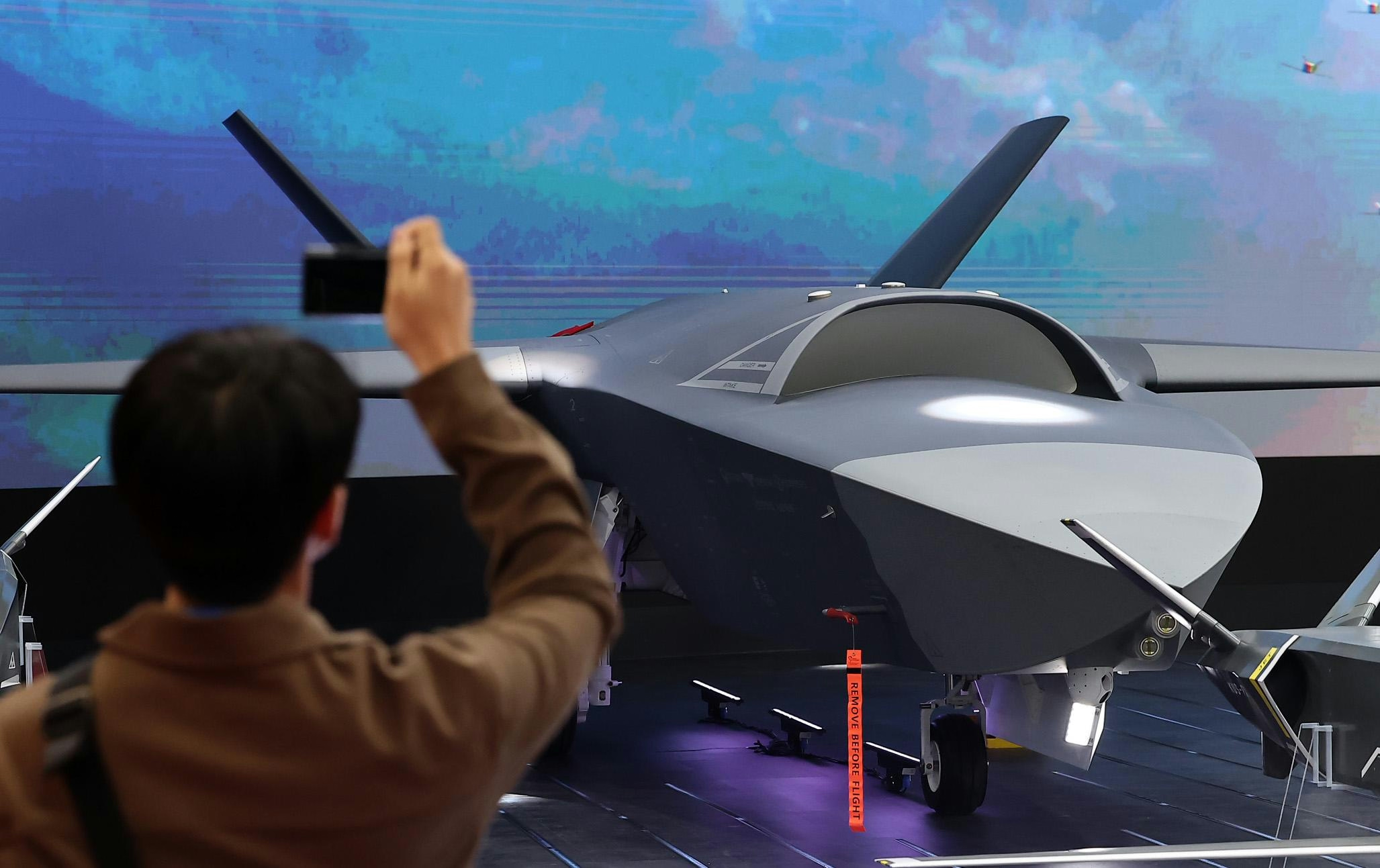
Korea Advances Domestic Aircraft Engine Development with KASA's First Dual-Use Turbofan
South Korea has embarked on a significant initiative to develop its first domestically produced dual-use turbofan engine and hybrid propulsion system, marking a pivotal move toward greater self-reliance in advanced aerospace technologies. The Korea Aerospace Administration (KASA) announced on May 26 the commencement of this ambitious project, which aims to localize core propulsion technologies essential for future electrified aircraft and the rapidly evolving sectors of Urban Air Mobility (UAM) and Advanced Air Mobility (AAM).
Project Overview and Objectives
Unveiled at the "Joint Inception Briefing for the Next-Generation Dual-Use Aircraft Engine and Propulsion System Development Project," the initiative is slated to receive approximately 900 billion won in funding over four years, from 2026 to 2029. KASA’s overarching goal is to bolster the domestic aerospace propulsion industry and establish South Korea as a competitive force in the global aviation market.
The project is structured around two primary components. The first focuses on the development of a high-bypass turbofan engine, targeting a 4,500-pound-force (lbf) class gas turbine suitable for both civil and military applications. This includes integration into More Electric Aircraft (MEA) and unmanned aerial vehicles. Key technological advancements under development encompass high-bypass fan and booster systems, advanced combustor testing, and the design and manufacture of a rotor-integrated embedded starter generator (ISG). KASA emphasized that progressing beyond mere parts manufacturing to full system integration is critical for achieving global competitiveness.
The second component centers on hybrid propulsion system technologies aimed at eco-friendly propulsion solutions. This effort seeks to enhance the operational range and efficiency of future air mobility vehicles through the development of a 500 kW-class turbogenerator, a 300 kW-class multiplexed electric engine (comprising motor and inverter), and the integration design of a 1.5 MW-class hybrid electric propulsion system. The project will also establish ground test systems and integration analysis capabilities to support these developments.
Strategic Implications and Challenges
KASA anticipates that these technological advancements will enable domestic companies to penetrate the global aviation supply chain while enhancing South Korea’s technological self-sufficiency in both civil and military aviation sectors. However, the project faces potential challenges, notably rising production costs. This concern has been underscored by recent considerations to delay the production of the KF-21 Block 2 fighter jet, which may affect the timeline and scope of engine development.
The initiative has garnered increased attention in the market, reflecting growing interest in South Korea’s pursuit of aerospace self-reliance. At the same time, it intensifies competition on the international stage, as other countries such as Russia and Turkey accelerate their own aircraft engine manufacturing programs. Russian officials have highlighted the importance of adopting new technologies and platform standardization to maintain competitiveness in the global market.
Industry experts, academics, and research leaders attending the briefing concurred on the critical importance of localizing aircraft engine and propulsion technologies to generate high added value within the domestic aerospace sector. They also stressed the necessity of strengthened cooperation among stakeholders to ensure that research outcomes are effectively translated into practical applications.
As South Korea advances this project, the progress and outcomes of KASA’s dual-use turbofan and hybrid propulsion system development will be closely monitored both domestically and internationally, serving as a key indicator of technological progress and strategic autonomy in the aerospace industry.

Etihad Airways Suspends Airbus A380 Flights on Key Route

Aditya Birla Group Seeks Approval for Aircraft Leasing in GIFT City

Qatar Airways Highlights Innovation and Connectivity at Arabian Travel Market 2026

Hong Kong's Five-Year Plan Includes Andrew Fan's Aircraft Parts Processing Hub Proposal

ACIA Aero Leasing Delivers ATR72-600 to Air Nostrum

RTX Appoints Jill Albertelli as Head of Pratt & Whitney

TAT Technologies Joins Beyond Aero Hydrogen Aircraft Program

AURAK Study Highlights Barriers to Air Taxi Adoption in Emerging Economies

Xiamen Air Selects Altitude for 787 Maintenance at Heathrow

Etihad and Swissport Extend Global Partnership
