
Orchestrer les insights d’IA pour les transformer en actions

Tendances
Categories
Korean Air to Fully Integrate Asiana Airlines by December
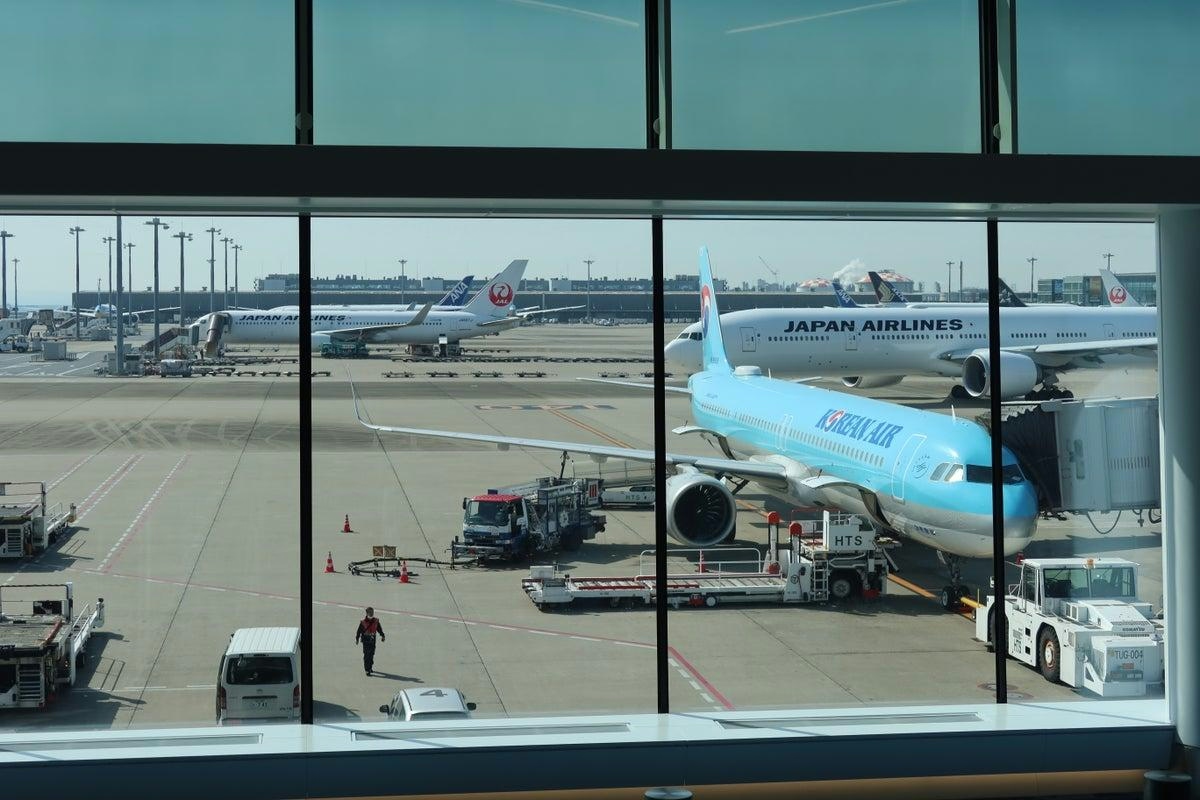
Korean Air to Fully Integrate Asiana Airlines by December 2026
After nearly six years of negotiations, regulatory scrutiny, and industry speculation, Korean Air is set to complete the full integration of Asiana Airlines by December 2026. This milestone marks the conclusion of one of the most protracted airline mergers in recent history, signaling a significant transformation in South Korea’s aviation sector.
Finalization of the Merger Agreement
The boards of both Korean Air and Asiana Airlines have approved the definitive merger agreement, with legal formalities scheduled for May 14, 2026. The consolidation process began with a share subscription agreement in November 2020 and advanced with Korean Air’s acquisition of a 63.9% stake in Asiana in December 2024. The merger aims to stabilize the domestic aviation market, which has faced considerable challenges due to pandemic-related disruptions.
Upon completion, Korean Air will assume all of Asiana’s assets, liabilities, rights, obligations, and personnel, effectively becoming an integrated flag carrier by December 17, 2026. The combined airline will maintain a significant presence at Incheon International Airport while preserving Gimpo Airport as a convenient city hub, thereby enhancing its operational footprint.
Regulatory and Operational Challenges
Despite the clear trajectory toward integration, Korean Air must still obtain final approval from the Korean Ministry of Land, Infrastructure and Transport (MOLIT). This will be followed by amendments to its Operations Specifications (OpSpecs) to unify Asiana’s aircraft and safety systems under Korean Air’s Air Operator Certificate. Additionally, international regulatory filings will be necessary to harmonize safety management and operational protocols across the expanded network.
The process of aligning operational systems and managing cultural integration between the two airlines is expected to be complex. Korean Air is investing in service enhancements, including lounge renovations, catering improvements, and terminal relocations, to elevate the passenger experience. The airline is also standardizing flight crew training and upgrading its Operations and Customer Centre, Cabin Crew Training Centre, and Aviation Health and Medical Centre to support the enlarged workforce.
To accommodate the expanded fleet, Korean Air plans to establish a new engine maintenance plant and expand its Engine Test Cell facilities near Incheon.
Market Implications and Industry Response
The merger has attracted close attention from investors and industry analysts, who are monitoring the realization of financial synergies and operational efficiencies. Competitors are likely to respond with strategic adjustments, such as route realignments and service enhancements, to counterbalance the competitive advantages of the newly integrated carrier.
The consolidation will also unify the frequent flyer programs of both airlines, offering customers a single, streamlined loyalty scheme.
A Prolonged Path to Integration
The integration process has been marked by delays, primarily due to regulatory hurdles and the necessity of multiple government approvals. While mergers of this scale typically conclude within a few years, the Korean Air-Asiana deal has extended to nearly six years, testing the patience of stakeholders and passengers alike.
With the final steps now approaching, Korean Air is positioned to complete the merger by mid-December 2026, contingent on the absence of further regulatory obstacles. This development is poised to reshape South Korea’s aviation landscape and establish the combined entity as a formidable competitor in the global airline industry.

Etihad Airways Suspends Airbus A380 Flights on Key Route

Aditya Birla Group Seeks Approval for Aircraft Leasing in GIFT City

Qatar Airways Highlights Innovation and Connectivity at Arabian Travel Market 2026

Hong Kong's Five-Year Plan Includes Andrew Fan's Aircraft Parts Processing Hub Proposal

ACIA Aero Leasing Delivers ATR72-600 to Air Nostrum

RTX Appoints Jill Albertelli as Head of Pratt & Whitney

TAT Technologies Joins Beyond Aero Hydrogen Aircraft Program

AURAK Study Highlights Barriers to Air Taxi Adoption in Emerging Economies

Xiamen Air Selects Altitude for 787 Maintenance at Heathrow

Etihad and Swissport Extend Global Partnership
