Image

AeroGenie — Votre copilote intelligent.

Posez n'importe quelle question. Analysez tout. Agissez instantanément.

Tendances

Categories

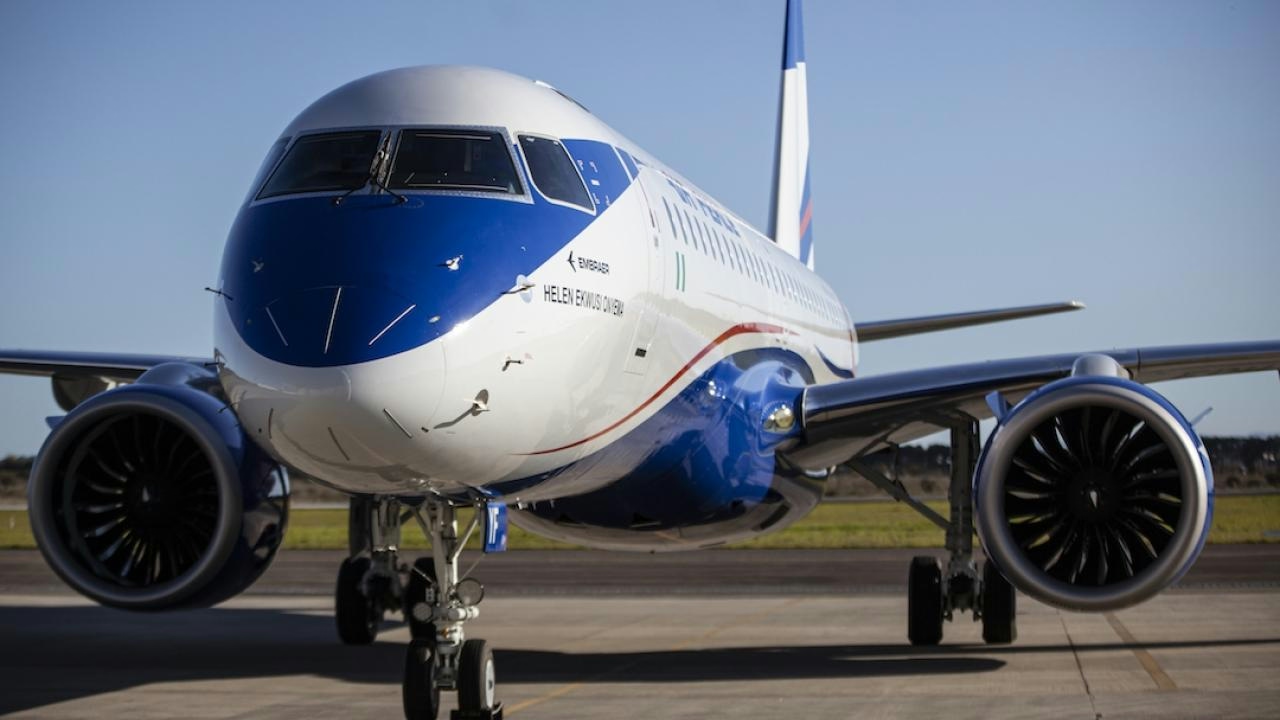
LATAM Airlines to Receive First Embraer E195-E2 Jets in Late 2026
March 6, 2026By ePlane AI
LATAM Airlines to Receive First Embraer E195-E2 Jets in Late 2026
0
0
LATAM Airlines
Embraer E195-E2
Fleet Modernization

LATAM Airlines to Receive First Embraer E195-E2 Jets in Late 2026

RIO DE JANEIRO — LATAM Airlines Group is preparing for a significant transformation of its fleet, marking a departure from its longstanding reliance on an all-Airbus narrowbody operation. At the Routes Americas 2026 conference held in Brazil, LATAM Brazil CEO Jerome Cadier announced that the airline will take delivery of its first Embraer E195-E2 jets in the fourth quarter of 2026. This acquisition signals a strategic shift aimed at enhancing regional connectivity and operational flexibility throughout South America.

Strategic Adaptation to Market Dynamics

LATAM’s decision to incorporate the Brazilian-built E195-E2, often referred to as the "Profit Hunter," reflects a deliberate response to the evolving competitive landscape in Brazil. The airline is recalibrating its network strategy to better align with market demand, particularly in a context of improved infrastructure at secondary airports and persistent fuel price volatility. The E195-E2 offers a 25% reduction in fuel burn per seat compared to previous-generation aircraft, enabling LATAM to operate thinner routes more profitably and avoid the risks associated with overcapacity. This is especially pertinent as the airline seeks to increase flight frequencies between major hubs such as São Paulo and secondary economic centers without compromising load factors.

Fleet Composition and Delivery Schedule

The new Embraer jets will primarily be acquired through leasing agreements with Azorra, as part of a broader arrangement involving the Abra Group and other regional partners. The scheduled delivery in late 2026 aligns with LATAM’s "Sustainability and Efficiency 2030" roadmap, underscoring the airline’s commitment to modernizing its fleet with more efficient aircraft. Industry analysts anticipate that the E195-E2 will initially be deployed on domestic Brazilian routes, with potential expansion to LATAM’s affiliates in Chile and Colombia. The aircraft will feature a contemporary two-class cabin configuration, including LATAM’s signature Premium Economy offering tailored for short-haul travel.

Operational Plans and Market Implications

Preparations for the E195-E2’s entry into service are already underway, with LATAM filing initial flight patterns and identifying routes for the new jets. Early operations are expected to include daily and frequent services connecting São Paulo with regional destinations such as Joinville and Ribeirão Preto, as well as flights from Brasília to Palmas and from Rio de Janeiro to Vitória. These routes are designed to optimize the aircraft’s range and capacity, enhancing connectivity within Brazil’s domestic market.

As LATAM continues to lead Latin America’s aviation sector—reporting a 6.5% year-over-year increase in available seats during the first quarter of 2026—competitors including GOL and Azul are closely observing these strategic developments. The airline’s capacity adjustments coincide with Embraer’s plans to increase E-Jet deliveries to 100 units annually by 2027 or 2028, a factor that may further influence LATAM’s competitive positioning. Importantly, all E2 jets are expected to return to service in 2026 following the resolution of Pratt & Whitney GTF engine issues, ensuring the reliability of the new fleet.

Through these initiatives, LATAM aims to strengthen its market presence and operational efficiency, positioning itself for sustained growth amid the ongoing recovery of the global aviation industry.

More news
A $12.5 Billion Investment Modernizes Air Traffic Control, but Additional Funding Is Needed for Software and AI

A $12.5 Billion Investment Modernizes Air Traffic Control, but Additional Funding Is Needed for Software and AI

$12.5 Billion Investment Modernizes Air Traffic Control, but Additional Funding Required for Software and AI Integration Progress in Modernizing Air Traffic Control Infrastructure Washington — The Department of Transportation (DOT) is advancing efforts to modernize the United States’ air traffic control system, replacing antiquated technologies such as paper strips, copper wiring, and obsolete computer floppy disks. This initiative has been propelled by a $12.5 billion investment authorized under President Donald Trump’s spending bill, which officials describe as an initial installment toward a comprehensive overhaul. At a press briefing held at DOT headquarters, Transportation Secretary Sean Duffy emphasized the significant progress achieved but underscored the necessity for further funding to complete the modernization, particularly in software development and artificial intelligence (AI) integration. “We are going to need more money for the software side of this build,” Duffy stated, adding that Congress must identify a funding pathway to support the ongoing development, deployment, debugging, and training efforts. The Federal Aviation Administration (FAA) reports substantial infrastructure upgrades, including the replacement of nearly half of the system’s copper wiring, conversion of 270 radio sites, and the implementation of electronic flight strips in 17 control towers. Additionally, over 4,500 FAA locations are receiving new radar systems, digital voice switches, and training simulators. The primary contract for these upgrades has been awarded to Peraton, which is focusing on modernizing communications, wiring, radar, and electronic flight strip technologies. A notable milestone was reached in May with the activation of a new fiberoptic cable linking Philadelphia and New York, enhancing telecommunications at the air traffic control facility serving Newark Liberty International Airport. This upgrade follows a series of outages last year that caused significant delays. Funding Challenges and Safety Concerns Despite these advancements, the FAA acknowledges that additional resources are critical, especially for the integration of advanced software and AI technologies. The Trump administration’s proposed fiscal year 2027 budget includes an extra $1.5 billion for modernization efforts; however, FAA officials estimate that several billion dollars more will be necessary to complete the overhaul. The agency is also addressing ongoing staffing shortages, which have drawn increased scrutiny in light of recent safety incidents. Recent accidents have highlighted the urgency of these modernization efforts. Last month, a fatal collision at New York’s LaGuardia Airport resulted in the deaths of two pilots when their Air Canada regional jet struck a fire truck on the runway. The National Transportation Safety Board (NTSB) is currently investigating the incident. In a separate event last year, 67 people lost their lives when a military helicopter collided with a plane at Ronald Reagan Washington National Airport. The NTSB attributed the accident in part to “degraded performance due to the high workload” experienced by air traffic controllers. Advancing Safety Through Artificial Intelligence As part of the broader modernization strategy, the FAA is exploring the deployment of predictive AI systems designed to enhance both safety and operational efficiency. Several companies, including Palantir, Thales, and a startup firm, are competing to develop the FAA’s SMART system. This technology aims to extend conflict prediction capabilities from the current 15-minute window to as much as two hours, potentially reducing delays and improving overall airspace safety. While the initial $12.5 billion investment has catalyzed critical infrastructure improvements, DOT and FAA leadership emphasize that sustained funding and continued technological innovation are essential to maintaining the safety and reliability of the nation’s airspace well into the future.
FAA Collaborates with AI Vendors to Develop Customized Air Traffic Control Software

FAA Collaborates with AI Vendors to Develop Customized Air Traffic Control Software

FAA Advances Air Traffic Control Modernization Through AI Collaboration The Federal Aviation Administration (FAA) is intensifying its efforts to modernize the United States’ air traffic control (ATC) infrastructure, with a strategic emphasis on integrating artificial intelligence (AI) into its operational framework. At the recent Modern Skies Summit in Washington, D.C., FAA Administrator Bryan Bedford and Transportation Secretary Sean Duffy detailed the progress made and the challenges that persist in the comprehensive overhaul of the National Airspace System. Progress and Technological Innovations Since the launch of the modernization initiative last year, the FAA and its industry partners have achieved significant milestones. Nearly half of the legacy copper wiring has been replaced, approximately 270 radio sites have been upgraded, new surface awareness systems have been installed at 54 airports, and 17 control towers have transitioned to electronic flight strips. Central to these advancements is the development of bespoke AI software designed to enhance scheduling efficiency and optimize traffic flow. Bedford highlighted the creation of “digital twins” of the National Airspace System, developed in collaboration with AI vendors. These digital replicas, built upon over two decades of operational data, enable predictive analytics that can deconflict flight schedules and improve overall system performance. The FAA anticipates that successful deployment of this technology will reduce operational costs, decrease block times, lower fuel consumption, and minimize delays. Challenges in Security and Workforce Capacity Despite these technological strides, the FAA faces considerable obstacles. A recent government watchdog report has exposed security vulnerabilities within critical ATC systems, raising concerns about the robustness and resilience of newly implemented technologies. Additionally, capacity constraints and a high attrition rate among trainees complicate the agency’s ability to scale its workforce effectively. The agency is also grappling with a talent shortage, particularly in the burgeoning drone sector, as new regulations governing Beyond Visual Line of Sight (BVLOS) operations near finalization. These workforce challenges coincide with increased scrutiny over the security and reliability of AI-driven air traffic management systems, as industry competitors accelerate their own AI integration efforts to maintain market competitiveness. Strategic Vision and Funding Needs The FAA envisions establishing a centralized automation platform that would streamline training processes and facilitate rapid safety improvements—capabilities currently unavailable in the commercial market. According to materials distributed at the summit, no existing software or platform meets the agency’s specific requirements, prompting a request for additional congressional funding to develop tailored solutions. Describing AI integration as the “third wave of true modernization,” Bedford noted that these initiatives extend beyond the initial $12.5 billion congressional allocation for ATC upgrades. While the White House’s fiscal 2027 budget proposal includes $4 billion for the FAA, the agency is seeking a total of $20 billion to fully realize its modernization objectives. In the interim, Duffy acknowledged that the FAA has had to rely on internal resources to finance early-stage industry collaboration. Regarding staffing for the AI projects, an FAA spokesperson confirmed that the agency will employ a combination of existing personnel and contractors to manage development efforts. This approach aligns with a broader federal trend of leveraging external vendor expertise for complex technological undertakings. As the FAA advances its modernization agenda, it continues to navigate the delicate balance between fostering innovation, ensuring security, and maintaining workforce readiness.
WTM Africa Report Highlights Key Trends Shaping Africa’s Travel and Tourism Industry in 2026

WTM Africa Report Highlights Key Trends Shaping Africa’s Travel and Tourism Industry in 2026

WTM Africa Report Highlights Key Trends Shaping Africa’s Travel and Tourism Industry in 2026 The 2026 State of the Industry Report from WTM Africa reveals that the continent’s travel and tourism sector is poised for significant transformation. The report identifies several critical trends—including aviation expansion, the integration of artificial intelligence (AI) in travel technology, sustainability challenges, workforce development, and inclusion—that are expected to redefine Africa’s tourism landscape over the coming years. Aviation: Expansion Amid Persistent Challenges Aviation remains a key driver of growth in Africa’s tourism industry. In 2025, international arrivals increased by 8%, reaching 81 million visitors, marking the fastest regional growth worldwide. Aviation capacity also grew by 13.7%, with 182.4 million departure seats available. However, this growth is unevenly distributed across the continent. Eastern Africa experienced a remarkable 24.3% increase in flights, while Central and Western Africa continue to face infrastructural and economic hurdles that have hindered similar progress. Despite initiatives such as visa-free travel and digital authorizations, significant barriers persist. Limited intra-African connectivity and ongoing visa restrictions continue to impede seamless travel. Additionally, the reliance on cash payments for corporate travel and fragmented booking systems complicate the travel experience. If these issues remain unaddressed, they risk slowing the sector’s momentum and constraining Africa’s ability to fully benefit from rising demand. Technology: AI and Digital Innovation Transform Travel The rapid adoption of artificial intelligence in travel planning is a defining trend, particularly among younger travelers. The report highlights that 72% of Gen Z tourists now utilize AI tools to organize their trips, prompting tourism operators to enhance their digital infrastructure and ensure their services are machine-readable. The emergence of agentic AI technologies is reshaping trip planning and increasing pressure on providers to offer sophisticated, digitally accessible inventories. This technological evolution is also fueling a resurgence in domestic travel, as travelers seek more personalized and flexible options. Nevertheless, the fragmented nature of digital systems and the slow pace of integration among some operators threaten to leave parts of the market behind, underscoring the need for accelerated digital transformation. Sustainability: A Critical Imperative Sustainability remains a pressing concern for Africa’s tourism sector. Currently, fewer than 5% of hospitality properties on the continent have obtained third-party sustainability certification. This is particularly alarming in light of the European Union’s greenwashing ban, which will take effect in September 2026. As international travelers increasingly prioritize eco-friendly destinations, African tourism risks losing competitiveness unless stakeholders intensify efforts to meet global sustainability standards. This will require substantial investment in green infrastructure, transparent sustainability practices, and strict compliance with emerging regulations. Workforce Development, Inclusion, and Market Dynamics The report also emphasizes the growing importance of workforce development and inclusion within the industry. The rise of female leadership and a focus on upskilling are reshaping the talent pool, contributing to a more diverse and capable workforce. However, the sector faces ongoing challenges from external factors such as geopolitical conflicts, including the Middle East crisis, which has disrupted safari tourism by forcing travelers to seek alternative routes. Responses from competing destinations vary widely. Some are capitalizing on mega events and improved connectivity to attract visitors, while others continue to struggle with entrenched barriers. The fragmented nature of the market, combined with external shocks, highlights the urgent need for coordinated strategies to promote sustainable and inclusive growth across the continent. Africa’s travel and tourism industry stands at a crossroads, confronted with both unprecedented opportunities and complex challenges. Its future success will depend on the sector’s ability to invest in infrastructure, embrace digital innovation, advance sustainability, and foster an inclusive workforce to maintain competitiveness on the global stage.
TPA Proposes Air Taxi Service Between Tampa and St. Petersburg

TPA Proposes Air Taxi Service Between Tampa and St. Petersburg

Tampa International Airport Proposes Air Taxi Service Linking Tampa and St. Petersburg Tampa International Airport (TPA) has announced plans to introduce air taxi routes across Tampa Bay, including a direct connection between Tampa and St. Petersburg. This initiative forms part of a broader $1.5 billion terminal expansion aimed at accommodating regional growth and enhancing transportation infrastructure. Airport CEO Michael Stephens outlined the vision during a presentation to the Pinellas County Commission, emphasizing collaboration with state, federal, and industry partners to integrate electric vertical takeoff and landing (eVTOL) aircraft—commonly referred to as air taxis—into the local transit network. Vision for Air Taxi Integration and Regional Mobility Initial proposals include routes linking Tampa International with Peter O. Knight Airport on Davis Islands, alongside other locations designed to support multimodal travel options. Stephens described the airport’s ambition to become a hub for emerging "flying car" technology, highlighting Florida’s strategic position to lead early adoption. The Tampa–Orlando corridor has been identified as a critical test market for eVTOL deployment. The initiative responds to longstanding mobility challenges between Hillsborough and Pinellas counties, where daily commutes are hindered by limited bridge crossings. Stephens stressed the necessity of diversifying transportation modalities to better connect the region, underscoring the potential of air taxis to alleviate congestion and improve commuter options. Industry Challenges and Ongoing Developments Despite the promise of air taxi services, the path to implementation faces significant hurdles. The eVTOL sector is currently marked by legal disputes among major players such as Joby Aviation and Archer Aviation, who are engaged in litigation over trade secrets and business relationships. These conflicts, coupled with the rigorous certification process for eVTOL aircraft, may affect the timeline and scale of service deployment. Meanwhile, Doroni Aerospace has announced plans to test its prototype in 2027, as companies compete for market share through both technological innovation and legal strategies. Terminal Expansion and Regional Impact Concurrently, TPA is advancing construction on Airside D, a new 16-gate, 600,000-square-foot terminal that will serve as the airport’s primary international facility. This expansion is designed to support passenger growth from 25 million to an estimated 35 million by 2037. Stephens noted that Pinellas County contributes nearly a quarter of TPA’s total traffic, driven by tourism and a workforce that commutes across the bay. The enhanced international service is expected to meet increasing demand for access to Pinellas County’s beaches and attractions. Following a groundbreaking in December 2024, construction on Airside D has entered the vertical phase. Upon completion, the terminal will expand customs capacity, introduce new airline lounges, and improve passenger flow. During the recent spring break period, TPA managed over 3 million passengers, maintaining wait times as low as 22 minutes—significantly shorter than delays experienced at other major airports. With a daily workforce of approximately 10,000 employees, many of whom commute across Tampa Bay, the airport’s efforts to improve regional connectivity are critical. As TPA progresses with its expansion and explores innovative transportation solutions, the prospect of air taxi services becoming operational hinges on forthcoming regulatory approvals, legal resolutions, and market dynamics.
Airbus A380 Route Reductions Signal Shift in Airline Strategies

Airbus A380 Route Reductions Signal Shift in Airline Strategies

Airbus A380 Route Reductions Signal Shift in Airline Strategies Airbus A380 operations are undergoing a significant transformation as leading airlines adjust their long-haul networks in response to changing market conditions and geopolitical challenges. Once emblematic of premium international travel, the superjumbo is now experiencing selective route withdrawals and redeployments, despite sustained global passenger demand. Strategic Realignment Amid Global Uncertainty Major carriers including Emirates, Qatar Airways, and Singapore Airlines are strategically scaling back A380 services on various international routes. This recalibration is driven less by declining demand and more by a pursuit of operational efficiency, cost management, and enhanced fleet flexibility. The ongoing instability in the Middle East has further accelerated these adjustments, compelling airlines to reconsider their route structures and capacity distribution. Singapore Airlines, for instance, has recently reinstated A380 flights to Melbourne, capitalizing on a 38 percent increase in bookings as corporate travelers reroute through Singapore to avoid Middle Eastern airspace. Conversely, Qantas has reduced domestic capacity in response to regional volatility, reallocating aircraft to bolster services to key European destinations. These developments reflect a broader industry trend in which airlines prioritize dense, high-yield routes for the A380 while scaling back on marginal or seasonal markets. Route Adjustments and Market Responses Several global hubs, including Zurich, Auckland, and Mumbai, have seen diminished A380 frequencies as airlines redeploy the aircraft to routes with steadier demand profiles. Singapore Airlines has also discontinued A380 services on certain historically significant routes, a move that has surprised frequent flyers. These changes are influenced by seasonal demand shifts, airport slot limitations, and the imperative for more agile fleet deployment. Competitors are responding promptly to these shifts. Turkish Airlines, leveraging its strategic geographic position, has expanded market share by offering alternative connections that appeal to travelers seeking safe and reliable routes. The industry as a whole is placing greater emphasis on diverse booking channels and real-time rebooking capabilities to accommodate evolving passenger preferences. Economic and Operational Pressures Despite its iconic status and appeal to passengers, the A380 faces persistent economic challenges. Its four-engine configuration and high maintenance requirements render it less competitive compared to newer, more fuel-efficient twin-engine aircraft such as the Airbus A350 and Boeing 787. The A380 remains most viable on routes with consistently high demand, yet fluctuating market conditions and infrastructure constraints at many airports limit its deployment. Airlines are increasingly favoring aircraft that offer greater operational flexibility and lower costs, particularly in an environment of uncertain demand. This strategic shift enables carriers to better manage capacity and respond swiftly to changes in global travel patterns. Passenger Experience and Future Outlook The A380 continues to be favored by travelers for its spacious cabins and premium amenities, with airlines like Emirates maintaining investments in onboard enhancements. However, as networks are streamlined, opportunities to fly on the superjumbo are becoming more limited. The focus is now on deploying the A380 exclusively on routes where it delivers the greatest value. Looking forward, the industry’s adaptation to geopolitical instability and shifting demand signals a broader transformation in airline strategy. The A380’s role is set to become increasingly specialized, reserved for flagship routes where its unique advantages can be fully leveraged.
Pratt & Whitney Unveils $100 Million Initiative to Reduce Airline Engine Delays

Pratt & Whitney Unveils $100 Million Initiative to Reduce Airline Engine Delays

Pratt & Whitney Unveils $100 Million Initiative to Reduce Airline Engine Delays Pratt & Whitney has announced a comprehensive $102.7 million investment aimed at expanding its Maintenance, Repair, and Overhaul (MRO) capabilities across three U.S. facilities. This strategic initiative focuses on alleviating persistent engine delays, particularly for its Geared Turbofan (GTF) engine family, which has faced increasing scrutiny from airline customers such as Airbus. The investment seeks to address critical shortages that have affected fleets including the A320neo, underscoring the urgency to enhance serviceability and turnaround times. Major Expansion in Texas The largest portion of the investment, totaling $78 million, is allocated to Pratt & Whitney’s facility in Irving, Texas. Here, the company has inaugurated a new 500,000-square-foot center dedicated to its Commercial Serviceable Assets business, which manages used serviceable material (USM) and engines. This expansion is expected to increase USM inventory by more than 60 percent, a move designed to alleviate bottlenecks in the MRO process by ensuring a greater availability of parts. Rob Griffiths, Senior Vice President of Commercial Engines Operations, emphasized that the investments across the three U.S. sites aim to enhance the throughput of GTF engines and parts, incorporating new repair capabilities and advanced technologies to expedite engine returns to customers. Investments in Florida and Arkansas In West Palm Beach, Florida, Pratt & Whitney is investing $20 million to expand its existing Engine Center by 50,000 square feet. This enlargement will increase MRO capacity for GTF engines by 40 percent and includes upgrades to equipment for engine assembly, disassembly, machining, testing, cleaning, and warehousing. Meanwhile, the Propulsion Systems Division in Springdale, Arkansas, is receiving $4.7 million to support a 7,000-square-foot expansion. This facility focuses on engine case repairs for both commercial and military aircraft, with new equipment expected to reduce process times by over 60 percent, thereby improving operational efficiency. Industry and Market Pressures This substantial investment comes at a pivotal moment for Pratt & Whitney, as the company confronts significant challenges in maintaining supply chain efficiency amid rising demand for advanced technologies such as artificial intelligence, which is placing additional strain on the electrical grid and global logistics networks. These factors pose potential obstacles to achieving the targeted improvements in engine turnaround times. The broader market is also attentive to Pratt & Whitney’s moves, with competitors like Williams International likely to increase their own investments in MRO and technological innovation. Furthermore, Pratt & Whitney’s expanding role in emerging sectors, including Collaborative Combat Aircraft programs, adds another layer of complexity and scrutiny to its operations. While the $100 million-plus investment underscores Pratt & Whitney’s commitment to resolving engine delays and supporting airline partners, the company faces the challenge of balancing internal operational demands with external market pressures. As airlines and manufacturers intensify their calls for faster and more reliable engine solutions, the industry is poised for accelerated advancements in engine technology and service reliability.
Boeing's Unbuilt 777-100 Model

Boeing's Unbuilt 777-100 Model

Boeing’s Unbuilt 777-100: A Missed Opportunity in a Changing Aviation Landscape In the annals of aviation history, some of the most fascinating stories belong to aircraft that never advanced beyond the conceptual stage. The Boeing 777-100 is one such example, representing an early design that diverged significantly from the twin-aisle aircraft that has since become a staple of long-haul air travel. While the Boeing 777 series has grown into a vital component of global aviation, the 777-100’s development offers insight into a period marked by shifting industry priorities, regulatory challenges, and rapid technological progress. Origins and Design Philosophy The genesis of the 777-100 dates back to the late 1970s, a time when the commercial aviation market was dominated by three- and four-engine aircraft. Regulatory frameworks at the time imposed strict limitations on twin-engine aircraft, particularly concerning their distance from diversion airports during transoceanic flights. This environment favored trijets and quadjets for long-haul routes, especially those crossing vast oceanic expanses. Boeing identified a niche between its medium-range 767 and the large-capacity, long-range 747. The 777-100 was conceived as a mid-sized widebody aircraft capable of intercontinental range, designed to offer airlines a versatile option for routes that exceeded the 767’s capabilities but did not warrant the scale of a 747. The three-engine configuration was central to this concept. While twinjets were viewed with skepticism due to regulatory constraints, three-engine aircraft had already demonstrated their viability. Models such as the McDonnell Douglas DC-10 and Lockheed L-1011 TriStar had established a precedent, combining long-range performance with lower fuel consumption and maintenance costs compared to four-engine jets. Boeing aimed to capitalize on these advantages by integrating more advanced engines and aerodynamic improvements to enhance efficiency further. Industry Evolution and Regulatory Shifts Despite its promising design, the 777-100 never progressed beyond the conceptual phase. Its development coincided with significant transformations within the aviation industry. Advances in engine reliability, coupled with the introduction of Extended-range Twin-engine Operational Performance Standards (ETOPS), gradually dismantled the regulatory barriers that had previously favored aircraft with three or four engines. As a result, airlines increasingly preferred more fuel-efficient twin-engine jets, prompting Boeing to redirect its efforts toward the development of the 777-200, which would go on to achieve considerable commercial success. The broader aerospace environment also played a role in shaping the fate of the 777-100. Geopolitical tensions, particularly between the United States and China, have historically influenced aircraft delivery schedules and order volumes, especially in the strategically important Asia-Pacific region. Such geopolitical dynamics continue to pose challenges for manufacturers, complicating program timelines and market access amid shifting alliances and trade policies. Market Dynamics and Competitive Pressures Boeing’s financial performance reflects the volatility inherent in the aerospace sector. The company’s elevated price-to-earnings ratio, recently recorded at 111.41, indicates strong investor expectations for future growth but also underscores the risks associated with market overvaluation in an industry subject to rapid change. Competitive pressures extend beyond aviation, as illustrated by developments in the automotive sector. For instance, Tesla is currently grappling with record levels of unsold electric vehicles, while competitors such as Ford and BYD are making significant inroads. These examples highlight how swiftly market preferences and technological standards can evolve, potentially rendering even well-conceived projects obsolete before they reach fruition. Reflections on the 777-100’s Legacy The story of the Boeing 777-100 serves as a compelling case study in the rapid pace of change within the aviation industry. Its cancellation was not merely a question of technical feasibility but rather a reflection of evolving regulatory frameworks, shifting market demands, and complex geopolitical factors. In the highly competitive and dynamic field of aerospace, success often hinges as much on timing and adaptability as on innovation and engineering prowess.
Delta TechOps and LATAM Brasil Announce A320 Repair Agreement

Delta TechOps and LATAM Brasil Announce A320 Repair Agreement

Delta TechOps and LATAM Brasil Announce A320 Repair Agreement Strategic Partnership to Enhance A320 Maintenance Capabilities Delta TechOps and LATAM Airlines Brasil have formalized a new agreement focused on the repair of Airbus A320 components, marking a significant development in the competitive Maintenance, Repair, and Operations (MRO) sector. Announced on April 21, 2026, at the MRO Americas conference in Orlando, Florida, the partnership will channel repair work through LATAM’s São Carlos maintenance base in Brazil, with Delta TechOps acting as the sole commercial interface for customers worldwide. Under this collaboration, Delta TechOps will maintain responsibility for engineering standards and quality assurance, while LATAM Airlines Brasil will conduct the actual repairs at its expansive São Carlos facility. The initial scope of the agreement covers select A320 component repairs, with intentions to broaden the service portfolio over time. This alliance leverages LATAM’s extensive expertise with the A320 family—one of the most widely operated narrowbody aircraft globally—combined with Delta’s rigorous technical oversight, thereby reinforcing both companies’ competitive positions in the global MRO market. Facility Capabilities and Industry Context The São Carlos maintenance site, operational since 2001, spans approximately one million square feet and employs around 2,400 personnel. It features nine hangars and 22 specialized workshops capable of servicing up to 16 aircraft simultaneously. The facility holds certifications from major aviation authorities, including the Federal Aviation Administration (FAA), the European Union Aviation Safety Agency (EASA), and Brazil’s National Civil Aviation Agency (DGAC). This agreement arrives as Delta TechOps anticipates full-year revenues of $1.2 billion, underscoring its strong market presence. Nevertheless, the MRO industry remains fiercely competitive, with companies such as DASI and AerFin actively expanding their service offerings. The partnership with LATAM Brasil is viewed as a strategic move to enhance Delta’s capacity to sustain profit margins and meet revenue targets amid intensifying competition. Broader Market Challenges and Future Outlook The global MRO landscape continues to face uncertainties stemming from geopolitical tensions, particularly between the United States and China, which have disrupted Boeing’s delivery schedules and order books. Although the current agreement specifically addresses Airbus A320 components, potential supply chain disruptions or shifts in aircraft demand could indirectly influence Delta TechOps’ operational strategies and growth prospects. The agreement is subject to regulatory approval in Brazil. Upon receiving the necessary clearances, implementation is expected to commence in the second quarter of 2026, with a phased transition of select Delta A320 components to LATAM’s São Carlos facility. As the MRO sector evolves, competitive responses are anticipated to include enhanced service offerings, highlighting the critical role of strategic partnerships such as this in maintaining industry leadership.
Joramco Signs Aircraft Parts Sourcing Agreement with AeroParts-AI at MRO Americas

Joramco Signs Aircraft Parts Sourcing Agreement with AeroParts-AI at MRO Americas

Joramco Enhances Aircraft Parts Sourcing Through Partnership with AeroParts-AI Amman-based maintenance, repair, and overhaul (MRO) provider Joramco, the engineering division of Dubai Aerospace Enterprise (DAE), has formalized a one-year agreement with AeroParts-AI to advance its aircraft parts sourcing capabilities. Announced at MRO Americas 2026, the partnership follows Joramco’s internal validation of AeroParts-AI’s artificial intelligence-driven sourcing platform. This platform leverages a global supplier network to enhance procurement efficiency, transparency, and responsiveness, reflecting Joramco’s strategic focus on innovation and digital transformation. Strategic Implications Amidst Industry Competition Joramco’s collaboration with AeroParts-AI positions the latter as a key technology partner in the evolution of next-generation aircraft parts procurement. This development occurs against a backdrop of intensifying competition within the used serviceable material (USM) market, where an increasing number of companies are acquiring retired airframes and engines for teardown and parts resale. Industry analysts suggest that Joramco’s adoption of AI-based sourcing tools may invite closer examination of its pricing models and supply chain effectiveness as market dynamics continue to evolve. The broader MRO sector is witnessing a surge in digital procurement initiatives, with competitors such as AAR recently launching its own AI-powered parts procurement platform, Agentic. This trend underscores a growing industry-wide commitment to integrating advanced technologies to optimize supply chain operations. Market Dynamics and Competitive Pressures The competitive environment is further complicated by the expansion of major Japanese conglomerates into the U.S. aircraft parts market. Notable acquisitions, including Marubeni’s purchase of DASI and Sumitomo’s control of Werner Aero, have intensified rivalry and spurred new investment strategies across the MRO landscape. These developments are reshaping the competitive framework and prompting companies to accelerate their technological and operational advancements. By leveraging AeroParts-AI’s platform, Joramco aims to streamline its procurement processes and sustain its competitive advantage in a rapidly changing market. The agreement is anticipated to bolster Joramco’s capacity to deliver enhanced value to its customers while effectively navigating the challenges posed by increased competition and technological disruption within the global aircraft parts supply chain.
Revima and Air Astana Sign 131-9A APU Support Agreement at MRO Americas

Revima and Air Astana Sign 131-9A APU Support Agreement at MRO Americas

Revima and Air Astana Sign Five-Year 131-9A APU Support Agreement at MRO Americas Independent maintenance, repair, and overhaul (MRO) provider Revima has formalized a five-year contract with Air Astana Group to support the airline’s 131-9A auxiliary power units (APUs) installed on its Airbus A320 Family fleet. The agreement, finalized during the MRO Americas event, designates Revima’s state-of-the-art facility in Normandy, France, as the exclusive site for all APU shop visits. Scope of the Agreement and Technological Integration Beyond traditional maintenance services, the contract grants Air Astana access to Revima’s PrediCare® digital predictive maintenance platform. This advanced solution leverages data analytics to provide actionable maintenance recommendations, enhancing operational planning and optimizing lifecycle cost management. Keith Wardle, Air Astana’s vice president of engineering and maintenance, emphasized the strategic value of the partnership, stating that Revima’s technical expertise combined with the PrediCare® service will support the airline in maintaining stringent safety standards and operational efficiency. Olivier Legrand, president and chief executive of Revima, expressed his company’s commitment to delivering customized support and superior reliability, highlighting the added value of digital solutions throughout the collaboration. Industry Context and Strategic Implications This agreement emerges amid a competitive and rapidly evolving MRO sector, where providers face mounting pressure to balance competitive pricing with technological innovation. Both Revima and Air Astana will confront challenges such as ensuring timely parts delivery and adapting to advancements in MRO technologies. The partnership is poised to attract attention from other airlines and MRO providers seeking cost-effective, technologically sophisticated support solutions. It may also prompt competitors to enhance their offerings through proprietary technologies or new strategic alliances. Despite these industry challenges, the collaboration aims to bolster Air Astana’s operational reliability while reinforcing Revima’s position as a prominent player in the APU MRO market.
line










