Image

AeroGenie — Votre copilote intelligent.

Posez n'importe quelle question. Analysez tout. Agissez instantanément.

Tendances

Categories

Lockheed Martin Tests AI Enhancements on F-35 Fighter Jet
February 24, 2026By ePlane AI
Lockheed Martin Tests AI Enhancements on F-35 Fighter Jet
0
0
Lockheed Martin
F-35 Fighter Jet
Artificial Intelligence Integration

Lockheed Martin Advances AI Integration in F-35 Fighter Jet

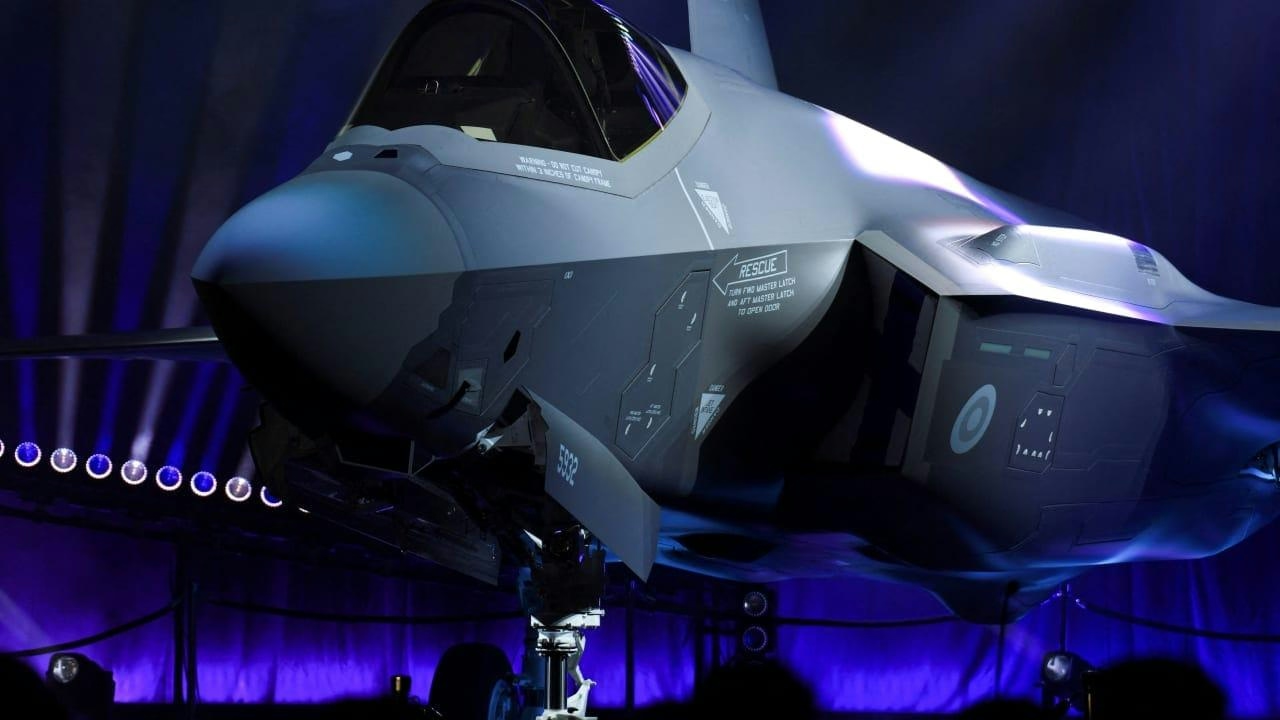
Lockheed Martin has achieved a significant breakthrough in military aviation by successfully conducting a flight test of an artificial intelligence-enhanced combat identification system on its F-35 fighter jet. This milestone, part of the company’s Project Overwatch, represents the first time a tactical AI model has been deployed in flight to autonomously generate a Combat ID that is displayed directly to the pilot.

Enhancing Situational Awareness Through AI

The AI capability was seamlessly integrated into the F-35’s information fusion system, enabling the aircraft to analyze sensor data in real time and accurately identify potential threats or allied forces. This technological advancement is poised to substantially improve situational awareness and decision-making for pilots operating in increasingly complex and contested combat environments.

Despite the promise of AI integration, several challenges remain. The accuracy of data inputs is paramount, as any errors could result in misidentification with potentially severe consequences. Furthermore, the introduction of AI-driven systems adds layers of complexity that necessitate enhanced pilot training to ensure that crews can effectively interpret and respond to AI-generated information during high-stakes operations.

Global Implications and Industry Response

The successful demonstration has attracted international interest, with countries such as Singapore expressing a desire to acquire advanced AI-enabled capabilities for their air forces. This development is expected to spur competitors to accelerate their own AI enhancements in fighter jets to maintain technological parity. At the same time, defense analysts emphasize the importance of addressing new risks associated with AI adoption in combat, including system vulnerabilities and the critical need for robust safeguards to prevent unintended consequences.

As Lockheed Martin continues to refine its AI integration efforts, the defense community remains attentive to how these innovations will influence the future landscape of aerial combat and shape global military procurement strategies.

More news
Uber Expands App to Include Parking, Air Taxis, and Autonomous Rides

Uber Expands App to Include Parking, Air Taxis, and Autonomous Rides

Uber Expands App to Include Parking, Air Taxis, and Autonomous Rides Uber Technologies (NYSE: UBER) is significantly broadening its mobility platform, moving beyond its traditional ride-hailing and delivery services. The company has announced the acquisition of SpotHero, a leading parking platform, which will enable users to reserve parking spaces directly through the Uber app in over 400 cities. This integration targets drivers who may not require a ride but still need convenient parking solutions, marking a strategic expansion into urban parking management. Launch of Uber Air and Autonomous Vehicle Partnerships In a further step into new mobility sectors, Uber is commercially launching Uber Air, powered by Joby Aviation. This service allows users to book air taxi rides within the existing Uber app interface, representing the company’s entry into the emerging urban air mobility market. Uber Air offers a premium travel option on select routes, aiming to provide faster and more efficient urban transportation. Simultaneously, Uber is deepening its involvement in autonomous vehicle technology through partnerships with companies such as Wayve, Nuro, and WeRide. These collaborations focus on deploying autonomous ride options in major markets, positioning Uber as a central platform for a diverse range of mobility services, including robotaxis. This multi-modal approach reflects Uber’s ambition to become a comprehensive provider of urban transportation solutions. Challenges and Market Response Despite the promising expansion, Uber faces considerable challenges. Regulatory hurdles loom large as the company ventures into air taxis and autonomous vehicles, both of which are subject to evolving safety and operational standards. Competition is intensifying, with established players like Waymo and Lyft also investing heavily in autonomous and multi-modal mobility solutions. Integrating parking, ride-hailing, air travel, and autonomous services into a seamless user experience presents significant technological complexity. Market reactions to Uber’s announcements have been mixed. Some investors recognize the potential for Uber to capture a larger share of the end-to-end urban journey, while others remain skeptical about the feasibility and profitability of these new services. The expansion increases operational complexity and exposes Uber to heightened regulatory scrutiny and substantial capital requirements across multiple transportation modes. Competitors are likely to accelerate their own innovations, intensifying the race to dominate the future of urban mobility. Looking forward, critical questions remain regarding user adoption, regulatory approvals, and the speed at which these services can be deployed across different regions. Investors will closely monitor how Uber manages pricing strategies, user experience, and safety standards as it integrates these diverse offerings into a unified platform. Uber’s recent initiatives underscore its commitment to redefining urban transportation amid uncertainty and fierce competition. The company’s success in executing these ambitious plans will be pivotal in shaping its future role within the evolving mobility landscape.
First GE90-94B Engines Surpass 100,000 Flight Hours

First GE90-94B Engines Surpass 100,000 Flight Hours

First GE90-94B Engines Surpass 100,000 Flight Hours The GE90 engine program marked a significant milestone this October as the first two GE90-94B engines surpassed 100,000 flight hours each. Operated by Austrian Airlines and KLM Royal Dutch Airlines, these engines join an elite group of fewer than 500 GE Aviation and CFM International engines worldwide to have reached this level of operational endurance, equivalent to more than 11 years of continuous flying. Endurance and Operational History This achievement highlights the exceptional durability and reliability of the GE90-94B model, placing it alongside other long-serving engines such as the CF6-6, CF6-50, CF6-80C2, CF6-80E1, and CFM56-5C in terms of longevity. Additional GE90-94B engines are anticipated to reach the 100,000-hour milestone in the near future. Jim Elliott, principal engineer for GE90 Services Systems Engineering, emphasized the significance of this milestone, stating that reaching 100,000 flight hours is a testament to the fundamental design of the engine. He noted that the GE90-94B design has served as the foundation for all of GE’s commercial turbofan engines introduced since its debut. Elliott also highlighted how the GE90 program helped establish enhanced customer and product support operations that continue to benefit GE’s latest engine programs. The Austrian Airlines engine, delivered in September 1997, has completed approximately 11,500 flight cycles and transported around three million passengers globally. The KLM engine, originally delivered to Air France in March 1998, has completed 12,574 cycles. Following the 2004 merger of Air France and KLM, the airlines’ GE90-94B and GE90-115B fleets have been managed jointly. The milestone KLM engine accumulated roughly 49,000 flight hours with Air France and 51,000 hours with KLM. KLM’s Boeing 777 fleet currently includes 15 777-200 aircraft powered by GE90-94B engines and 16 777-300 aircraft equipped with GE90-115B engines. Program Legacy and Industry Context The GE90 program celebrated its 25th service anniversary in 2020, with the entire fleet—comprising both GE90-94B and GE90-115B variants—surpassing 100 million engine flight hours. To date, more than 2,800 GE90 engines have been delivered worldwide. This milestone arrives at a critical juncture for GE Aviation. While the GE90 continues to power Boeing 777-300ERs and 777 Freighters globally, the introduction of the next-generation GE9X engine for the long-delayed Boeing 777X faces market scrutiny, particularly concerning a potential seal issue. These delays have extended the operational relevance of the GE90, as airlines maintain reliance on the engine for their widebody fleets. Meanwhile, competitors are advancing in response to evolving market demands. ST Engineering recently unveiled a business aviation thrust reverser demonstrator, and MTU Aero Engines is experiencing robust demand for maintenance services, especially for Pratt & Whitney’s geared turbofan (GTF) engines. These developments underscore the dynamic nature of the commercial aviation propulsion sector, where proven reliability and continuous innovation remain paramount. *CFM International is a 50-50 joint venture between GE and Safran Aircraft Engines.*
The Last Airworthy Douglas DC-8s

The Last Airworthy Douglas DC-8s

The Last Airworthy Douglas DC-8s The Douglas Aircraft Company, established in 1921 by Donald Wills Douglas Sr. in Southern California, played a foundational role in the development of American aviation. The company earned early acclaim through landmark achievements such as the first aerial circumnavigation and the production of iconic World War II aircraft, including the C-47 Skytrain and A-26 Invader. Following the war, Douglas continued to innovate with piston-engine airliners like the DC-6 and DC-7 before making a significant leap into the jet age with the introduction of the DC-8. This model became a cornerstone of global commercial air travel for decades. After merging with McDonnell Aircraft Corporation to form McDonnell Douglas, the company sustained production of the DC-8, which emerged as one of the most recognizable jetliners of its time. Today, only two Douglas DC-8 aircraft remain airworthy worldwide, a testament both to the aircraft’s robust engineering and the evolving dynamics of the commercial aviation industry. The Last Two Airworthy DC-8s The first of these surviving aircraft is OB-2231P, a 56-year-old plane originally delivered to Air Canada in February 1970. After serving as a passenger airliner, it was converted to cargo operations in 1982. Over the years, OB-2231P changed ownership multiple times, including a nearly twenty-year tenure with Astar Air Cargo, before being acquired by SkyBus Cargo Charters in December 2017. Currently, it operates regular short-haul cargo flights from Miami International Airport, primarily servicing routes to Port-au-Prince, Haiti, and Santo Domingo in the Dominican Republic. Recent flight tracking data confirms its ongoing activity, with round trips between Miami and Port-au-Prince lasting just under two hours. The second active DC-8, registered as 9S-AJO and now 55 years old, was first delivered to World Airways in March 1971. Throughout its operational life, it has flown under several operators, including Capitol International Airways, Viasa, Emery Worldwide, and Gestair Cargo. Since November 2011, it has been operated by Trans Air Cargo Service, based in the Democratic Republic of the Congo. Flight tracking indicates that 9S-AJO continues to operate primarily out of Kinshasa, maintaining the DC-8’s presence in African cargo transport. Challenges in a Changing Industry The continued operation of these last airworthy DC-8s is particularly notable given the mounting challenges facing the aviation sector. Recent logistics reports highlight increasing pressures on operators, including tariffs, trade uncertainties, labor shortages, rising material costs, and volatile freight markets. These factors complicate the maintenance and operation of aging aircraft such as the DC-8, which depend on parts that are becoming increasingly scarce and require specialized technical expertise. Furthermore, the commercial airliner market is now dominated by Boeing and Airbus, as noted in a recent Forbes analysis. Airlines today are largely confined to selecting aircraft from these two manufacturers, leaving little room for legacy models like the DC-8. Both Boeing and Airbus are themselves grappling with production and supply chain difficulties, which continue to influence the competitive landscape and the strategic decisions of cargo and passenger carriers worldwide. Enduring Legacy Despite these challenges, the ongoing operation of OB-2231P and 9S-AJO highlights the DC-8’s enduring reliability and the adaptability of its operators. As the aviation industry confronts new obstacles and consolidates around a limited number of major manufacturers, these last flying DC-8s stand as living testaments to a transformative era in aerospace history.
Airlines With the Densest Economy Cabins in 2026

Airlines With the Densest Economy Cabins in 2026

Airlines With the Densest Economy Cabins in 2026 Narrowbody Aircraft: Maximizing Capacity Through Seat Pitch The airline industry’s ongoing trend toward denser seating arrangements remains particularly evident in narrowbody aircraft, where the Boeing 737 and Airbus A320 families dominate the fleets of most low-cost and ultra-low-cost carriers. These aircraft are almost universally configured with six seats abreast in economy class, leaving limited scope for variation in width. Consequently, the primary determinant of cabin density in this segment is seat pitch—the distance between rows—rather than the number of seats across. Ryanair serves as a prominent example of this strategy, reducing seat pitch to approximately 28 to 29 inches to increase the number of rows and overall passenger capacity. While the aircraft design restricts the addition of seats across the cabin, Ryanair compensates by minimizing premium seating and optimizing the cabin layout to accommodate more travelers. Regulatory requirements, however, impose limits on maximum capacity, mandating that all occupants must be evacuated within 90 seconds in an emergency. To comply, Boeing developed the 737 MAX 8-200 variant, which includes additional emergency exits to legally support a higher passenger count. Although the aircraft can theoretically seat up to 210 passengers, Ryanair typically configures its MAX 8-200s with 197 seats plus crew, adhering to European safety standards. Widebody Aircraft: Expanding Width and Seating Configurations Widebody aircraft such as the Airbus A350 and Boeing 777 offer greater flexibility in cabin layouts, allowing airlines to experiment with denser seating arrangements. The A350 was initially designed with nine-abreast economy seating, but some carriers have adopted ten-abreast configurations to boost capacity. In response, Airbus introduced a new production standard that widens the A350’s cabin by four inches, facilitating these denser layouts without compromising safety. Similarly, the Boeing 777, which features a wider cabin than the A350, has seen a near-universal shift to ten-abreast seating in economy, despite its original design for nine seats across. These modifications reflect airlines’ efforts to maximize revenue potential while navigating the physical constraints of aircraft design. Balancing Revenue and Passenger Comfort Airlines implementing these dense seating configurations face a complex challenge in balancing increased revenue with passenger comfort. Market responses have been mixed: some travelers welcome the greater availability of seats and enhanced space for carry-on luggage, while others express concerns about diminished personal space and overall comfort. Competitive responses vary accordingly; some carriers adopt similarly dense cabins to maintain cost competitiveness, whereas others differentiate themselves by offering more spacious seating to attract passengers prioritizing comfort. Recent industry developments underscore these divergent approaches. Ryanair has upgraded its fiscal 2026 outlook, citing strong demand and improved deliveries of Boeing aircraft. In contrast, Frontier Airlines has opted to reduce its annual growth rate to focus on profitability, signaling a more cautious stance on capacity expansion. As airlines continue to explore the limits of cabin density, the sector is poised for ongoing shifts in passenger experience and competitive dynamics, with each carrier carefully weighing the trade-offs between operational efficiency and customer satisfaction.
Avelo Airlines Delays Delivery of New Embraer Aircraft

Avelo Airlines Delays Delivery of New Embraer Aircraft

Avelo Airlines Postpones Delivery of Embraer 195-E2 Aircraft to 2028 Avelo Airlines has announced a significant delay in the delivery of 50 Embraer 195-E2 aircraft, now scheduled to join its fleet in 2028 instead of the initially planned first half of 2027. The airline’s spokesperson, Courtney Goff, attributed the postponement to the need for additional time to upgrade internal systems and procedures, as well as to adequately train and certify crew members on the new aircraft type. Currently, Avelo operates exclusively with Boeing 737 aircraft. Strategic Fleet Modernization and Operational Challenges The $4.4 billion order for the Embraer jets, revealed in September, was part of Avelo’s broader strategy to modernize its fleet, reduce operational costs, and support future expansion. The deal also includes an option to purchase an additional 50 aircraft. However, the delay in delivery poses several challenges, including potential operational disruptions and customer dissatisfaction. There is also the risk of financial penalties associated with the postponed deliveries. Industry analysts warn that such delays may invite increased scrutiny from investors and customers, potentially undermining the airline’s reputation and financial standing. Competitors could exploit this opportunity by highlighting their own reliability and punctuality to attract Avelo’s customer base. Embraer’s Current Focus and Avelo’s Network Adjustments Embraer is currently concentrating on resolving issues within its E-Jet E2 program and expanding its presence in the Asia-Pacific market. This strategic focus may limit the manufacturer’s capacity to promptly address Avelo’s specific concerns, potentially complicating the delivery timeline further. In parallel, Avelo recently announced plans to retire some Boeing 737-700 aircraft and discontinue certain deportation flights as part of efforts to streamline its network. The airline presently operates 26 nonstop routes from Tweed New Haven Airport. As Avelo manages the implications of this delay, it faces the dual challenge of mitigating operational impacts while maintaining market confidence to sustain its growth trajectory and customer loyalty.
China Commits to 120-Aircraft Airbus Order During Merz’s First Beijing Visit

China Commits to 120-Aircraft Airbus Order During Merz’s First Beijing Visit

China Commits to 120-Aircraft Airbus Order During Merz’s First Beijing Visit German Chancellor Friedrich Merz secured a significant commitment from Beijing on Wednesday for the purchase of up to 120 Airbus aircraft, marking the centerpiece of his inaugural visit to China. This agreement underscores Germany’s efforts to strengthen economic ties with its largest trading partner amid increasing global uncertainty, particularly in response to Washington’s escalating tariff measures. Strengthening Bilateral Relations Amid Geopolitical Shifts The announcement followed high-level meetings in Beijing with President Xi Jinping and Premier Li Qiang, during which both sides also signed agreements addressing climate change and food security. The leaders expressed their intention to resume regular government-to-government consultations, which had been disrupted by the pandemic and political transitions in Berlin. Speaking after a dinner with Xi, Merz emphasized that “the Chinese leadership will be ordering a larger number of additional aircraft from Airbus,” highlighting the deal as evidence of the value of such diplomatic engagements. This visit occurs against a backdrop of shifting geopolitical dynamics. The imposition of sweeping tariffs and unpredictable foreign policy under U.S. President Donald Trump has prompted several Western leaders—including Britain’s Keir Starmer, France’s Emmanuel Macron, and Canada’s Mark Carney—to pursue closer ties with Beijing. Trump himself is expected to visit China at the end of March, further illustrating the evolving international landscape. Economic Stakes and Trade Dynamics For export-driven Germany, the stakes are particularly high. China reclaimed its position as Berlin’s top trading partner in 2025, with bilateral trade reaching €251.8 billion, according to Germany’s Federal Statistical Office. The United States, which briefly surpassed China in 2024, fell back to second place as German trade with China grew by 2.1 percent while commerce with the U.S. declined by 5 percent. This divergence was driven by rising Chinese imports and weakening American demand for German goods. Merz, accompanied by a substantial business delegation including executives from Volkswagen, BMW, and Mercedes, framed the visit as essential for an economy that “needs economic relations all over the world.” Prior to his departure, he called for a “balanced, reliable, regulated and fair partnership with China.” President Xi reciprocated by expressing readiness to elevate bilateral ties and voicing support for European strategic autonomy, urging both sides to be “reliable partners that support each other.” Challenges Amid Growing Trade Imbalance Despite these positive developments, the deepening relationship is overshadowed by a record trade imbalance. Germany’s trade deficit with China reached €90 billion in 2025, quadrupling since 2020. This widening gap has raised significant concerns among German manufacturers, who warn of intensifying competition from China and the erosion of Germany’s industrial base. Industry leaders are pressing Chancellor Merz to adopt a firmer stance, citing the so-called “China shock” and advocating for strategic measures to reduce dependency on Chinese imports and safeguard domestic employment. Navigating these challenges, Merz seeks to strike a delicate balance: maintaining robust economic ties with China while pursuing policies aimed at de-risking and enhancing Europe’s competitiveness to rival both China and the United States. The Airbus deal thus stands as both a symbol of opportunity and a reminder of the complexities inherent in the Sino-German economic relationship.
Joby Aviation Earnings Highlight Cash Runway Amid Air Taxi Development

Joby Aviation Earnings Highlight Cash Runway Amid Air Taxi Development

Joby Aviation Earnings Highlight Cash Runway Amid Air Taxi Development Financial Performance and Market Expectations Joby Aviation is poised to release its fourth-quarter and full-year 2025 financial results following market close on Wednesday, a critical juncture for the electric air taxi developer as it advances toward commercialization amid persistent cash burn. Analysts anticipate a loss of $0.226 per share on revenues of $16.18 million. While this represents a narrower loss compared to the previous quarter’s $0.48 per share deficit, revenue is expected to decline from $22.57 million. The Santa Cruz-based company’s shares currently trade at $9.72, approximately 20% below the $12.63 consensus price target, implying potential upside of around 30% should Joby meet its strategic milestones. However, Wall Street remains divided on the stock’s prospects. Among 11 analysts, two recommend a Buy, six Hold, and three Sell, reflecting skepticism about whether Joby’s $9.4 billion market capitalization is supported by realistic commercialization potential or driven by speculative enthusiasm. Notably, earnings per share and revenue estimates have remained stable in recent weeks, indicating a cautious investor stance awaiting clearer operational guidance. Key Themes for Investors Investors will focus on three primary areas during the upcoming earnings call. First, Joby’s cash runway and burn rate remain under scrutiny. The company bolstered its liquidity to approximately $2.8 billion in January through a $1.29 billion capital raise combining equity and convertible debt. Market participants will seek confirmation of the company’s estimated $135 million quarterly cash burn and updated projections for achieving positive cash flow, particularly as Joby scales manufacturing operations in Ohio. The sustainability of its financial resources until commercial launch is a central concern. Second, progress on certification and operational milestones will be closely examined. Joby entered the final 30% of the Federal Aviation Administration’s (FAA) certification process in February, a pivotal step toward initiating commercial flights. Investors will look for updates on certification status, involvement in the FAA’s eVTOL Integration Pilot Program, and the construction of its Dubai vertiport, which was reported to be 60% complete as of November. The company aims to inaugurate the world’s first integrated air taxi network in Dubai by 2026, though regulatory and operational challenges remain significant. Third, Joby’s strategic pivot toward medical logistics through a recent partnership with Strata Critical Medical introduces a potential near-term revenue stream via cargo transport. This initiative allows Joby to demonstrate operational capabilities in less complex missions ahead of passenger service launches, potentially mitigating risks and providing a proof of concept to support broader commercialization efforts. Challenges and Competitive Environment Beyond financial metrics, Joby faces substantial challenges in launching its aerial ridesharing service and capturing a share of the emerging urban air mobility market. The company must deliver aircraft that meet stringent performance and safety standards while navigating evolving regulatory frameworks. Securing additional capital and safeguarding intellectual property rights remain ongoing concerns. The competitive landscape is intensifying, with rivals such as Archer Aviation actively contesting Joby’s trade-secret litigation in court. Dependence on third-party suppliers and the possibility of further legal disputes add layers of complexity to Joby’s path forward. Outlook Joby’s third-quarter results underscored deep unprofitability, with losses more than doubling year-over-year and no immediate trajectory toward profitability. Nevertheless, the addressable market for urban air mobility remains substantial if regulatory and technological obstacles can be surmounted. As 2026 approaches—a pivotal year for Joby’s commercial launch—the forthcoming earnings report will provide crucial insight into whether the company’s significant cash reserves can sustain its ambitious plans or if the promise of urban air mobility will continue to elude realization.
U.S. Airforwarders Association Opposes 10% Import Surcharge, Cites Supply Chain Risks

U.S. Airforwarders Association Opposes 10% Import Surcharge, Cites Supply Chain Risks

U.S. Airforwarders Association Opposes 10% Import Surcharge, Citing Supply Chain and Geopolitical Risks Concerns Over Tariff Impact on Supply Chains The Airforwarders Association has expressed strong opposition to the Administration’s recent decision to impose a temporary 10% surcharge on imports, announced shortly after the President’s State of the Union Address. In a statement issued on February 25, 2026, the Washington D.C.–based trade group cautioned that broad tariff measures risk increasing uncertainty for U.S. businesses, despite recent legal clarifications provided by the Supreme Court. Representing companies involved in air cargo and logistics, the association highlighted that its members are already contending with volatile shipment volumes, pricing pressures, and complex compliance requirements. The introduction of sweeping tariffs without clear implementation guidelines threatens to further disrupt operations within supply chains that are already under significant strain. Air cargo providers, who typically plan capacity and pricing months in advance and operate on narrow margins, face heightened challenges in long-term planning, investment decisions, and demand forecasting as a result of sudden shifts in trade policy. Broader Risks and Geopolitical Challenges The association underscored that the risks facing supply chain and logistics managers extend beyond tariffs alone. Persistent issues such as trade uncertainty, labor shortages, rising material costs, and fluctuations in freight markets continue to exert pressure on the industry, with no immediate resolution in sight. The newly imposed surcharge adds an additional layer of complexity, particularly as businesses grapple with uncertainties surrounding tariff refunds following recent rulings. Geopolitical instability further exacerbates these challenges. The association pointed to escalating cartel violence in Mexico and increasing tensions in the Middle East as factors that intersect with domestic policy uncertainty, creating a difficult operating environment for U.S. importers, exporters, and logistics providers. These overlapping pressures demand adaptive strategies across global trade and logistics operations. In response to these concerns, the Airforwarders Association is calling on the Administration and Congress to establish consistent and transparent trade policies. The group argues that enhanced predictability and stability in trade frameworks are critical to bolstering U.S. economic competitiveness and supporting the long-term planning needs of businesses navigating an increasingly complex global trade environment.
Joby to Offer Air Taxi Rides Through Uber App in Dubai

Joby to Offer Air Taxi Rides Through Uber App in Dubai

Joby to Offer Air Taxi Rides Through Uber App in Dubai Joby Aviation’s shares experienced a rise in premarket trading on Wednesday following the company’s announcement of plans to introduce air taxi rides in Dubai via the Uber app later this year. This initiative, branded as Uber Air, will enable users to book Joby’s electric vertical takeoff and landing (eVTOL) aircraft as a new mode of transportation. Each air taxi ride will be complemented by an Uber Black vehicle for pickup and drop-off, integrating ground and air travel seamlessly. Regulatory Approvals and Timeline Adjustments Before the service can commence, Joby must obtain regulatory approval for its air taxis from authorities in the United Arab Emirates. Initially, the company anticipated launching passenger flights in Dubai by late 2025 or early 2026. However, this timeline has been revised, with UAE regulators now expecting certification by the third quarter of this year, according to a November report by The National. In the United States, Joby’s progress toward certification has been more measured. The company entered the final phase of the Federal Aviation Administration’s (FAA) certification process last year and is expected to provide an update on its certification timeline during its fourth-quarter earnings report, scheduled for release after market close on Wednesday. Expansion and Industry Challenges The planned Dubai launch represents a significant expansion of Joby’s collaboration with Uber, building on last year’s integration of Joby’s Blade helicopter and seaplane services into the Uber app. Despite this progress, the initiative faces considerable challenges. Regulatory hurdles remain formidable in both the UAE and the US, and Joby’s ability to meet stringent performance and production targets will be crucial as it scales operations. The competitive landscape in the emerging air taxi sector is intensifying. Archer Aviation, a rival startup, is currently embroiled in a trade-secret lawsuit filed by Joby, underscoring the legal and competitive pressures within the industry. Furthermore, market acceptance of air taxi services remains uncertain. Initial offerings in Dubai will focus on airport transfers, resorts, and business districts, but consumer demand at scale has yet to be proven. As Joby advances toward aircraft certification and production ramp-up, the success of its Dubai launch will hinge on navigating regulatory, technical, and market challenges. The deepening partnership with Uber positions Joby as a leading player in urban air mobility, though the journey to commercial service remains complex and uncertain.
Airbus Balances SAF Expansion and A350 Orders Amid Counterfeit Parts Concerns

Airbus Balances SAF Expansion and A350 Orders Amid Counterfeit Parts Concerns

Airbus Balances SAF Expansion and A350 Orders Amid Counterfeit Parts Concerns Advancing Sustainable Aviation Fuel and Fleet Renewal Airbus is currently navigating a multifaceted challenge as it pushes forward with its sustainable aviation fuel (SAF) initiatives while securing significant aircraft orders. The company recently entered into a multi-year agreement with Air bp to supply SAF and related services across Germany and Spain, underscoring its commitment to reducing emissions and supporting the aviation industry's broader decarbonization goals. Concurrently, Air Canada has placed a substantial order for the A350-1000, reinforcing Airbus’s strong position in the widebody aircraft market and aiding the airline’s long-haul fleet renewal strategy. Counterfeit Engine Parts Raise Operational Concerns Despite these positive developments, Airbus faces mounting concerns over counterfeit engine parts discovered in components used on some of its aircraft. This issue has prompted regulators and airlines to conduct thorough safety assessments, leading to industry-wide inspections and, in certain cases, temporary groundings of affected aircraft. The situation highlights the vulnerabilities inherent in Airbus’s extensive supplier and maintenance network, which can impact operational integrity and the company’s reputation, even when Airbus itself is not directly implicated in the fraudulent activities. Market Impact and Competitive Landscape These challenges arrive at a critical juncture for Airbus. The company’s share price (ENXTPA:AIR) currently stands at €182.84, reflecting a 13.9% increase over the past year and a near doubling over five years. However, recent market sentiment has turned cautious, with the stock declining 7.0% in the past week, 11.6% over the last month, and 10.2% year to date. Investors are closely monitoring how Airbus manages the balance between growth opportunities—such as expanding SAF production and fulfilling A350 orders—and the operational risks posed by supply chain vulnerabilities. The market’s reaction may intensify scrutiny of Airbus’s capacity to meet ambitious production targets and deliver on its SAF commitments. The company’s efforts to integrate SAF align with broader airline decarbonization strategies, positioning Airbus in direct competition with Boeing and, increasingly, Embraer on shorter routes. Meanwhile, competitors may seek to capitalize on Airbus’s current difficulties by highlighting their own progress in SAF adoption and aircraft reliability. Adding further complexity, Asia-Pacific airlines continue to drive global growth despite ongoing supply chain constraints. This regional momentum could influence Airbus’s market position as it strives to maintain its competitive edge while managing both production challenges and reputational risks. As Airbus advances, the interplay between sustainable growth, operational integrity, and market perception will be pivotal. Regulatory responses, airline procurement decisions, and competitor strategies will collectively shape how investors and industry stakeholders assess Airbus’s ability to fulfill its commitments in an evolving aviation landscape.
line










