
Orchestrer les insights d’IA pour les transformer en actions

Tendances
Categories
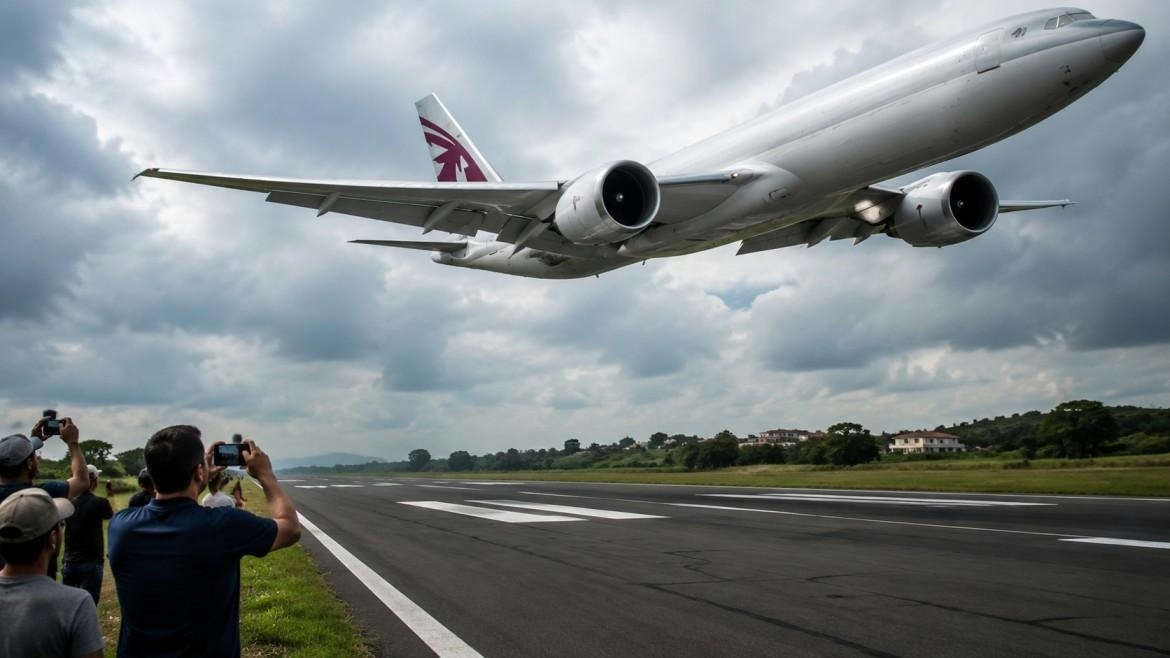
Low Flyby of Boeing 777F in Texas Sparks Safety Debate Among Pilots
Low Flyby of Boeing 777F in Texas Sparks Safety Debate Among Pilots
A low-altitude flyby by a Boeing 777F freighter over Horseshoe Bay Resort Airport in Texas on June 25, 2026, has sparked a widespread debate regarding aviation safety standards. The aircraft, registered N705DN and operated by Jetran LLC, was captured on video performing a dramatic pass mere feet above the ground during a pre-delivery test flight prior to its transfer to Qatar Airways Cargo. The footage quickly circulated on social media, drawing sharp criticism from pilots and safety experts who described the maneuver as reckless and inconsistent with established safety protocols.
The Incident Over Horseshoe Bay
The aircraft, initially delivered to Delta Air Lines in 2009 before being converted into a dedicated cargo platform, was conducting final acceptance procedures when it executed an unplanned low pass over Horseshoe Bay. Witnesses reported that the plane approached at an extremely low altitude with its landing gear fully retracted. During the flyby, the aircraft performed a right bank maneuver that brought one wingtip visually close to the runway, startling observers on the ground. The flight was en route between Grissom Aeroplex and Perot Field Fort Worth Alliance Airport but diverted over the airport associated with leasing operations. While acceptance flights are a routine part of aircraft delivery cycles, such visually dramatic low passes are rare and generally discouraged unless mandated by structured test protocols.
Industry Reaction and Ongoing Investigation
The viral video has divided the aviation community. Many pilots and analysts contend that the maneuver introduced unnecessary risks and could erode public confidence in aviation safety. Concerns have been raised about the lack of operational necessity for such a low-altitude pass, the heightened perception of risk to public safety, and questionable decision-making during a non-revenue flight. Jetran LLC, the operator responsible for the flight, issued a statement clarifying that the maneuver did not reflect its operational standards and has called for an investigation by the relevant authorities. The Federal Aviation Administration (FAA) has acknowledged the incident and confirmed that it is under review.
Qatar Airways Cargo, the intended recipient of the aircraft, emphasized that the flyby was not conducted by its pilots and did not involve its operational procedures. Meanwhile, China Airlines announced plans to acquire two additional Boeing 777Fs, highlighting the ongoing expansion of global freighter fleets and underscoring the importance of maintaining rigorous safety standards during such transitions.
Scrutiny of Safety Culture in Acceptance Flights
This incident has reignited discussions about the safety culture surrounding pre-delivery acceptance flights. These flights are typically designed to verify engine performance, systems integrity, avionics calibration, flight control response, structural and aerodynamic behavior, and compliance with regulatory certification standards. Safety experts emphasize that a robust safety culture is critical, particularly during non-revenue operations such as test and acceptance flights. The Horseshoe Bay flyby serves as a stark reminder of the necessity for industry-wide vigilance and strict adherence to operational protocols to preserve public trust and ensure aviation safety.

Hong Kong's Five-Year Plan Includes Andrew Fan's Aircraft Parts Processing Hub Proposal

ACIA Aero Leasing Delivers ATR72-600 to Air Nostrum

RTX Appoints Jill Albertelli as Head of Pratt & Whitney

TAT Technologies Joins Beyond Aero Hydrogen Aircraft Program

AURAK Study Highlights Barriers to Air Taxi Adoption in Emerging Economies

Xiamen Air Selects Altitude for 787 Maintenance at Heathrow

Etihad and Swissport Extend Global Partnership

Sepehran Airlines B737 Returns to Mashhad After Tyre and Engine Issues

Etihad Deploys Widebody Fleet to Meet Strong Demand

Korean Air Finalizes $36.2 Billion Deal with Boeing
