
Orchestrer les insights d’IA pour les transformer en actions

Tendances
Categories
Malaysia Aviation Group Expands Fleet with New Deliveries and Pending Order
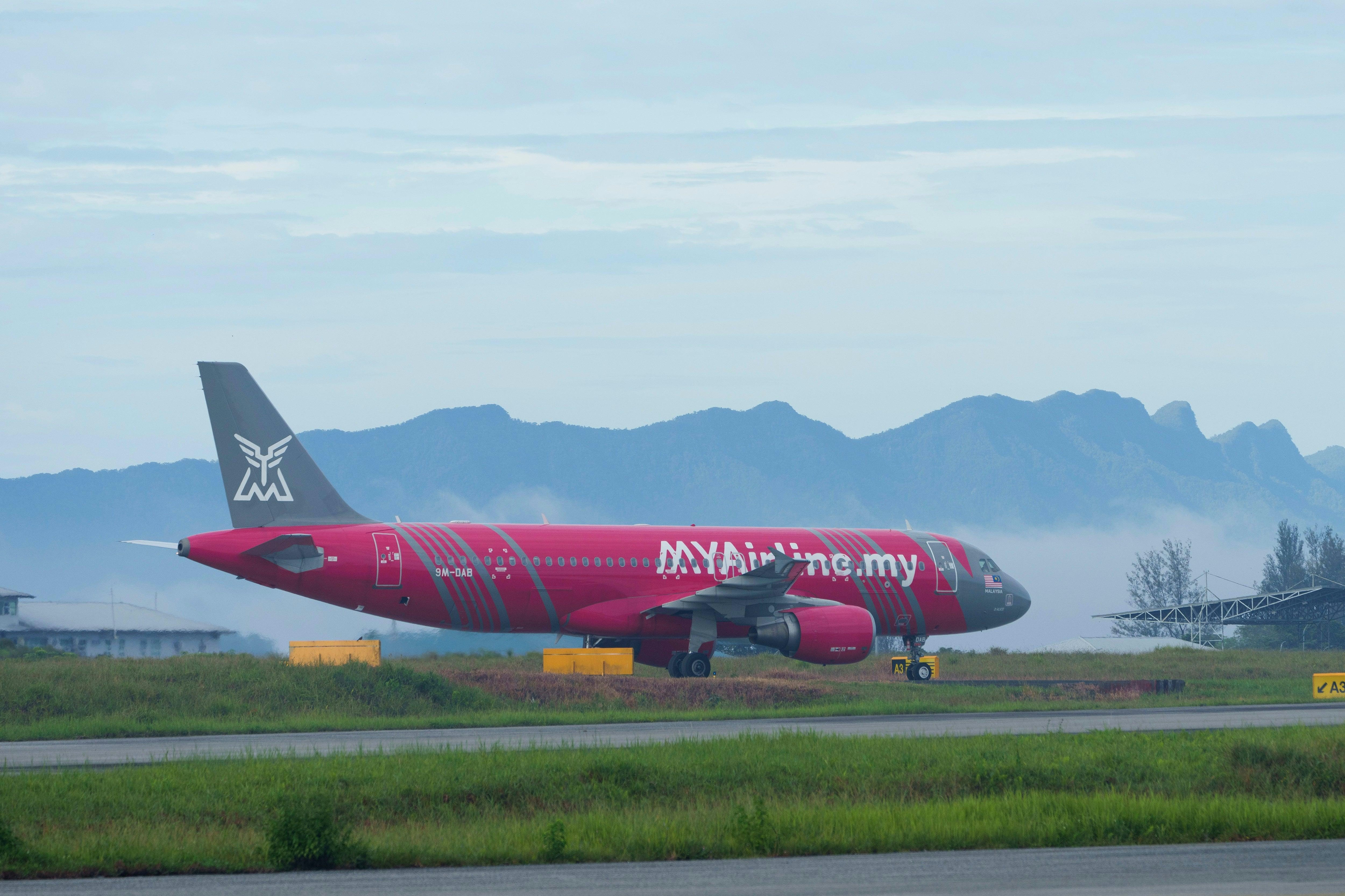
Malaysia Aviation Group Advances Fleet Modernisation Amid Strategic Transition
Malaysia Aviation Group (MAG), the parent company of Malaysia Airlines, is progressing with its comprehensive fleet renewal strategy as it prepares to select the next generation of widebody aircraft to replace its current long-haul fleet of leased Airbus A350s. This forthcoming decision represents the final major phase in MAG’s long-term passenger fleet modernisation plan, underscoring the group’s commitment to enhancing its operational capabilities and passenger experience.
Leadership Transition and Strategic Focus
The fleet renewal initiative has been a central priority under the leadership of MAG Managing Director Izham Ismail, who is scheduled to retire at the end of January 2026. The responsibility for overseeing the completion of this strategic plan will transition to his successor, former Chief Operating Officer Nasaruddin Bakar. This leadership change comes at a critical juncture as the group navigates complex market dynamics and operational challenges.
Delivery Delays and Capacity Expansion
MAG has encountered significant delays in the delivery of its existing orders for Boeing 737 MAX and Airbus A330neo aircraft, which have affected its capacity planning and operational flexibility. Nevertheless, recent improvements in delivery schedules are enabling the airline to expand its capacity and introduce upgraded cabin products, thereby enhancing the overall passenger experience. These developments are vital as MAG seeks to maintain competitiveness in a region marked by rapid aviation growth.
Financial and Operational Challenges
Despite these positive strides, MAG faces considerable financial and logistical challenges associated with acquiring new aircraft and integrating them into its existing operations. The high capital expenditure required for fleet renewal, coupled with the complexities of operational transition, demands careful management to ensure financial stability. Industry observers are closely monitoring MAG’s ability to execute this transition smoothly, particularly as regional competitors intensify their own fleet expansions.
Regional Competition and Market Dynamics
The competitive landscape in Southeast Asia and beyond is becoming increasingly dynamic. Ethiopian Airlines is expanding its Boeing MAX fleet while exploring new widebody options, and Philippine Airlines continues to augment its Airbus A320 fleet. Additionally, Boeing’s robust delivery performance in October 2025 has reinforced its position as a dominant player in the widebody market, a factor likely to influence MAG’s forthcoming fleet decisions.
As Malaysia Aviation Group advances its fleet renewal efforts, its capacity to balance operational efficiency, financial prudence, and competitive positioning will be pivotal. The outcome of the widebody aircraft selection campaign and the successful integration of new aircraft will significantly influence the airline’s future trajectory within a rapidly evolving global aviation environment.

Etihad Airways Suspends Airbus A380 Flights on Key Route

Aditya Birla Group Seeks Approval for Aircraft Leasing in GIFT City

Qatar Airways Highlights Innovation and Connectivity at Arabian Travel Market 2026

Hong Kong's Five-Year Plan Includes Andrew Fan's Aircraft Parts Processing Hub Proposal

ACIA Aero Leasing Delivers ATR72-600 to Air Nostrum

RTX Appoints Jill Albertelli as Head of Pratt & Whitney

TAT Technologies Joins Beyond Aero Hydrogen Aircraft Program

AURAK Study Highlights Barriers to Air Taxi Adoption in Emerging Economies

Xiamen Air Selects Altitude for 787 Maintenance at Heathrow

Etihad and Swissport Extend Global Partnership
