
Orchestrer les insights d’IA pour les transformer en actions

Tendances
Categories
Massachusetts startup developing AI copilots for military aircraft to go public
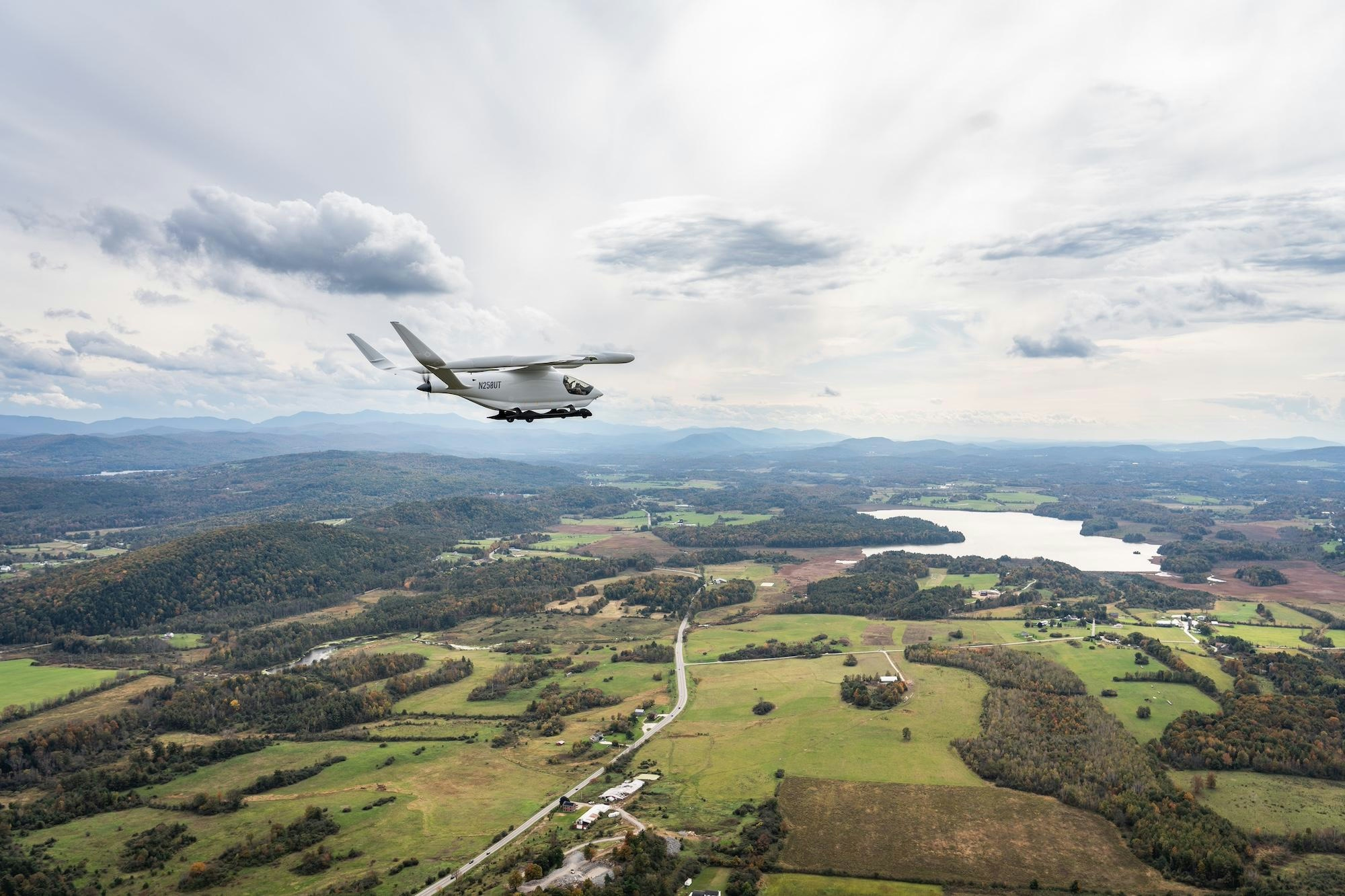
Massachusetts Startup Merlin Labs to Go Public with AI Copilots for Military Aircraft
Boston-based Merlin Labs, a pioneering startup developing artificial intelligence copilots for military aircraft, is preparing for a public listing in 2026 through a merger with Inflection Point Acquisition Corp. IV, a special purpose acquisition company (SPAC). This move positions Merlin as one of the first Massachusetts technology firms expected to enter the public markets next year, amid a period of heightened scrutiny and evolving investor sentiment toward AI companies.
Advancing Autonomous Flight Technology for Military Applications
Named after the iconic World War II aircraft engine, Merlin Labs is focused on creating AI systems that enable aircraft to operate autonomously from takeoff to landing. The company’s initial efforts concentrate on military platforms, including Boeing’s aerial refueling tanker and Lockheed Martin’s C130J Super Hercules cargo plane. In parallel, Merlin is pursuing Federal Aviation Administration certification for its AI technology on the Cessna Caravan, a small aircraft widely used in civilian cargo and passenger transport.
Merlin’s flagship product, the “Merlin Pilot,” is designed as an AI copilot capable of managing all pilot duties during flight. Rather than aiming to eliminate human pilots entirely, the company seeks to reduce cockpit crew requirements, potentially allowing military aircraft to operate with a single pilot or fewer relief pilots on extended missions. CEO Matt George emphasized the practical approach, stating, “If you are out there trying to say, ‘Hey, next year, we’re gonna take all the Air Force airplanes and they’re gonna fly with nobody aboard’… that’s not realistic. And if you’re waiting for that environment to be real before the Air Force adopts autonomy, we’re going to be waiting a really long time.”
Significant technical challenges remain, particularly in ensuring the AI can interact seamlessly with human air traffic controllers and collaborate effectively with onboard pilots. George explained that the system integrates on-screen data and spoken communication to provide context when the AI requires human assistance, underscoring the importance of human-machine interaction in the cockpit.
Growth, Funding, and Market Challenges Ahead
Operating out of Boston, Merlin conducts flight testing in New Zealand and North Kingstown, Rhode Island, with plans to open a new research and development facility at Hanscom Field in Bedford next year. The company currently employs approximately 200 staff and has raised $134 million from investors including First Round Capital and GV, Google’s venture capital arm. The upcoming SPAC merger is expected to inject an additional $200 million in funding to support Merlin’s growth and development.
Merlin’s planned public debut arrives amid a period of uncertainty for AI startups. The market is closely monitoring anticipated initial public offerings from major players such as SpaceX, Anthropic, and OpenAI, while skepticism persists regarding sustained investor appetite for high valuations in the AI sector. Venture capitalists predict that 2026 may see many AI startups face significant challenges or fail due to shifting funding landscapes and performance pressures. Merlin will need to navigate these complex market dynamics carefully to secure investor confidence and distinguish itself within a competitive and rapidly evolving industry.

Etihad Airways Suspends Airbus A380 Flights on Key Route

Aditya Birla Group Seeks Approval for Aircraft Leasing in GIFT City

Qatar Airways Highlights Innovation and Connectivity at Arabian Travel Market 2026

Hong Kong's Five-Year Plan Includes Andrew Fan's Aircraft Parts Processing Hub Proposal

ACIA Aero Leasing Delivers ATR72-600 to Air Nostrum

RTX Appoints Jill Albertelli as Head of Pratt & Whitney

TAT Technologies Joins Beyond Aero Hydrogen Aircraft Program

AURAK Study Highlights Barriers to Air Taxi Adoption in Emerging Economies

Xiamen Air Selects Altitude for 787 Maintenance at Heathrow

Etihad and Swissport Extend Global Partnership
