
Orchestrer les insights d’IA pour les transformer en actions

Tendances
Categories
NASA Software Raises Bar for Aircraft Icing Research
NASA Software Raises Bar for Aircraft Icing Research
Advancing Computational Modeling for Aircraft Safety
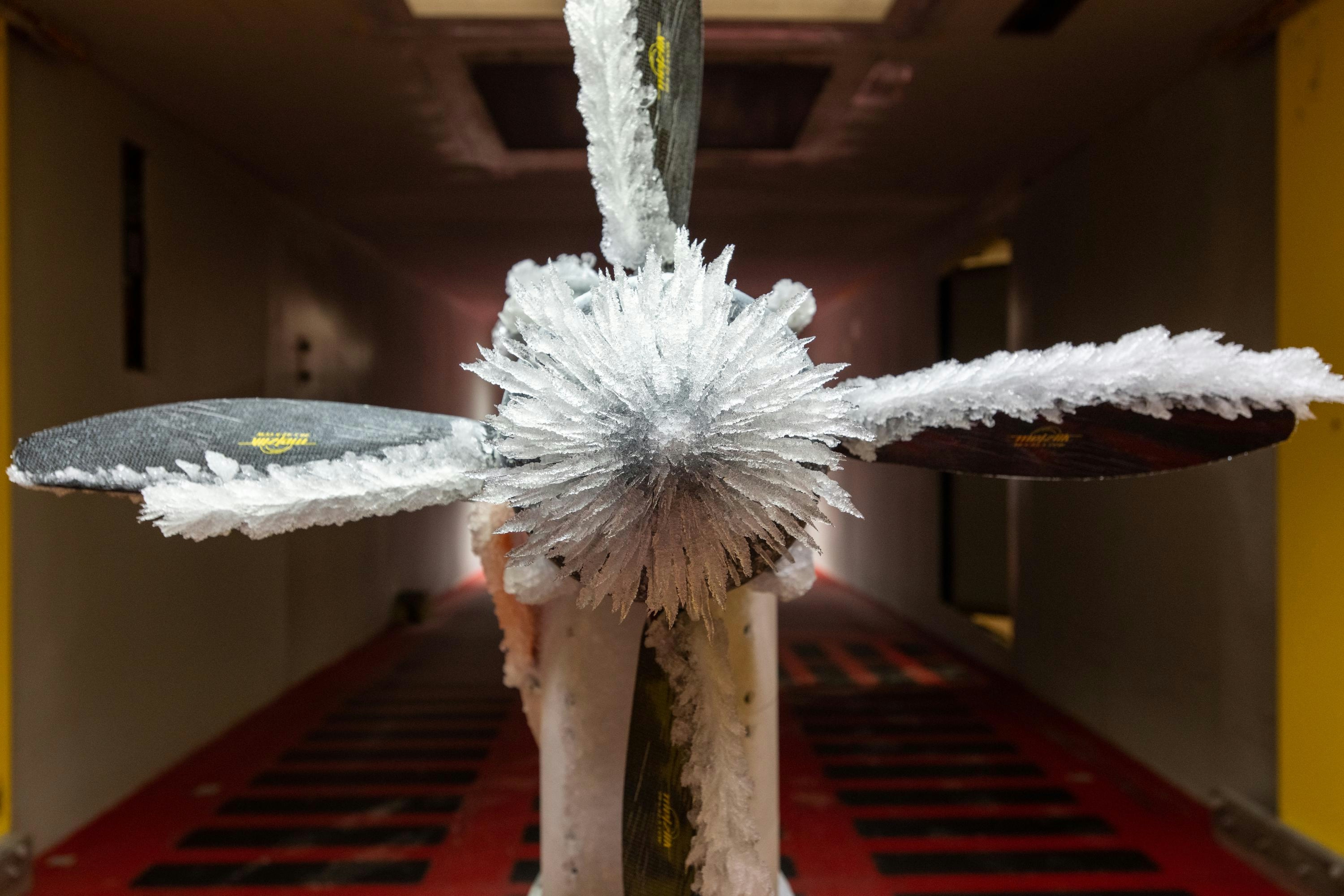
Researchers at NASA’s Glenn Research Center in Cleveland have developed the Glenn Icing Computational Environment (GlennICE), a sophisticated software tool that is redefining standards in aircraft safety by enabling detailed three-dimensional computational modeling of ice formation. This innovation is particularly significant for next-generation aircraft, including advanced air mobility rotors and unconventional wing configurations, where traditional icing prediction methods fall short.
In 2023, NASA conducted physical testing of an advanced rotor model within its Icing Research Tunnel to validate GlennICE’s computational forecasts. This validation is critical, as ice accumulation from freezing airborne water droplets continues to pose a serious hazard to aircraft operating in adverse weather conditions. GlennICE’s ability to accurately simulate these phenomena marks a substantial improvement over legacy software.
From Legacy Systems to Cutting-Edge Solutions
GlennICE builds upon decades of NASA research and represents a major advancement beyond earlier tools such as LEWICE 3D. While legacy codes were primarily designed for conventional tube-and-wing aircraft, GlennICE addresses the complexities introduced by modern aviation technologies. These include supersonic aircraft, unmanned drones, open-rotor turbofans, and aircraft with unconventional shapes. The software’s advanced digital modeling capabilities allow researchers to simulate the behavior of water and ice particles across a wide range of atmospheric conditions, providing unprecedented flexibility and precision.
Christopher Porter, the lead developer of GlennICE, emphasized the necessity of this evolution: “The legacy codes are well formulated to handle simulations of traditional tube-and-wing shaped aircraft. But now, we have new vehicles with new designs that present icing research challenges. This requires a more advanced tool, and that’s where GlennICE comes in.”
Industry Adoption and Future Challenges
GlennICE’s configurability and seamless integration with other software tools have streamlined the research process, reducing time requirements and enhancing adaptability to unique scenarios. This efficiency has garnered significant interest from the aviation sector, with numerous industry partners and government agencies adopting the software through NASA’s software catalog.
Despite its promise, the development and deployment of GlennICE face ongoing challenges. Ensuring robust performance across diverse conditions, integrating the software with existing aviation systems, and securing sustained funding remain critical hurdles. The growing engagement from the aviation industry may foster new partnerships and collaborations, potentially accelerating progress in aircraft safety research.
NASA’s advancements with GlennICE have also stimulated competitive responses within the aerospace sector, prompting other companies to explore their own software solutions for aircraft icing. As NASA continues to refine GlennICE, the software is positioned to play a pivotal role in the future of aircraft design, helping engineers mitigate ice-related risks and enhance safety for passengers and pilots worldwide.

Etihad Airways Suspends Airbus A380 Flights on Key Route

Aditya Birla Group Seeks Approval for Aircraft Leasing in GIFT City

Qatar Airways Highlights Innovation and Connectivity at Arabian Travel Market 2026

Hong Kong's Five-Year Plan Includes Andrew Fan's Aircraft Parts Processing Hub Proposal

ACIA Aero Leasing Delivers ATR72-600 to Air Nostrum

RTX Appoints Jill Albertelli as Head of Pratt & Whitney

TAT Technologies Joins Beyond Aero Hydrogen Aircraft Program

AURAK Study Highlights Barriers to Air Taxi Adoption in Emerging Economies

Xiamen Air Selects Altitude for 787 Maintenance at Heathrow

Etihad and Swissport Extend Global Partnership
