
Orchestrer les insights d’IA pour les transformer en actions

Tendances
Categories
Nesma Airlines Adds Two Wet-Leased Boeing 737s to Expand Regional Operations
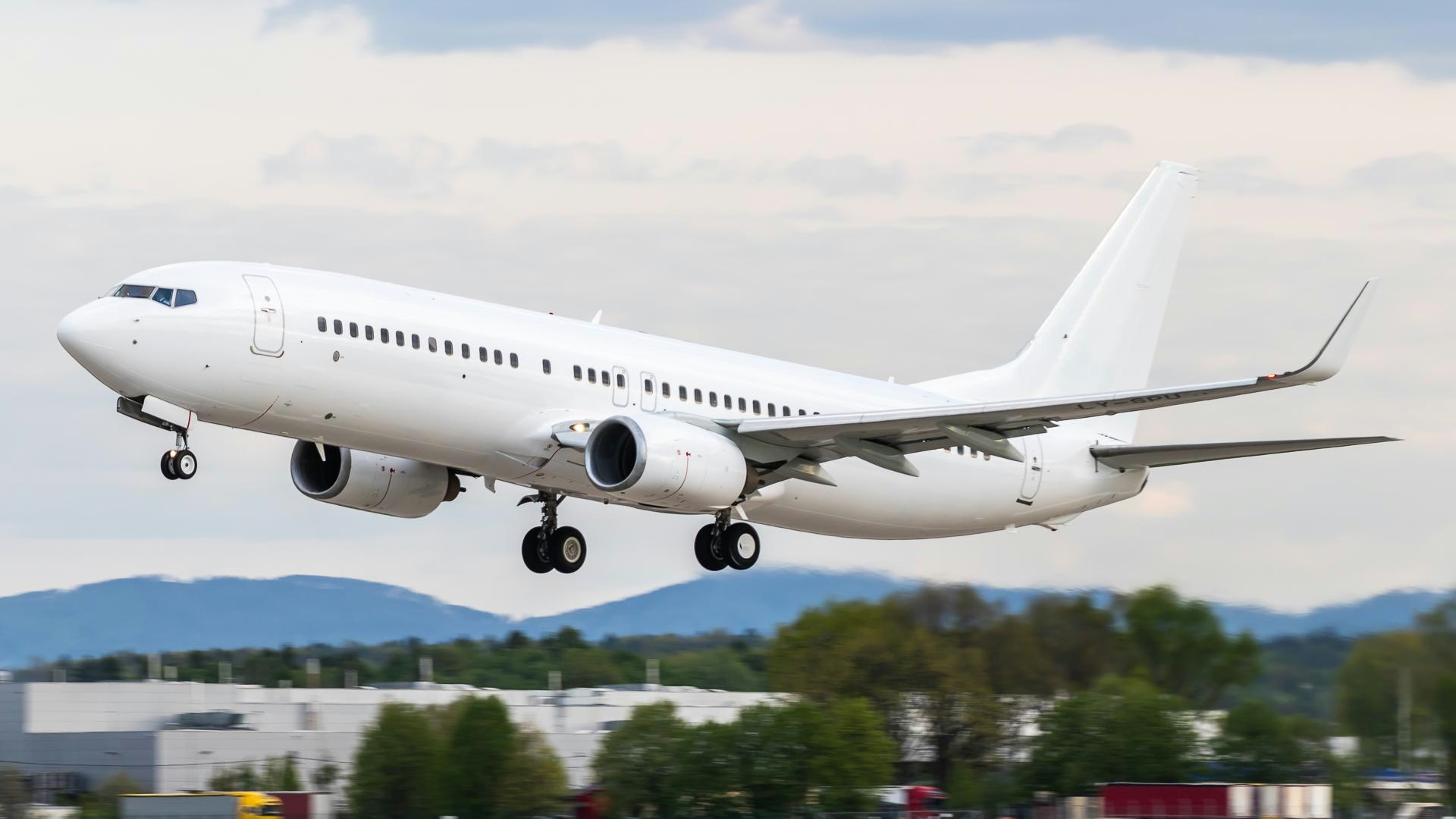
Nesma Airlines Expands Fleet with Two Wet-Leased Boeing 737s
Nesma Airlines has announced the addition of two wet-leased Boeing 737 aircraft to its fleet, a strategic move designed to strengthen its regional presence and increase capacity. This expansion is intended to enhance service on both domestic and regional routes, aligning with Egypt’s growing tourism sector and the broader recovery of air travel across the Middle East and North Africa (MENA) region.
The wet-lease agreement, which includes aircraft, crew, and maintenance, offers Nesma Airlines a flexible and cost-effective solution to scale operations without committing to long-term investments. This arrangement allows the airline to swiftly respond to rising demand as travel restrictions ease and both business and leisure travel resume momentum throughout the region.
Enhancing Regional Connectivity and Operational Efficiency
The introduction of the Boeing 737s represents a significant step in Nesma Airlines’ efforts to capture a larger share of the competitive regional market. These aircraft will primarily serve key domestic routes within Egypt while expanding services to neighboring destinations, providing more frequent flights for a diverse range of travelers.
Known for its versatility, fuel efficiency, and reliability, the Boeing 737 aligns well with Nesma Airlines’ operational objectives. Its capacity to accommodate passengers across business and economy classes makes it particularly suitable for short- and medium-haul routes. Additionally, the aircraft’s lower operating costs offer a competitive advantage in the busy airspaces of the MENA region.
Navigating a Competitive and Evolving Market
Nesma Airlines’ fleet expansion occurs amid intensifying competition within the MENA aviation sector. Regional carriers such as Air Cambodia have recently placed substantial orders for Boeing 737 Max aircraft, signaling aggressive growth strategies. At the same time, airlines including Eurowings and FlyDubai are expanding their fleets through wet-lease agreements and new aircraft acquisitions.
This competitive environment is likely to prompt adjustments in fleet composition and route networks among rival carriers as they seek to maintain or increase their market share. Nesma Airlines will need to carefully manage the integration of the new wet-leased aircraft into its operations while navigating regulatory requirements across multiple jurisdictions.
Supporting Egypt’s Tourism and Economic Recovery
The timely addition of these aircraft positions Nesma Airlines to better accommodate the surge in passenger demand and contribute to Egypt’s tourism recovery. By increasing capacity and improving connectivity, the airline is poised to play a pivotal role in supporting the country’s economic revival and enhancing its status as a regional travel hub.
As the MENA aviation market continues to evolve, Nesma Airlines’ agile approach—leveraging wet-leased Boeing 737s—underscores its commitment to meeting passenger needs, maintaining competitiveness, and fostering broader industry growth.

Etihad Airways Suspends Airbus A380 Flights on Key Route

Aditya Birla Group Seeks Approval for Aircraft Leasing in GIFT City

Qatar Airways Highlights Innovation and Connectivity at Arabian Travel Market 2026

Hong Kong's Five-Year Plan Includes Andrew Fan's Aircraft Parts Processing Hub Proposal

ACIA Aero Leasing Delivers ATR72-600 to Air Nostrum

RTX Appoints Jill Albertelli as Head of Pratt & Whitney

TAT Technologies Joins Beyond Aero Hydrogen Aircraft Program

AURAK Study Highlights Barriers to Air Taxi Adoption in Emerging Economies

Xiamen Air Selects Altitude for 787 Maintenance at Heathrow

Etihad and Swissport Extend Global Partnership
