
Orchestrer les insights d’IA pour les transformer en actions

Tendances
Categories
New aircraft carriers face years of delivery delays
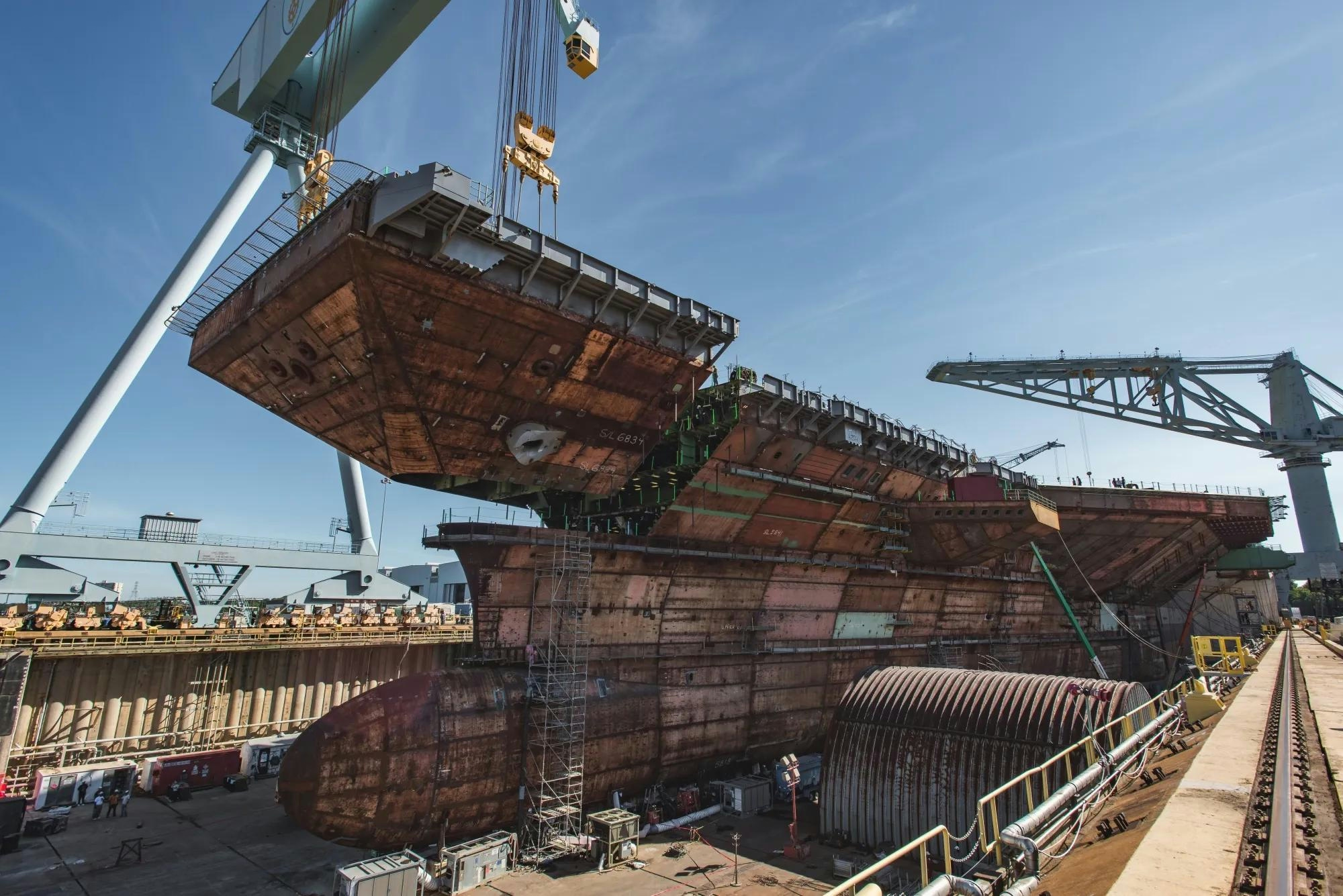
New Aircraft Carriers Face Significant Delivery Delays
The U.S. Navy’s next-generation aircraft carriers are encountering substantial setbacks, with delivery timelines extended by several years, according to recently released Navy budget documents. The Ford-class program, already plagued by repeated postponements, continues to face technological and supply chain difficulties that threaten to undermine naval readiness and the broader global maritime strategy.
Delays in Delivery and Technological Challenges
The USS John F. Kennedy, the Navy’s forthcoming Ford-class carrier, was initially scheduled for delivery this month. However, the Navy’s Fiscal Year 2026 budget justification now projects its delivery in March 2027, marking a two-year delay from the original timeline. This follows an earlier one-year postponement, intensifying concerns about the program’s schedule reliability. Similarly, the future carrier Enterprise has experienced a further delay, with its delivery date pushed from September 2029 to July 2030, after already being deferred from an initial 2028 target.
The budget documents attribute these delays primarily to “delays in material availability and industry/supply chain performance.” The Kennedy’s latest postponement is specifically linked to the completion of Advanced Arresting Gear (AAG) certification and ongoing work on the Advanced Weapons Elevator (AWE). Both systems represent significant technological advancements but have historically caused integration challenges. Although these systems are operational on the lead ship of the class, the USS Gerald R. Ford, their implementation on subsequent carriers has proven more complex than anticipated.
Broader Implications for Naval Modernization
These persistent delays reflect wider challenges confronting the Navy’s shipbuilding efforts. The Ford-class carriers incorporate new reactor and electric plants, advanced propulsion systems, and the Electromagnetic Aircraft Launch System, all central to the Navy’s fleet modernization ambitions. However, contractor-related equipment maintenance issues and the integration of cutting-edge technologies have resulted in “teething problems” not only within the carrier program but also in other initiatives, such as the Constellation-class frigate, which has suffered from incomplete functional design.
The repercussions of these delays extend beyond the shipyards. Analysts have expressed concern over the potential impact on U.S. naval capabilities and operational readiness, particularly if the number of active carriers temporarily declines. Such gaps could provide strategic opportunities for rival powers, who may accelerate their own naval development in response to perceived vulnerabilities in U.S. maritime dominance.
Admiral James Kilby, acting chief of naval operations, recently acknowledged the severity of the situation before the Senate Appropriations Subcommittee on Defense, stating, “We are behind in every ship class [by] different rates, but at least years.” In response, the Pentagon is pursuing measures to enhance ship manufacturing through new contracts, invest in unmanned systems, and modernize aging shipyards. These initiatives form part of a broader strategy to sustain U.S. naval superiority, particularly as the nation simultaneously seeks to increase submarine production under the Aukus trilateral security partnership with the United Kingdom and Australia.
As the Navy contends with these multifaceted challenges, the delays in delivering new aircraft carriers underscore the complexities inherent in modernizing a technologically advanced fleet amid evolving industrial and geopolitical pressures.

Etihad Airways Suspends Airbus A380 Flights on Key Route

Aditya Birla Group Seeks Approval for Aircraft Leasing in GIFT City

Qatar Airways Highlights Innovation and Connectivity at Arabian Travel Market 2026

Hong Kong's Five-Year Plan Includes Andrew Fan's Aircraft Parts Processing Hub Proposal

ACIA Aero Leasing Delivers ATR72-600 to Air Nostrum

RTX Appoints Jill Albertelli as Head of Pratt & Whitney

TAT Technologies Joins Beyond Aero Hydrogen Aircraft Program

AURAK Study Highlights Barriers to Air Taxi Adoption in Emerging Economies

Xiamen Air Selects Altitude for 787 Maintenance at Heathrow

Etihad and Swissport Extend Global Partnership
