
Orchestrer les insights d’IA pour les transformer en actions

Tendances
Categories
New Developments Reshaping the Flying Taxi Market
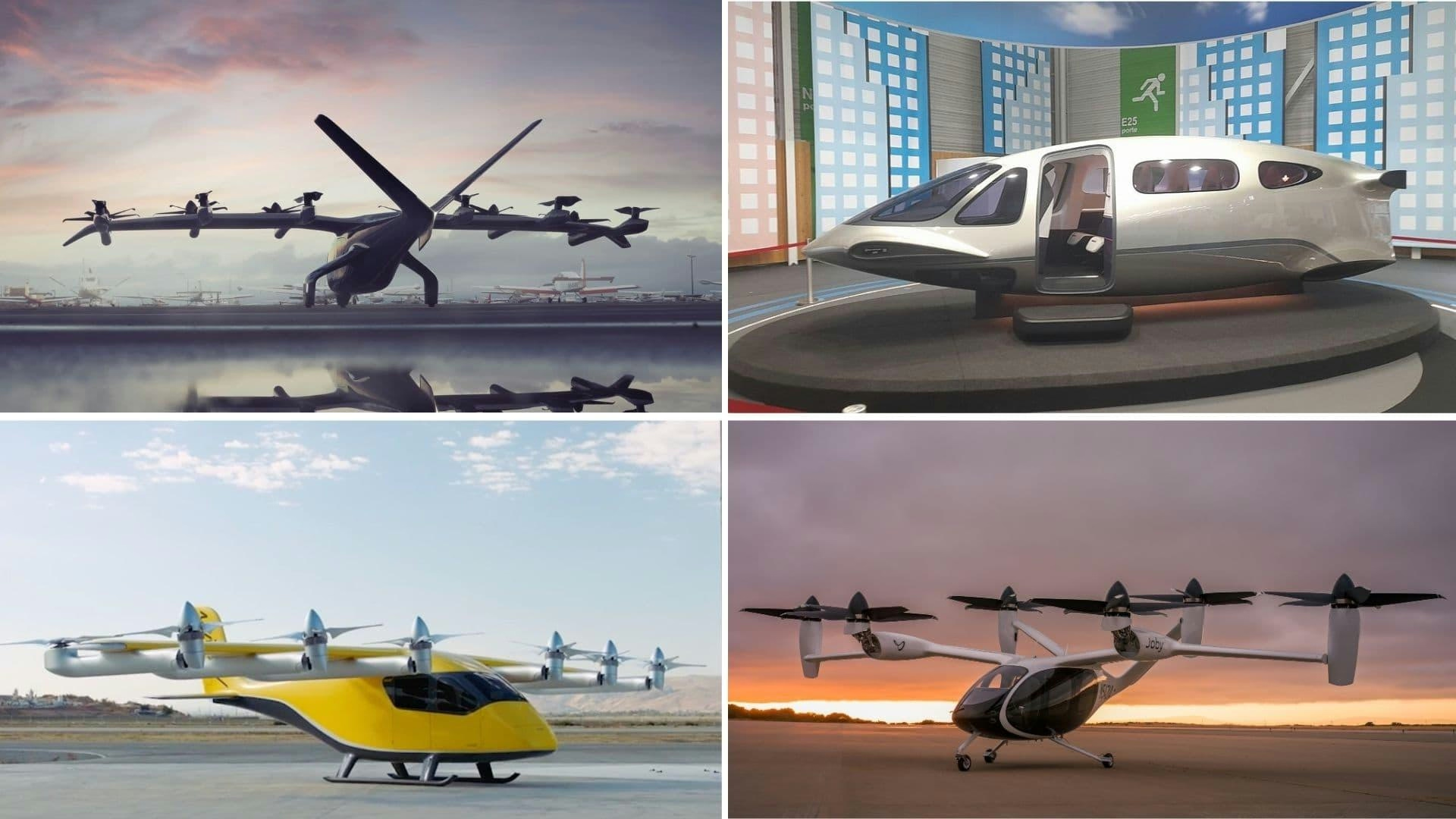
New Developments Reshaping the Flying Taxi Market
The concept of flying taxis is swiftly evolving from a futuristic vision into a tangible solution for urban transportation challenges. Fueled by rapid technological advancements and substantial financial investment, the flying taxi sector is on the cusp of significant expansion. This emerging mode of transport aims to alleviate urban congestion and transform the way cities manage mobility.
Market Growth, Industry Dynamics, and Challenges
Industry forecasts project the global flying taxi market to reach an estimated value of $9.54 billion by 2030, driven by a compound annual growth rate of 21.1%. This growth is underpinned by increased investment in the production of commercial-scale electric vertical takeoff and landing (eVTOL) aircraft, alongside breakthroughs in autonomous flight technologies that promise enhanced safety and reduced reliance on human pilots. The rising demand for environmentally sustainable transport solutions is also a critical factor, encouraging the adoption of zero-emission electric air taxis. Complementing these developments is the creation of dedicated infrastructure, such as vertiports, designed to support the operational needs of flying taxis, as well as progressive regulatory frameworks facilitating certification and commercialization.
Key technological trends shaping the market include innovations in lightweight materials, advanced electric propulsion systems, and sophisticated autonomous navigation software. The sector is witnessing growth not only in intracity air mobility but also in intercity services, with increasing interest in multi-seat air taxis tailored for urban transit.
Leading corporations in this space encompass a diverse group of aerospace and automotive giants, including Hyundai Motor Company, Boeing, Airbus, Zhejiang Geely, Cessna, Dassault Aviation, Textron, Vertical Aerospace, Archer Aviation, Embraer, Bell Textron, Joby Aviation, Wisk Aero, and Volocopter. These entities are heavily investing in research and development to expedite the global rollout of flying taxi services. Strategic collaborations are further accelerating progress; notably, in January 2025, Indian startup ePlane formed a partnership with Tata Consultancy Services (TCS) to develop advanced digital and engineering solutions for urban air mobility. This alliance leverages TCS’s expertise in cloud computing, the Internet of Things, and artificial intelligence to improve operational efficiency and enhance passenger experience.
Despite the promising outlook, the flying taxi market confronts significant challenges. The current high cost of eVTOL services limits accessibility primarily to affluent individuals, which may disrupt traditional charter flight operators and executive jet manufacturers. Investor sentiment remains mixed, with optimism tempered by economic uncertainties and ongoing regulatory complexities. Market volatility is further influenced by factors such as Federal Reserve policy debates and fluctuating economic indicators anticipated in 2026, which could complicate the sector’s trajectory.
Responses among competitors vary widely. Companies like Joby Aviation and Vertical Aerospace are advancing steadily through testing phases and regulatory compliance, while established automakers are exploring hybrid road-to-air vehicle concepts. Additionally, some industry leaders are investigating specialized applications, including advanced flying firefighting vehicles, to differentiate themselves in a competitive landscape.
As the flying taxi industry continues to mature, the interplay between innovation, investment, regulatory progress, and market acceptance will be pivotal in determining the speed and scale at which these aerial mobility solutions become integrated into mainstream urban transportation.

Etihad Airways Suspends Airbus A380 Flights on Key Route

Aditya Birla Group Seeks Approval for Aircraft Leasing in GIFT City

Qatar Airways Highlights Innovation and Connectivity at Arabian Travel Market 2026

Hong Kong's Five-Year Plan Includes Andrew Fan's Aircraft Parts Processing Hub Proposal

ACIA Aero Leasing Delivers ATR72-600 to Air Nostrum

RTX Appoints Jill Albertelli as Head of Pratt & Whitney

TAT Technologies Joins Beyond Aero Hydrogen Aircraft Program

AURAK Study Highlights Barriers to Air Taxi Adoption in Emerging Economies

Xiamen Air Selects Altitude for 787 Maintenance at Heathrow

Etihad and Swissport Extend Global Partnership
