
Orchestrer les insights d’IA pour les transformer en actions

Tendances
Categories
New Electric Plane Advances Viability of Electric Aviation
New Electric Plane Advances Viability of Electric Aviation
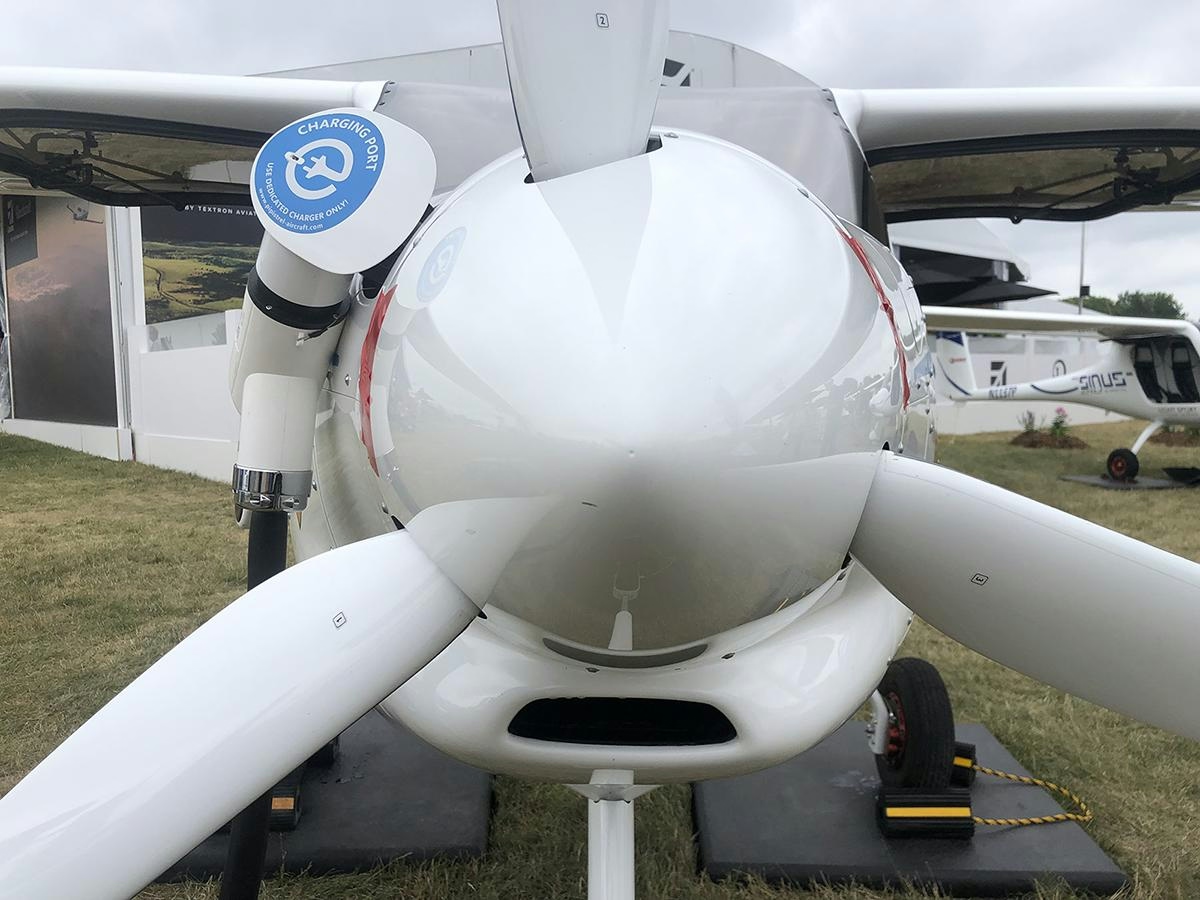
Electric vehicle technology has been steadily transforming various modes of transportation, from cars to scooters. However, aviation remains a sector where battery-powered solutions continue to lag behind traditional fuel-burning engines, primarily due to weight and range limitations. The challenge for electric aircraft lies in the fact that every additional battery increases weight, which in turn reduces payload capacity and flight range. Moreover, the high cost of batteries further complicates the widespread adoption of electric planes. Despite these obstacles, a Vermont-based startup is adopting a pragmatic approach that could mark a significant turning point for electric aviation.
A Practical Approach to Electric Flight
Beta Technologies has developed the Alia CX300, an electric aircraft designed not as a futuristic flying car but as a practical solution for short-haul flights. Rather than pursuing ambitious sci-fi concepts, Beta’s design targets real-world applications such as package delivery and organ transport—areas where cleaner and quieter flight could have an immediate and meaningful impact. This focus on utilitarian use distinguishes the Alia CX300 from many other electric aircraft projects that emphasize personal air taxis or eVTOLs, which often remain inaccessible to the broader public.
The environmental footprint of aviation is substantial, with millions of gallons of jet fuel and leaded gasoline consumed annually. The industry is increasingly aware of its pollution problem and is actively pursuing cleaner alternatives. While unleaded aviation gasoline is gradually replacing leaded fuel, the ultimate objective remains the complete elimination of combustion engines. Electric flight holds promise in this regard but is currently constrained by the limitations of battery technology. Unlike automobiles, which can accommodate large and heavy battery packs, aircraft must minimize weight to ensure efficiency and safety. Consequently, most electric planes today are restricted to short flights between nearby cities.
Progress and Industry Momentum
Recent developments indicate growing momentum in the field of electric aviation. The Alia CX300 recently completed a test flight in Norway, a country recognized as a leader in adopting electric aviation technologies. Norway’s airport authority, Avinor, is actively promoting electric commercial flights on short routes, reflecting increasing market enthusiasm for cleaner alternatives. The successful test flight highlights both the progress made and the challenges that remain, particularly regarding battery lifespan and the high power demands associated with rapid charging.
The positive market response has attracted attention from major industry players. GE Aerospace, for instance, has invested in Beta Technologies, signaling a broader competitive push toward hybrid-electric and fully electric advanced air mobility solutions. This investment underscores the growing seriousness with which established aerospace companies are approaching the electrification of flight.
While many electric aircraft initiatives focus on high-profile concepts such as air taxis and personal eVTOLs, Beta’s Alia CX300 stands out for its grounded, utilitarian design. Rather than promising a revolution in personal transportation, it aims to make existing aviation cleaner and more efficient in sectors where it can have the most immediate impact.
The path ahead remains challenging. Battery technology must advance significantly, particularly in terms of energy density and charging infrastructure, before electric planes can compete with their fossil-fueled counterparts on longer routes. Nevertheless, with practical designs like the Alia CX300 gaining traction and receiving support from regulators and industry leaders alike, the viability of electric aviation is progressing more rapidly than ever before.

Etihad Airways Suspends Airbus A380 Flights on Key Route

Aditya Birla Group Seeks Approval for Aircraft Leasing in GIFT City

Qatar Airways Highlights Innovation and Connectivity at Arabian Travel Market 2026

Hong Kong's Five-Year Plan Includes Andrew Fan's Aircraft Parts Processing Hub Proposal

ACIA Aero Leasing Delivers ATR72-600 to Air Nostrum

RTX Appoints Jill Albertelli as Head of Pratt & Whitney

TAT Technologies Joins Beyond Aero Hydrogen Aircraft Program

AURAK Study Highlights Barriers to Air Taxi Adoption in Emerging Economies

Xiamen Air Selects Altitude for 787 Maintenance at Heathrow

Etihad and Swissport Extend Global Partnership
