Image

AeroGenie — Votre copilote intelligent.

Posez n'importe quelle question. Analysez tout. Agissez instantanément.

Tendances

Categories

New Tower and MRO Facility Support Growth at KOJC and KIXD
February 1, 2026By ePlane AI
New Tower and MRO Facility Support Growth at KOJC and KIXD
0
0
Johnson County Executive Airport
New Century AirCenter
MRO Facility

New Tower and MRO Facility Support Growth at KOJC and KIXD

Major Infrastructure Investments at Johnson County Airports

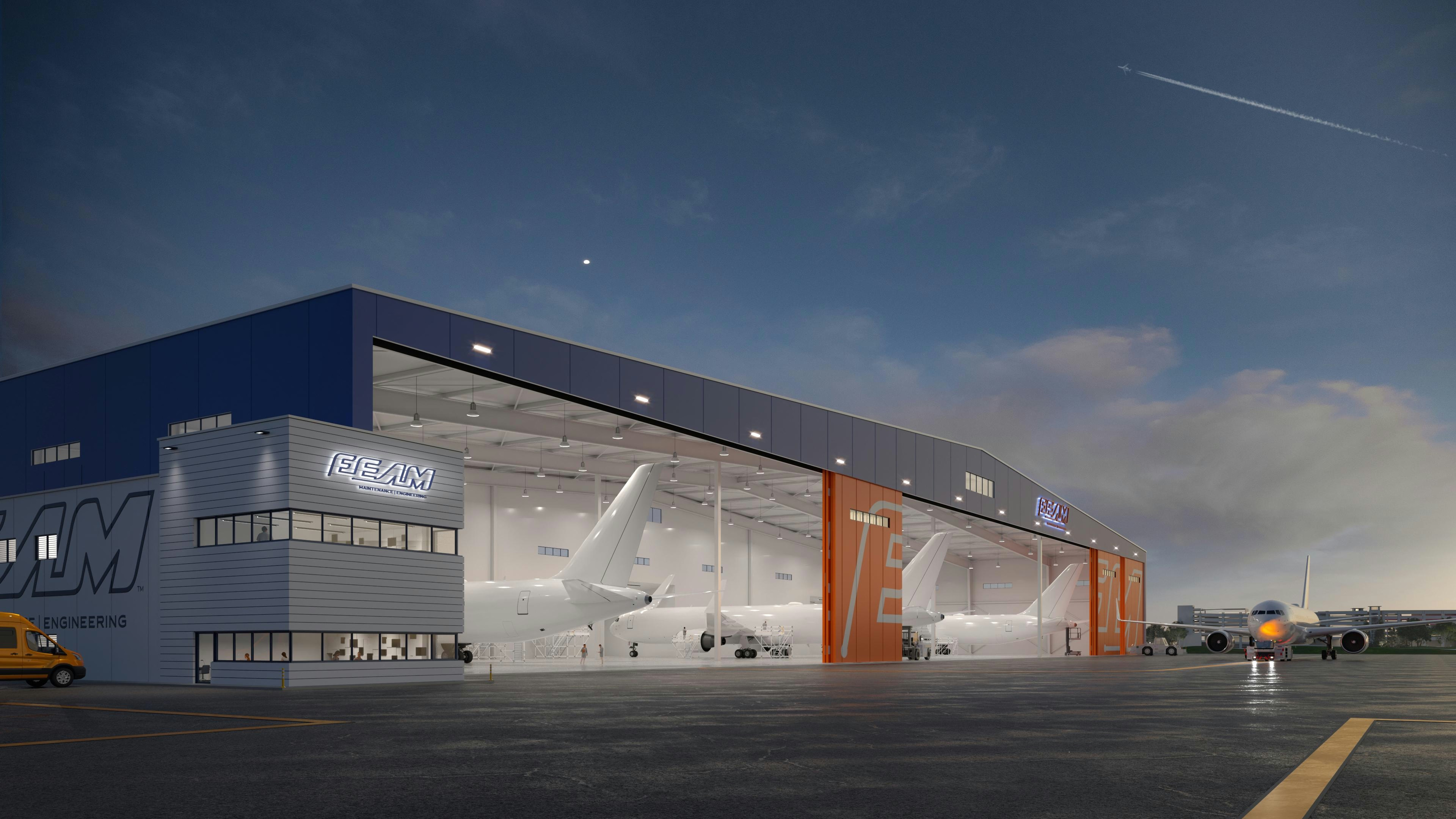
Johnson County Executive Airport (KOJC) in Kansas and New Century AirCenter (KIXD) in Olathe are undergoing significant transformations, marked by major infrastructure projects and economic milestones. In 2025, the Johnson County Airport Commission (JCAC) announced the advancement of a $20 million maintenance, repair, and overhaul (MRO) facility at KIXD, signaling a strategic effort to enhance the region’s aviation capabilities.

The Dream Air New Century project, situated on an eight-acre site, will include a new terminal and two hangars, positioning New Century AirCenter as a prominent aviation hub. Bryan Johnson, JCAC’s executive director, emphasized the importance of the development, stating that it represents a decisive move to build capacity for future growth. In response to increasing demand in business aviation, the commission also finalized a five-acre lease for a 20,000-square-foot corporate jet hangar at KIXD, further expanding the airport’s infrastructure.

Upgrades and Funding at Johnson County Executive Airport

At KOJC, the final phase of T-hangar renovations is underway, focusing on the reconstruction of rows Mike and November. The airport is poised for accelerated infrastructure improvements following the receipt of a record $21 million grant from the Federal Aviation Administration (FAA). This funding is designated for the complete reconstruction of Runway 18-36, which is the second-longest runway in the Kansas City metropolitan area. Additionally, KOJC secured $15 million in federal funds to replace its existing 80-year-old air traffic control tower. The new tower is projected to be operational by early 2028, enhancing operational safety and efficiency.

Market Dynamics and Economic Impact

The expansion at KIXD coincides with a growing MRO market, driven by strong global air traffic and increased demand for aftermarket support for older aircraft models. This growth is expected to attract heightened investor interest and may prompt competitors to intensify marketing efforts and develop new facilities to capture market share. Despite these opportunities, KOJC and KIXD face challenges related to maintaining competitive pricing, adapting to evolving regulatory frameworks, and managing potential supply chain disruptions.

JCAC officials highlighted the broader economic significance of these developments, noting that the airports collectively contribute more than $1.1 billion annually to the local and regional economy and support nearly 5,000 jobs. These investments underscore the airports’ roles as vital engines of economic growth in the region.

For further details, visit JoCoGov.org.

More news
Here’s How Far The Airbus A380 Can Fly Without Refueling

Here’s How Far The Airbus A380 Can Fly Without Refueling

Here’s How Far The Airbus A380 Can Fly Without Refueling When the Airbus A380 entered commercial service nearly two decades ago, it transformed long-haul air travel with its exceptional range and passenger capacity. Designed to carry several hundred passengers between major international hubs, the A380 enabled airlines to operate some of the world’s longest routes at a comparatively low operating cost—provided the aircraft was consistently filled to capacity. The A380’s Maximum Range and Operational Capabilities Airbus states that the A380 can cover up to 8,000 nautical miles (approximately 14,800 kilometers) in a typical four-class configuration seating 545 passengers. Engine Alliance, the manufacturer of one of the A380’s engine options, suggests the range can extend to 8,200 nautical miles (around 15,200 kilometers), depending on the payload. The aircraft’s actual range fluctuates with the number of passengers and cargo onboard, as increased weight results in higher fuel consumption. This extensive range allows the A380 to service ultra-long-haul routes such as London to Singapore, Dubai to Los Angeles, and Dubai to Auckland, the latter spanning 7,668 nautical miles (14,202 kilometers). Some of the longest scheduled flights, including Sydney to Dallas/Fort Worth at 7,474 nautical miles (13,840 kilometers), keep the aircraft in the air for over 14 hours. Although the A380 is theoretically capable of flying nonstop for up to 16 hours, regulatory requirements mandating fuel reserves mean this maximum duration is seldom reached in commercial operations. Technological Innovations Underpinning the Range The A380’s remarkable range is the product of several key technological advancements. Its efficient turbofan engines deliver substantial thrust while minimizing fuel burn. The aircraft’s wing and airframe incorporate approximately 25% composite materials, reducing overall weight and enhancing fuel efficiency despite its large size. Additionally, the A380 boasts an enormous fuel capacity, holding up to 84,535 US gallons (320,000 liters) distributed across 11 tanks primarily located in the wings. Sophisticated automated systems continuously manage fuel distribution to maintain optimal balance and efficiency throughout the flight. These innovations enabled the A380 to excel within the hub-and-spoke model of air travel, transporting large numbers of passengers between major airports at a lower cost per seat mile than many other widebody aircraft. However, this advantage depended heavily on airlines’ ability to consistently fill the aircraft to near capacity. Challenges and the Evolving Aviation Landscape Despite its engineering achievements, the A380 faces mounting challenges in today’s aviation environment. Geopolitical tensions, such as recent airspace closures related to the U.S.-Israeli conflict with Iran, have disrupted long-haul routes, forcing airlines to cancel flights or adopt longer detours. These developments have directly affected the operational viability of ultra-long-range aircraft like the A380. Coupled with rising oil prices, these factors have unsettled airline stocks and raised questions about the sustainability of operating large, fuel-intensive jets. In response, many carriers are transitioning toward more fuel-efficient twin-engine widebodies, including the Airbus A350 and the forthcoming Boeing 777X, which offer comparable range with lower operating costs. The industry is also investing in sustainable aviation fuels and exploring next-generation propulsion technologies, such as hydrogen-powered and hybrid-electric engines, which may significantly alter the future of long-haul air travel. While the Airbus A380 remains a remarkable feat of aerospace engineering, its dominance is increasingly challenged by technological advancements, shifting market dynamics, and the unpredictable realities of global aviation.
AI and Machine Learning in the 2026 Marine Aviation Sustainment Plan

AI and Machine Learning in the 2026 Marine Aviation Sustainment Plan

AI and Machine Learning Transform the 2026 Marine Aviation Sustainment Plan The 2026 Marine Aviation Plan represents a significant evolution in the Marine Corps’ approach to aviation readiness, placing artificial intelligence (AI) and machine learning (ML) at the heart of a new predictive sustainment model. This strategic shift departs from decades of reactive maintenance and supply practices, aiming to establish a data-driven framework that anticipates operational needs and enhances agility. Such innovation is particularly critical as Marine Aviation confronts the challenge of maintaining high readiness levels across dispersed and austere environments with limited logistical support. The plan candidly acknowledges the current limitations: “Marine Corps Aviation remains reactive in maintenance, supply, and operations planning, limiting readiness and reducing the ability to sustain distributed aviation operations and crisis response.” Traditional sustainment models, which rely on centralized maintenance, predictable supply chains, and steady operational tempos, are increasingly inadequate for Distributed Aviation Operations (DAO) in contested regions such as the Indo-Pacific. In these scenarios, the conventional practice of returning aircraft to main bases for scheduled maintenance or enduring lengthy waits for parts is no longer viable. A New Sustainment Paradigm: Dynamic Supply, Predictive Maintenance, and Optimized Operations To overcome these challenges, the AI and ML sustainment initiative is organized around three integrated Lines of Operation: Dynamic Aviation Supply, Predictive Maintenance, and Optimized Operations. Together, these efforts seek to establish a seamless data flow between maintenance, supply, and operational functions. AI and ML algorithms will uncover patterns beyond human detection, enabling Marines to anticipate and mitigate failures before they degrade combat readiness. This approach signifies a fundamental reimagining of how the Marine Corps sustains its aviation combat power rather than a mere incremental improvement. The first line of effort, Dynamic Aviation Supply, tackles the persistent difficulty of ensuring the timely availability of the right parts, especially when operating from widely dispersed and austere locations. Traditional supply packages, which are based on historical averages and stable environments, falter when squadrons operate from multiple Forward Arming and Refueling Points (FARPs) or expeditionary airfields where resupply opportunities are irregular. Dynamic Aviation Supply envisions adaptive, AI-driven spare parts packages that respond in real time to operational conditions and evolving aircraft configurations. Machine learning algorithms will analyze extensive datasets—including aircraft configurations, operational tempo, environmental conditions, mission profiles, and component failure rates—to identify subtle patterns. For example, AI can detect that F-35B aircraft operating in high-temperature, high-humidity maritime environments with specific weapons loads experience distinct wear patterns compared to those based at temperate locations. Integration Challenges and Broader Implications Despite its promise, the integration of AI and ML into Marine Aviation sustainment faces significant challenges. Rapid technological adoption is essential, yet ensuring interoperability with existing legacy systems remains a formidable obstacle. Additionally, the high costs associated with advanced AI capabilities present considerable budgetary constraints. Beyond the military domain, these technological advancements are influencing the defense industry and financial markets. Investor responses to AI-driven developments have been marked by volatility, oscillating between panic selling and euphoric rallies. Concurrently, competitors are accelerating their own research and development efforts, forging strategic partnerships, and pursuing acquisitions to maintain pace with the Marine Corps’ technological advancements. As the 2026 Marine Aviation Plan progresses, its success will hinge not only on the transformative potential of AI and machine learning but also on the Marine Corps’ capacity to manage the complexities of integration, cost, and a rapidly evolving technological environment.
The Role of American Propulsion in Future Global UAV Missions

The Role of American Propulsion in Future Global UAV Missions

The Role of American Propulsion in Future Global UAV Missions Advancing UAV Propulsion Through Strategic Innovation The global unmanned aerial systems (UAS) sector is experiencing a significant transformation driven by escalating geopolitical tensions and an increasing demand for sophisticated intelligence capabilities. Central to this evolution is Northwest UAV (NWUAV), an Oregon-based company that has emerged as a pivotal force within the American UAV propulsion industry. NWUAV’s approach is anchored in three strategic pillars: the Single-Fuel Mandate, Supply Chain Sovereignty, and Vertical Integration. Through these initiatives, the company is not only manufacturing advanced engines but also strengthening the resilience of national security infrastructure. The Single-Fuel Mandate addresses a longstanding logistical challenge faced by military operations, which have traditionally managed multiple fuel types across different platforms. While ground vehicles and manned aircraft commonly utilize heavy fuels such as JP-8, many tactical UAVs have depended on high-octane gasoline, creating a complex and potentially hazardous dual-fuel environment. NWUAV’s portfolio of heavy-fuel engines—including the NW-44, NW-88, and NW-230—is engineered to operate efficiently on the same fuels already deployed in military theaters. These multi-fuel systems streamline logistics, enhance operational safety, and improve survivability, aligning closely with NATO’s “Single Fuel” initiative. Moreover, NWUAV engines are capable of performing at density altitudes up to 36,000 feet, enabling seamless mission launches from a variety of environments while reducing logistical burdens and associated risks. Ensuring National Security Through Domestic Manufacturing As the drone industry matures, dependence on global supply chains has evolved from a matter of convenience to a critical vulnerability. Foreign-manufactured propulsion components pose risks including embedded “kill switches,” data breaches, and abrupt supply interruptions. In response, NWUAV has committed since 2013 to developing a fully American-made propulsion stack, consolidating all design, manufacturing, and support operations at its AS9100D-certified facility in McMinnville, Oregon. This reshoring effort guarantees that U.S. defense contractors and agencies have access to propulsion systems free from adversarial influence. The company’s adherence to EAR99 export approval and stringent American aerospace standards provides customers with transparency and reliability—factors that are increasingly vital as secure supply chains and trusted microelectronics become top priorities for the Department of Defense. Navigating Global Competition and Emerging Opportunities Despite these technological and strategic advancements, American propulsion manufacturers face formidable competition from established foreign entities, particularly China, which has rapidly expanded its drone industry. With signals from Congress and the current administration indicating increased investment in revitalizing the domestic drone sector, demand for American-made propulsion systems is anticipated to grow substantially. This development may prompt intensified efforts by foreign competitors to maintain their market share, while U.S. companies like NWUAV capitalize on their domestic manufacturing capabilities and national security advantages. The escalating global threat posed by drones, as emphasized by leaders of counter-drone task forces, highlights the urgent need for advanced and secure propulsion solutions. In this context, American propulsion technology is positioned to play a critical role in shaping the future of global UAV missions, offering not only innovation but also the assurance of supply chain integrity and operational security.
Joby Electric Air Taxi Conducts Test Flights at Half Moon Bay Airport Following FAA Approval

Joby Electric Air Taxi Conducts Test Flights at Half Moon Bay Airport Following FAA Approval

Joby Electric Air Taxi Conducts Test Flights at Half Moon Bay Airport Following FAA Approval Joby Aviation, a prominent developer of electric vertical takeoff and landing (eVTOL) aircraft, has recently completed a series of test flights at Half Moon Bay Airport (HAF) after securing approval from the Federal Aviation Administration (FAA). These flights represent a pivotal step for the California-based company as it moves closer to launching commercial air taxi services. Advancing Urban Air Mobility The test flights, conducted with the collaboration of airport personnel and partners, took place over the Moss Beach Distillery and featured Joby’s all-electric air taxi. Designed to provide fast, quiet, and convenient urban transportation, the aircraft is central to Joby’s vision of operating its own air taxi service in cities worldwide, alongside plans to sell the aircraft to other operators. This progress aligns with a broader surge of interest and investment in urban air mobility, reflecting growing optimism about the future of electric air taxis. Industry Context and Challenges Ahead Joby’s recent FAA approval has been met with enthusiasm from investors, yet the company faces a competitive environment. Rivals such as Archer Aviation and Beta Technologies are also intensifying their testing and certification efforts in response to Joby’s advancements. Despite the successful test flights, Joby must still overcome significant challenges before commencing commercial operations. These include ongoing regulatory scrutiny as the company pursues full FAA certification, as well as technical and manufacturing hurdles related to scaling production and meeting rigorous safety and performance standards. Joby has announced plans to initiate early operations under the FAA’s eVTOL Integration Pilot Program (eIPP) in 2026. The company aims to increase manufacturing capacity to four aircraft per month by 2027, with a long-term goal of producing up to 500 aircraft annually at its Ohio facilities. The Future of Electric Air Taxis The urban air mobility sector is rapidly evolving, with companies competing to secure regulatory approvals and establish market leadership. The growth of this industry will depend on continued technological innovation, effective regulatory collaboration, and public acceptance of electric air taxis as a practical mode of transportation. For further details on Joby Aviation and its developments, visit www.jobyaviation.com.
Japan Delays JSM Deployment Due to F-35A Software Issues

Japan Delays JSM Deployment Due to F-35A Software Issues

Japan Postpones Deployment of Joint Strike Missile for F-35A Fleet Amid Software Integration Challenges Japan has delayed the operational deployment of the Kongsberg Joint Strike Missile (JSM) for its F-35A fighter jets due to unresolved software integration issues. This setback underscores ongoing difficulties within the broader F-35 program, which have affected multiple international operators. Software Development Delays Hamper Operational Readiness The Japan Air Self-Defense Force (JASDF) recently received its initial shipment of JSMs, transported from Norway aboard a Boeing KC-767 tanker. Despite this delivery, JASDF Chief of Staff Hiroaki Uchikura confirmed that the missiles are not yet ready for operational use. The F-35A aircraft require further software development to fully integrate and employ the new weapon system. “The launch platform for the JSM is the F-35A,” Uchikura stated in Tokyo. “Currently, software development on the aircraft side necessary to operate the JSM is underway. We will continue coordinating with the U.S. government so that Japan can begin operating the JSM as soon as possible.” When asked about a timeline for deployment, Uchikura refrained from providing specifics, citing sensitivities related to “relations with other countries,” and acknowledged that Japan has “not yet acquired the capability to fully utilize the JSM.” The delay in integrating the JSM may affect Japan’s overall operational readiness and diminish the strike capabilities of its F-35A fleet. The JSM is unique as the only internally carried missile on the F-35A that combines anti-ship and land-attack functions. It boasts a range exceeding 150 nautical miles (277 kilometers) and is equipped with an infrared seeker. Weighing 416 kilograms (917 pounds), the high-subsonic missile represents a significant enhancement to the aircraft’s offensive potential. Broader Implications Within the F-35 Program Japan’s software challenges reflect wider issues confronting the international F-35 program. The Pentagon has reported that software upgrades for the F-35 have stalled, resulting in a lack of new combat capabilities and persistent stability and functionality problems. The integration of the JSM is specifically linked to the long-delayed Block 4 upgrade, which builds upon the Technical Refresh 3 (TR-3) hardware and software baseline. These delays have impacted not only Japan but also other F-35 operators awaiting enhanced capabilities. Norway was the first country to deploy the JSM with its F-35A fleet, and other nations including Australia, Germany, and the United States have placed orders for the missile. Japan continues to collaborate closely with the U.S. government and industry partners to resolve the software issues, with the goal of bringing the JSM into operational service at the earliest opportunity.
Why American Airlines Chooses the Boeing 787 Over the Airbus A350

Why American Airlines Chooses the Boeing 787 Over the Airbus A350

Why American Airlines Chooses the Boeing 787 Over the Airbus A350 The Airbus A350 has gained recognition as a premier widebody aircraft, celebrated for its advanced composite construction, extended range, and fuel efficiency. Numerous leading international carriers have incorporated the A350 into their long-term fleet strategies, capitalizing on its lower operating costs and enhanced passenger comfort. However, American Airlines presents a notable divergence from this trend, having selected the Boeing 787 Dreamliner as the cornerstone of its long-haul operations. The Airbus A350’s Market Position The A350 family, equipped with Rolls-Royce Trent XWB engines and featuring a carbon-fiber fuselage, offers a compelling combination of range, capacity, and reduced emissions. The A350-900 variant is optimized for long, thin routes, while the larger A350-1000 is designed to serve high-demand trunk routes. Airlines benefit from operational efficiencies through shared training and maintenance across these variants, while passengers experience improved cabin pressurization and humidity levels, contributing to enhanced comfort and premium yields. Additionally, the A350 includes an ultra-long-range version, currently operated by Singapore Airlines, and a forthcoming freighter model, the A350F, aimed at modernizing cargo fleets in response to increasingly stringent environmental regulations. American Airlines’ Fleet Strategy American Airlines’ engagement with the A350 began indirectly through US Airways, which had placed an order for 20 A350s in 2005 to support its long-haul ambitions following restructuring. After the merger with American Airlines, the combined carrier reevaluated its fleet requirements and ultimately canceled the A350 order, opting instead to concentrate on the Boeing 787 for its future widebody needs. This decision was influenced by several factors. The Boeing 787’s operational flexibility, fuel efficiency, and compatibility with American’s existing Boeing fleet presented a more attractive proposition. The airline concluded that the 787 better aligned with its network strategy and capacity demands, facilitating streamlined pilot training, maintenance, and scheduling processes. Industry Dynamics and Market Implications American Airlines’ exclusive commitment to the Boeing 787 occurs amid intensified competition between Boeing and Airbus. In February, Boeing reported its highest aircraft delivery figures in nine years, while Airbus maintained steady deliveries despite a slower start to the year. American’s choice may have broader implications for market share, potentially strengthening Boeing’s position and prompting strategic responses from Airbus. In response, competitors might adjust their fleet strategies or seek to leverage the A350’s advantages. Airbus may pursue technological enhancements or targeted marketing initiatives to bolster the A350’s appeal and regain traction in the North American market. Influence on Route Expansion The selection of the Boeing 787 also impacts transatlantic route development. As American Airlines, alongside carriers such as Aeromexico and Alaska Airlines, plans new long-haul services, the preference for the 787 over the A350 could affect route economics, flight frequency, and passenger experience. This decision highlights the intricate relationship between aircraft capabilities, market forces, and airline strategy in shaping the future landscape of international air travel. While the Airbus A350 remains a foundational aircraft for many global airlines, American Airlines’ choice of the Boeing 787 reflects a deliberate alignment of fleet efficiency, operational requirements, and market positioning—factors that continue to influence the competitive dynamics of commercial aviation.
Boeing’s 777-9 Aircraft Moves to Fourth Certification Phase

Boeing’s 777-9 Aircraft Moves to Fourth Certification Phase

Boeing’s 777-9 Aircraft Advances to Fourth Certification Phase Amid Ongoing Challenges Boeing’s long-delayed 777-9 aircraft has progressed to the fourth phase of certification testing, representing a crucial advancement for the beleaguered wide-body jet program. Federal aviation regulators recently granted approval for this next stage, according to sources cited by The Air Current. This development comes as Boeing continues to address a series of setbacks, including regulatory scrutiny, significant cost overruns, and a timeline now extended by six years. Progress and Program Background The 777-9 is the first variant of Boeing’s 777X family, a program that has already incurred $15 billion in development charges. Designed to replace the company’s aging 747 and 777 models, the 777X series is positioned to complement the 787 Dreamliner as a cornerstone of Boeing’s international route offerings. At a recent investor conference, Boeing Chief Financial Officer Jay Malave confirmed that the company had secured clearance for the third certification phase and expected further progress shortly. “There are two more that we need to get approval for, and we’re waiting for the next one very shortly here,” Malave stated. Certification Efforts and Market Implications To expedite certification, Boeing has incorporated a fifth 777-9 aircraft into its test fleet, aiming to meet regulatory requirements more efficiently. Despite these efforts, the program continues to face challenges, including intensified scrutiny from aviation authorities and mounting competition from rival manufacturers. Airbus and other potential entrants in the large wide-body market are closely monitoring Boeing’s progress and may accelerate their own development schedules in response. The certification milestone has sparked increased investor interest in Boeing’s recovery and future prospects. The company’s ability to successfully navigate the remaining certification phases will be closely observed by industry stakeholders and competitors alike as it strives to bring the 777-9 to market after years of delay.
FAA Restricts Helicopter Flights Near Busy Airports Following AI Review of Aviation Incidents

FAA Restricts Helicopter Flights Near Busy Airports Following AI Review of Aviation Incidents

FAA Imposes New Restrictions on Helicopter Flights Near Major Airports Following AI Safety Review The Federal Aviation Administration (FAA) has introduced stringent new regulations governing helicopter operations in the vicinity of busy airports, prompted by an artificial intelligence-driven analysis of aviation incidents that exposed critical safety vulnerabilities. This policy shift, outlined in an order released on Wednesday, departs from the traditional reliance on the “see and avoid” method, whereby helicopter pilots visually maintain separation from other aircraft in congested airspace. Enhanced Radar Monitoring to Prevent Collisions Under the revised framework, air traffic controllers will employ radar technology to actively monitor helicopters as they navigate flight paths used by arriving and departing airplanes. This change responds to a series of recent near-misses and a fatal collision that highlighted the inadequacies of visual separation alone. On January 29, 2025, a U.S. Army Black Hawk helicopter collided with an American Airlines regional jet during its landing approach at Ronald Reagan Washington National Airport. Despite the helicopter pilot’s report of having the passenger plane in sight, the crash over the Potomac River resulted in 67 fatalities. Investigations by the National Transportation Safety Board revealed that the FAA had access to raw data documenting over 15,000 close calls at the airport between October 2021 and December 2024. However, this information was not thoroughly analyzed until after the deadly accident. In response, the FAA deployed AI tools to conduct a comprehensive assessment of airports nationwide where helicopters and fixed-wing aircraft frequently share airspace, uncovering previously unrecognized patterns and risks. Transportation Secretary Sean Duffy emphasized the significance of this approach, stating, “Using innovative data analysis, the safety team at the FAA has identified the need for enhanced protocols at all airports across the National Airspace System.” Operational Implications and Industry Response The FAA’s announcement also referenced several recent incidents underscoring the urgency of the new measures, including a February 27 event where a police helicopter entered the final approach path of an American Airlines flight, and a March 2 occurrence at Hollywood Burbank Airport in which a helicopter had to maneuver to avoid a converging private aircraft. While the radar-based separation requirements are anticipated to enhance safety, the FAA acknowledged that they may introduce operational challenges, particularly delays for routine helicopter flights. Nonetheless, urgent missions such as medical evacuations and law enforcement operations will continue to receive priority clearance, with fixed-wing traffic temporarily halted to accommodate these critical flights. This policy adjustment has intensified scrutiny of aviation safety protocols and raised concerns about potential disruptions to essential helicopter services, including police, medical, and news operations that depend on rapid access to congested airspace. Airlines and other stakeholders are now adapting to the updated regulations to ensure compliance while striving to maintain operational efficiency. As the FAA strengthens oversight in light of technological advancements and tragic events, the aviation sector is entering a phase of transition focused on preventing future accidents and reinforcing public confidence in the safety of shared airspace.
SWISS Appoints Wagner as Head of Technical Division

SWISS Appoints Wagner as Head of Technical Division

SWISS Appoints Thoralf Wagner as Head of Technical Division Swiss International Air Lines (SWISS) has announced the appointment of Thoralf Wagner as the new head of technical fleet management, effective June 1, 2026. In this capacity, Wagner will be responsible for overseeing the technical operations of the airline’s fleet, encompassing maintenance, technical development, and adherence to aviation regulatory standards. Extensive Industry Experience and Leadership Wagner brings more than twenty years of experience in the aviation sector to his new role. He succeeds Claus Bauer, who has moved to a different position within the Lufthansa Group. Since 2021, Wagner has served as chief executive of Lufthansa Technik Budapest Ltd., and prior to that, he held various management positions at Lufthansa Technik and Lufthansa Technik Logistik Services. His comprehensive background in aircraft maintenance and international maintenance network management positions him well to lead SWISS’s technical division. Oliver Buchhofer, chief operating officer of SWISS, highlighted the importance of Wagner’s appointment, stating, “The technical division forms the backbone of stable flight operations. In Thoralf Wagner we are gaining a leader who is thoroughly familiar both with the operational realities of aircraft maintenance and with managing international maintenance networks. His experience will help us further strengthen the technical reliability of our fleet and successfully implement our upcoming fleet modernisation programmes.” Strategic Challenges and Industry Implications Wagner’s appointment arrives at a critical juncture for SWISS, as the airline navigates the complexities of fleet harmonization amid ongoing uncertainty surrounding the future of its Airbus A220-100 fleet. These challenges demand careful management to maintain operational efficiency and ensure compliance with regulatory requirements. Market responses to the leadership change have been mixed; some investors view the move as a strategic effort to enhance operational streamlining and technical reliability, while others remain cautious about potential impacts on the A220 program. Competitors within the industry are closely observing SWISS’s evolving technical strategy. Some are anticipated to reassess or adjust their own technical divisions in response to any competitive advantages that may emerge under Wagner’s leadership. Educational Background and Future Outlook Wagner holds a degree in transport engineering with a specialization in aviation from the Technical University of Dresden. During his academic tenure, he gained early practical experience with SWISS and Crossair as a student and diploma candidate. As SWISS embarks on its forthcoming fleet modernization initiatives, Wagner’s expertise in operational maintenance and international network management is expected to be instrumental in shaping the airline’s technical future.
Electric Flying Taxis Near Commercial Launch

Electric Flying Taxis Near Commercial Launch

Electric Flying Taxis Poised for Commercial Launch Joby Aviation is spearheading a transformative shift in urban transportation through its partnership with Virgin Atlantic, advancing the commercial introduction of electric air taxis. The company’s electric vertical takeoff and landing (eVTOL) aircraft is designed to carry four passengers, providing a quieter and zero-emission alternative to conventional helicopters. Equipped with six tilting rotors, the air taxi can hover, ascend, and cruise at speeds reaching 200 miles per hour, with a range of approximately 100 miles on a single battery charge. Successful test flights conducted in both the United States and Japan have validated the vehicle’s operational capabilities in real-world conditions. Commercial Rollout and Industry Challenges Joby Aviation aims to commence commercial services in Dubai and London by late 2025, signaling a potential paradigm shift in short-range urban travel. Despite this progress, the path to widespread adoption remains complex. Regulatory challenges persist as authorities work to develop comprehensive safety standards and operational frameworks for this emerging mode of transport. Public acceptance also poses a significant hurdle, with concerns surrounding safety, noise pollution, and the integration of air taxis into already congested urban airspaces. The market for electric flying taxis is becoming increasingly competitive, with companies such as Archer Aviation and Eve Air Mobility vying alongside Joby to establish a dominant presence. This rivalry has already led to legal confrontations, including Archer’s counterclaim against Joby alleging fraud, underscoring the high stakes involved in this nascent industry. Regulatory Progress and Future Outlook Regulatory bodies are actively facilitating the sector’s growth. The Federal Aviation Administration (FAA) has approved pilot programs for electric air taxis across 26 states, marking a critical step toward commercialization. However, some major metropolitan areas, including Los Angeles, were excluded from these test sites, potentially affecting local efforts to become early adopters of urban air mobility solutions. As the industry approaches commercial launch, significant questions remain regarding the pace at which electric air taxis will secure public trust and regulatory endorsement. If these challenges are successfully navigated, electric air taxis could revolutionize urban travel by offering a fast, clean, and efficient alternative to traditional ground transportation.
line










