
Orchestrer les insights d’IA pour les transformer en actions

Tendances
Categories
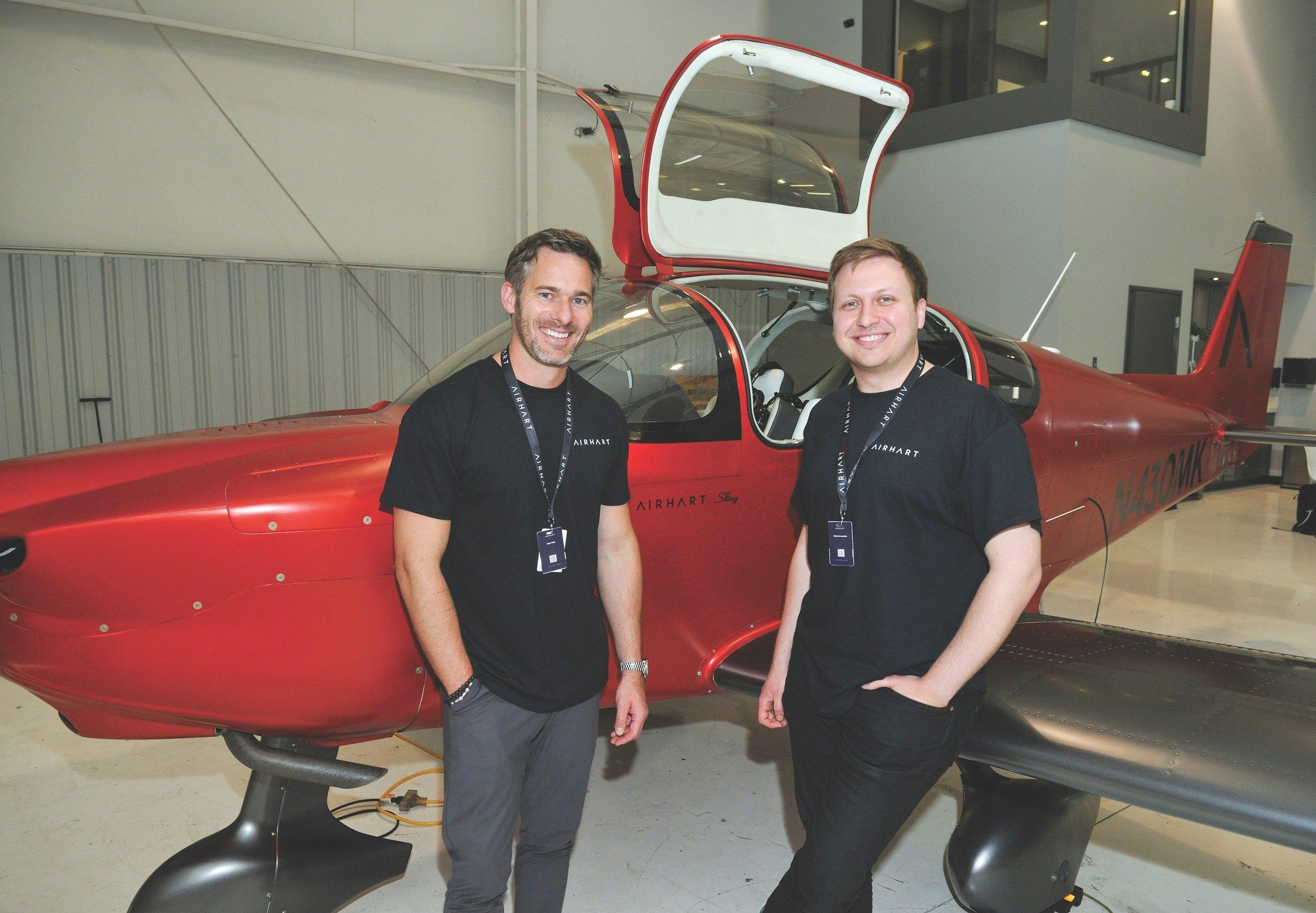
Nikita Ermoshkin: Putting the Pilot at the Center of Aviation Innovation
Nikita Ermoshkin: Putting the Pilot at the Center of Aviation Innovation
As the aviation industry rapidly advances toward automation, the prospect of fully autonomous, crewless flights often dominates discussions. However, Nikita Ermoshkin, founder and CEO of Airhart Aeronautics, presents a compelling alternative vision. He contends that genuine innovation must preserve the human pilot as the central figure within the cockpit, integrating technology to enhance rather than replace human judgment.
Redefining the Role of the Pilot
Ermoshkin emphasizes that while automation and autonomous safety systems will inevitably become integral to aviation, the pilot’s role should remain paramount. Drawing from his own experience as a student pilot and his engineering background at SpaceX, he found traditional general aviation aircraft overly complex and mentally demanding. Legacy light aircraft require continuous mechanical multitasking, which often detracts from a pilot’s ability to focus on critical safety decisions. Airhart Aeronautics addresses this challenge by automating routine aerodynamic adjustments, thereby allowing pilots to concentrate on situational awareness, weather navigation, and communication with air traffic control. In this model, software manages micro-level controls while the pilot retains ultimate authority over the flight.
Broad Appeal Among Pilots
Airhart’s pilot-centric system has garnered positive responses from both novice and experienced aviators during prototype and simulator testing. For beginners, the simplified cockpit environment reduces anxiety and cognitive load, potentially making flight training more accessible and helping to lower the industry’s high dropout rates. Ermoshkin notes that users consistently describe the system as less intimidating and remarkably low-stress.
Veteran pilots, who often approach automation with skepticism, have also welcomed the technology. Rather than diminishing traditional skills, Airhart’s fly-by-wire automation alleviates fatigue and mental strain during extended flights. The platform’s advanced, data-driven flight analysis tools serve as a digital coach, enabling seasoned pilots to review and refine their performance after each journey.
Industry Challenges and Emerging Opportunities
Despite encouraging early feedback, Ermoshkin acknowledges the significant obstacles that lie ahead. The aviation sector’s entrenched regulatory environment and established industry practices pose formidable barriers for new technologies. Successfully integrating Airhart’s innovations with existing systems and securing widespread pilot acceptance will require careful navigation of regulatory frameworks and industry conventions.
Market reactions have been mixed. While some traditional pilots and airlines remain skeptical, others recognize the potential for AI-driven systems to improve safety and operational efficiency. Competitors are responding by exploring similar technologies or devising strategies to maintain their market share.
Recent developments, including advances in AI-powered pilot assistance and the Federal Aviation Administration’s support for workforce development grants, indicate a broader industry shift toward innovation and inclusivity. Within this evolving landscape, Ermoshkin’s vision of centering the pilot within a technologically advanced ecosystem may serve as a bridge between aviation’s traditional foundations and its future transformation.
By prioritizing both human capability and technological progress, Airhart Aeronautics aspires not only to develop a new aircraft but to fundamentally reshape the flight experience for the next generation.

Hong Kong's Five-Year Plan Includes Andrew Fan's Aircraft Parts Processing Hub Proposal

ACIA Aero Leasing Delivers ATR72-600 to Air Nostrum

RTX Appoints Jill Albertelli as Head of Pratt & Whitney

TAT Technologies Joins Beyond Aero Hydrogen Aircraft Program

AURAK Study Highlights Barriers to Air Taxi Adoption in Emerging Economies

Xiamen Air Selects Altitude for 787 Maintenance at Heathrow

Etihad and Swissport Extend Global Partnership
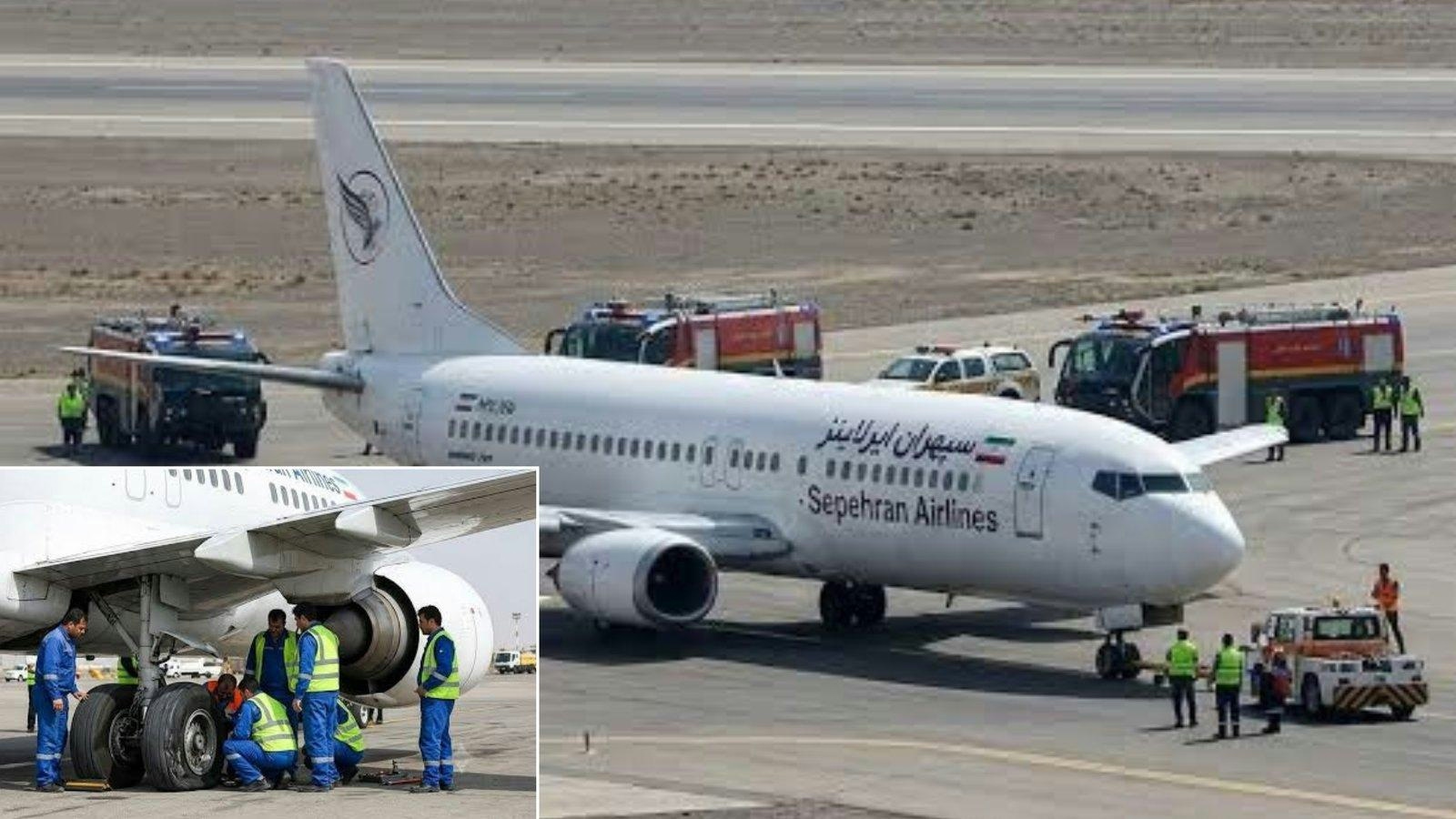
Sepehran Airlines B737 Returns to Mashhad After Tyre and Engine Issues

Etihad Deploys Widebody Fleet to Meet Strong Demand

Korean Air Finalizes $36.2 Billion Deal with Boeing
