
Orchestrer les insights d’IA pour les transformer en actions

Tendances
Categories
NRT, ICN, BRU, LHR, and NLMTD Discuss Expansion of BOOST Baggage Initiative and AI-Driven Automation
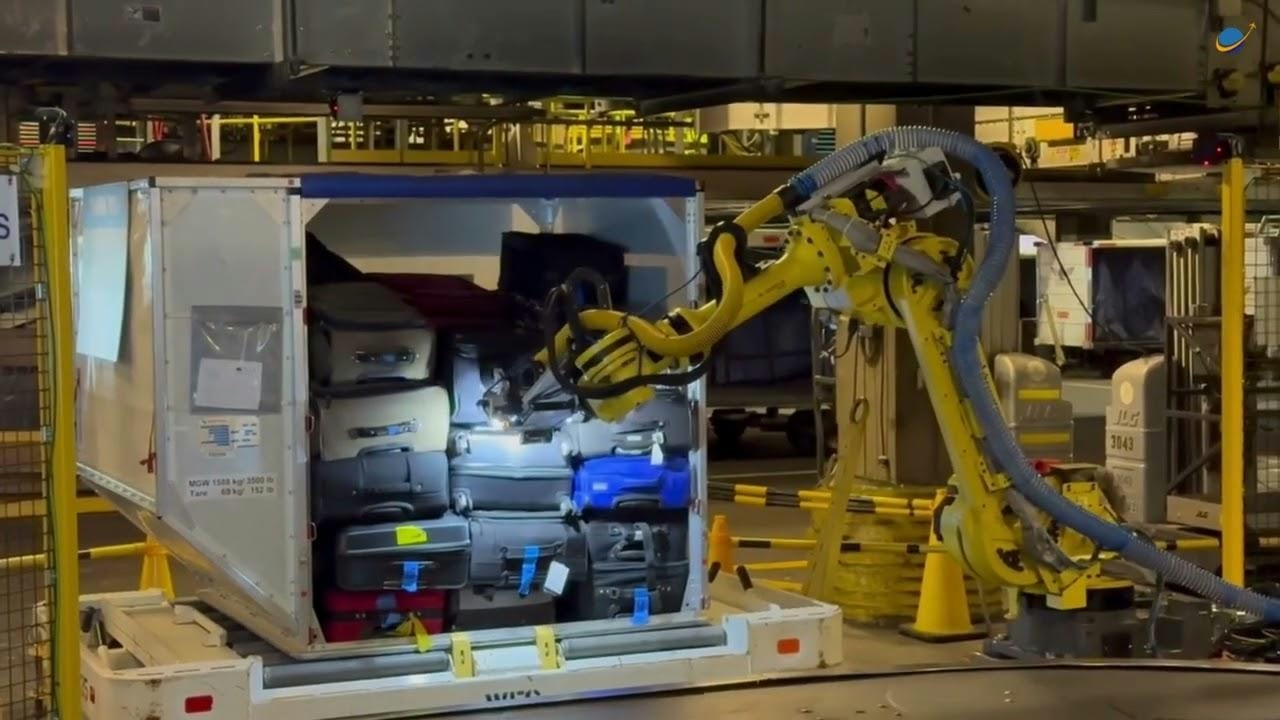
NRT, ICN, BRU, LHR, and NLMTD Advance BOOST Baggage Initiative with Global Expansion and AI Automation
BOOST, an innovative collaborative initiative focused on revolutionizing baggage handling through robotics and automation, is intensifying efforts to modernize airport operations on a global scale. Established two years ago by the innovation consultancy nlmtd (Unlimited) in partnership with Future Travel Experience (FTE) and the FTE Baggage Innovation Working Group (BIWG), BOOST unites prominent international airports—including Narita (NRT), Incheon (ICN), Brussels (BRU), and Heathrow (LHR)—to facilitate shared experimentation, proofs of concept, and collective learning.
Expansion into Asia and Strategic Industry Context
A pivotal development for BOOST is the launch of the BOOST Asia Cluster, marking the initiative’s transition from a predominantly European collaboration to a truly global network. With Incheon International Airport already engaged, Narita International Airport’s recent inclusion strengthens BOOST’s regional presence in Asia and broadens opportunities for joint innovation and knowledge exchange.
Jos Werner, Director at nlmtd and partner of the FTE Baggage Innovation Working Group, highlighted the significance of this expansion during the APEX FTE EMEA event. He stated, “With Narita joining, we can accelerate our learning and innovation in shaping the future of baggage handling.” This growth occurs amid a consolidating European aviation market, where major airline groups such as Lufthansa and Air France-KLM are expanding their influence. Airports and partners face increasing challenges, including rising operational costs, geopolitical uncertainties, and mounting sustainability demands. BOOST’s collaborative approach aims to mitigate risks and expedite innovation, enabling participants to maintain competitiveness amid these industry shifts.
Emphasis on Automated Loading and AI Integration
BOOST is preparing to publish its second White Paper, building on last year’s visionary outlook for baggage handling. The forthcoming document will concentrate on automated loading, a critical yet historically under-automated phase of the baggage journey. Werner emphasized that loading remains one of the most physically demanding and least digitized components of airport operations, making it a prime target for technological transformation.
He noted, “The loading step is still the least automated in the whole process, but carries the highest physical strain.” However, Werner cautioned that technological advancements alone are insufficient; successful scaling of automation requires comprehensive operational alignment across systems, processes, and personnel. “If you really want to scale it, then the whole operation needs to act as one,” he added.
BOOST’s initiatives include key technical proofs of concept, such as AI-driven baggage identification systems. While these innovations promise significant efficiency improvements, market responses have been mixed. Notably, skepticism remains among some American stakeholders concerning the transparency and control of AI technologies. As BOOST expands, it is anticipated that competitors will accelerate their own technological developments to safeguard their market positions.
A Call for Broader Industry Collaboration
The upcoming White Paper is intended not only as a strategic vision but also as a call to action for wider industry engagement. BOOST leaders emphasize that overcoming operational and technological challenges requires extensive feedback and collaboration to ensure automation delivers meaningful benefits throughout the aviation ecosystem.
As the BOOST coalition continues to grow and adapt to evolving global challenges, its members remain dedicated to pioneering solutions that address both immediate operational needs and the changing expectations of passengers and industry stakeholders.

Hong Kong's Five-Year Plan Includes Andrew Fan's Aircraft Parts Processing Hub Proposal

ACIA Aero Leasing Delivers ATR72-600 to Air Nostrum

RTX Appoints Jill Albertelli as Head of Pratt & Whitney

TAT Technologies Joins Beyond Aero Hydrogen Aircraft Program

AURAK Study Highlights Barriers to Air Taxi Adoption in Emerging Economies

Xiamen Air Selects Altitude for 787 Maintenance at Heathrow

Etihad and Swissport Extend Global Partnership
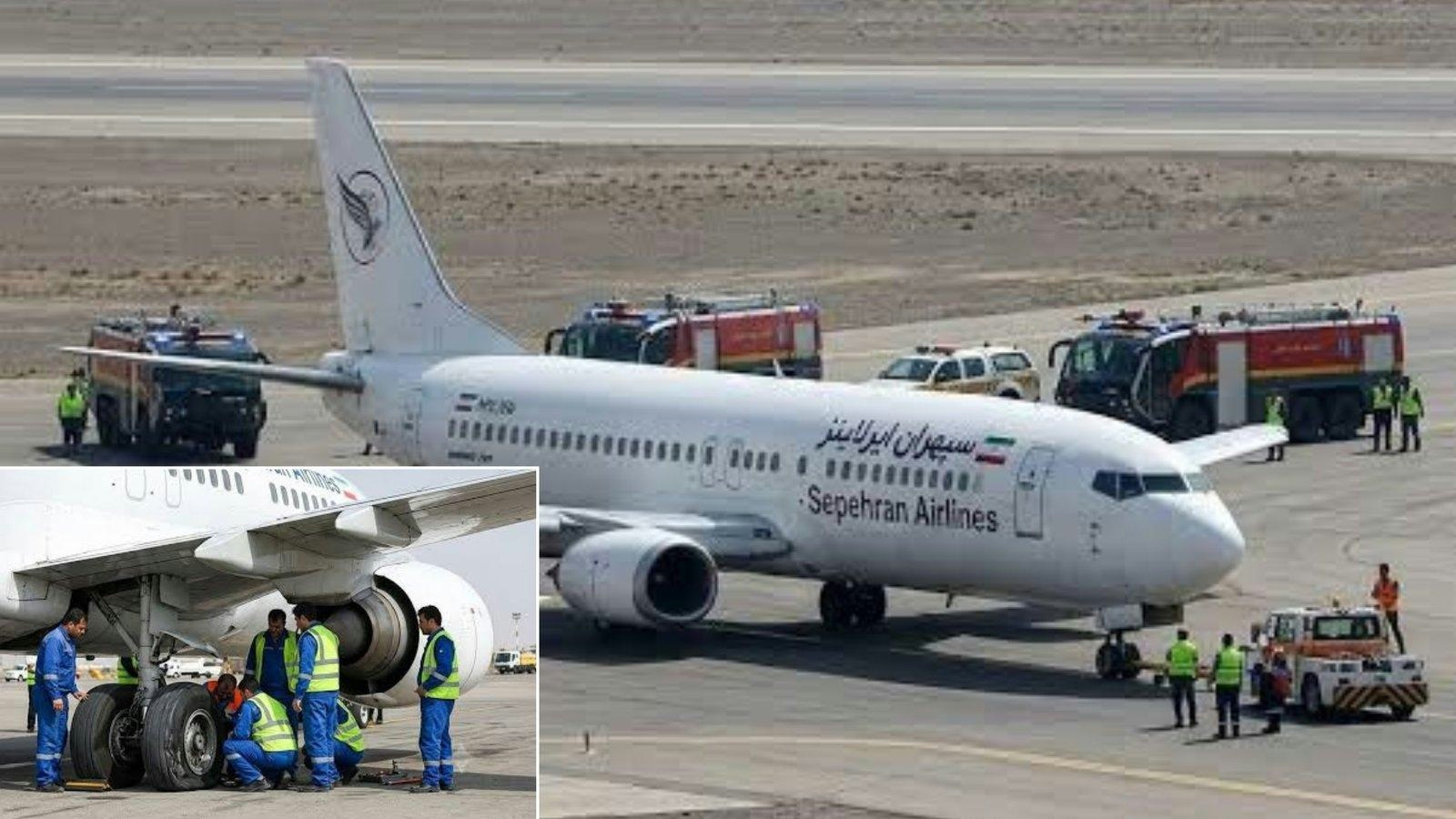
Sepehran Airlines B737 Returns to Mashhad After Tyre and Engine Issues

Etihad Deploys Widebody Fleet to Meet Strong Demand
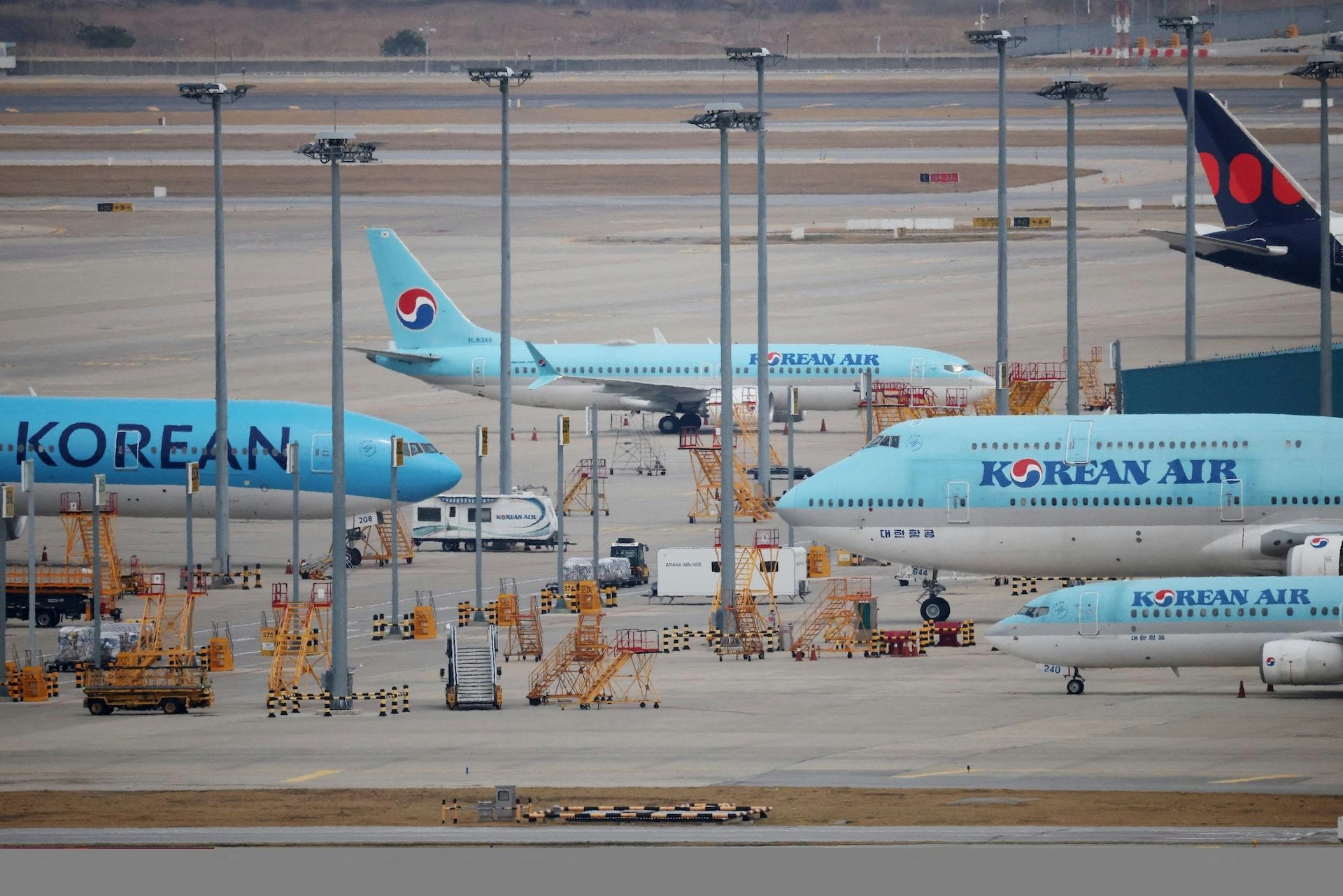
Korean Air Finalizes $36.2 Billion Deal with Boeing
