
Orchestrer les insights d’IA pour les transformer en actions

Tendances
Categories
NTSB Calls on FAA to Require Cockpit Smoke Training After 737 Max Incident
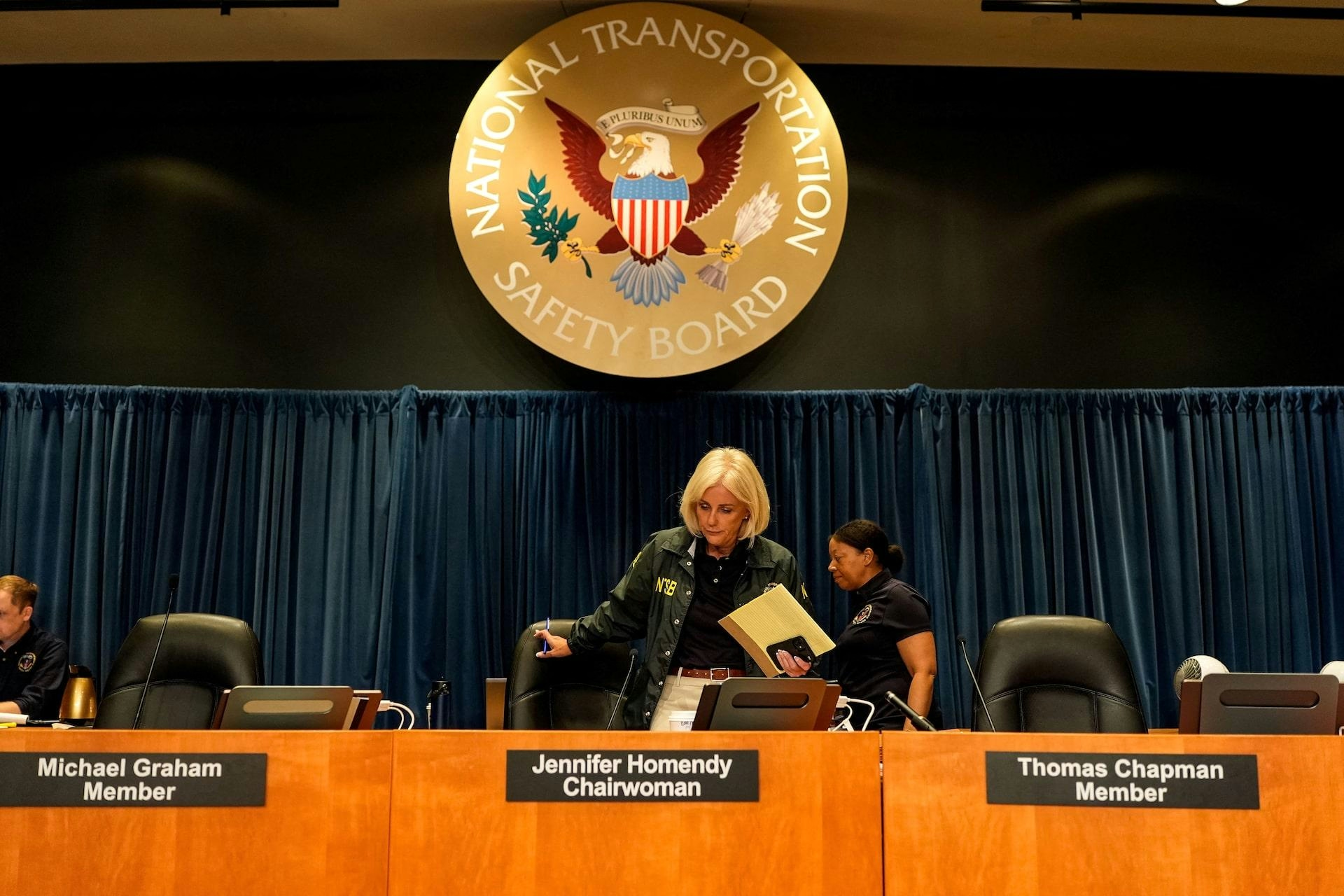
NTSB Calls on FAA to Mandate Cockpit Smoke Training Following 737 Max Incident
The National Transportation Safety Board (NTSB) has formally urged the Federal Aviation Administration (FAA) to require pilots to undergo realistic, scenario-based cockpit smoke training. This call comes in the wake of a December 2023 incident involving a Southwest Airlines Boeing 737 Max, during which the cockpit rapidly filled with smoke following an engine failure shortly after takeoff from Louisville. The NTSB’s recommendations, released in early May, emphasize the critical need for enhanced pilot preparedness in emergencies characterized by limited visibility and smoke infiltration.
Details of the Incident and Pilot Response
The December event was triggered when the aircraft’s left-side CFM International Leap-1B turbofan ingested a bird, causing fan blade separation. This activated the engine’s load reduction device (LRD), a mechanism designed to prevent further damage by shedding fan blades. However, this process can result in oil spilling onto hot engine components, producing smoke that may enter the cockpit or passenger cabin depending on the affected engine. In this case, the cockpit became rapidly engulfed in smoke, severely impairing the flight crew’s visibility.
The pilots reported that the sudden onset of smoke, combined with the adrenaline and surprise of the situation, presented challenges far beyond their prior training experiences. Despite these difficulties, the crew successfully donned oxygen masks, executed emergency checklists, declared an emergency, and safely landed the aircraft. The NTSB cautioned that had this incident occurred under more adverse conditions, such as at night or in poor weather, the outcome could have been catastrophic.
This was the second similar event involving a Southwest 737 Max 8 in 2023, following a comparable incident in March. Notably, current U.S. regulations do not mandate cockpit smoke simulation training for pilots, leaving a critical gap in emergency preparedness.
Calls for Regulatory and Industry Action
In response, the NTSB is pressing the FAA to develop and implement standardized, scenario-based training modules for both new and recurrent pilots, specifically targeting smoke-in-the-cockpit emergencies. The board also urged industry organizations, including Airlines for America (A4A) and the Regional Airline Association (RAA), to disseminate information about the December incident among their members and promote the adoption of realistic smoke training programs.
The Department of Transportation’s Office of Inspector General has also scrutinized the FAA’s handling of engine smoke incidents, recommending that the agency take more proactive measures. These include timely notifications to operators regarding delays in software updates intended to mitigate such risks.
Meanwhile, LOT Polish Airlines has publicly accused Boeing of withholding safety information related to the 737 Max to facilitate sales, arguing that comprehensive simulator training requirements would have increased operational costs for customers.
When approached for comment on the NTSB’s recommendations, neither the FAA nor the RAA responded. Airlines for America acknowledged ongoing collaboration with the NTSB and FAA to uphold safety standards but did not address inquiries about expanding pilot training protocols.
The NTSB remains steadfast in its position that realistic, scenario-based cockpit smoke training is vital to equip pilots with the skills necessary to manage emergencies that can rapidly escalate and jeopardize flight safety.

Etihad Airways Suspends Airbus A380 Flights on Key Route

Aditya Birla Group Seeks Approval for Aircraft Leasing in GIFT City

Qatar Airways Highlights Innovation and Connectivity at Arabian Travel Market 2026

Hong Kong's Five-Year Plan Includes Andrew Fan's Aircraft Parts Processing Hub Proposal

ACIA Aero Leasing Delivers ATR72-600 to Air Nostrum

RTX Appoints Jill Albertelli as Head of Pratt & Whitney

TAT Technologies Joins Beyond Aero Hydrogen Aircraft Program

AURAK Study Highlights Barriers to Air Taxi Adoption in Emerging Economies

Xiamen Air Selects Altitude for 787 Maintenance at Heathrow

Etihad and Swissport Extend Global Partnership
