Image

Orchestrer les insights d’IA pour les transformer en actions

Inscrivez-vous dès aujourd’hui sur la liste d’attente d’AeroGenie !

Tendances

Categories

NTSB: Engine Debris Broke Ryanair Window, Causing Passenger Injury
August 13, 2026By ePlane AI
NTSB: Engine Debris Broke Ryanair Window, Causing Passenger Injury
0
0
Ryanair
Boeing 737-8AS
Engine Failure
Cabin Window Damage

NTSB Report Details Engine Debris Incident on Ryanair Flight

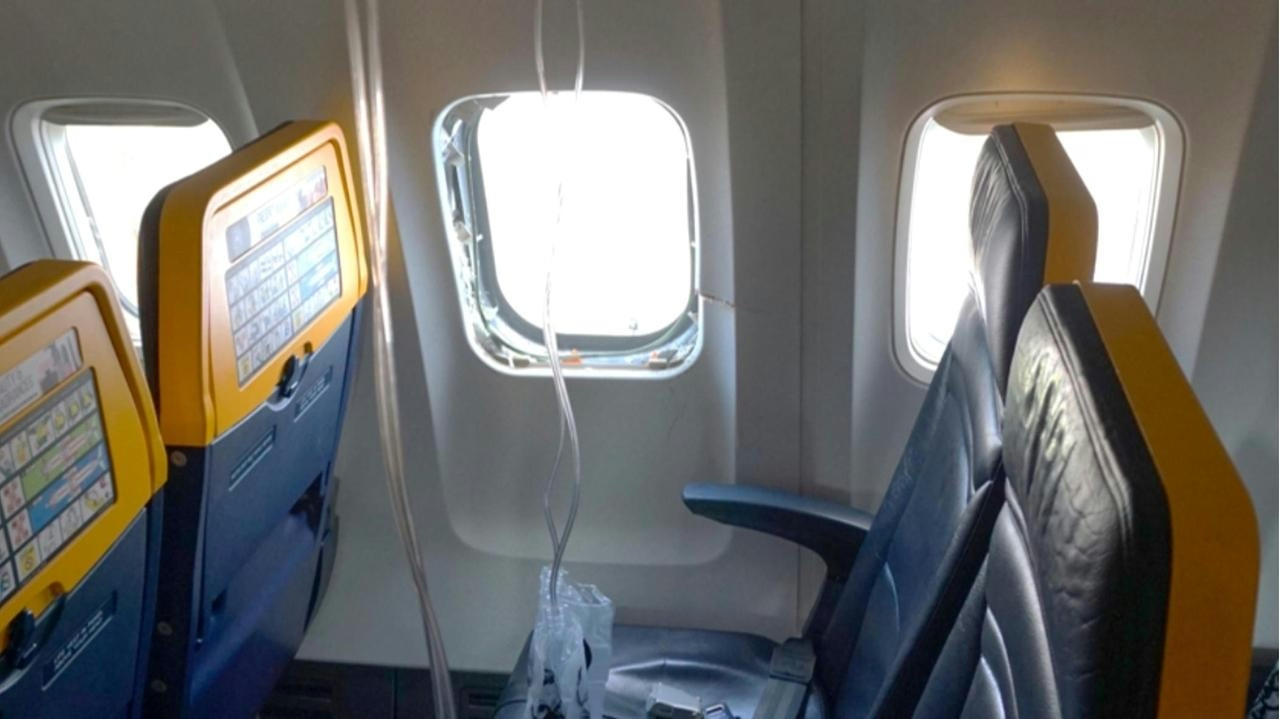
A preliminary report released by the U.S. National Transportation Safety Board (NTSB) has revealed that engine debris shattered a window on a Ryanair-operated flight shortly after takeoff from Thessaloniki, Greece, last month. The incident caused a passenger’s head to be partially sucked through the broken window before fellow travelers intervened to pull him back inside the cabin.

Incident Overview and Passenger Injuries

The event occurred on July 10, 2026, aboard a Boeing 737-8AS operated by Malta Air on behalf of Ryanair. According to the NTSB, a fan blade in the aircraft’s right engine (No. 2) separated, sending fragments through the engine casing. These fragments punctured the fuselage in multiple locations and shattered a cabin window, leading to a rapid loss of cabin pressure. The affected passenger, a 61-year-old seated by the damaged window, sustained neck and shoulder injuries as well as friction burns. Passengers nearby reacted quickly, assisting in pulling the man back into the aircraft. Flight attendants reported intense vibrations, followed by smoke or fog filling the cabin and the deployment of oxygen masks. The injured passenger was relocated to another seat where a doctor onboard provided medical aid. Other passengers used a metal box to help block the opening until the plane made an emergency landing back at Thessaloniki Airport.

Investigation Findings and Maintenance History

Investigators found bird remains inside the damaged engine, indicating a possible bird strike during takeoff. However, the precise cause of the fan blade failure remains undetermined. The investigation was transferred to the NTSB by Greek authorities under international aviation protocols. Maintenance records reviewed by the NTSB show that the right engine’s fan blades underwent ultrasonic inspections in May 2026 and November 2025, with no damage detected. Despite this, flight crews had reported four suspected bird strikes involving the same engine over the previous year, with bird remains confirmed after two incidents.

Aviation safety experts emphasize that while required maintenance appears to have been conducted on schedule, investigators are expected to scrutinize the inspection procedures closely. They will also assess whether the repeated bird strikes may have contributed to undetected damage that led to the fan blade failure.

Industry Implications and Ongoing Investigation

The incident has drawn increased attention from aviation safety authorities and may expose Ryanair and Malta Air to potential legal action from injured passengers. Industry analysts suggest that the event could affect Ryanair’s reputation, potentially resulting in higher insurance premiums and more rigorous oversight of its maintenance practices. Competitors may also leverage the incident to highlight their own safety records and operational standards.

Jeff Guzzetti, a former investigator with the NTSB and Federal Aviation Administration, commented, “We know what happened and even to some extent why it happened, but there are still unanswered questions that the NTSB will get at.”

The NTSB’s investigation into the incident remains ongoing.

More news
One of the Largest Widebody Aircraft Is the Cheapest to Fly in the U.S.

One of the Largest Widebody Aircraft Is the Cheapest to Fly in the U.S.

One of the Largest Widebody Aircraft Is the Cheapest to Fly in the U.S. Operational Cost Efficiency of the Boeing 787-10 Dreamliner Recent quarterly financial disclosures from major U.S. airlines have highlighted a notable operational insight: the Boeing 787-10 Dreamliner, one of the largest twin-engine widebody jets, currently stands as the most cost-effective widebody aircraft in domestic and transatlantic service. While international airshow order announcements often capture public attention, the true economics of operating these aircraft emerge from detailed data submitted to the U.S. Department of Transportation (DOT) through Form 41 balance sheets. Despite its substantial 224-foot (68-meter) fuselage, the stretched 787-10 achieves lower direct operating costs per seat than many smaller twin-engine jets. Its high-density seating configurations enable airlines to maximize passenger capacity on high-demand routes without a corresponding increase in fuel consumption or maintenance expenses. According to aviation intelligence firm AirInsight, the 787-10’s direct operating cost stands at just $19.54 per seat-hour, encompassing fuel, crew, maintenance, and insurance. Comparative Cost Advantages and Design Efficiencies This cost efficiency is particularly significant when compared to other widebody aircraft. The Airbus A330-300, for instance, incurs a direct operating cost of $21.43 per seat-hour, representing a 9.7% premium over the 787-10. The Boeing 767-400ER is even less economical, with costs of $22.91 per seat-hour, or 17.2% higher. While savings of $1.89 to $3.37 per seat-hour may appear modest on an individual flight, these margins accumulate rapidly. On a 10-hour transatlantic journey with 318 seats, operating a 787-10 instead of a 767-400ER can save an airline more than $10,700 per departure. Over the course of 300 annual flights, this translates to over $3.2 million in direct cost reductions per aircraft. The 787-10’s efficiency largely results from Boeing’s strategy of stretching the Dreamliner airframe without redesigning its core wings or propulsion systems. Sharing 95% of its components with the smaller 787-9, the aircraft benefits from minimized production and maintenance costs while avoiding the weight penalties typically associated with entirely new widebody designs. This approach prioritizes optimizing fuel capacity for payload rather than maximizing range, making the 787-10 particularly well-suited for high-density, medium- to long-haul routes. Market Dynamics and Industry Implications This operational advantage emerges amid shifting dynamics in the widebody aircraft market. Airbus has been gaining momentum, securing new orders and delivering more widebody aircraft than Boeing in recent years. This trend is prompting airlines to reevaluate their fleet strategies, balancing the cost efficiencies of models like the 787-10 against the increasing appeal and availability of Airbus alternatives. In response, both manufacturers face pressure to innovate—Boeing by enhancing efficiency and reliability within its existing lineup, and both companies by investing in the development of next-generation aircraft to meet evolving airline requirements. As airlines navigate these competitive pressures, the 787-10’s cost leadership highlights the critical role of operational efficiency in fleet planning. With profit margins under constant strain, the ability to transport more passengers at a lower per-seat cost represents a significant competitive advantage that may shape fleet decisions and industry strategies in the years ahead.
Vancouver Island Aviation Manufacturer Awarded $1 Million in Tariff Relief

Vancouver Island Aviation Manufacturer Awarded $1 Million in Tariff Relief

Vancouver Island Aviation Manufacturer Awarded $1 Million in Tariff Relief A Parksville-area aviation manufacturer, COTA Aviation, has been granted $1 million in federal tariff relief as part of a larger $30.5 million investment supporting 24 British Columbia-based companies through the Regional Tariff Response Initiative. The funding, announced by Gregor Robertson, Minister of Housing and Infrastructure and Minister responsible for Pacific Economic Development Canada, is intended to assist businesses in managing ongoing trade challenges while strengthening local supply chains. Supporting Indigenous-Led Advanced Manufacturing COTA Aviation, a majority Indigenous-owned enterprise specializing in the production of aircraft and defence components, plans to allocate the funds toward acquiring and installing advanced equipment for manufacturing gears used in aerospace and defence systems. According to Pacific Economic Development Canada, this project is expected to sustain skilled employment, reinforce Indigenous-led advanced manufacturing, and enhance the capacity of Western Canada’s domestic aerospace and defence supply chains. Navigating Persistent Trade Uncertainties The tariff relief arrives amid continued uncertainty for local businesses, as persistent tariff threats—particularly from the United States—complicate long-term strategic planning. The unpredictability surrounding tariff decisions has left many companies adopting a cautious approach, simultaneously exploring new opportunities while contending with regulatory ambiguities and misinformation campaigns. Industry analysts observe that such trade disruptions often result in increased costs for American consumers, who ultimately bear the financial burden of tariffs. Meanwhile, some sectors, such as the BC Seafood Alliance, maintain a focus on established markets like the I-5 corridor, illustrating the diverse strategies businesses are employing in response to shifting trade dynamics. Broader Regional Support In addition to COTA Aviation, several other Vancouver Island businesses and associations have received funding under the initiative. Nanaimo Forest Products was awarded $5.5 million, Niik Steel in Nanaimo received $1 million, Canadian Bavarian Millwork & Lumber in Chemainus was granted $1 million, the BC Shellfish Growers’ Association in Comox obtained $363,800, and the Vancouver Island Economic Alliance secured $300,000. “These trade disruptions are creating real challenges for the B.C. businesses that are the backbone of our economy,” Robertson stated. “That is why the Government of Canada is stepping up with investments—to help these businesses build more resilient supply chains, grow productivity, and open doors to new markets. By investing in B.C. businesses, we’re creating the conditions they need to thrive, succeed, and build Canada strong.” The Regional Tariff Response Initiative aims to support business growth, enhance productivity, facilitate market expansion, reduce costs, and foster more resilient supply chains. The funding targets sectors most affected by global trade disruptions, including advanced manufacturing, forestry, and steel and aluminum, as companies across the region continue to adapt to an evolving trade environment.
FAA Mandates Inspections of Rotax Gearboxes

FAA Mandates Inspections of Rotax Gearboxes

FAA Issues Directive for Immediate Inspection of Rotax Gearboxes The Federal Aviation Administration (FAA) has issued a critical airworthiness directive mandating immediate inspections of certain Rotax 912 and 914-series engines. This action follows the discovery that a recently manufactured propeller gearbox was missing essential components, raising significant safety concerns. The directive, published on Thursday and effective from August 28, applies to approximately 180 engines installed on U.S.-registered aircraft. Safety Concerns and Inspection Requirements Rotax, the engine manufacturer, identified that some gearboxes were produced without an oil spray nozzle and the screws necessary to secure the propeller shaft bearing. The FAA warns that the absence of these parts could allow the propeller shaft bearing to shift, potentially causing a loss of engine oil, in-flight engine shutdown, and ultimately, loss of aircraft control. The affected gearboxes are specifically listed by serial number in Rotax Alert Service Bulletin ASB-2026-001R00. Under the FAA directive, engines with fewer than 25 hours of service must undergo inspection before any further flight after the directive’s effective date. Engines with 25 hours or more must be inspected within five hours of operation. Should any gearbox be found missing the required components, it must be replaced prior to the aircraft’s next flight. The FAA estimates the cost of inspection at approximately $170 per engine, while replacement of a gearbox could reach around $5,900. Operational and Market Implications The directive is expected to pose operational challenges for aircraft operators and manufacturers alike. Immediate compliance may lead to increased costs and potential disruptions in flight schedules as inspections are conducted. Additionally, the mandate is likely to attract intensified regulatory scrutiny, compelling companies to demonstrate strict adherence to safety standards. From a market perspective, the announcement could trigger a temporary decline in stock prices for firms dependent on Rotax gearboxes, particularly smaller aircraft manufacturers. Competitors may seize this opportunity to promote alternative gearbox technologies or increase production capacity to meet the demand for compliant parts. This FAA directive highlights the critical importance of stringent quality control in aircraft manufacturing and illustrates the broader impact that safety mandates can exert across the aviation sector.
Plane Spotting at ONT: A Guide for Aviation Fans

Plane Spotting at ONT: A Guide for Aviation Fans

Plane Spotting at Ontario International Airport: A Haven for Aviation Enthusiasts For aviation aficionados, few experiences rival the thrill of standing at the edge of the tarmac, camera poised, as the distant roar of jet engines intensifies. At Ontario International Airport (ONT), such moments are a daily occurrence. The sight of a China Airlines 777 descending against the striking backdrop of the San Gabriel Mountains, landing gear extended and perfectly aligned for final approach, encapsulates the unique allure that draws plane spotters to this Southern California hub. A Unique Aviation Landscape Since its establishment in 1923, ONT has played host to numerous milestones in aviation history. However, it is the airport’s everyday operations that captivate the growing community of plane spotters. Unlike other regional airports, ONT offers a distinctive blend of narrow-body aircraft, widebody international flights, and a busy cargo sector. This diverse mix unfolds beneath the scenic silhouette of Mt. Baldy and the San Gabriel mountain range, creating a picturesque setting that keeps enthusiasts returning. The combination of varied aircraft types and stunning natural surroundings distinguishes ONT as a premier location for plane watching in the region. Challenges and Adaptations Plane spotting at ONT faces emerging challenges. Recent constraints on Air Traffic Control capacity, coupled with the Federal Aviation Administration’s flight caps, have begun to limit aircraft movements. This reduction threatens to diminish both the variety and frequency of planes available for observation. Furthermore, the introduction of new Required Navigation Performance (RNP) approaches at nearby airports has altered flight paths, occasionally diverting traffic away from ONT and impacting the spotting experience. These operational changes, alongside ongoing discussions about stricter noise regulations, have compelled spotters and competitors alike to adjust their strategies. Such measures could further affect the accessibility and enjoyment of plane spotting in the area. Looking Ahead: Facilities and Opportunities Despite these obstacles, Ontario International Airport remains attentive to the needs of its aviation community. Enthusiasts have long advocated for a dedicated public plane spotting area, and airport officials acknowledge that such a facility is under consideration as part of the ONT BOLD Program. This initiative aims to expand the airport with a new terminal and upgrade existing infrastructure. While these developments are still in progress, several excellent vantage points around the airport continue to offer rewarding views—some of which remain relatively unknown even to local residents. Whether a seasoned spotter equipped with scanners and telephoto lenses or a family seeking an engaging and free weekend activity, ONT provides a dynamic and accessible environment for plane watching. As the airport evolves and the broader aviation landscape shifts, Ontario International Airport endures as a favored destination for those who find fascination in the power and precision of flight.
Carburetor Ice Causes Skydiving Plane to Crash

Carburetor Ice Causes Skydiving Plane to Crash

Carburetor Ice Causes Skydiving Plane Crash Near Upolu Airport A Cessna 182B skydiving aircraft experienced a loss of engine power during its descent near Upolu Airport (PHUP) in Hawi, Hawaii, resulting in a crash that caused substantial damage to the plane and minor injuries to the pilot. According to a recent National Transportation Safety Board (NTSB) report, the incident highlights the dangers of carburetor icing and emphasizes the need for improved pilot training and safety measures. Sequence of Events and Emergency Response The pilot had completed a skydiving drop from 8,500 feet mean sea level and initiated a spiraling descent back to the airport. During this phase, the throttle was reduced to idle, and 20 degrees of flaps were deployed. The pilot then applied full carburetor heat while gradually enriching the engine mixture. At approximately 300 feet above ground level, the mixture was confirmed to be full rich, the propeller was set forward, and carburetor heat was fully engaged. However, when the pilot attempted to increase throttle, the engine failed to respond. Despite following emergency procedures to restore power, the engine could not be restarted. The pilot executed a forced landing in a field about one mile west of the airport. Uneven terrain caused the nose gear to collapse, inflicting significant damage to the fuselage and engine compartment. Investigation Findings and Weather Conditions Post-accident examination revealed no mechanical malfunctions or failures in the engine or fuel system. The gascolator contained 100LL aviation fuel, and only trace amounts of water were detected in the fuel tanks. Weather data from Kailua/Kona Keahole Airport (PHKO), located approximately 34 miles south, recorded a temperature of 84°F, a dew point of 71°F, and relative humidity of 81%. According to the Federal Aviation Administration’s (FAA) Carburetor Ice Probability Chart, these conditions present a high risk of serious carburetor icing at glide power. The FAA’s Pilot’s Handbook of Aeronautical Knowledge explains that carburetor ice is most likely when temperatures are below 70°F and humidity exceeds 80%, but it can occur at temperatures as high as 100°F. During prolonged descents with closed or reduced throttle settings, the engine cools rapidly, increasing susceptibility to carburetor icing. The handbook advises pilots to apply full carburetor heat before reducing throttle and to maintain it during descent, as well as to periodically open the throttle to keep the engine warm. Conclusion and Implications for Aviation Safety The NTSB determined that the probable cause of the accident was a loss of engine power due to carburetor ice formation during the extended descent, with the pilot’s delayed application of carburetor heat contributing to the outcome. This incident underscores the critical importance of timely carburetor heat application, especially in humid conditions. Aviation experts emphasize that enhanced pilot training on recognizing and managing carburetor icing is essential to prevent similar accidents. The event may also prompt increased scrutiny of aircraft maintenance protocols and could lead to higher insurance premiums for aircraft susceptible to carburetor icing. In response, some manufacturers and industry competitors are exploring new technologies and safety features aimed at mitigating the risk of carburetor ice in future aircraft models.
Holt Construction Appointed to DBIA Aviation Design-Build Panel

Holt Construction Appointed to DBIA Aviation Design-Build Panel

Holt Construction Joins DBIA Aviation Design-Build Panel Complex aviation infrastructure projects require meticulous coordination among owners, designers, and builders to effectively balance constructability, cost, and scheduling demands. Holt Construction has recently assumed a prominent role in addressing these challenges by participating in an industry panel dedicated to design-build delivery within the aviation sector. Advancing Collaborative Aviation Project Delivery On August 5, Robert Kipp, Field Director at Holt Construction, took part in the DBIA NYC Metro Region NextGen event, where industry leaders convened to explore collaborative strategies for delivering complex aviation facilities. The panel focused on how design-build methodologies can enhance project delivery by integrating design and construction considerations from the earliest stages. Discussions emphasized the importance of aligning design requirements with constructability, managing budgets and timelines effectively, and balancing the priorities of diverse stakeholders. The event highlighted the intensified coordination necessary across project teams in aviation construction. Design-build delivery, which consolidates design and construction into a unified process, demands early and continuous communication to ensure alignment. For contractors such as Holt Construction, this approach significantly influences planning, sequencing, and coordination throughout the entire project lifecycle. Challenges and Industry Implications As Holt Construction assumes a more visible position within the DBIA Aviation Design-Build Panel, it faces several challenges inherent to aviation project delivery. These include navigating stringent operational constraints and managing the involvement of multiple stakeholders, which require both adaptability and innovative solutions. Furthermore, Holt must contend with established firms possessing extensive experience in the aviation sector, while remaining responsive to evolving industry standards. The company’s appointment is likely to attract increased scrutiny from competitors and stakeholders alike, with its strategies and performance subject to closer examination. In turn, rival firms may intensify efforts to secure design-build contracts and forge new partnerships, thereby heightening competition within the industry. Industry forums such as the DBIA NextGen event offer critical platforms for contractors and project owners to evaluate how design-build practices can meet the unique demands of aviation construction. Holt Construction’s active engagement in these discussions underscores its commitment to fostering collaboration, driving innovation, and advancing best practices in aviation project delivery.
India Advances Sustainable Aviation Fuel Readiness for CORSIA

India Advances Sustainable Aviation Fuel Readiness for CORSIA

India Advances Sustainable Aviation Fuel Readiness for CORSIA Coordinated National Effort to Meet International Aviation Decarbonization Standards India has initiated a comprehensive, cross-sectoral strategy to develop a verified carbon accounting framework and establish reliable domestic supply chains for sustainable aviation fuel (SAF). This initiative aims to position the country’s aviation sector for compliance with the Carbon Offsetting and Reduction Scheme for International Aviation (CORSIA) well ahead of the global enforcement deadline set for January 1, 2027. Civil Aviation Minister Ram Mohan Naidu recently convened an inter-ministerial meeting to evaluate India’s preparedness for CORSIA implementation and the integration of SAF into the aviation fuel mix. The meeting included senior officials from the Ministries of Petroleum & Natural Gas, Environment, Forest and Climate Change, as well as representatives from the Directorate General of Civil Aviation (DGCA), Airports Authority of India (AAI), Bureau of Indian Standards (BIS), and Bureau of Energy Efficiency (BEE). The discussions focused on the progress of SAF production projects led by oil marketing companies, the development of supply chain logistics, and the necessary infrastructure to ensure consistent SAF availability. India’s strategy targets a 5% blending of SAF by 2030, aiming to foster a robust domestic market while enhancing the country’s position as a global exporter of sustainable fuels. Minister Naidu emphasized that decarbonization represents not only an environmental necessity but also a strategic economic opportunity. He highlighted the government’s commitment to building a globally competitive SAF ecosystem that supports aviation growth and contributes to international climate goals, aligning with Prime Minister Narendra Modi’s vision of “One Earth, One Family, One Future.” The initiative is also designed to benefit multiple stakeholders, including farmers, by integrating agricultural residues into the SAF supply chain. Progress and Challenges in Scaling Sustainable Aviation Fuel Significant strides have been made in greening India’s aviation infrastructure, with 104 airports now operating entirely on green energy, a remarkable increase from zero in 2014. Efforts to modernize the aircraft leasing ecosystem are facilitating the operation of more fuel-efficient fleets by domestic airlines. Despite these advances, challenges remain in scaling up SAF production to meet blending targets, ensuring cost competitiveness relative to conventional jet fuels, and developing resilient supply chains for raw materials such as crop residues. Market analysts anticipate that India’s push for SAF will stimulate increased investment in related infrastructure and technology. This momentum may also prompt other countries to accelerate their own SAF production efforts to maintain competitiveness and secure market share in the evolving global aviation fuel market. Minister Naidu called on industry leaders to transition swiftly from feasibility assessments to definitive production schedules. He stressed the importance of clear obligations for all stakeholders concerning production capacity and carbon accounting. India’s immediate priority is to meet the 1% SAF blending mandate under CORSIA in a cost-effective manner, while simultaneously developing a carbon-credit offset mechanism through a coordinated government approach to ensure long-term sustainability. Policy Development and Inter-Ministerial Coordination The Minister underscored the necessity of collective decision-making and seamless coordination among ministries to drive the energy transition forward. The meeting reviewed progress on SAF supply chain development, the establishment of a national SAF Registry, and compliance measures for CORSIA. Minister Naidu expressed confidence in the commitment of government bodies and industry participants, directing all stakeholders to expedite key deliverables to guarantee India’s full operational readiness before the mandatory phase of CORSIA begins. He also confirmed that the draft SAF policy is nearing completion, following extensive inter-ministerial consultations and stakeholder engagement. Throughout the policy development process, minimizing financial burdens on air travelers and airlines has remained a central priority, reflecting India’s balanced approach to advancing its sustainable aviation agenda.
Engine Checks Conducted 70 Times Per Second Before Every Takeoff

Engine Checks Conducted 70 Times Per Second Before Every Takeoff

Engine Checks Conducted 70 Times Per Second Before Every Takeoff The moment an aircraft begins its takeoff roll is marked by a surge of noise and a sudden compression against the seatback, an exhilarating experience for passengers. For the flight crew and the aircraft’s advanced avionics, however, this phase represents the most critical juncture of departure. Before accelerating down the runway, pilots deliberately pause to allow the engines to stabilize at an intermediate thrust setting. During this brief but essential interval, the Full Authority Digital Engine Control (FADEC) system performs continuous verification of every internal parameter—from fuel flow to exhaust gas temperature—ensuring perfect synchronization across both engines. The Importance of Intermediate Thrust Stabilization This pause is far more than a regulatory formality; it is a vital safety protocol designed to prevent asymmetric thrust, which can cause hazardous yawing at low speeds when the rudder has limited effectiveness. The intermediate thrust setting provides the massive fan and compressor assemblies time to overcome their significant rotational inertia. Meanwhile, the FADEC system executes up to 70 high-speed checks per second, amounting to thousands of verifications within moments, to confirm that both engines operate in complete harmony. Unlike automotive engines, where the throttle directly controls power output, a modern airliner’s thrust lever functions as a request to the FADEC. The engines themselves are enormous high-bypass turbofans, with fan diameters exceeding 10 feet and multi-stage compressor spools weighing thousands of pounds. These components cannot deliver immediate, symmetric thrust from idle without risking compressor stalls, surges, and mechanical stress. The intermediate stabilization—typically maintained between 50% and 60% N1—acts as a kinetic buffer, ensuring balanced airflow and pressure ratios before full takeoff power is applied. This procedure is particularly critical for today’s powerful, thrust-intensive engines. By holding at approximately 55% N1, the flight crew ensures both engines are synchronized before the aircraft accelerates to speeds where directional control becomes paramount. Should one engine lag due to wear or system demands, the aircraft could yaw toward the weaker engine, a risk effectively mitigated by this careful stabilization. Operational Challenges and Industry Implications The sophistication of these engine checks introduces new operational challenges. The vast volume of data generated by FADEC systems demands advanced technology for effective management and interpretation, increasing the complexity of engine monitoring. Airlines may encounter higher operational costs due to more frequent engine checks and potential delays if any parameter falls outside acceptable limits. Consequently, maintenance schedules and budgets are being adjusted to accommodate these rigorous protocols, with some carriers investing in enhanced engine monitoring systems to maintain a competitive advantage. The broader aviation market is also responding to these developments. As airlines adapt to these advanced safety measures, competitors are expected to adopt similar practices to ensure regulatory compliance and passenger safety. Financial markets may witness shifts in operational strategies across the sector, with various stakeholders making significant adjustments to address the evolving landscape of engine management and safety protocols. Ultimately, the split-second pause before takeoff exemplifies the complexity and precision of modern aviation, balancing safety, technology, and operational efficiency at the very moment flight commences.
USS John F. Kennedy Begins Acceptance Trials Ahead of Delivery

USS John F. Kennedy Begins Acceptance Trials Ahead of Delivery

USS John F. Kennedy Begins Acceptance Trials Ahead of Delivery The John F. Kennedy, the second nuclear-powered aircraft carrier in the Gerald R. Ford class, departed Newport News on August 12 to commence acceptance trials, a pivotal phase preceding its official delivery to the U.S. Navy. Identified as Pre-Commissioning Unit (PCU) John F. Kennedy, the vessel—soon to be commissioned as USS John F. Kennedy (CVN 79)—will undergo rigorous evaluations of its systems and equipment during these final manufacturer-led sea trials to verify compliance with Navy standards. Delays and Technical Challenges Originally scheduled for delivery in 2025, the 100,000-ton carrier experienced significant delays due to technical difficulties with its Advanced Arresting Gear (AAG) and Advanced Weapons Elevators (AWE). The Kennedy embarked on its initial manufacturer trials in January 2026, with the current acceptance trials marking its second major sea voyage. In the interim, Navy personnel have conducted extensive drills and readiness exercises aboard the ship to prepare both crew and vessel for operational deployment. A key milestone in the ship’s preparation was the deadload testing of its Electromagnetic Aircraft Launch System (EMALS) on June 26, 2026, showcasing the carrier’s advanced launch capabilities. Unlike its predecessor, USS Gerald R. Ford, the Kennedy will be delivered fully equipped to operate the F-35C Lightning II stealth fighter. This capability was secured following Congressional intervention and schedule adjustments, necessitating modifications such as reinforced jet blast deflectors and specialized maintenance systems tailored for the fifth-generation aircraft. Strategic Implications and Future Deployment The Kennedy’s acceptance trials occur amid ongoing challenges within the U.S. naval shipbuilding sector, which has struggled with delivering vessels on time, within budget, and meeting required standards. These delays have elicited skepticism from industry observers and market analysts regarding the Navy’s ability to maintain delivery schedules. Meanwhile, international competitors have cited these setbacks as evidence of their own efficiencies and technological progress in shipbuilding. Upon commissioning, the Kennedy is slated to be homeported at Naval Base Kitsap-Bremerton in Washington, becoming the first Ford-class carrier stationed on the U.S. West Coast. This strategic location will facilitate regular deployments to the Indian and Pacific Oceans. The carrier is expected to arrive at its new homeport no earlier than 2029, following a $145 million upgrade to the base’s electrical infrastructure that commenced in May 2025. The Kennedy will replace the aging USS Nimitz (CVN 68), which is approaching decommissioning. However, the Nimitz will remain in service temporarily to help the Navy fulfill its legal obligation to operate at least eleven aircraft carriers, although it is unlikely to undertake extended deployments again. As the Kennedy progresses through its final trials, its development is closely monitored within the Navy and by industry stakeholders, given the broader implications for U.S. naval readiness and the credibility of the nation’s shipbuilding industry.
Bell Australia Expands Aftermarket Services with New Hydraulics Capabilities

Bell Australia Expands Aftermarket Services with New Hydraulics Capabilities

Bell Australia Expands Aftermarket Services with New Hydraulics Capabilities Bell Textron has significantly enhanced its component, repair, and overhaul (CRO) facility in Clontarf, Brisbane, by introducing hydraulic component maintenance and repair services for the first time in the Asia-Pacific (APAC) region. This development marks a substantial expansion of the facility, which has grown from a modest 50m² workshop to an 800m² standalone site, underscoring Bell’s deepening commitment to the Australian rotary wing market. Facility Upgrades and Service Enhancements The expansion includes a major upgrade to non-destructive testing (NDT) capabilities, featuring a new NDT room that is three times larger than the original space. Alongside this, Bell has increased the number of qualified technicians to meet growing demand. The upgraded CRO shop now offers a comprehensive range of hydraulic services, including inspection, testing, repair, and overhaul of Bell aircraft components and assemblies. These enhancements are designed to reduce operator downtime, lower maintenance costs, and provide tailored support that aligns with customers’ operational and budgetary needs. Over the past year, these improvements have contributed to a 50% increase in Bell’s component capability. Dean Ashton, general manager of Bell Textron Australia, emphasized the strategic importance of the expansion, stating, “This expansion reflects a major investment in our operations and a clear, long-term commitment to the Australian rotary wing market. By upgrading our facilities, introducing new services, and growing our team, we are strengthening our ability to provide reliable, responsive, and locally driven support for operators across Australia and the wider Asia-Pacific region.” Industry Challenges and Strategic Responses Bell’s expansion occurs amid broader industry challenges, notably a shortage of structural technicians within the Australian automotive aftermarket sector. This shortage poses potential risks to service capacity and response times as Bell scales its new hydraulics capabilities. Nevertheless, the market response is anticipated to be positive, given Bell’s strong reputation and the increasing demand for dependable aftermarket support in the region. The move may also encourage competitors to enhance their own service offerings or differentiate their capabilities to maintain market share. To further support its customers, Bell Australia has established a dedicated CRO logistics team aimed at streamlining freight forwarding, improving turnaround times, and optimizing spares management through better demand forecasting and inventory control. The expansion has also created new employment opportunities, with the CRO shop doubling its workforce over the past 18 months. Bell has invested in apprenticeship programs and expanded factory training for technicians, thereby building a robust pipeline of skilled talent while maintaining rigorous quality standards. Certifications and Future Outlook The Clontarf facility holds certifications from CASA 145, FAA, and TCCA, ensuring compliance with global aviation standards. Bell Australia’s hydraulic services currently encompass the overhaul and repair of hydraulic servos for Bell 205, 206, 212, 407, and 412 models. Additionally, integrated servo and valve assemblies are available for the Bell 212 and 412, with further capability expansions planned. As Bell continues to invest in its Australian operations, the company aims to develop a comprehensive aftermarket support ecosystem that addresses the evolving needs of customers across the APAC region, positioning itself for sustained growth and service excellence in the years ahead.
line









