Image

AeroGenie — Votre copilote intelligent.

Posez n'importe quelle question. Analysez tout. Agissez instantanément.

Tendances

Categories

Ongoing Engine Issues Continue to Affect Boeing 737 MAX Performance

July 26, 2025By ePlane AI
Ongoing Engine Issues Continue to Affect Boeing 737 MAX Performance
0
0
Boeing 737 MAX
CFM LEAP-1B Engine
Engine Safety

Ongoing Engine Issues Continue to Affect Boeing 737 MAX Performance

Technical Challenges Surrounding the CFM LEAP-1B Engines

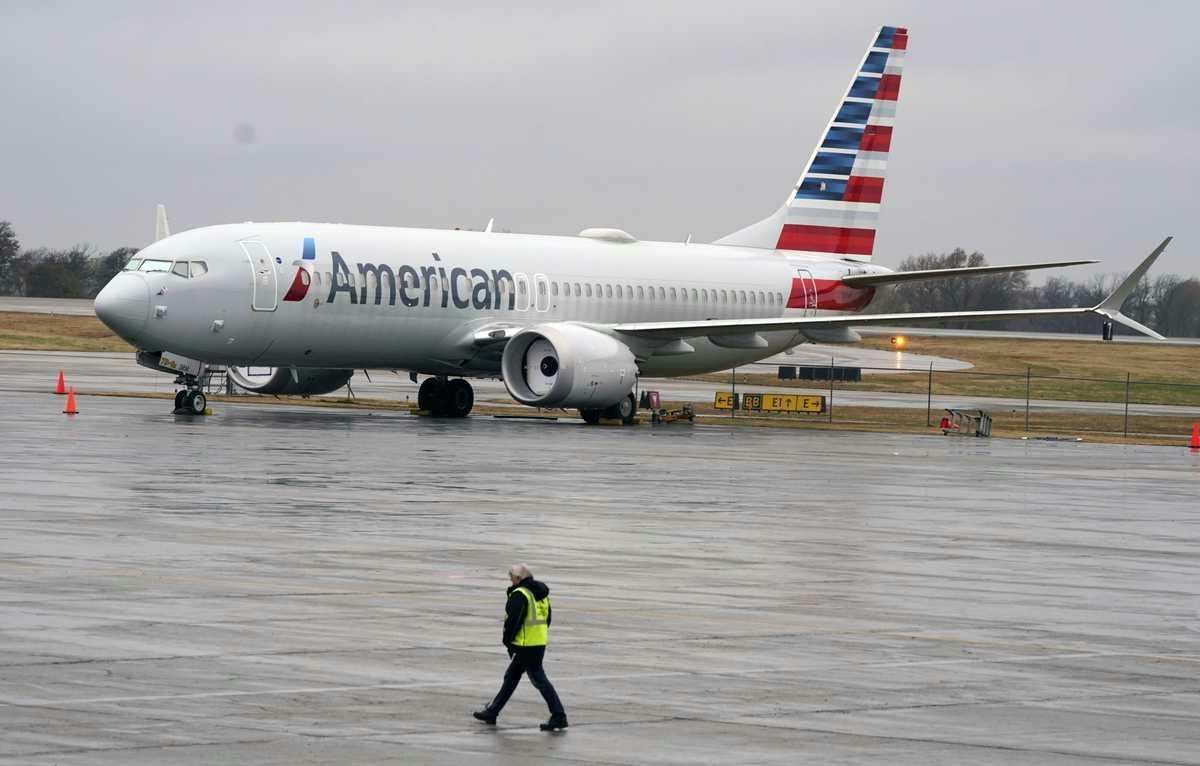
The Boeing 737 MAX, the latest iteration of the company’s best-selling airliner series, continues to grapple with technical difficulties that are undermining its operational performance and reputation. Central to these challenges are the CFM LEAP-1B engines, which power the aircraft. Investigations have revealed a specific vulnerability linked to the engine’s load-reduction mechanism, a system intended to protect the airframe during bird strikes by reducing engine loads.

However, this protective mechanism has been found to inadvertently disrupt an oil line when activated, causing hot oil to leak onto metal surfaces. The resulting smoke can then be drawn into the aircraft’s ventilation system, potentially entering the cockpit or cabin and posing a significant safety hazard to both passengers and crew.

Industry and Regulatory Responses

In response to these findings, Boeing has expressed alignment with the National Transportation Safety Board’s (NTSB) recommendations, confirming that work is underway in close collaboration with airframers to enhance the system’s reliability. The NTSB has verified that Boeing has updated flight manuals to guide pilots on preventing smoke ingress following such incidents. Additionally, the NTSB issued a safety bulletin urging the Federal Aviation Administration (FAA) to mandate immediate software updates to address the issue.

Boeing and CFM International, the engine manufacturer, are actively revising flight procedures and developing a software solution designed to prevent the load-reduction device from triggering oil leaks. These efforts come amid intensified scrutiny of the 737 MAX program, which has been beset by ongoing production challenges and regulatory delays.

Broader Implications for Boeing and the Aviation Industry

The FAA has imposed a monthly production cap of 38 aircraft as inspectors maintain vigilant oversight of safety concerns. Recent incidents, including two Southwest Airlines flights affected by bird strikes that resulted in smoke entering the cockpit and cabin, have heightened regulatory attention. Additional worries have surfaced regarding the engine’s anti-ice system, which operates at temperatures that may compromise engine integrity.

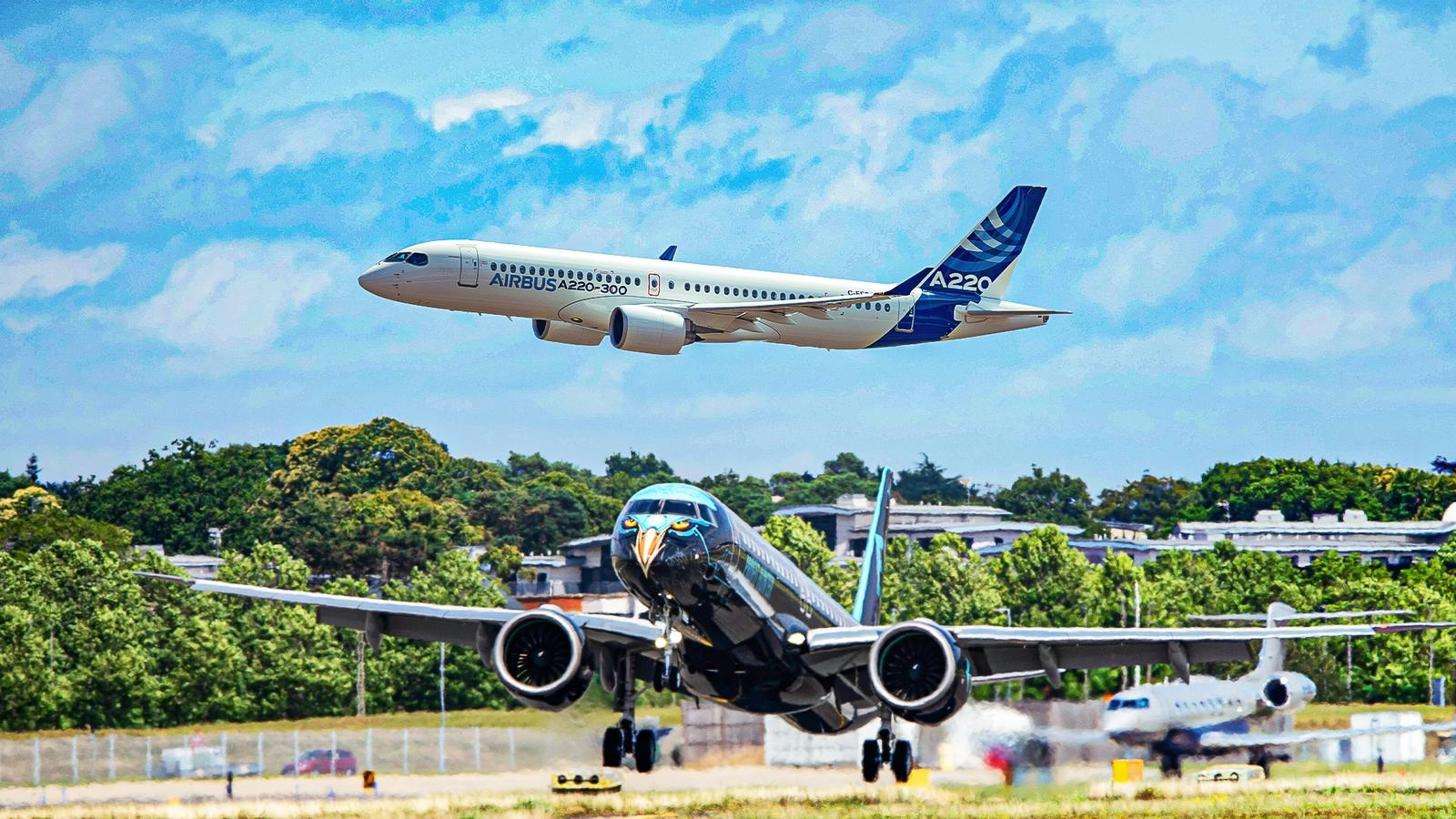
These persistent technical and safety issues carry wider ramifications for Boeing. Heightened regulatory scrutiny threatens to prolong certification timelines and increase costs. Market reactions have mirrored these difficulties, with investor confidence wavering and Boeing’s stock price experiencing downward pressure. Airlines and lessors are also reassessing their fleet strategies; for instance, Swiss Airlines is reportedly considering the Airbus A220 as an alternative.

Compounding these challenges, Boeing continues to finalize redesigns for the 737 MAX 7 and 10 engine anti-ice systems, a process that could further delay performance enhancements and certification. As Boeing endeavors to resolve these issues, the 737 MAX program remains under close observation from regulators, customers, and the broader aviation sector.
More news
FAA Restricts Helicopter Flights Near Busy Airports Following AI Review of Aviation Incidents

FAA Restricts Helicopter Flights Near Busy Airports Following AI Review of Aviation Incidents

FAA Imposes New Restrictions on Helicopter Flights Near Major Airports Following AI Safety Review The Federal Aviation Administration (FAA) has introduced stringent new regulations governing helicopter operations in the vicinity of busy airports, prompted by an artificial intelligence-driven analysis of aviation incidents that exposed critical safety vulnerabilities. This policy shift, outlined in an order released on Wednesday, departs from the traditional reliance on the “see and avoid” method, whereby helicopter pilots visually maintain separation from other aircraft in congested airspace. Enhanced Radar Monitoring to Prevent Collisions Under the revised framework, air traffic controllers will employ radar technology to actively monitor helicopters as they navigate flight paths used by arriving and departing airplanes. This change responds to a series of recent near-misses and a fatal collision that highlighted the inadequacies of visual separation alone. On January 29, 2025, a U.S. Army Black Hawk helicopter collided with an American Airlines regional jet during its landing approach at Ronald Reagan Washington National Airport. Despite the helicopter pilot’s report of having the passenger plane in sight, the crash over the Potomac River resulted in 67 fatalities. Investigations by the National Transportation Safety Board revealed that the FAA had access to raw data documenting over 15,000 close calls at the airport between October 2021 and December 2024. However, this information was not thoroughly analyzed until after the deadly accident. In response, the FAA deployed AI tools to conduct a comprehensive assessment of airports nationwide where helicopters and fixed-wing aircraft frequently share airspace, uncovering previously unrecognized patterns and risks. Transportation Secretary Sean Duffy emphasized the significance of this approach, stating, “Using innovative data analysis, the safety team at the FAA has identified the need for enhanced protocols at all airports across the National Airspace System.” Operational Implications and Industry Response The FAA’s announcement also referenced several recent incidents underscoring the urgency of the new measures, including a February 27 event where a police helicopter entered the final approach path of an American Airlines flight, and a March 2 occurrence at Hollywood Burbank Airport in which a helicopter had to maneuver to avoid a converging private aircraft. While the radar-based separation requirements are anticipated to enhance safety, the FAA acknowledged that they may introduce operational challenges, particularly delays for routine helicopter flights. Nonetheless, urgent missions such as medical evacuations and law enforcement operations will continue to receive priority clearance, with fixed-wing traffic temporarily halted to accommodate these critical flights. This policy adjustment has intensified scrutiny of aviation safety protocols and raised concerns about potential disruptions to essential helicopter services, including police, medical, and news operations that depend on rapid access to congested airspace. Airlines and other stakeholders are now adapting to the updated regulations to ensure compliance while striving to maintain operational efficiency. As the FAA strengthens oversight in light of technological advancements and tragic events, the aviation sector is entering a phase of transition focused on preventing future accidents and reinforcing public confidence in the safety of shared airspace.
SWISS Appoints Wagner as Head of Technical Division

SWISS Appoints Wagner as Head of Technical Division

SWISS Appoints Thoralf Wagner as Head of Technical Division Swiss International Air Lines (SWISS) has announced the appointment of Thoralf Wagner as the new head of technical fleet management, effective June 1, 2026. In this capacity, Wagner will be responsible for overseeing the technical operations of the airline’s fleet, encompassing maintenance, technical development, and adherence to aviation regulatory standards. Extensive Industry Experience and Leadership Wagner brings more than twenty years of experience in the aviation sector to his new role. He succeeds Claus Bauer, who has moved to a different position within the Lufthansa Group. Since 2021, Wagner has served as chief executive of Lufthansa Technik Budapest Ltd., and prior to that, he held various management positions at Lufthansa Technik and Lufthansa Technik Logistik Services. His comprehensive background in aircraft maintenance and international maintenance network management positions him well to lead SWISS’s technical division. Oliver Buchhofer, chief operating officer of SWISS, highlighted the importance of Wagner’s appointment, stating, “The technical division forms the backbone of stable flight operations. In Thoralf Wagner we are gaining a leader who is thoroughly familiar both with the operational realities of aircraft maintenance and with managing international maintenance networks. His experience will help us further strengthen the technical reliability of our fleet and successfully implement our upcoming fleet modernisation programmes.” Strategic Challenges and Industry Implications Wagner’s appointment arrives at a critical juncture for SWISS, as the airline navigates the complexities of fleet harmonization amid ongoing uncertainty surrounding the future of its Airbus A220-100 fleet. These challenges demand careful management to maintain operational efficiency and ensure compliance with regulatory requirements. Market responses to the leadership change have been mixed; some investors view the move as a strategic effort to enhance operational streamlining and technical reliability, while others remain cautious about potential impacts on the A220 program. Competitors within the industry are closely observing SWISS’s evolving technical strategy. Some are anticipated to reassess or adjust their own technical divisions in response to any competitive advantages that may emerge under Wagner’s leadership. Educational Background and Future Outlook Wagner holds a degree in transport engineering with a specialization in aviation from the Technical University of Dresden. During his academic tenure, he gained early practical experience with SWISS and Crossair as a student and diploma candidate. As SWISS embarks on its forthcoming fleet modernization initiatives, Wagner’s expertise in operational maintenance and international network management is expected to be instrumental in shaping the airline’s technical future.
Electric Flying Taxis Near Commercial Launch

Electric Flying Taxis Near Commercial Launch

Electric Flying Taxis Poised for Commercial Launch Joby Aviation is spearheading a transformative shift in urban transportation through its partnership with Virgin Atlantic, advancing the commercial introduction of electric air taxis. The company’s electric vertical takeoff and landing (eVTOL) aircraft is designed to carry four passengers, providing a quieter and zero-emission alternative to conventional helicopters. Equipped with six tilting rotors, the air taxi can hover, ascend, and cruise at speeds reaching 200 miles per hour, with a range of approximately 100 miles on a single battery charge. Successful test flights conducted in both the United States and Japan have validated the vehicle’s operational capabilities in real-world conditions. Commercial Rollout and Industry Challenges Joby Aviation aims to commence commercial services in Dubai and London by late 2025, signaling a potential paradigm shift in short-range urban travel. Despite this progress, the path to widespread adoption remains complex. Regulatory challenges persist as authorities work to develop comprehensive safety standards and operational frameworks for this emerging mode of transport. Public acceptance also poses a significant hurdle, with concerns surrounding safety, noise pollution, and the integration of air taxis into already congested urban airspaces. The market for electric flying taxis is becoming increasingly competitive, with companies such as Archer Aviation and Eve Air Mobility vying alongside Joby to establish a dominant presence. This rivalry has already led to legal confrontations, including Archer’s counterclaim against Joby alleging fraud, underscoring the high stakes involved in this nascent industry. Regulatory Progress and Future Outlook Regulatory bodies are actively facilitating the sector’s growth. The Federal Aviation Administration (FAA) has approved pilot programs for electric air taxis across 26 states, marking a critical step toward commercialization. However, some major metropolitan areas, including Los Angeles, were excluded from these test sites, potentially affecting local efforts to become early adopters of urban air mobility solutions. As the industry approaches commercial launch, significant questions remain regarding the pace at which electric air taxis will secure public trust and regulatory endorsement. If these challenges are successfully navigated, electric air taxis could revolutionize urban travel by offering a fast, clean, and efficient alternative to traditional ground transportation.
Madrid Wins Ryanair’s Largest European Maintenance Hub, Impacting Aviation Jobs in Spain

Madrid Wins Ryanair’s Largest European Maintenance Hub, Impacting Aviation Jobs in Spain

Madrid Secures Ryanair’s Largest European Maintenance Hub, Transforming Spain’s Aviation Sector Madrid has emerged as a pivotal center in European aviation with Ryanair’s inauguration of its largest aircraft maintenance facility at Madrid-Barajas Airport. This €25 million investment represents the airline’s most substantial ground-level commitment to date, positioning Spain as a key player in Ryanair’s future expansion plans. The new maintenance, repair, and overhaul (MRO) center is set to reshape the aviation employment landscape across the country. A State-of-the-Art Facility and Its Impact on Employment Occupying 22,000 square meters within the airport’s industrial zone, the new MRO center is capable of servicing up to seven aircraft simultaneously. It is equipped to perform a wide range of tasks, from routine inspections to complex engineering operations, necessitating a highly skilled workforce trained to meet rigorous international standards. The facility is expected to generate approximately 700 skilled jobs, offering stable and well-compensated employment opportunities in a sector where technical expertise is increasingly in demand. The inauguration ceremony, attended by Madrid’s Mayor José Luis Martínez-Almeida, highlighted strong municipal support and aligned with broader initiatives to establish Madrid-Barajas as a premier European aviation hub. However, the expansion also introduces challenges. Industry experts, including the CEO of Danish Air Transport, have cautioned about potential oversaturation in the aircraft, crew, maintenance, and insurance (ACMI) market. The increased maintenance capacity may intensify competition among service providers in Spain, raising concerns about job security for existing aviation workers as the market adapts to these new dynamics. Spain’s Growing Strategic Role in Ryanair’s Operations Ryanair currently operates 109 aircraft from 11 bases across Spain, making the country a cornerstone of its Southern European network. The Madrid maintenance hub now serves as a central node within Ryanair’s network of seven EU-based maintenance centers. This development complements the airline’s existing Spanish infrastructure, which includes another facility at Barajas, a maintenance center in Seville, a crew training site, and a technology hub in central Madrid. Together, these assets reinforce Spain’s strategic importance to Ryanair’s operations. The establishment of the Madrid hub is also expected to prompt competitive responses from other airlines, which may reconsider their maintenance strategies and potentially relocate operations to Madrid to capitalize on the new facility’s capabilities. This could further heighten competition for skilled labor and maintenance contracts within the Spanish aviation sector. Supporting Ryanair’s Ambitious Growth Targets Ryanair’s investment in Madrid is closely linked to its long-term vision of operating 800 aircraft and transporting 300 million passengers annually by 2034. The new maintenance hub is designed to enhance operational efficiency by reducing logistical dependencies and turnaround times, thereby supporting this ambitious growth trajectory. Moreover, the facility may influence Ryanair’s future route planning. Market analyses indicate untapped potential for routes such as Newcastle to Madrid, which could become more viable as the airline consolidates its operations in the Spanish capital. As Ryanair deepens its commitment to Madrid, the move presents both significant opportunities and challenges for Spain’s aviation sector. It promises a substantial boost in employment while simultaneously reshaping the competitive landscape for maintenance services across Europe.
SITA Introduces Bag Radar to Enhance Predictive Baggage Tracking

SITA Introduces Bag Radar to Enhance Predictive Baggage Tracking

SITA Introduces Bag Radar to Enhance Predictive Baggage Tracking The aviation sector is poised to make a substantial advancement in reducing baggage disruptions with the launch of SITA Bag Radar, a cloud-based analytics platform designed to predict and prevent mishandled luggage, missed connections, and operational bottlenecks in real time. As global air travel continues to grow, baggage mishandling remains a persistent issue, often leading to passenger dissatisfaction and significant financial costs for airlines. From Reactive to Proactive Baggage Management Historically, airlines have managed baggage issues reactively, addressing problems only after they have caused operational disruptions. SITA Bag Radar represents a strategic shift by employing historical data, real-time monitoring, and artificial intelligence to deliver early warnings of potential baggage disruptions. This proactive approach empowers airlines, airports, and ground handlers to intervene before issues escalate, thereby improving operational efficiency and enhancing the overall passenger experience. Operational Mechanics of SITA Bag Radar The platform processes extensive operational baggage data, transforming it into actionable insights. By detecting anomalies and emerging risks—such as patterns that suggest likely missed connections or congestion at transfer points—SITA Bag Radar enables operational teams to implement corrective measures, including rerouting baggage or reallocating resources. The objective is to mitigate disruptions before they affect travelers. Persistent Challenges in Baggage Handling Despite technological progress, baggage mishandling continues to be a challenge due to the complexity of global airline networks. Baggage frequently passes through multiple systems, handlers, and airports, with data often fragmented across disparate platforms. This fragmentation complicates efforts to maintain a comprehensive view of baggage movement, allowing delays and inefficiencies to escalate rapidly. Integration and Industry Reception The success of SITA Bag Radar depends on addressing several critical challenges. Integration with existing legacy baggage tracking systems used by airlines and airports is essential to ensure reliable, real-time insights. Additionally, the accuracy and consistency of data collected from diverse sources are vital for the effectiveness of predictive analytics. Privacy concerns also arise from real-time location tracking, necessitating stringent measures to safeguard data security and maintain passenger trust. Industry response to Bag Radar has been mixed. Some airlines remain skeptical about the technology’s efficacy and the potential costs associated with its implementation. Meanwhile, competitors are expected to enhance their own baggage tracking solutions or develop alternative technologies to maintain competitive advantage. Future Prospects SITA Bag Radar signifies a major step toward embedding predictive intelligence within aviation operations, addressing a longstanding gap in baggage management. Should the challenges of integration and data quality be successfully navigated, the platform has the potential to establish a new benchmark for proactive baggage handling, reducing mishandling rates and improving the travel experience for millions of passengers worldwide.
Bordeaux Airport uses AI to reduce passenger waiting times

Bordeaux Airport uses AI to reduce passenger waiting times

Bordeaux Airport Implements AI to Reduce Passenger Waiting Times Bordeaux-Mérignac Airport has initiated a trial of advanced artificial intelligence technology aimed at improving passenger flow and minimizing waiting times within its terminal. Collaborating with Outsight, a specialist in real-time data solutions, the airport has deployed a ‘Physical AI’ system—referred to as a “motional digital twin”—to monitor and manage crowd movements more effectively. Enhancing Operational Efficiency Through Real-Time Data Since March 16, the AI system has been operational at strategic locations in Hall A, including security checkpoints. Utilizing 3D LiDAR sensors, the technology captures three-dimensional data on passenger movements, providing real-time insights into crowd density, queue lengths, and spatial utilization. This continuous stream of information allows airport personnel to dynamically adjust resource allocation, such as deploying additional security staff or opening extra service counters when necessary. The system also generates alerts in instances of overcrowding or capacity breaches, enabling swift operational responses. This capability is particularly pertinent given the recent introduction of the Entry/Exit System (EES), which has increased security checks and contributed to longer wait times. Talel Jaouad, head of airport process operations at Bordeaux Airport, emphasized that the trial aims to deepen understanding of passenger flows to optimize resource deployment and enhance overall passenger satisfaction. The airport’s official statement highlighted that data-driven management of passenger movement is becoming a critical factor in operational performance. Importantly, the AI technology ensures passenger privacy by providing only anonymized visualizations, with no personal identification recorded. This confidential data offers a comprehensive, real-time overview of terminal capacity, supporting efforts to prevent bottlenecks and reduce queue lengths at key points. Broader Implications for the Aviation and Travel Industries Bordeaux’s adoption of AI reflects a growing trend across the aviation sector, where airports increasingly rely on anonymized AI tools to optimize passenger throughput and improve operational efficiency. Raul Bravo, president and co-founder of Outsight, noted that airports like Bordeaux are integrating technologies that seamlessly fit into existing operations while delivering immediate, measurable benefits. Handling approximately six million passengers annually, Bordeaux Airport plans to expand its capacity to 7.8 million by 2027. Serving over 80 destinations through 24 airlines, including planned growth from major carriers such as EasyJet, the airport is prioritizing the optimization of its current infrastructure. Passenger volumes currently stand at about 85 percent of pre-pandemic levels, underscoring the importance of efficient terminal management. Beyond airport operations, the integration of AI is reshaping the wider travel industry. As AI-driven agents increasingly automate planning, booking, and operational tasks, traditional business models—particularly those of intermediaries like online travel agencies—may encounter mounting challenges. Recent volatility in sectors such as logistics and software has been linked to rapid AI advancements, and Bordeaux’s initiative may encourage competitors to adopt similar technologies to maintain their competitive edge. This evolution raises important questions about the future role of intermediaries and the overall landscape of travel services. By leveraging AI, Bordeaux Airport seeks not only to improve passenger experience but also to position itself at the forefront of an industry undergoing rapid technological transformation, where innovation is essential for maintaining competitiveness and operational excellence.
Airbus Faces Delivery Challenges for 2026

Airbus Faces Delivery Challenges for 2026

Airbus Faces Delivery Challenges for 2026 Slow Start and Competitive Pressure Airbus is encountering significant challenges in meeting its commercial aircraft delivery targets for 2026, grappling with a sluggish start to the year compounded by ongoing supply chain disruptions. Internal data from Forecast International reveals that Airbus has delivered only 6.2% of its 870-aircraft target so far this year, a pace that lags behind its historical performance. By comparison, at the end of February 2025, Airbus had achieved 7.9% of its annual delivery goal, which was subsequently revised downward from 820 to 790 aircraft. This underperformance is particularly notable in light of Boeing’s stronger delivery figures. Boeing has nearly doubled Airbus’s deliveries in the same period and secured more net orders in January, intensifying competitive pressures. This dynamic underscores the urgency for Airbus to accelerate its production and delivery rates if it is to meet its 2026 objectives. Production Constraints and Forecast Adjustments Airbus’s forecast of delivering 870 commercial aircraft in 2026 falls slightly short of analyst expectations, which hover around 880 units. Despite maintaining a record backlog of orders, the company has moderated its planned production ramp-up for the A320neo family, primarily due to engine delivery constraints from supplier Pratt & Whitney. These supply chain challenges continue to hamper Airbus’s ability to meet its production targets, particularly for its high-demand passenger jets. Although the current delivery pace does not yet necessitate a formal downward revision of the annual target, it raises the possibility that such an adjustment may become unavoidable if production does not accelerate. To remain on course, Airbus will need to significantly increase deliveries in the second half of the year, facing an even steeper climb than in 2025. Outlook Amidst Uncertainties As 2026 progresses, Airbus confronts a complex environment characterized by persistent supply chain uncertainties and heightened competition. The combination of a weaker start and ongoing production headwinds suggests that achieving the company’s initial delivery target will be more challenging than in previous years. The coming months will be critical in determining whether Airbus can overcome these obstacles and fulfill its ambitious delivery goals.
AerFin Sells A330 for Parts

AerFin Sells A330 for Parts

AerFin Sells Airbus A330 Airframe for Parts Amid Market Pressures Aviation asset management firm AerFin has completed the sale of an Airbus A330 airframe to an undisclosed airline for parts trading, highlighting the sustained demand for widebody aircraft components in a dynamic and increasingly competitive market. Auvinash Narayen, Chief Investment Officer at AerFin, emphasized the enduring value of widebody airframes, noting that they remain a critical source of materials for the industry, especially for platforms with significant operational life remaining. He added that the transaction exemplifies AerFin’s capability to align assets with customers who can optimise their value effectively. Market Dynamics and Operational Challenges The deal, finalised at the close of 2025, occurs amid intensifying competition within the market for used serviceable material. Industry players such as AerSale have voiced concerns regarding the scarcity of suitable feedstock, as the availability of used aircraft and engines continues to diminish. This competitive landscape is further complicated by constrained capacity in engine maintenance, repair, and overhaul (MRO) facilities, alongside unpredictable lead times for materials. These factors collectively challenge asset managers in securing buyers and managing inventory with efficiency. AerFin’s decision to dismantle the A330 for parts also reflects broader shifts in airline parts sourcing strategies, particularly among carriers operating in demanding environments like the Middle East. Such operational conditions influence the demand for components from older aircraft models, including the A330, thereby affecting both pricing structures and the availability of used parts in the market. Strategic Asset Management and Industry Collaboration Earlier in 2025, AerFin acquired an A330 powered by CF6-80 engines, though it remains unclear whether this is the same airframe involved in the recent sale. At the time of acquisition, Simon Goodson, AerFin’s Chief Executive Officer, described the purchase as a demonstration of disciplined capital deployment. He underscored the company’s deep understanding of asset demand and its ability to act decisively when opportunities arise, a strategy that has supported AerFin’s growth over the past 15 years. Goodson also highlighted the importance of collaborative partnerships in ensuring the timely completion of the transaction, despite the challenges posed by a tight year-end schedule. He remarked that a foundation of trust and responsiveness between parties enabled swift resolution of obstacles, allowing the deal to progress without delay. As the market for used aircraft parts becomes increasingly competitive and operational pressures intensify, AerFin’s recent sale underscores both the opportunities and complexities confronting asset specialists in the contemporary aviation sector.
New AI Platform Assists Frequent Flyers in Restoring Lost Loyalty Status

New AI Platform Assists Frequent Flyers in Restoring Lost Loyalty Status

New AI Platform Assists Frequent Flyers in Restoring Lost Loyalty Status Addressing the Challenges of Modern Loyalty Programmes Travel Smarter, a newly launched AI-powered platform, seeks to assist frequent flyers in regaining lost airline status and optimising the value of their points and miles. Founded by travel technology veterans Richard Viner, Joel Waldhoff, and CTO Pablo Casado-Bissone, the company has developed an agentic AI system tailored specifically to the complexities of travel loyalty programmes. The platform’s initial optimisation agents are now operational, with plans for further expansion underway. The product was made available to early-access users in January, following significant interest from the frequent flyer community. Viner, whose background includes roles at Sabre, Expedia, and Egencia, was motivated to create Travel Smarter in response to recent industry shifts. Airlines have increasingly adopted revenue-based qualification models, raised elite status thresholds, and tightened benefits, leaving many travellers uncertain about how to reclaim their previous status levels. “I want to help every traveller maximise their travel loyalty value,” Viner explained. “Last year, many friends lost status despite travelling just as much. I started showing them which airline or alliance would help them regain status faster, unlock upgrades, or earn enough points for family holidays—potentially saving thousands on flights. That’s when I realised this wasn’t just a niche problem.” A recent survey of 2,000 British Airways frequent flyers revealed that 62% expect to lose status under the new qualification criteria. Viner believes Travel Smarter addresses this growing concern by simplifying the process of earning and progressing status, as well as enhancing rewards across airlines, hotels, and eventually car rental programmes. “Travellers are losing airline status faster than ever, even as airlines quietly devalue loyalty programmes. The airline you fly most isn’t always the fastest route to status. Travel Smarter removes the guesswork, revealing the smartest path to status and the best return on travel spend,” he added. Leveraging Advanced AI to Navigate Loyalty Complexity The platform utilises recent advances in large language models (LLMs), agent orchestration frameworks, and AI-assisted coding tools to decode the intricate rules governing airline loyalty programmes and their partner earning structures. This technology enables rapid modelling of airline policies, simulation of thousands of status and earning scenarios, and deployment of optimisation agents that guide users toward maximising the value of their loyalty assets. Despite its promise, Travel Smarter faces several challenges as it enters the market. There is potential skepticism regarding AI-driven solutions within the loyalty programme sector, and the platform must ensure seamless integration with existing loyalty systems to gain widespread adoption. Furthermore, the rise of AI in travel threatens traditional intermediaries such as online travel agencies and global distribution systems, as automation could compress margins and disrupt established business models. Market responses may include temporary declines in stock prices for companies perceived as vulnerable to AI disruption. Competitors are also expected to intensify loyalty campaigns to retain or attract customers; for instance, Virgin Atlantic has already targeted British Airways members affected by recent programme changes. Nonetheless, the founders of Travel Smarter remain confident that their AI-driven approach will empower travellers to navigate the increasingly complex loyalty landscape, helping them restore lost status and maximise rewards in a rapidly evolving industry.
Air Dolomiti Adds Two Embraer 195 Aircraft to Fleet

Air Dolomiti Adds Two Embraer 195 Aircraft to Fleet

Air Dolomiti Expands Fleet with Two Embraer 195 Aircraft Amid Growing Regional Competition Air Dolomiti, a subsidiary of the Lufthansa Group, has taken a decisive step in its fleet renewal strategy by incorporating two Embraer E195 aircraft. The first of these jets joined the fleet in December and is already operational, while the second arrived on March 16 and is expected to commence service shortly. This development signals the start of a broader fleet expansion and modernization phase for the Italian regional carrier. Fleet Renewal and Growth Strategy The addition of the E195s forms part of an extensive renewal and growth program scheduled to continue through 2028. Over this period, Air Dolomiti plans to acquire a total of 13 Embraer E195 aircraft, which will gradually replace nine of its existing 108-seat E190s. This transition will increase the airline’s fleet size from 28 to 30 aircraft, thereby enhancing overall capacity and operational efficiency. The new E195s offer several advantages, including increased seating capacity, improved cabin comfort, and greater fuel efficiency. These enhancements align with Air Dolomiti’s commitment to delivering modern, customer-focused services while reinforcing its role within the Lufthansa Group network. By deploying these aircraft, the airline aims to provide more seats on key routes without compromising reliability or passenger experience. Operational Challenges and Market Context Integrating the Embraer E195s into the existing fleet presents operational challenges that Air Dolomiti must carefully manage to maintain service quality and efficiency. The airline operates in a highly competitive regional market, where rivals such as Finnair are expanding their E190 fleets, and QantasLink has recently introduced international flights using the Airbus A220. These moves reflect a wider trend among regional carriers toward fleet modernization as they seek to enhance their service offerings and safeguard market share. As Air Dolomiti advances its fleet renewal, it aims to deliver a more consistent and enhanced passenger experience across its network. The increased capacity and flexibility provided by the E195s will enable the airline to optimize its route network in close coordination with the Lufthansa Group. This strategy is designed to strengthen connectivity between regional Italian airports and major European hubs, allowing Air Dolomiti to better respond to evolving market demands, support both business and leisure travel, and maintain operational resilience amid a dynamic competitive landscape.
line