
Orchestrer les insights d’IA pour les transformer en actions

Tendances
Categories
Pratt & Whitney, MTU expand GTF engine MRO capacity
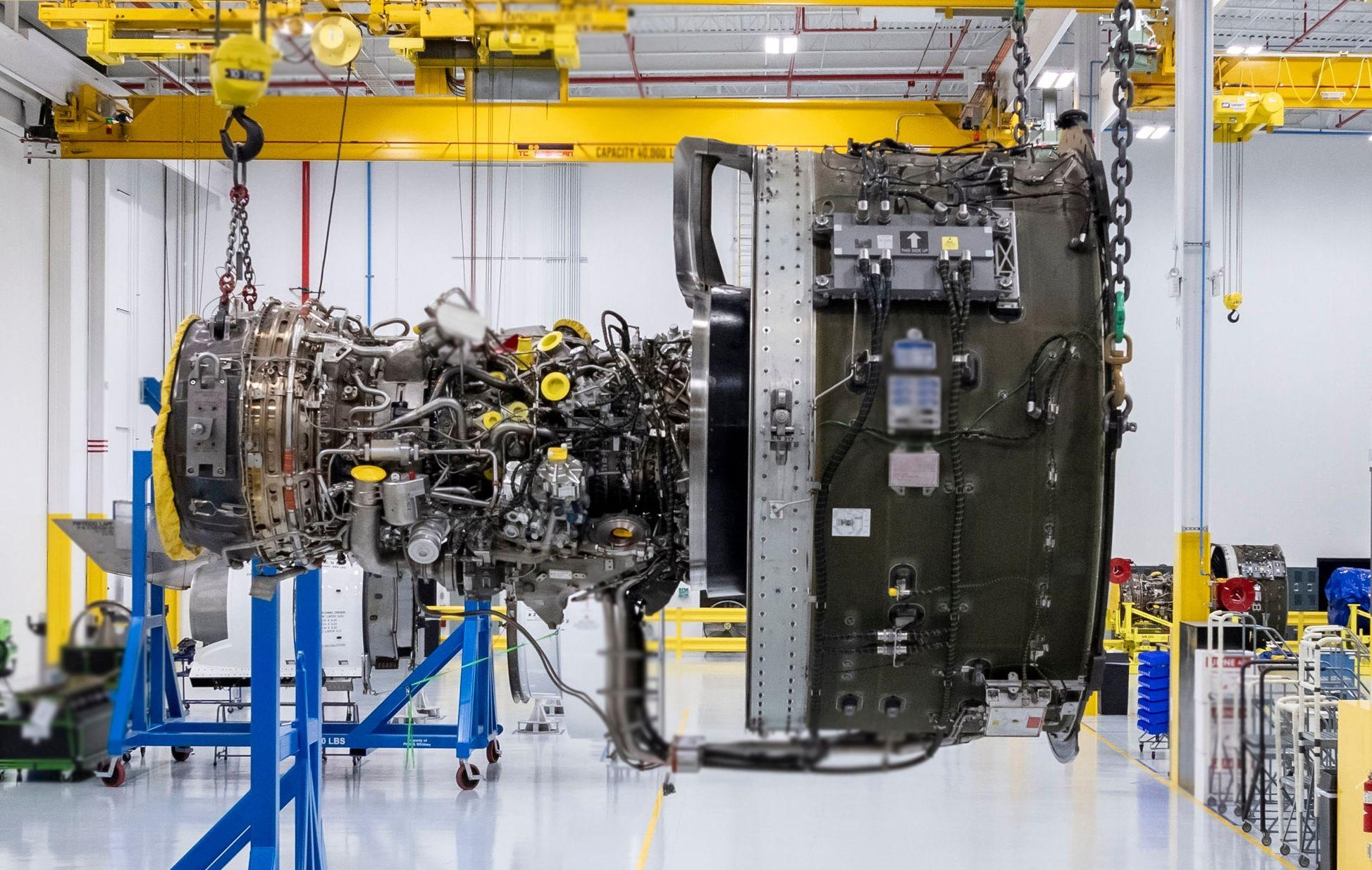
Pratt & Whitney and MTU Expand GTF Engine MRO Capacity
Pratt & Whitney and MTU Aero Engines are significantly increasing their maintenance, repair, and overhaul (MRO) capacity for the geared turbofan (GTF) engine to address growing demand and strengthen the engine’s long-term viability. This expansion comes amid heightened industry pressure to enhance reliability and efficiency, as airlines prioritize maximizing aircraft availability and minimizing operational disruptions.
Integration and Competitive Challenges
A central aspect of this expansion involves integrating the complex GTF engine into existing MRO networks, a process that presents considerable challenges. Achieving seamless collaboration with industrial partners while maintaining a competitive advantage requires substantial coordination and investment. MTU, a key partner in the GTF program, is simultaneously upgrading its own MRO capabilities, signaling increased competition within the sector.
Recent advancements include the introduction of the Hot Section Plus upgrade, designed to nearly double the engine’s time on wing. This enhancement is expected to reinforce market confidence in the GTF’s durability and performance, providing airlines with a strong incentive to continue investing in the engine amid a competitive environment. In response, rival manufacturers are anticipated to accelerate their own MRO improvements and develop competitive engine upgrades.
Industry Implications and Market Response
Expanding MRO capacity for advanced engine technology carries inherent risks. Integrating new processes and upgrades into established maintenance frameworks demands significant operational adjustments and capital expenditure. Ensuring smooth implementation is essential to maintaining customer trust and meeting stringent performance standards.
Market reaction to the expansion has been predominantly positive, with analysts expressing increased confidence in the future of the GTF program. Airlines and lessors are closely monitoring how Pratt & Whitney and MTU manage the transition, particularly as the Hot Section Plus upgrade is deployed and MRO networks adapt to evolving technical requirements.
As the GTF engine continues to develop, the efforts by Pratt & Whitney and MTU to expand and modernize their MRO capabilities will be critical in shaping the competitive landscape of the commercial engine market. The success of these initiatives will hinge on effective collaboration, technological innovation, and the ability to navigate operational challenges in a rapidly evolving industry.

Etihad Airways Suspends Airbus A380 Flights on Key Route

Aditya Birla Group Seeks Approval for Aircraft Leasing in GIFT City

Qatar Airways Highlights Innovation and Connectivity at Arabian Travel Market 2026

Hong Kong's Five-Year Plan Includes Andrew Fan's Aircraft Parts Processing Hub Proposal

ACIA Aero Leasing Delivers ATR72-600 to Air Nostrum

RTX Appoints Jill Albertelli as Head of Pratt & Whitney

TAT Technologies Joins Beyond Aero Hydrogen Aircraft Program

AURAK Study Highlights Barriers to Air Taxi Adoption in Emerging Economies

Xiamen Air Selects Altitude for 787 Maintenance at Heathrow

Etihad and Swissport Extend Global Partnership
